
Decluttering often feels overwhelming because it bundles several different jobs into one. You decide what stays, look for storage, clean, rearrange a room, face sentimental items and then end up with piles that need somewhere to go. These decluttering tips are meant to make decisions simpler instead of turning the task into a bigger project.
The approach is to solve one recurring clutter problem at a time and make it easier for useful items to return where they belong. You do not need to empty a room, follow minimalist rules or buy anything. Most of what follows is about looking at your space differently.

Decluttering and Organizing Are Not the Same Thing
The two are closely related, but they answer different questions. Decluttering decides what belongs. Organizing decides where the remaining items live.
Decluttering usually involves:
removing obvious trash and empty packaging
returning misplaced items to the room where they belong
noticing duplicates
deciding what still deserves a spot in active, easy-to-reach space
reducing categories that are taking up more room than they need to
Organizing usually involves:
giving items a home
grouping similar things together
making frequently used items easier to reach
The order matters because organizing first can lead you to buy or arrange storage for things that did not need to stay. You end up neatly containing items you would have been happy to move, pass along or keep somewhere less central.
That does not mean you have to finish decluttering before you organize anything. Sometimes the two happen together, such as when you clear one drawer and put its contents back in a better arrangement. The point is to ask “does this belong here?” before asking “where should this go?”
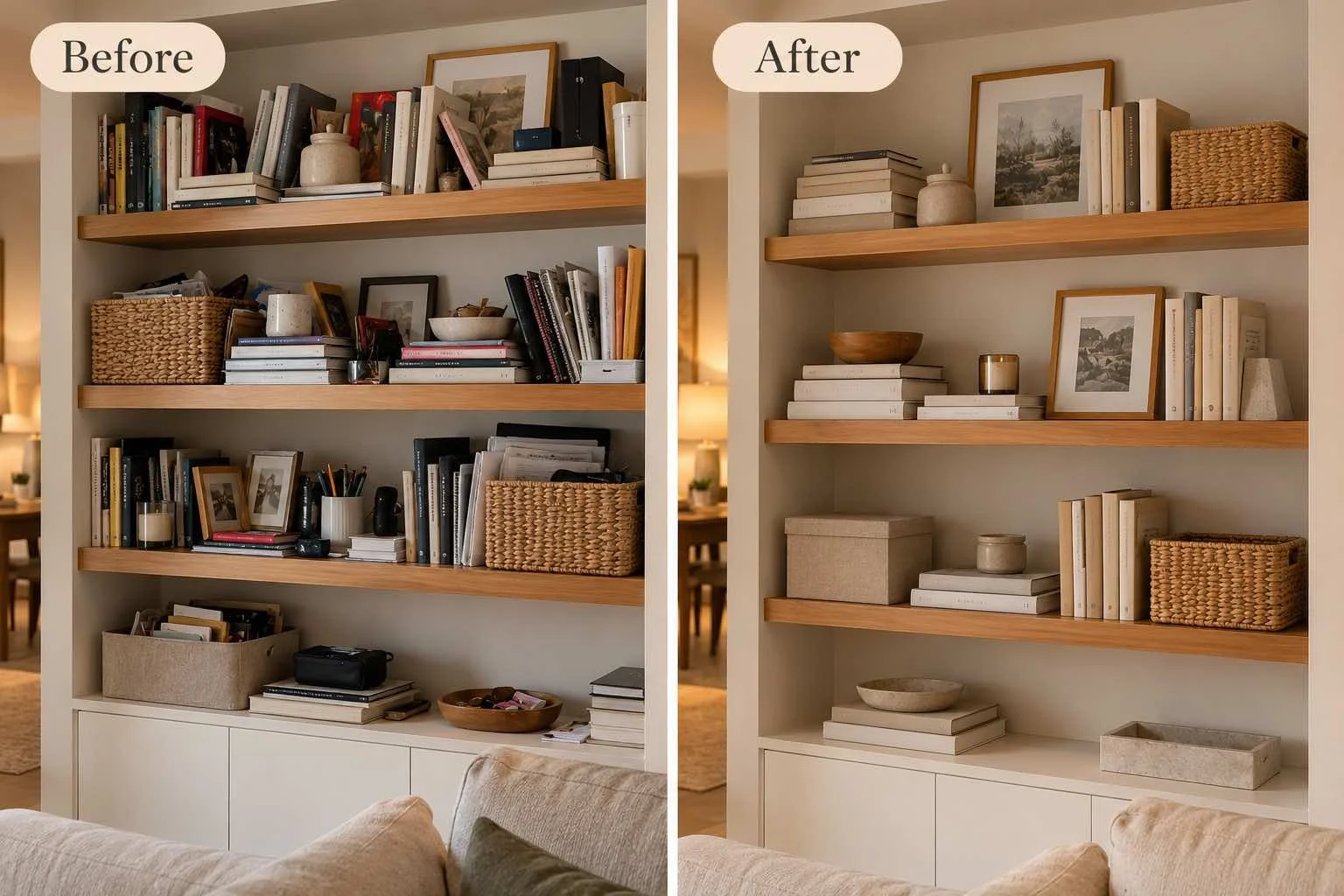
13 Decluttering Tips That Make Everyday Spaces Easier to Manage
1. Start With One Recurring Clutter Problem
Instead of picking the hardest room, pick the spot that keeps getting messy no matter how often you reset it. Common examples include:
shoes piling up by the door
mail collecting on the counter
clean laundry living on a chair
reusable bags scattered across several rooms
bathroom products covering the sink
kitchen counters holding unrelated items
Recurring clutter is useful information. It can indicate that a routine or storage location is not working well for the way you actually live. Solving that one spot tends to make a visible difference, and it teaches you something you can apply elsewhere. The trade-off is that fixing one problem will not change the whole home, which is fine. You can stop after one.
2. Remove Obvious Trash and Empty Packaging First
Begin with things that need no real decision:
empty boxes and shipping materials
old flyers and outdated paper
empty containers
packaging from products you already opened and use
broken packaging that serves no purpose
This can create visible progress without asking you to make difficult decisions right away. It also makes the remaining items easier to see, which helps later decisions.
If you come across household or personal products that seem past their use, check the product instructions. Disposal requirements for products like these vary, so follow local guidance rather than a general rule.
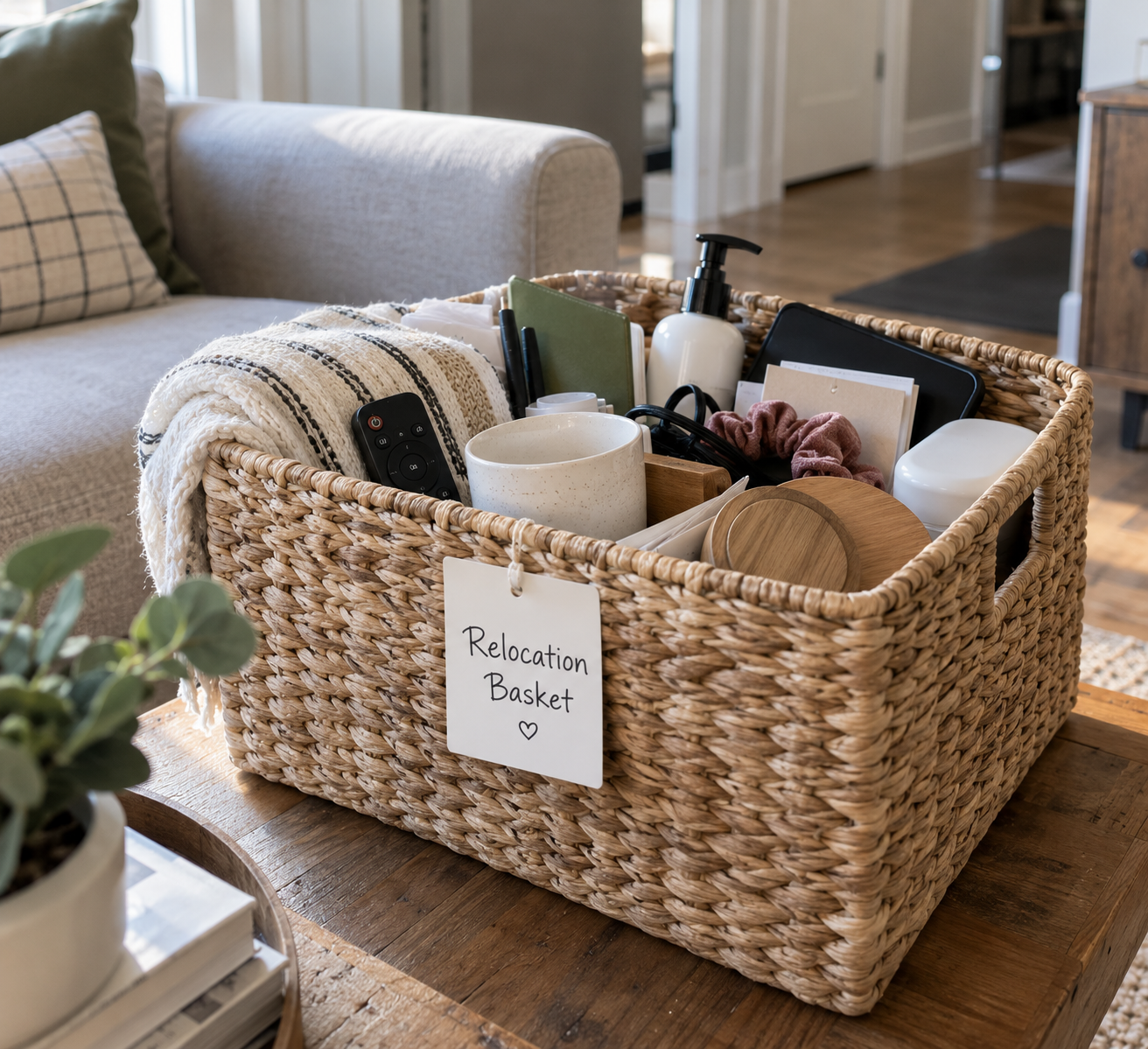
3. Return Items That Clearly Belong Somewhere Else
Not everything out of place is clutter. A lot of what makes a room feel messy is useful stuff in the wrong room: shoes in the bedroom, mugs in the office, a tool on the kitchen counter, mail on the dining table.
It helps to separate these two categories in your mind. Clutter is something you are unsure you need. A misplaced item is something you do need, just not here. Treating misplaced items as excess can lead you to discard things you use.
A practical approach is to walk through with a basket or just your hands, collect what belongs elsewhere and return everything in one trip where practical. Avoid building a giant relocation pile in the middle of the room, since that adds temporary clutter and can stall the whole project.
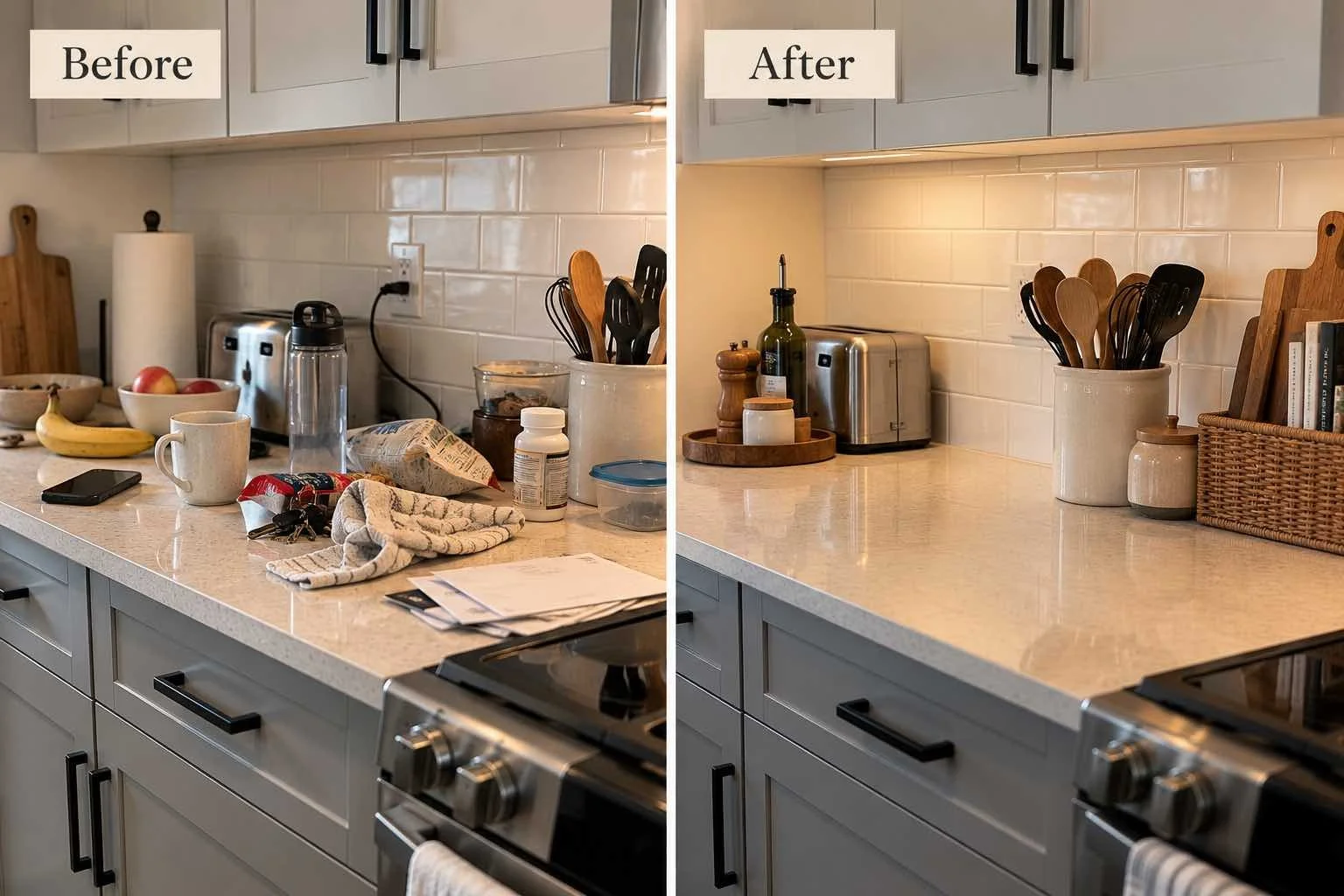
4. Protect One Clear Surface
Pick the one surface that matters most for daily tasks. Depending on your home, that might be:
the kitchen prep counter
the dining table
the bathroom vanity
a bedside table
the entry surface
A reliably clear surface makes everyday routines easier. Chopping vegetables, sitting down to eat or getting ready in the morning all go more smoothly when you do not have to move things first.
This does not mean every surface should be empty. A lamp, a plant, a tray of daily-use items or a few decorative pieces can stay if they are not in the way of the surface’s job. In a small kitchen or living room, choosing one working surface and letting the others be more flexible is often more realistic. Our guides to small living room ideas and pantry and kitchen organization ideas cover how to arrange these spaces once you have decided what belongs.
5. Check Categories That Keep Overflowing
Some categories regularly outgrow the space they were given. Typical ones include tote bags, mugs, beauty products, towels, hoodies, food storage containers and cleaning supplies.
When a category keeps overflowing, there are a few possible causes:
there are more items than you actually use
the storage location is wrong for how the items are used
the storage space is simply too small for the category
several unrelated categories are sharing the same space
Do not automatically assume the answer is getting rid of things. If your towels overflow a narrow shelf, the shelf may be the issue. If your mugs fill a cabinet because the cabinet also holds baking dishes, the mix may be the issue. Looking at the cause first saves you from either removing useful items or keeping a layout that was never going to work.
6. Deal With Duplicates as a Category
Duplicates tend to build up gradually, which is why they are easy to miss. Scissors, water bottles, kitchen utensils, tote bags, notebooks, chargers and cleaning cloths are common examples.
Instead of deciding item by item, gather one type together and ask:
Do these serve different purposes?
Are they used in different rooms?
Is a backup genuinely useful, or has it just never been used?
Are some of them forgotten, so you only know about them when you find them?
Having scissors in the kitchen, the office and the craft area can make sense. Seven pairs in one drawer might not. There is no ideal number to keep. The goal is that each one you have is findable and does a job.
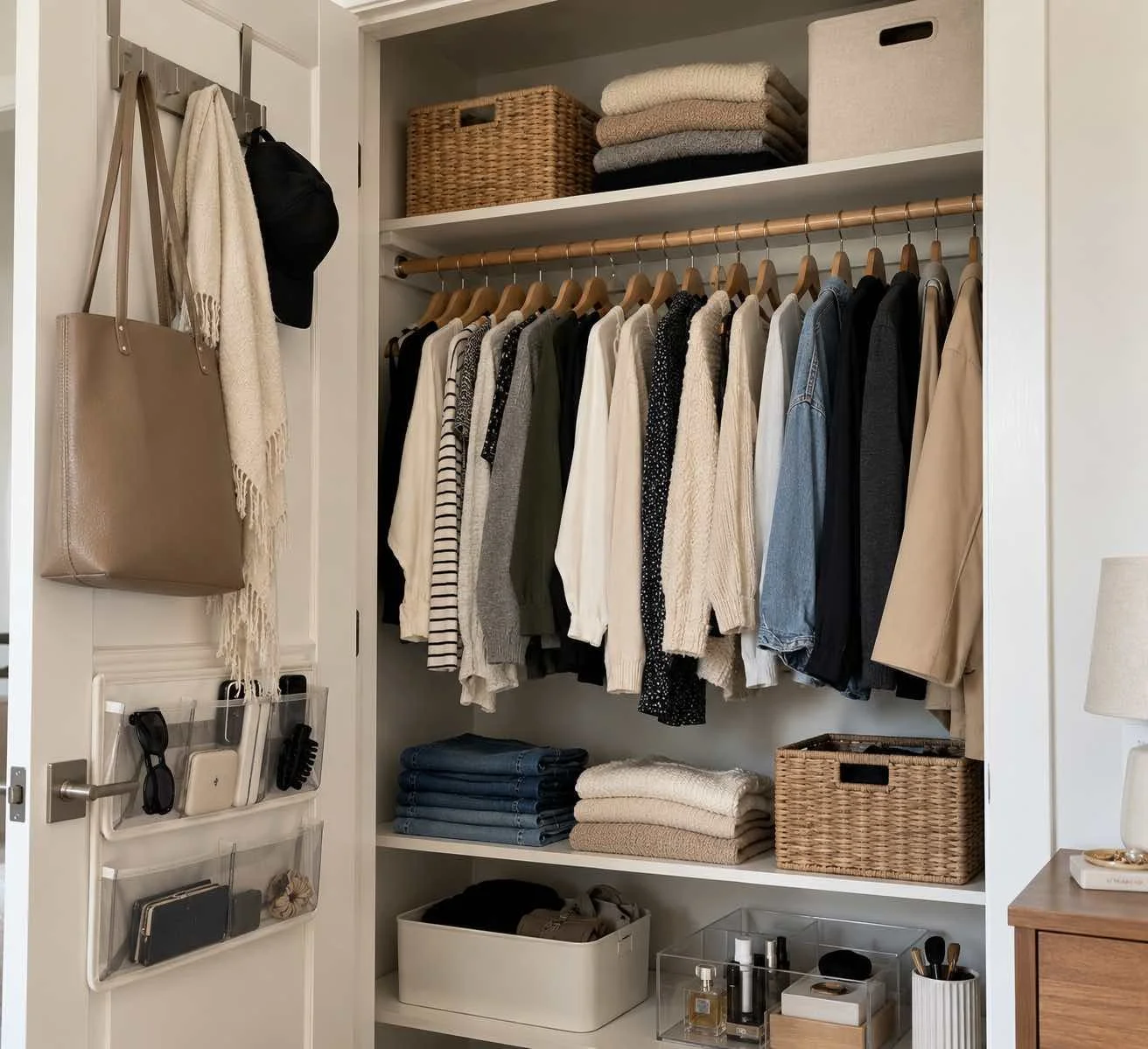
7. Move Rarely Used Items Out of Prime Space
Prime space is the most convenient storage in a room: easy-reach shelves, the front of cabinets, accessible drawers and main countertop areas. Those spots work best for things you use often.
Items you rarely reach for can move higher, farther back or to a secondary storage area where practical. Examples include occasional serving dishes, specialty appliances, off-season items and backup supplies.
Be careful with weight. Keep heavy items at a comfortable height rather than overhead, and avoid placing anything where it blocks exits, walkways, vents or utility access. This is the same principle we use in our closet organization ideas: the things you use most should be the easiest to reach.
8. Avoid Creating a “Decide Later” Pile That Never Ends
A “maybe” pile can be helpful in moderation, but it often grows into its own clutter. If you use one, keep it limited and clearly defined, such as a single box or a single shelf.
When you pick up a maybe item, a few questions can help:
Do I use this?
Do I already have something that does the same job?
Does it belong somewhere else in my home?
Would I notice if this stopped occupying prime space?
The last question is useful because the answer is not always “get rid of it.” Sometimes the answer is “move it somewhere less central.” Valuable and sentimental items do not need to be decided on the spot, and it is fine to set them aside for later.
9. Separate Sentimental Items From Everyday Decluttering
Sentimental items usually take more time and attention than everyday objects, and that is normal. A box of photos or a single keepsake can bring a whole decluttering session to a halt if you try to handle it alongside the junk drawer.
A simple way around this is to set sentimental items aside during the main session and return to them in their own time. That keeps the practical work moving and gives the emotional items the attention they deserve. There is no pressure to reduce sentimental belongings. Some people keep most of them and simply give them a defined place.
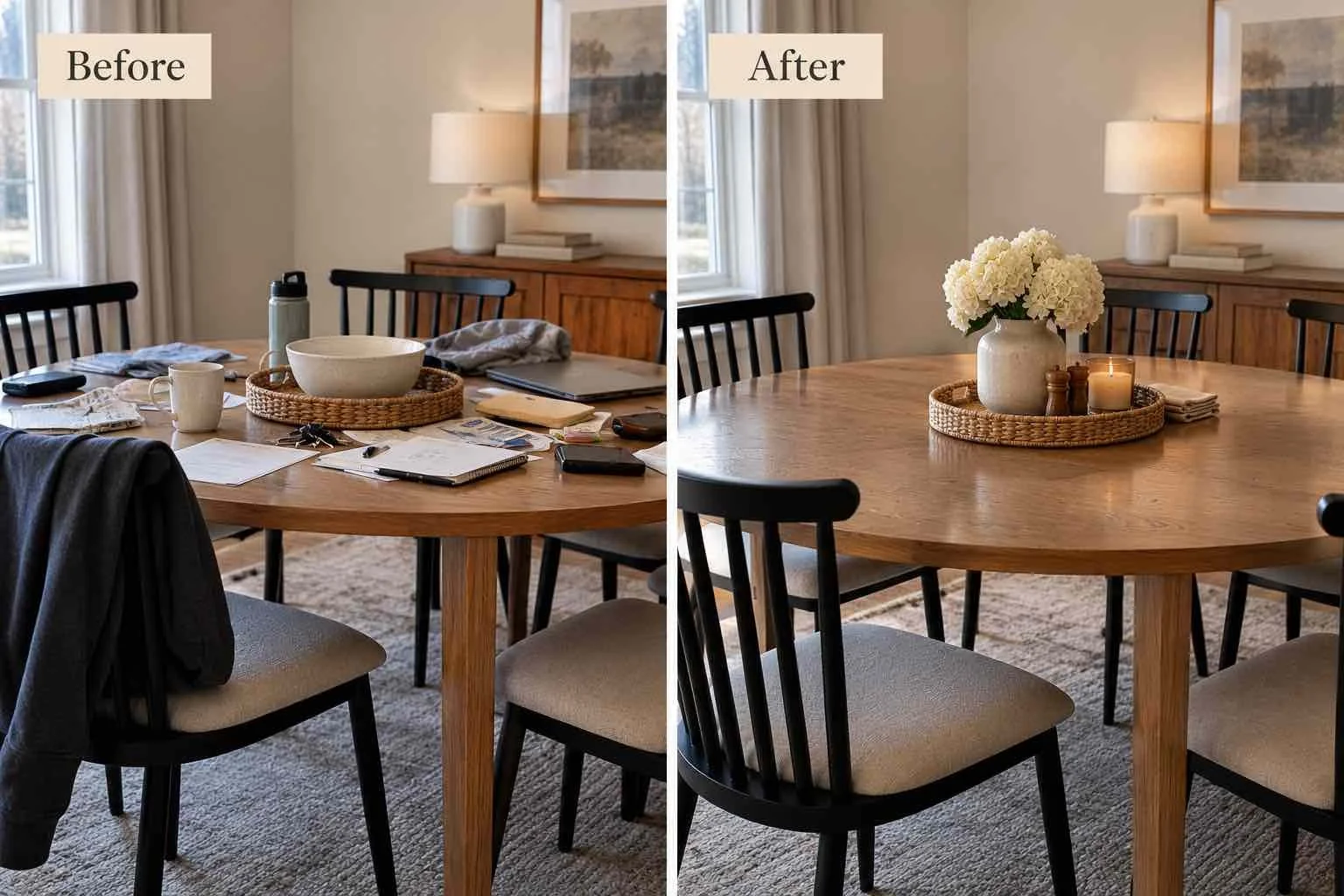
10. Declutter Flat Surfaces Before Buying Storage
Kitchen counters, dressers, desks, bathroom counters, dining tables and entry consoles tend to collect things. Before adding baskets or containers, ask what is actually supposed to live there.
Containers can sometimes turn temporary clutter into permanent storage. A tray on the counter can become a place where unrelated items settle for good. If something is on a surface because it is used daily, it may deserve a place there. If it is there because nobody decided where it goes, that is a different problem.
Storage works best when it solves a known problem. If you cannot name the problem, you probably do not need the container yet.
11. Finish One Small Area Before Opening Another
A single drawer, one shelf, one section of a counter or one closet category is a good unit of work. Opening several areas at once tends to spread temporary clutter across the whole room, which makes everything look worse before it looks better.
Finishing means the items you are keeping are back in place and the things leaving have somewhere to go. It does not mean you must complete the task in one sitting. You can stop after any finished area and pick up another time.
12. Give Items Leaving the Home a Clear Next Step
Items that are leaving need a destination, or they sit in bags in the hallway for months. Depending on the item, the next step might be:
donating it
recycling it where appropriate
selling it
returning it to another person
relocating it elsewhere in your home
Keeping something in secondary storage is also a valid choice if you want to hold on to it but not in active space. Options and requirements differ by location and item type, so check local guidance for anything that needs special handling.
Whichever route you choose, give it a clear spot and a loose plan, such as a bag by the door you will take with you next time you are out. Bags meant to leave the house should not become permanent hallway storage.
13. Make the New Arrangement Easy to Maintain
After you decide what stays, check whether the arrangement fits normal busy days:
Can everyday items be returned without moving something else first?
Can everyone in the household tell where things belong?
Are frequently used items easy to reach?
Is the system simple enough that it still works on a tired day?
A system with too many steps can be harder to maintain during normal busy days. If putting something away is harder than leaving it out, the item will end up out. Small adjustments, like moving a frequently used item to a more convenient spot, often do more than a full reorganization.
How to Declutter Your Home Without Doing Everything at Once
If you are wondering how to declutter your home without it taking over your life, a sequence like this keeps things manageable:
Choose one visible problem. Pick a single drawer, surface or category.
Remove obvious trash. Start with the no-decision items.
Relocate misplaced items. Return what belongs in other rooms.
Group what remains. Putting similar things together shows you what you have.
Identify duplicates and low-use items. Decide whether each one serves a purpose.
Decide what deserves prime space. Give easy-access spots to the things you use most.
Assign remaining items a practical home. Choose a place you will realistically use.
Finish the area before moving on. Return everything, and let the leaving items go to their next step.
You can stop after one area. There is no deadline and no required pace. Progress in one spot counts, even if the rest of the house stays as it is.
A Simple Declutter Checklist
A declutter checklist can help when you are stuck on a particular item. These are questions to consider, not rules, and not every question applies to every item.
Does this belong in this room?
Do I use it?
Does another item already do the same job?
Does it deserve easy-access space?
Is it broken or empty?
Am I keeping it because I actually need it?
Does it have a practical place to return to?
Is this category overflowing?
Would moving it elsewhere solve the problem?
Is this sentimental and better handled separately?
Use this decluttering checklist loosely. Sometimes one question settles it, and sometimes none of them fit. That is fine. The goal is to make the decision easier, not to add another step.
Decluttering Your Home Room by Room
Decluttering your home is easier when you focus on what each room needs. The notes below are short on purpose, since we have separate guides for detailed organization.
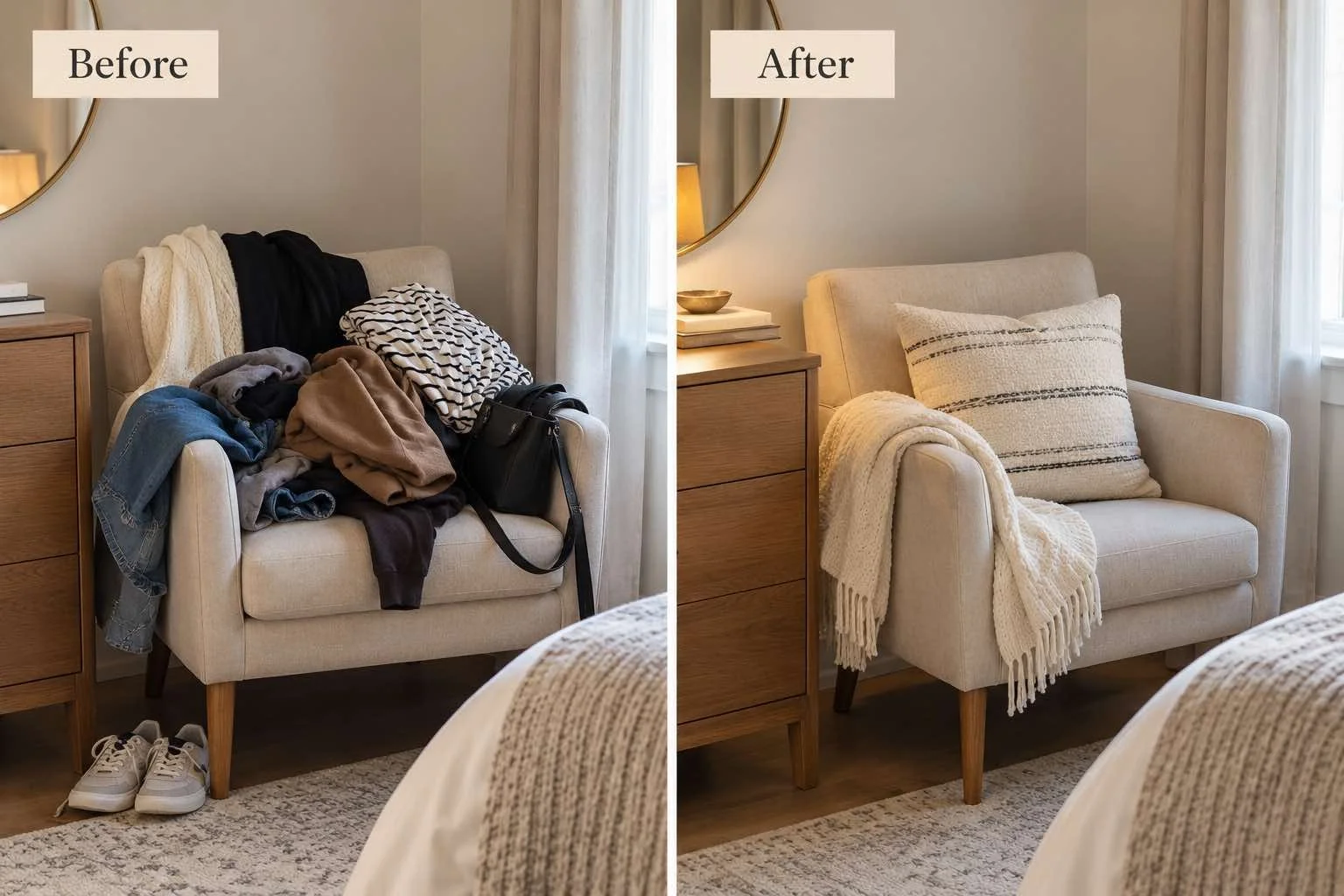
Bedroom
Bedrooms often collect clothing outside the closet, items on nightstands, laundry in progress and things that belong in other rooms. Start by returning misplaced items and checking which surfaces have become drop zones. A chair that holds clean clothes might mean you need a better place for them. For layout and storage ideas once you know what stays, see our small bedroom storage ideas.
Closet
Closets tend to hold overflowing categories such as bags, shoes and seasonal clothing, along with unused hangers. Look at which category is crowding the others and decide what deserves easy reach. Items worn rarely can move to less central spots. Our closet organization ideas go into the details of arranging what remains.
Kitchen
Kitchens collect counter items, duplicate tools, food-storage containers, packaging, rarely used appliances and backup supplies. Start with the counters and ask what actually needs to be there. Sort containers and tools by what you use, and move rarely used appliances to a less central spot. For help arranging what you keep, see our pantry and kitchen organization ideas.
Living Room
The living room is often where items from other rooms land, along with blankets, remotes, papers and sometimes toys. Surfaces such as the coffee table or side tables can become default drop zones. Returning misplaced items and deciding what lives in the room is usually enough to reset it. For more on arranging the space, see our small living room ideas.
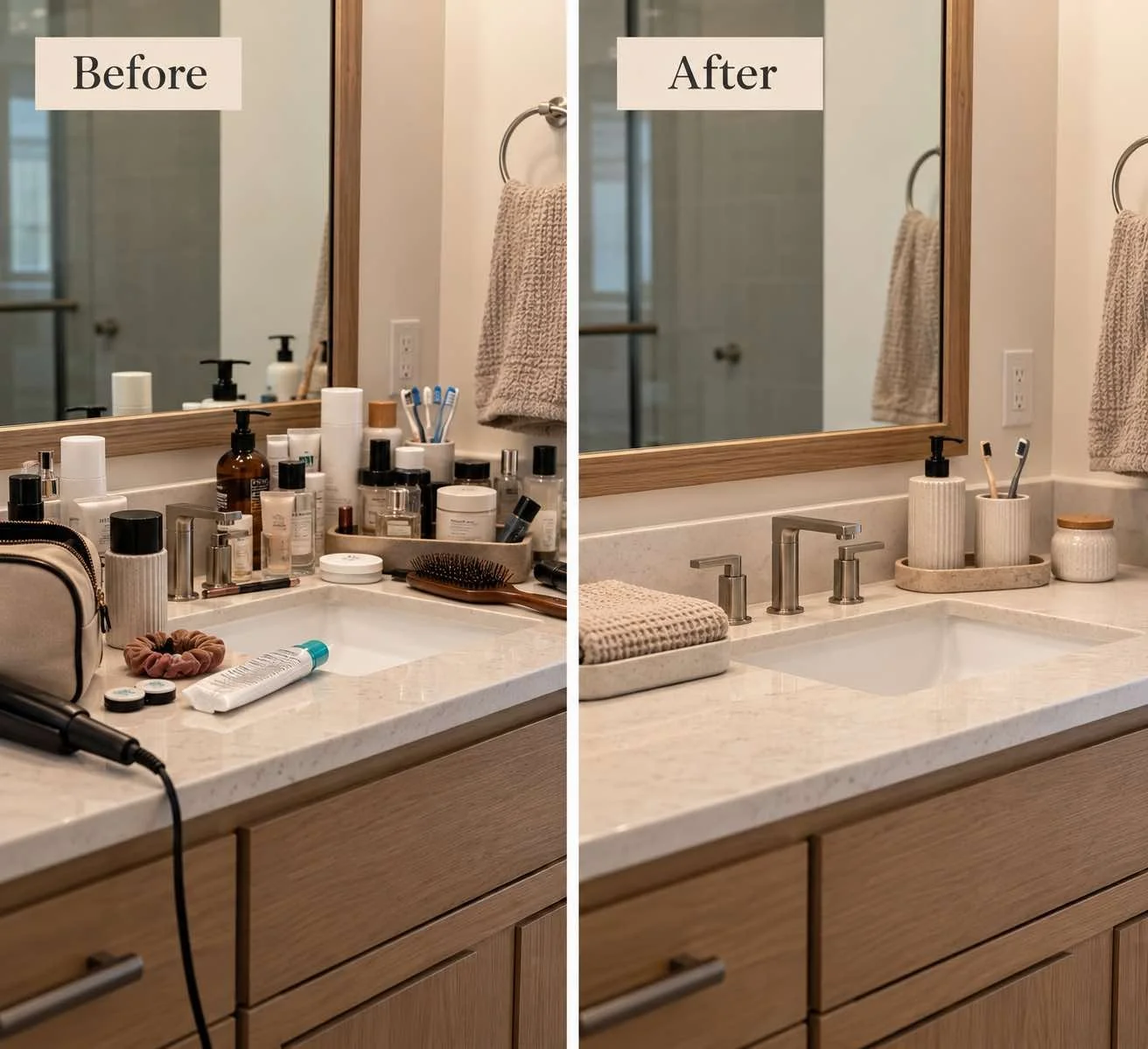
Bathroom
Bathroom clutter often comes from empty packaging, duplicates, backup products and items that have migrated onto the counter. Go through what is out and decide what you use daily and what can live in a drawer or cabinet. Keep it simple, and if you have questions about specific products, follow the product instructions or local guidance.
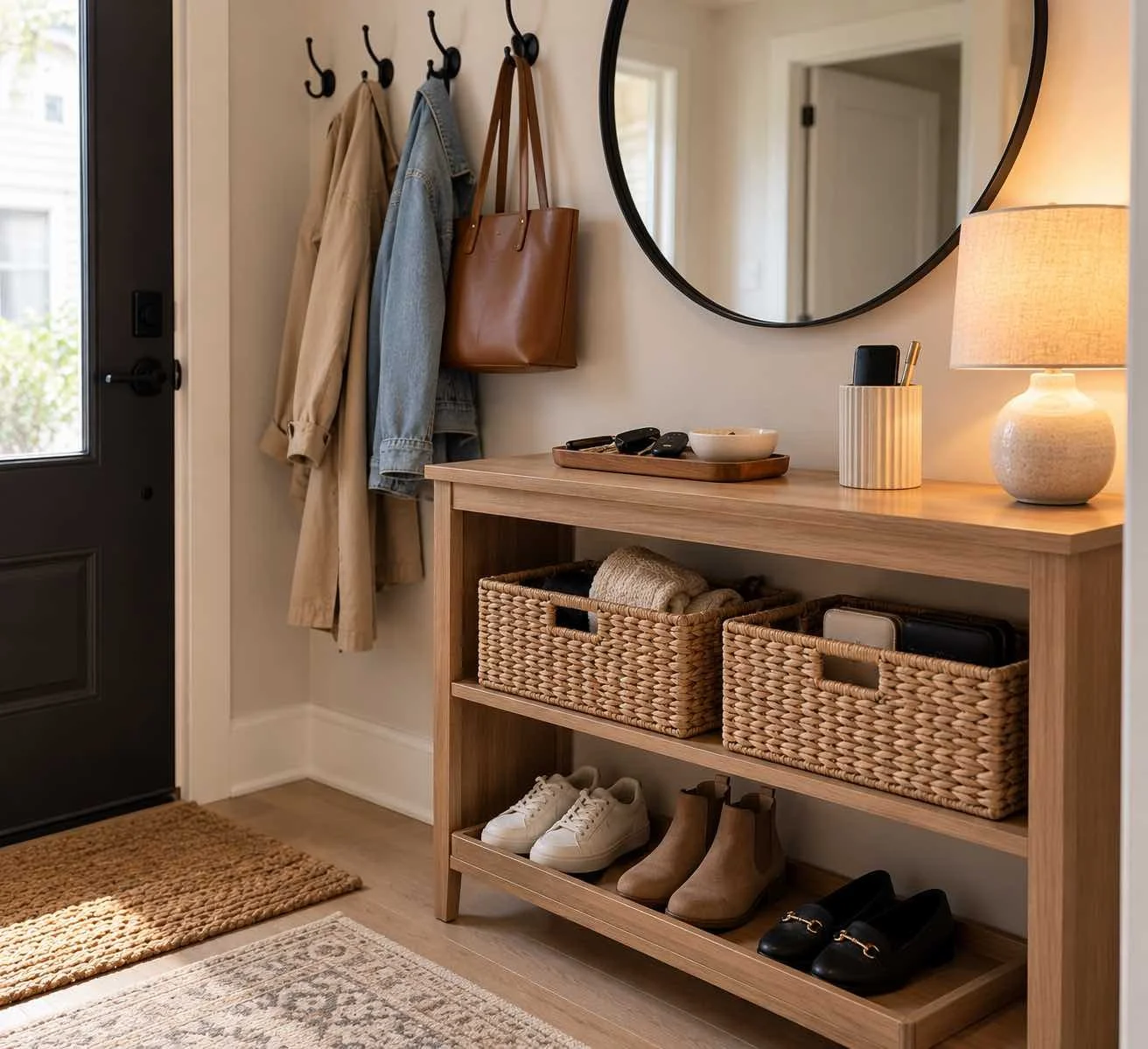
Entryway
The entryway is a transition zone, so shoes, bags, mail, keys, coats and items waiting to leave the house tend to gather there. It needs simple boundaries more than a complicated system. Decide what belongs at the door, such as keys, current-use shoes and a bag, and move the rest elsewhere. Items waiting to leave the house, like a return or a donation bag, should have a defined spot so they do not become permanent.
Decluttering Tips for Small Homes and Apartments
Clutter can become more noticeable sooner in a small home because surfaces are shared, rooms often serve several functions and walkways are easier to block.
A few ideas suit smaller spaces well:
Keep multi-use spaces resettable. If a dining table is also a desk, make it easy to return it to dining mode.
Limit backup supplies where storage is genuinely limited. Extra supplies are useful only if you have a place for them.
Move seasonal items out of prime zones. Keep everyday items closest and use less central storage for off-season things.
Avoid oversized organizers. A large organizer can consume floor space you need more than the storage.
If you rent, focus on arrangements that do not require permanent changes. Moving, grouping and editing what you own often helps more than altering the space itself. For more ideas, see our renter-friendly apartment ideas.
What Usually Makes Decluttering Harder?
A few common patterns can slow things down, and none of them mean you are doing it wrong:
starting too many areas at once
trying to organize before deciding what belongs
creating large “maybe” piles
buying containers too early
moving clutter from one room to another instead of resolving it
treating sentimental items like everyday objects
keeping outgoing donation or sell piles indefinitely
setting unrealistic expectations for what a lived-in home should look like
trying to make every decision immediately
If you recognize one or two, you can adjust. Narrowing the scope or setting sentimental items aside often helps more than pushing harder.
What to Do When You Do Not Know Where to Start
If you are unsure how to start decluttering, begin with the easiest decisions:
Obvious trash. Empty packaging, old flyers and broken items.
Obvious misplaced items. Things that clearly belong in another room.
One overflowing category. Pick a single category that keeps outgrowing its space.
One surface needed for daily life. Choose the counter, table or vanity you use most.
These steps are easier than emotionally difficult categories because they rely on practical questions rather than feelings. They also make the rest of the space clearer, which makes harder decisions less tangled up with the surrounding mess.
A Simple Decluttering Reset
A reset is a short routine for when the home starts to feel harder to use. You can do it whenever it makes sense for you; there is no required frequency.
Return misplaced items to their rooms.
Clear one main surface.
Remove empty packaging.
Reset shoes and bags.
Return clothing to where it belongs.
Handle incoming mail and papers.
Check one category that has started to overflow.
You do not have to do every step each time. Pick the ones that match what is bothering you.
Decluttering Works Best When Everyday Life Gets Easier
Decluttering is not about owning as little as possible. It is about making sure the space you have supports the way you live. Prime space works best for things you use often, and frequently used items deserve easy access.
Misplaced items are not automatically excess, and organizing makes more sense once you understand what belongs. Storage should solve an identified problem rather than a vague sense that something should be contained. A home can look lived-in and still function well. Small progress on one recurring problem is useful, and you can stop there.
If you would like more ideas for specific rooms, explore the rest of our organization guides on Lulonta.
