
Pantry and Kitchen Organization Ideas That Actually Work (Even in Small Spaces)
If you've ever opened a pantry door and had a box of crackers tumble out, or bought a second jar of cumin because you couldn't see the one hiding behind the flour, you already know the real problem isn't how much stuff you have. It's how hard that stuff is to see and reach.
The good news is that solving this doesn't require a full kitchen renovation or a Pinterest-perfect pantry room. A handful of well-placed organizers, some intentional grouping, and a little planning can turn a chaotic cabinet into a space that actually works for how you cook and shop. Below are practical pantry organization ideas and kitchen organization ideas you can adapt to whatever space you're working with, from a single narrow cabinet to a walk-in pantry.
Start With Zones, Not Just Storage
Before buying anything, it helps to think in zones rather than individual containers. Group items by how you use them: baking staples together, snacks together, breakfast items together, and so on. This is the foundation of most successful kitchen organization hacks, because it means you're not hunting through unrelated items to find what you need.
Once you know your zones, measure your shelves, drawers, cabinet interiors, and under-sink spaces. It's a simple step that's easy to skip, but it saves you from ordering an organizer that's a half-inch too tall for your shelf or too shallow to hold what you actually own.
Quick note: This post includes affiliate links. If you buy something through my links, I may earn a small commission — no extra cost to you, ever. It's one of the ways I keep Lulonta going, and I truly appreciate your support!
How to Organize Deep Pantry Shelves
Deep shelves are one of the most common sources of pantry clutter. Items at the back get forgotten, duplicates pile up, and smaller packages vanish behind bulkier ones.
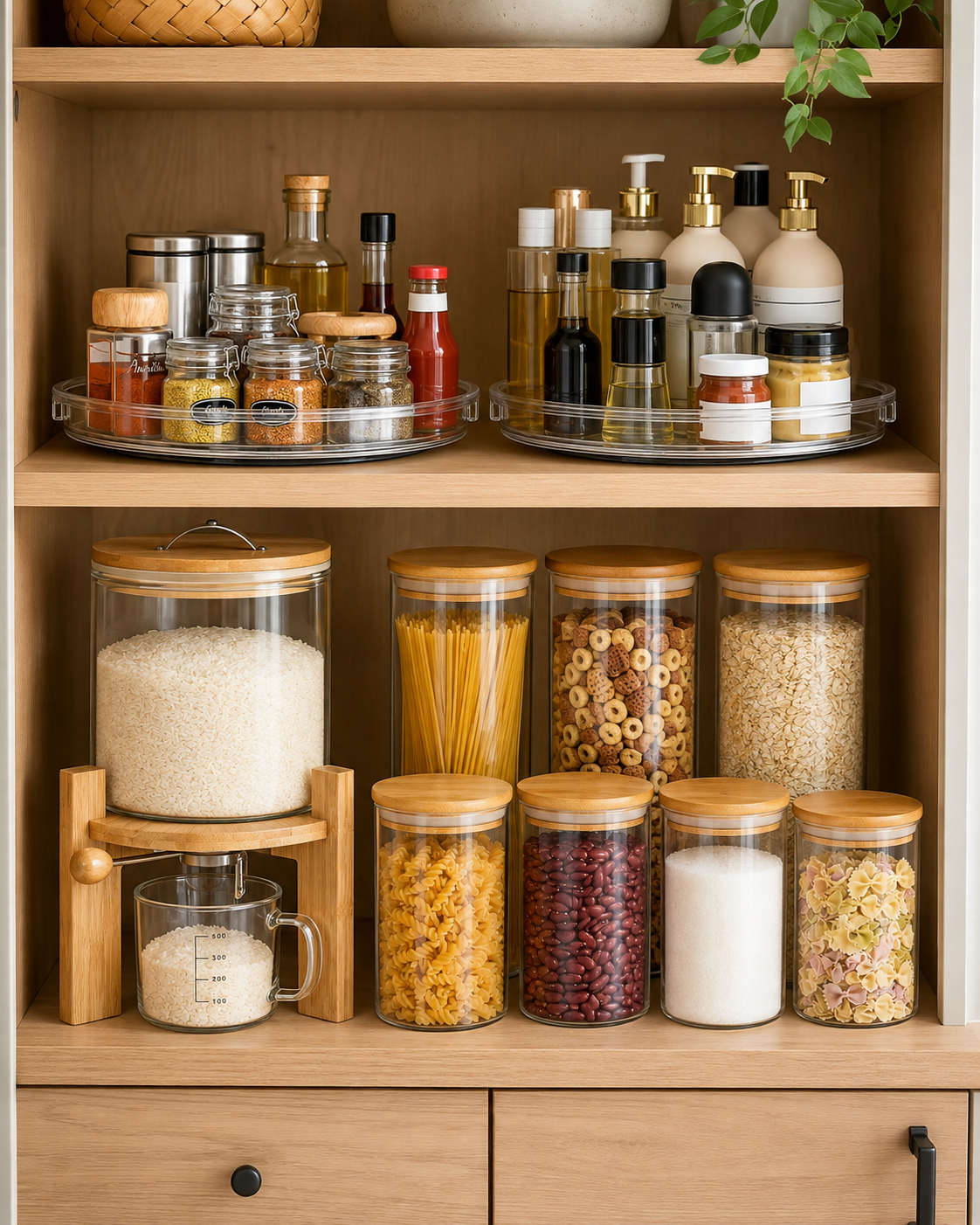
Turntables and lazy susans are one of the simplest fixes for this. A round turntable lets you spin the shelf instead of reaching blindly into the back, which is especially useful for oils, condiments, canned goods, or spice jars that would otherwise get buried. A set of rotating turntable organizers for deep cabinet shelves, available in a few sizes, lets you match the turntable to the depth of the shelf rather than using one oversized option everywhere. Smaller turntables work well for corner cabinets, while larger ones suit a main pantry shelf.


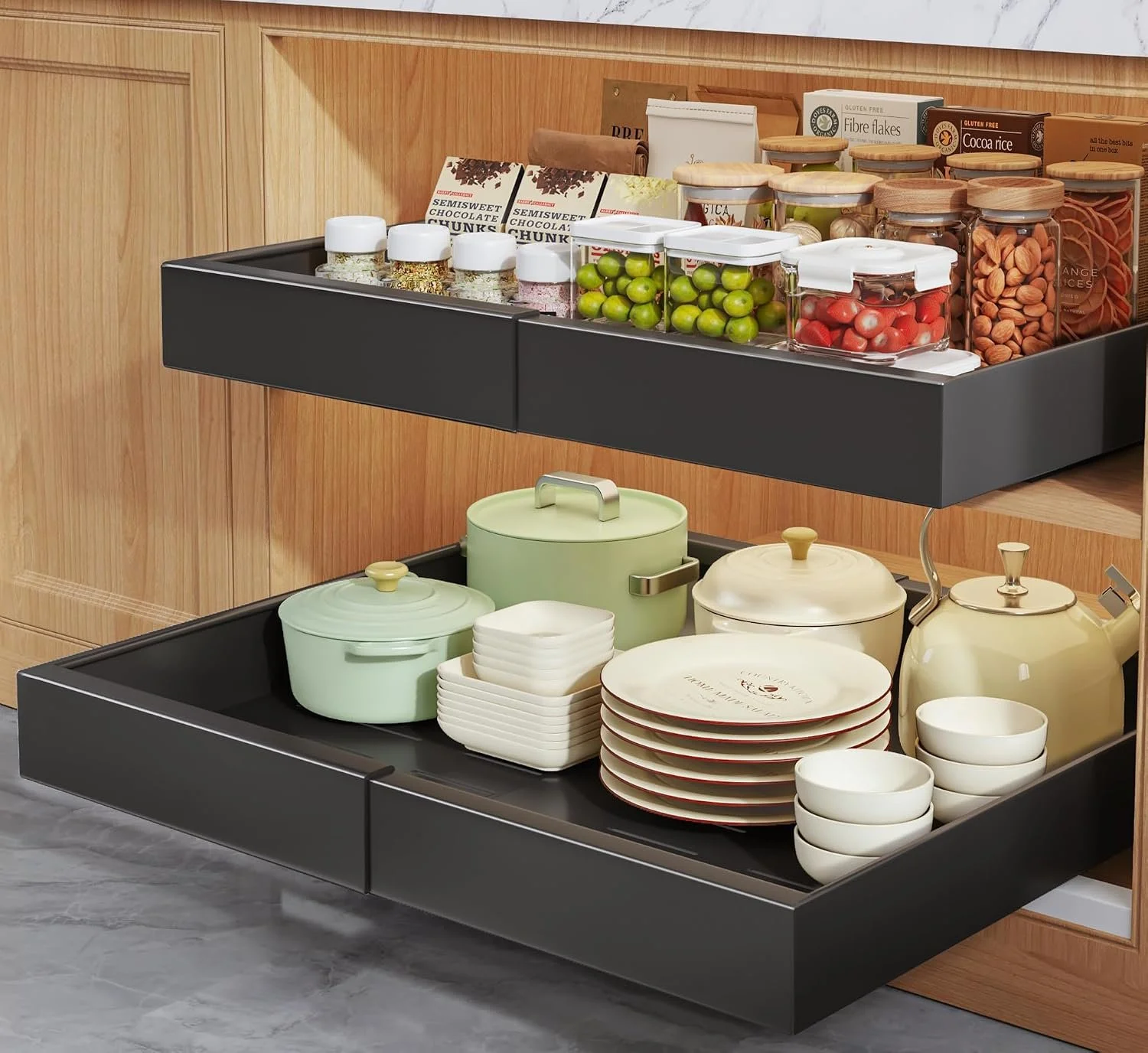
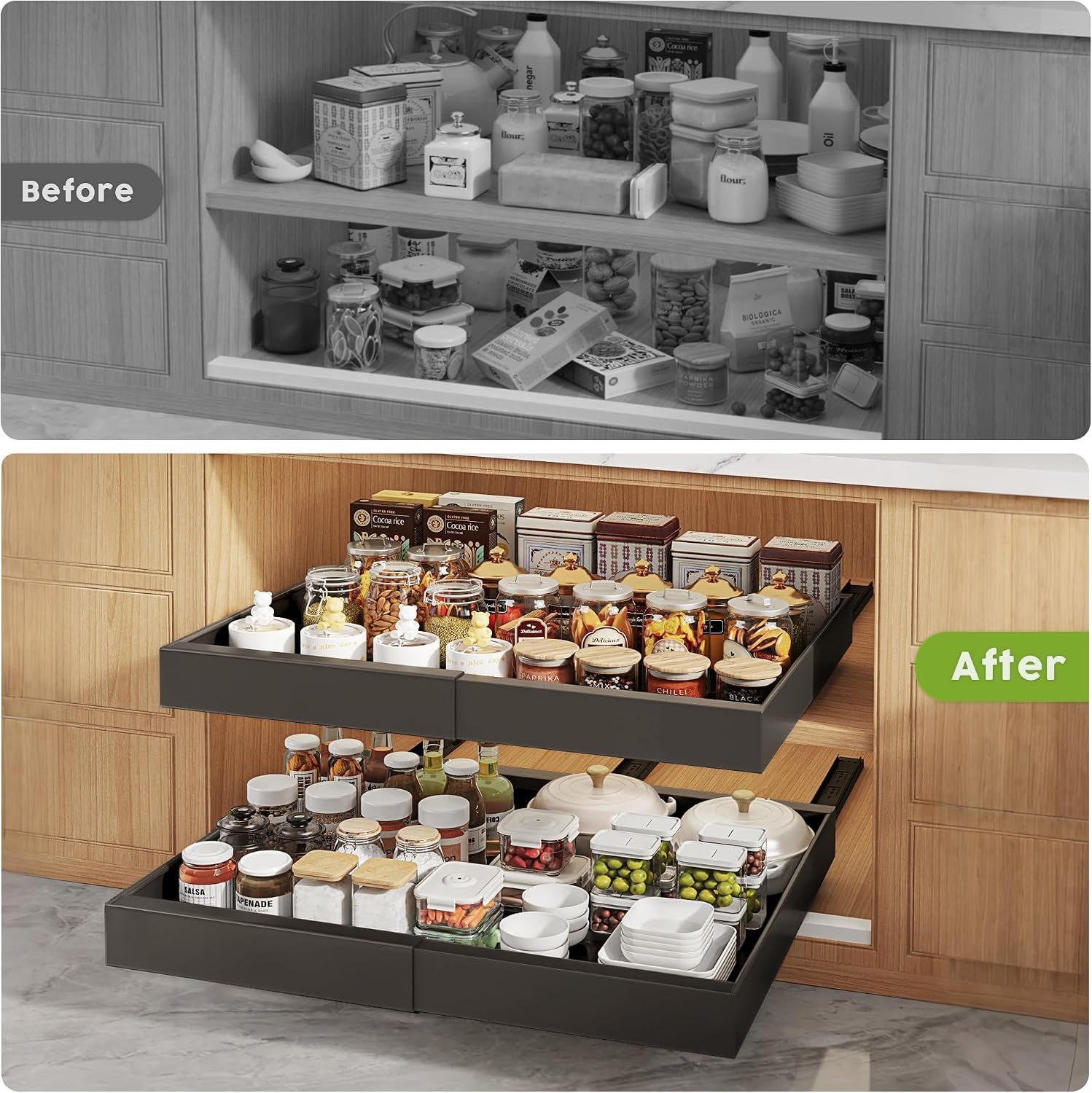
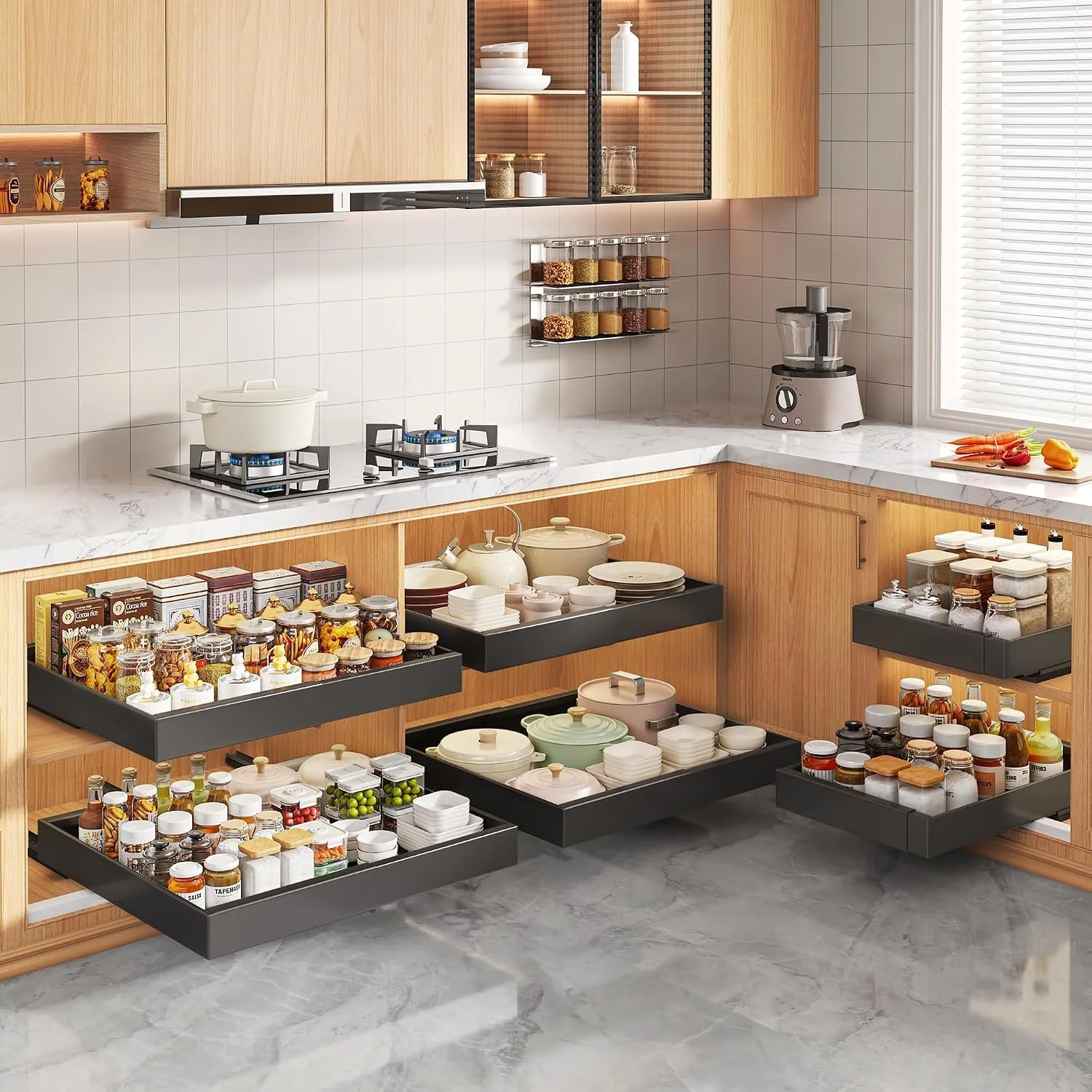
Pull-out shelves solve the same problem in a different way. Instead of turning the contents, you slide the whole shelf toward you. Slide-out cabinet organizers for deep, hard-to-reach shelves are worth considering for base cabinets or lower pantry shelves where bending and reaching to the back is uncomfortable. These typically mount with adhesive or hardware, so it's worth checking your cabinet's depth and width before installing to make sure the slide-out tray fits properly and still allows the door to close.
Small Pantry Organization Ideas for Limited Space
Not every kitchen has a walk-in pantry, and small pantry organization ideas often come down to using vertical space and stackable storage rather than trying to add more square footage.
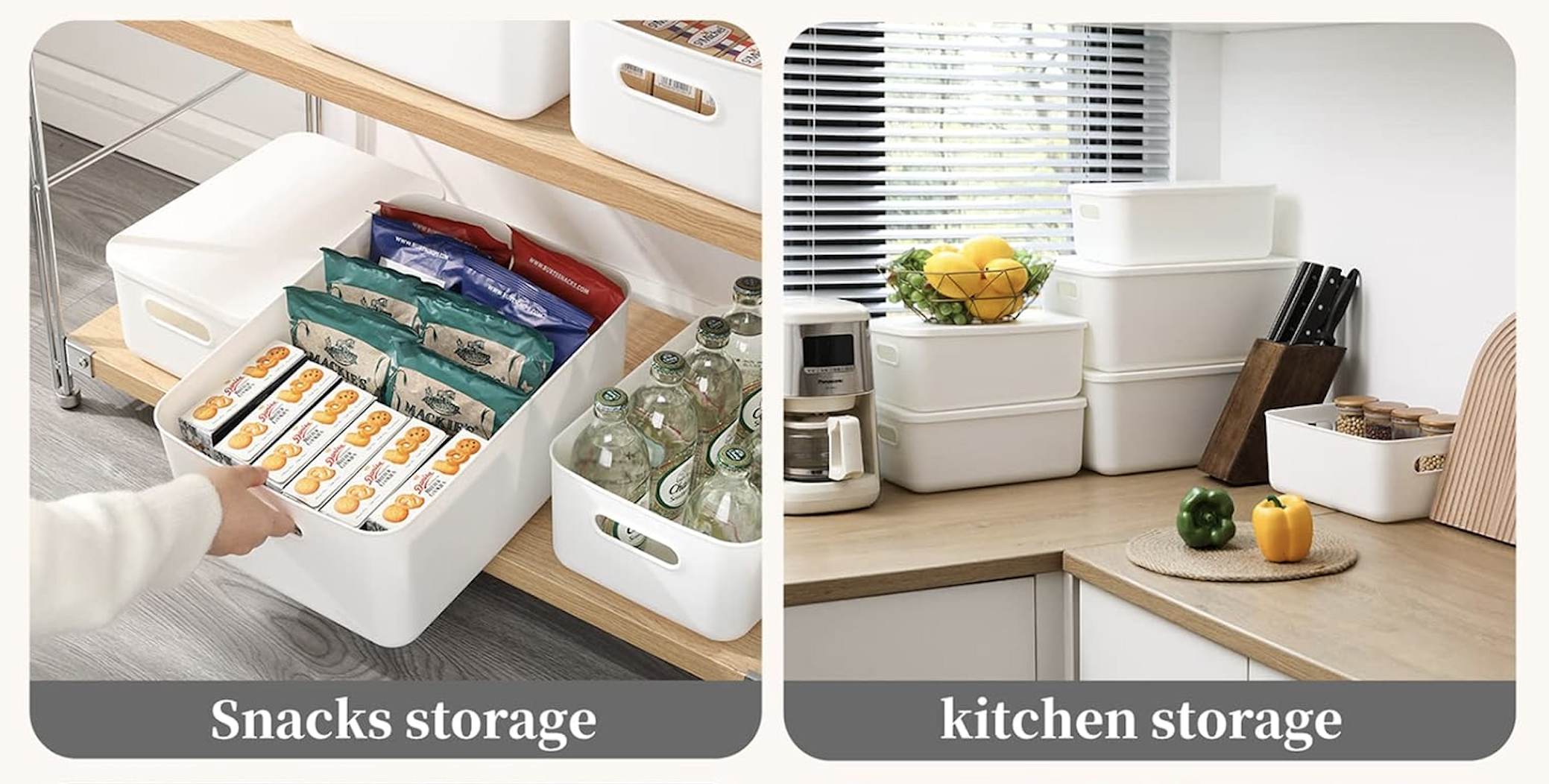
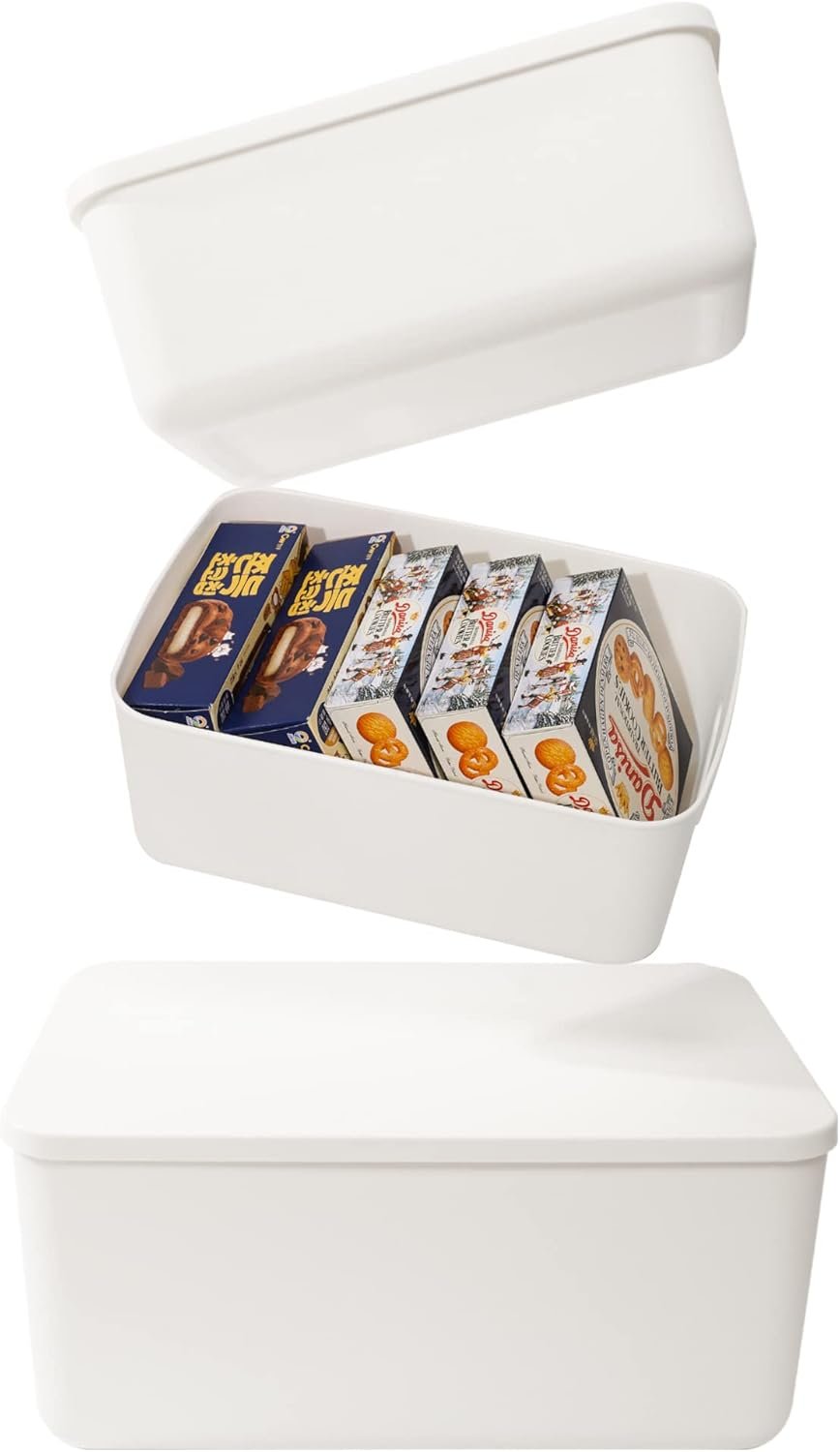
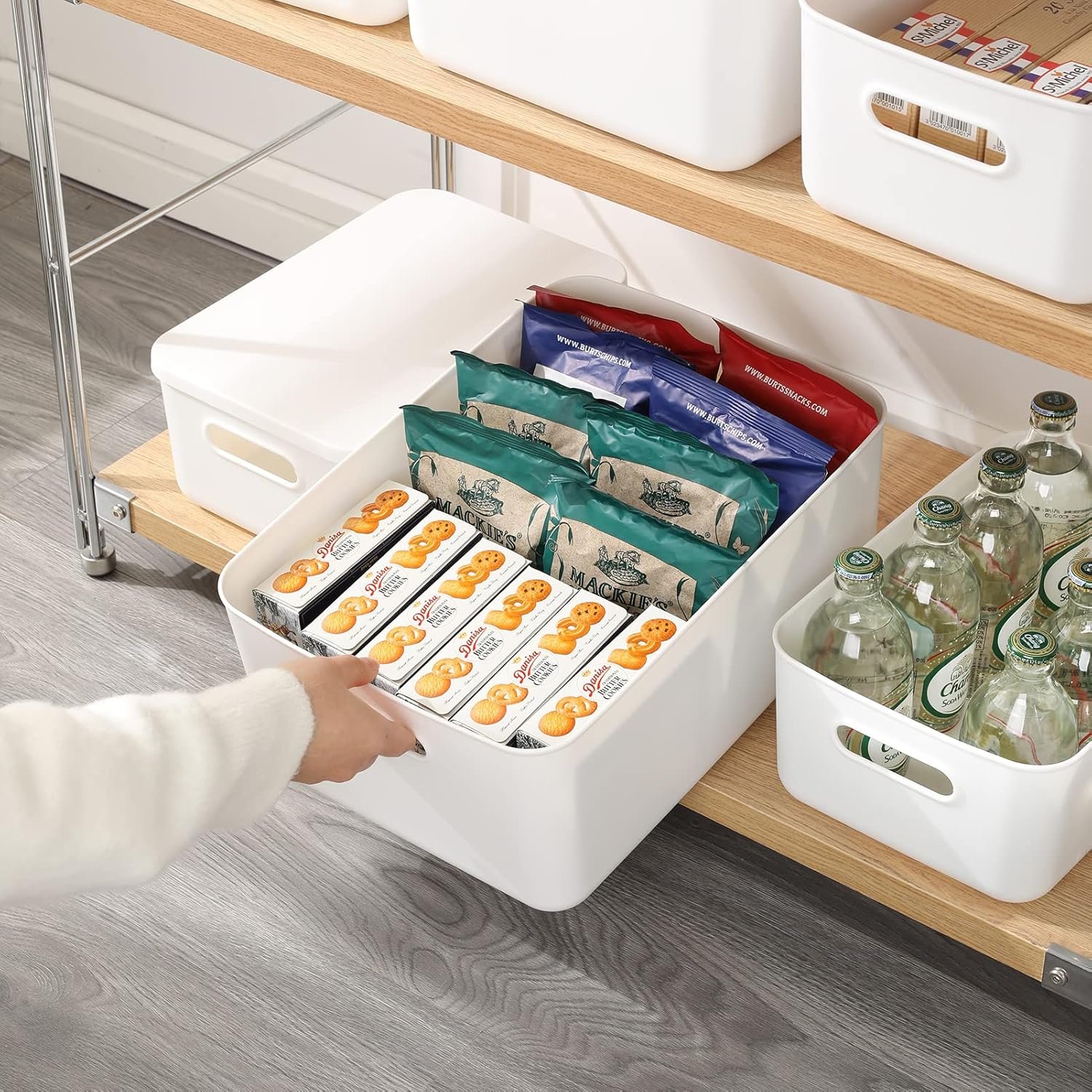
Stackable bins with lids are a good starting point for a small pantry because they let you build upward instead of spreading items across limited shelf width. Stackable storage bins with lids for pantry shelves and cabinets can hold snack bags, smaller packaged goods, or loose items that would otherwise slide around on an open shelf. Because they stack, they also make it easier to use the vertical space above shorter items without wasting it.
If your kitchen is part of a small rental, these renter-friendly apartment ideas include more ways to use limited space without permanent changes.
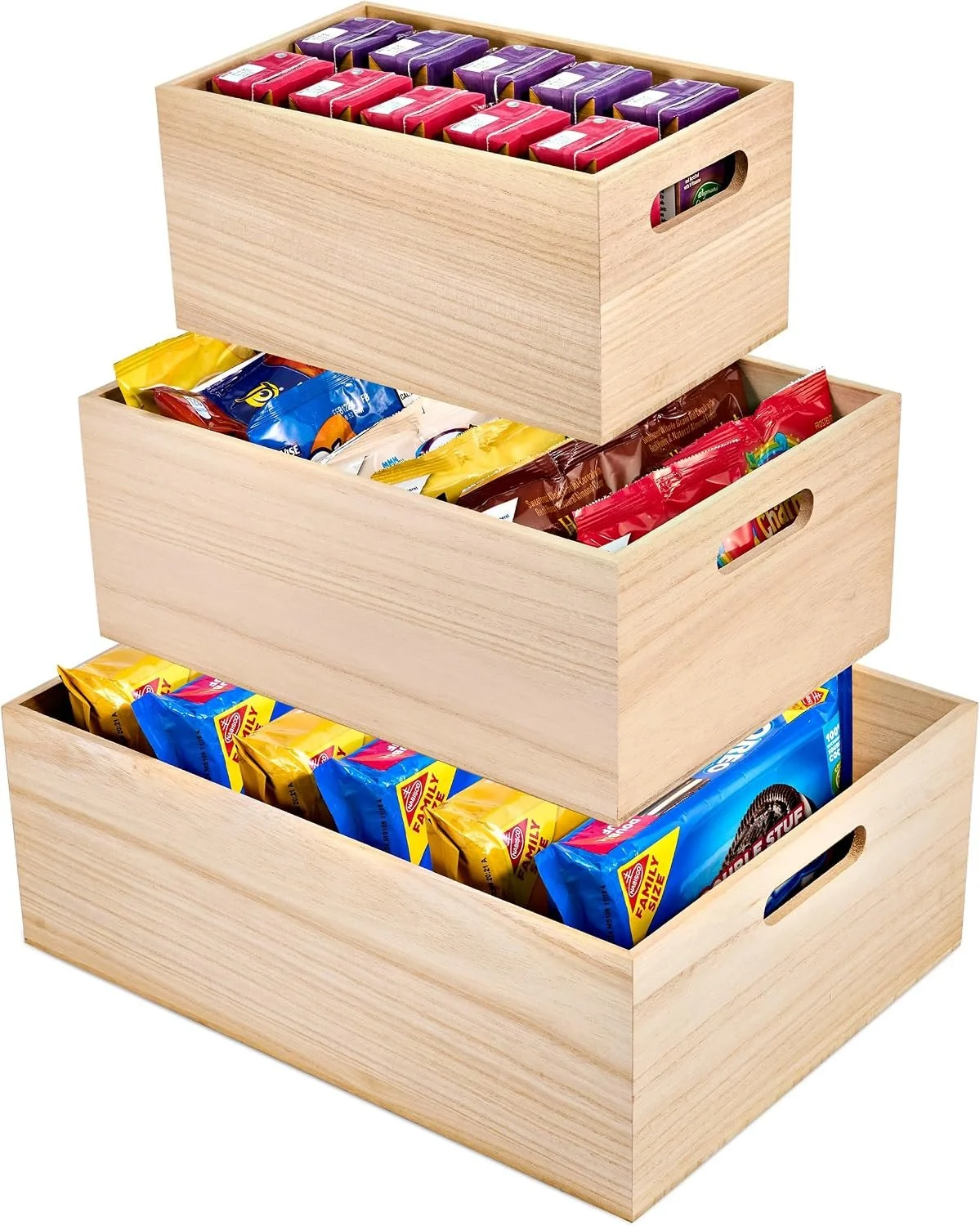
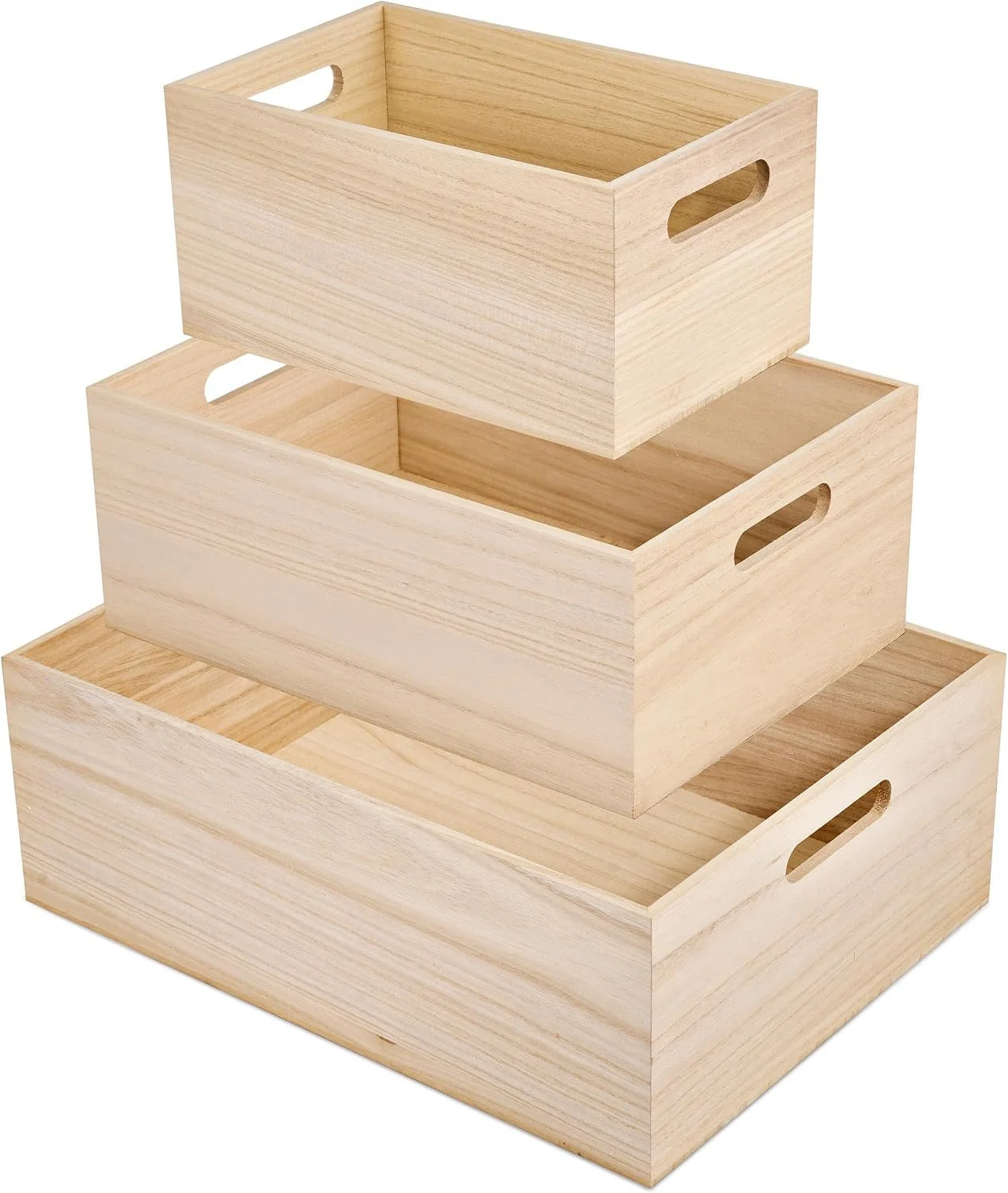
For crafts overflow, extra pantry goods, or items you don't need to see at a glance, unfinished wooden storage boxes for pantry or craft organization offer a simple option. Since they're unfinished, they can be painted or stained to match your kitchen, which is useful if you want closed storage that still looks intentional on an open shelf rather than purely utilitarian.
Making Grains, Rice, and Dry Goods Easier to Manage
Dry goods like rice, flour, and cereal create a specific kind of clutter: bags that don't stand up well, twist ties that come loose, and no easy way to tell how much you have left.
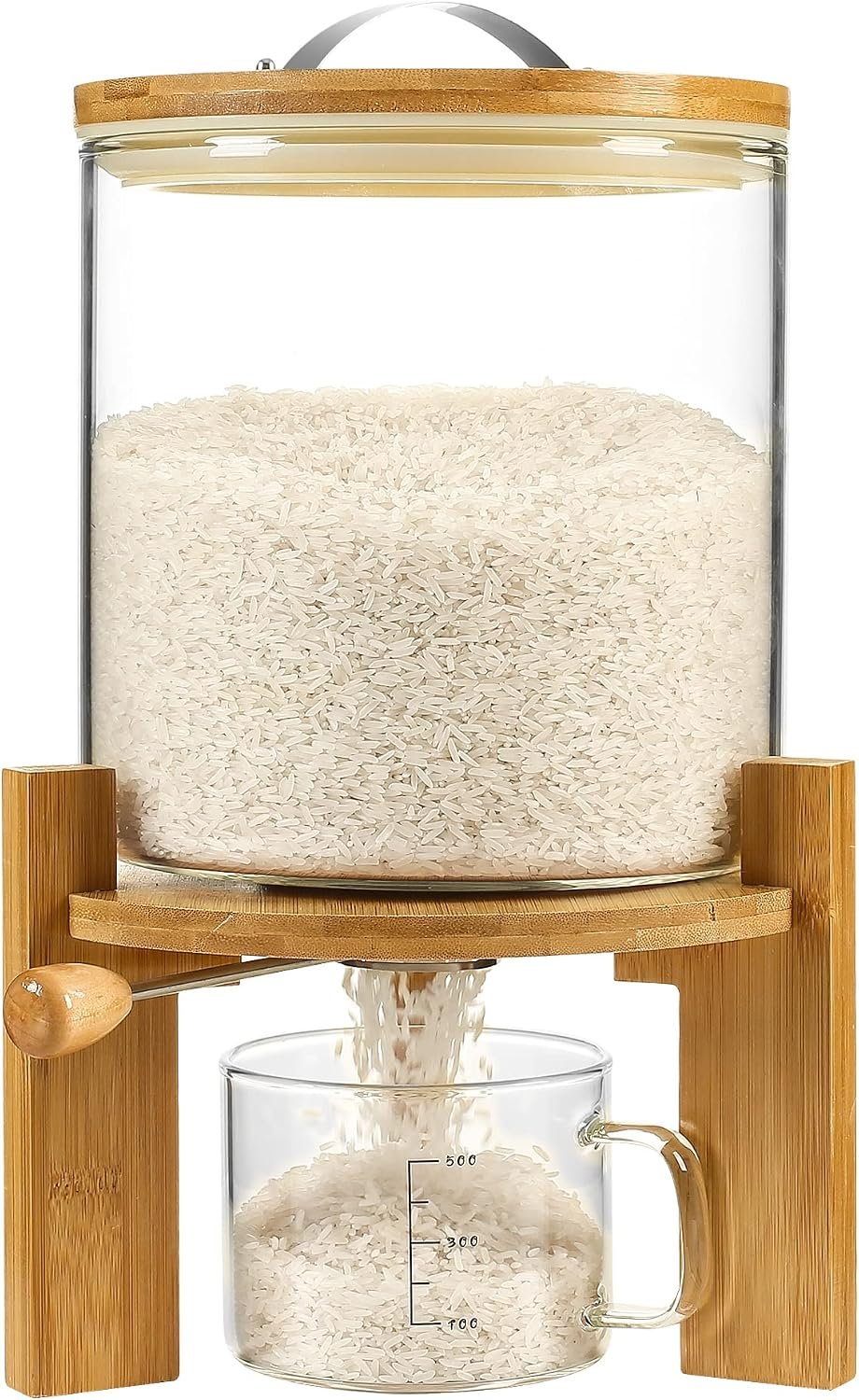
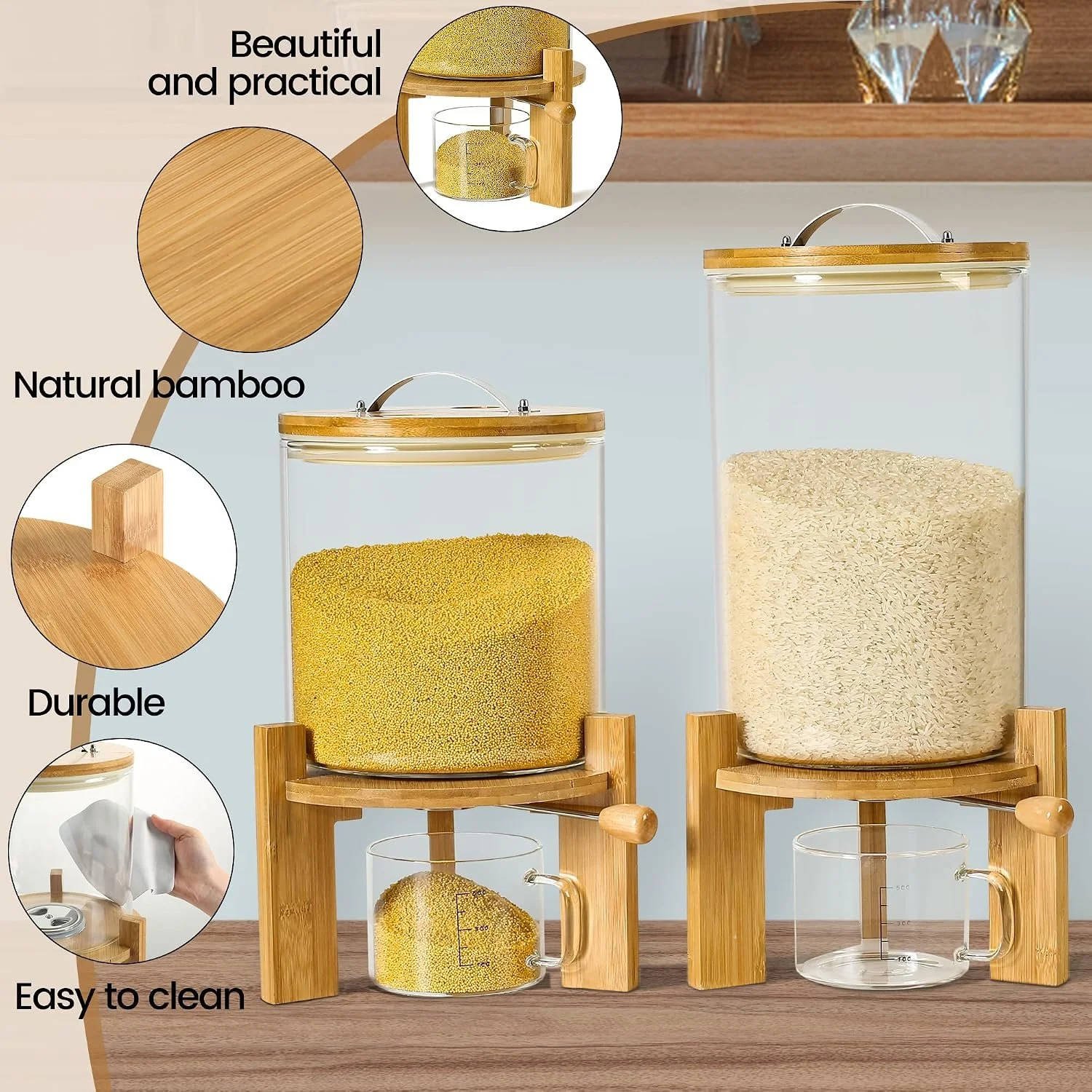
A glass rice dispenser with a measuring cup for grains and dry food addresses this directly. Rather than digging a cup into an open bag, a dispenser with a spout lets you portion out exactly what you need, which is particularly useful for households that cook rice or grains regularly. Because it's glass, you can see remaining quantity at a glance, which also helps with building a shopping list before you run out completely.
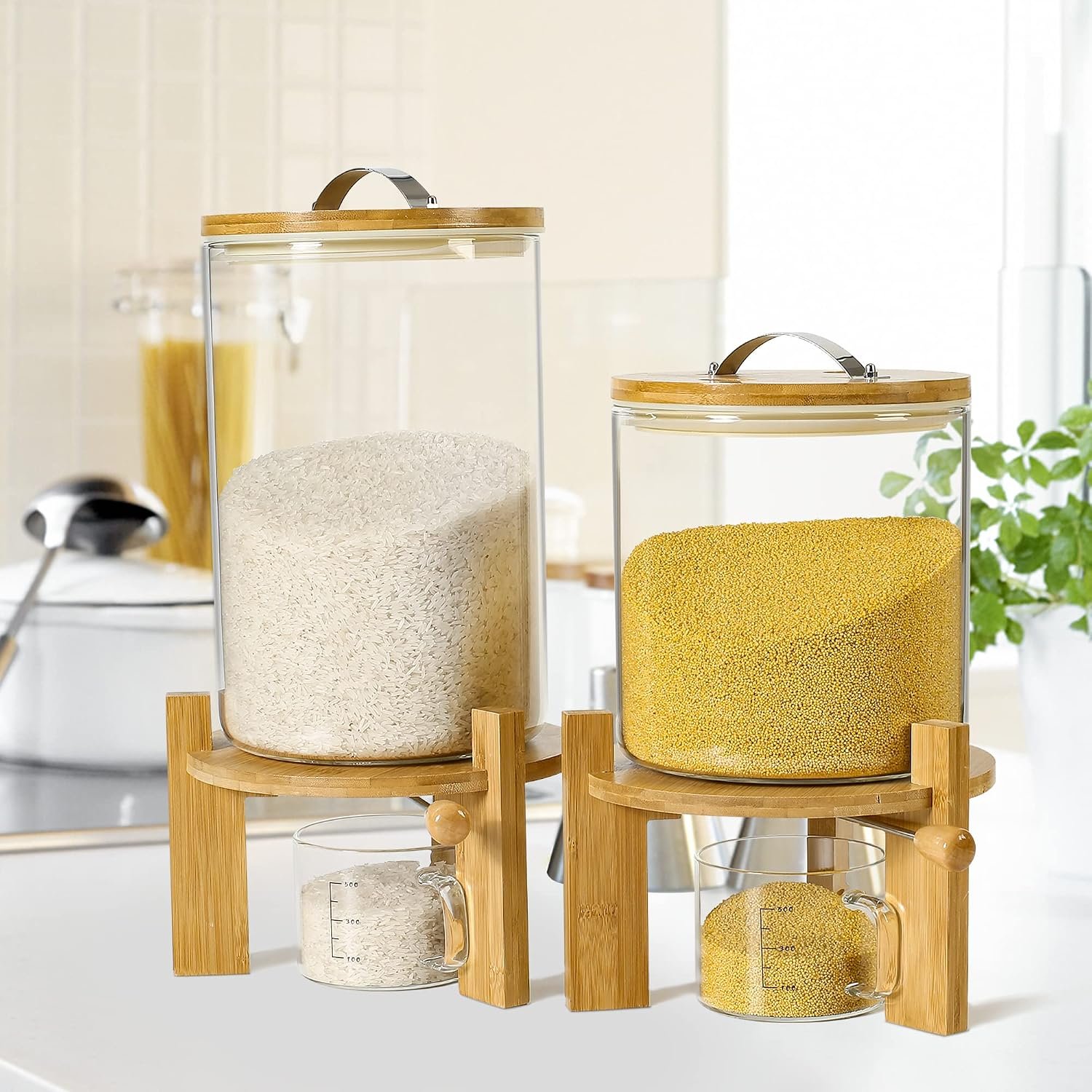
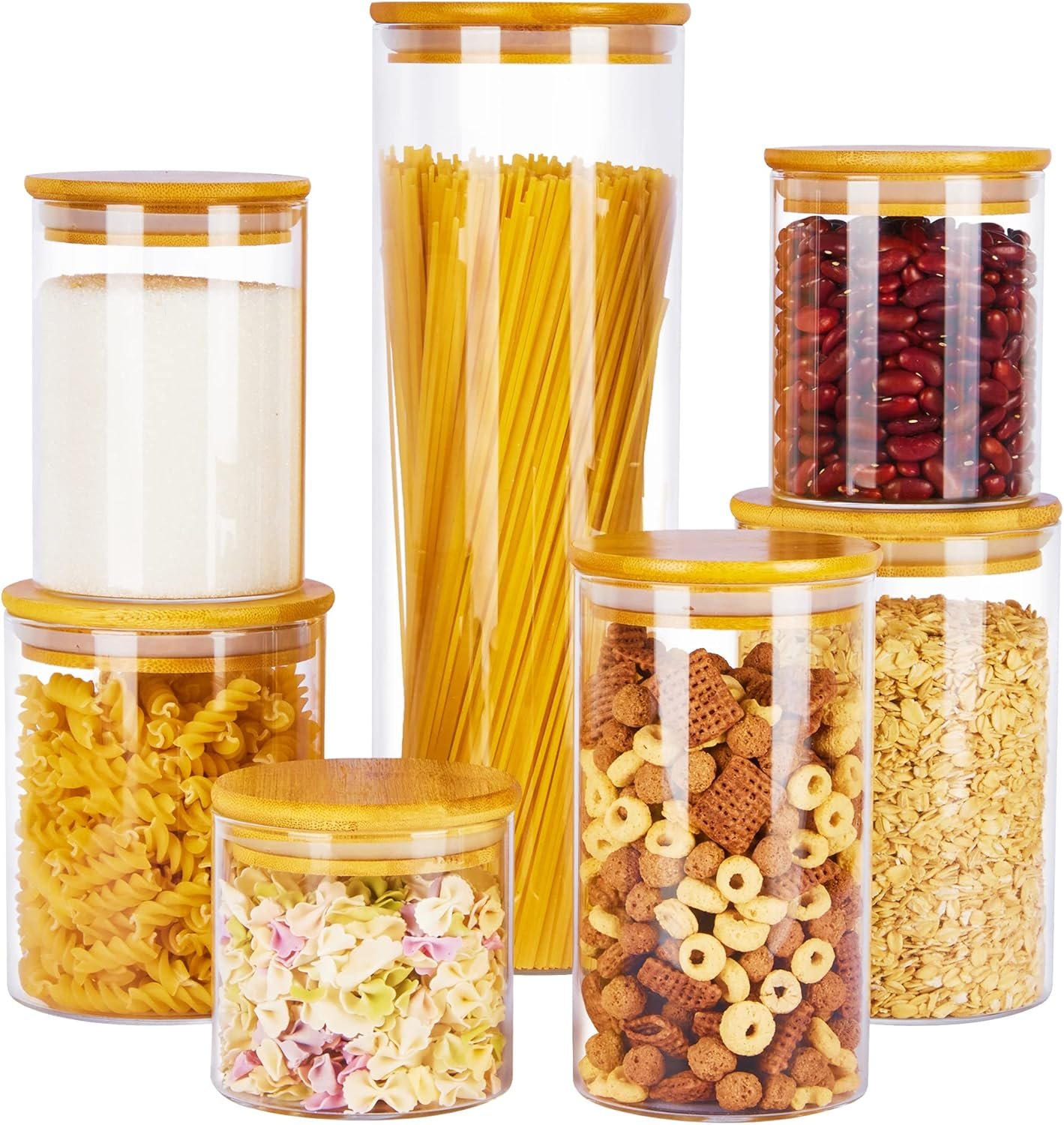
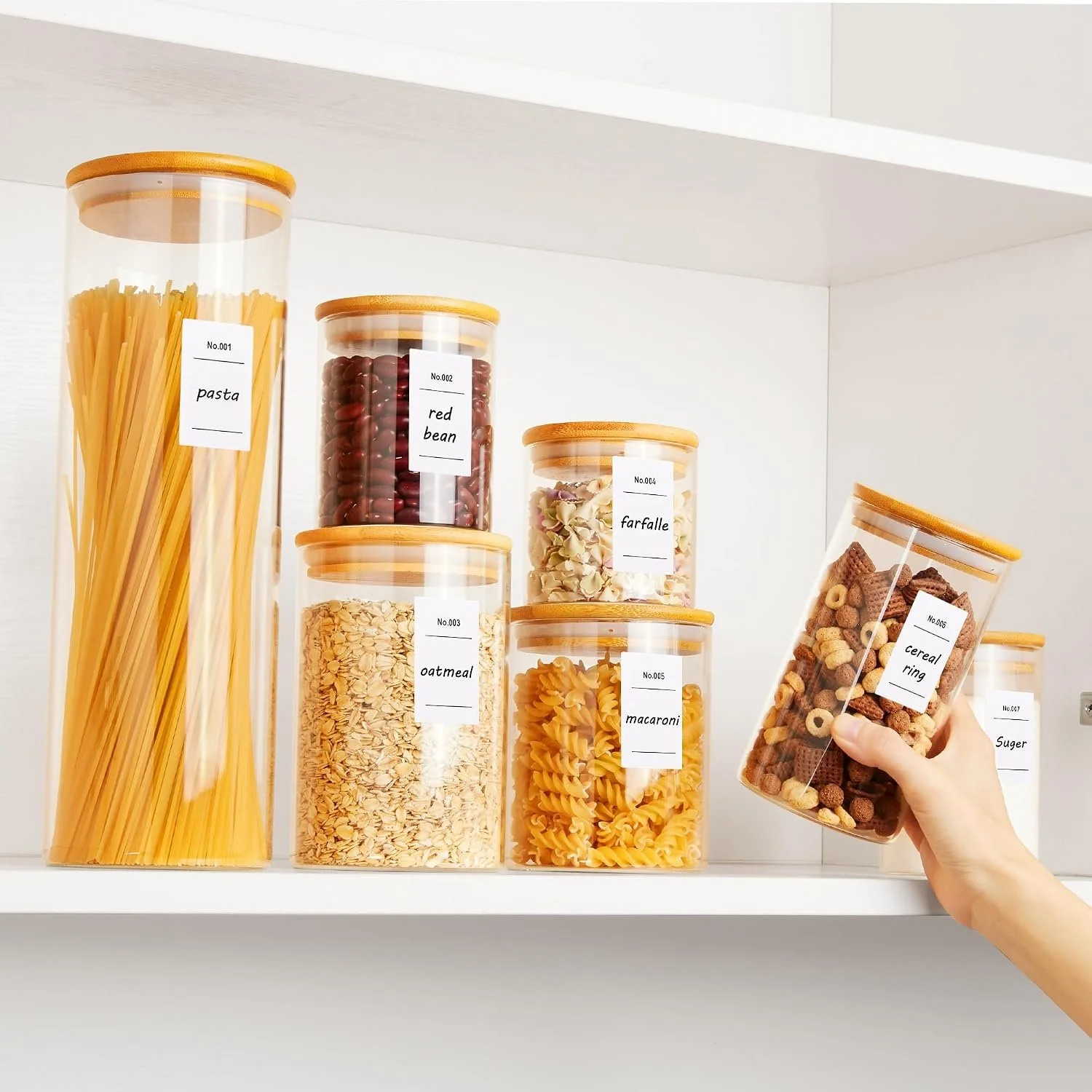
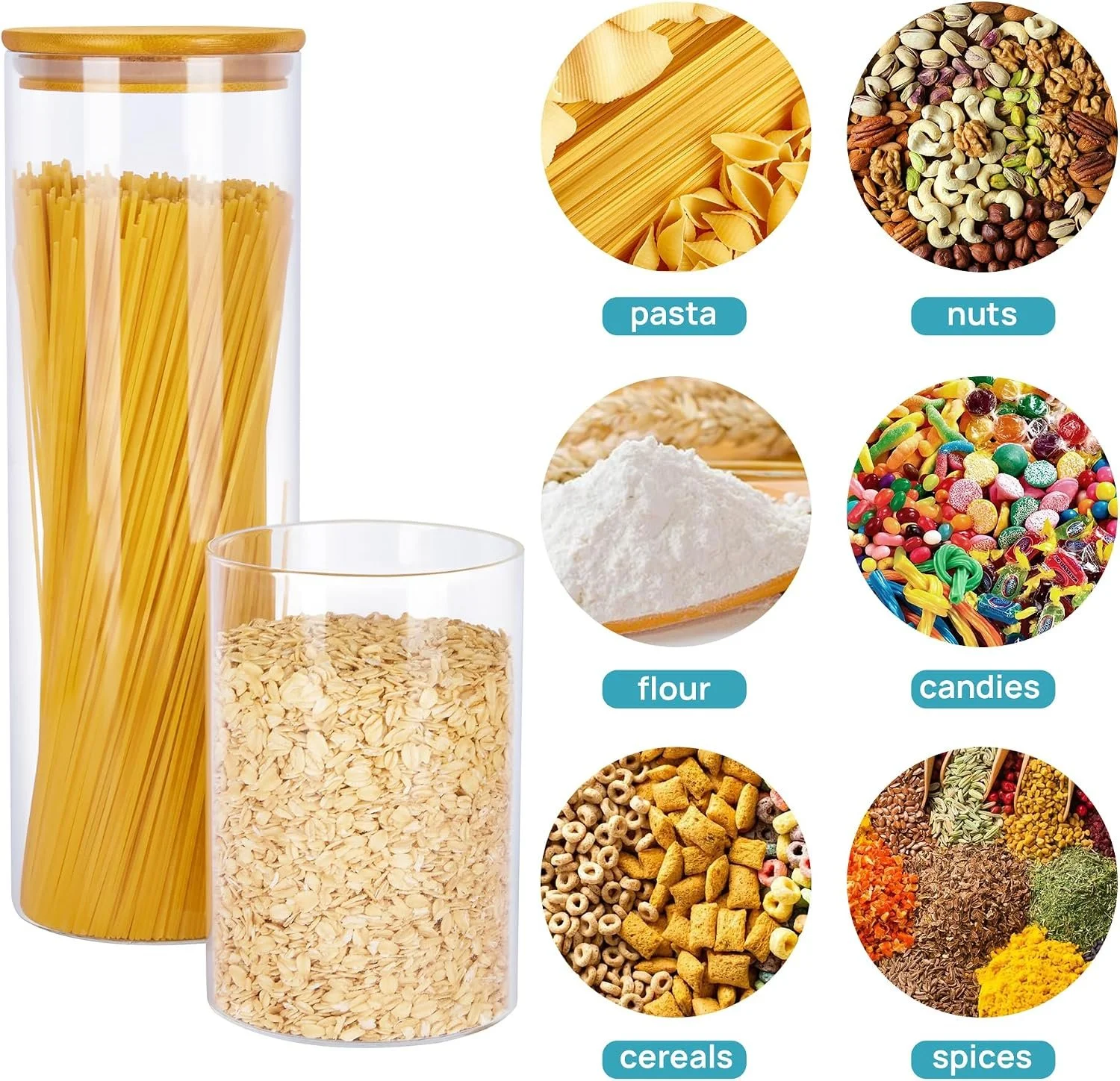
For a wider range of dry goods, airtight glass storage jars with wooden lids for pasta, cereal, and baking staples work well as a full pantry system. Keeping items like pasta, flour, sugar, and cereal in matching airtight containers does two things: it keeps food fresher for longer by limiting air exposure, and it creates a consistent visual line on the shelf, which makes it much easier to scan the pantry and see what's running low.
Spice Organization That Doesn't Take Over a Shelf
Spice organization tends to fall into two categories: drawer-based or shelf-based, and the right approach depends on your kitchen's layout.
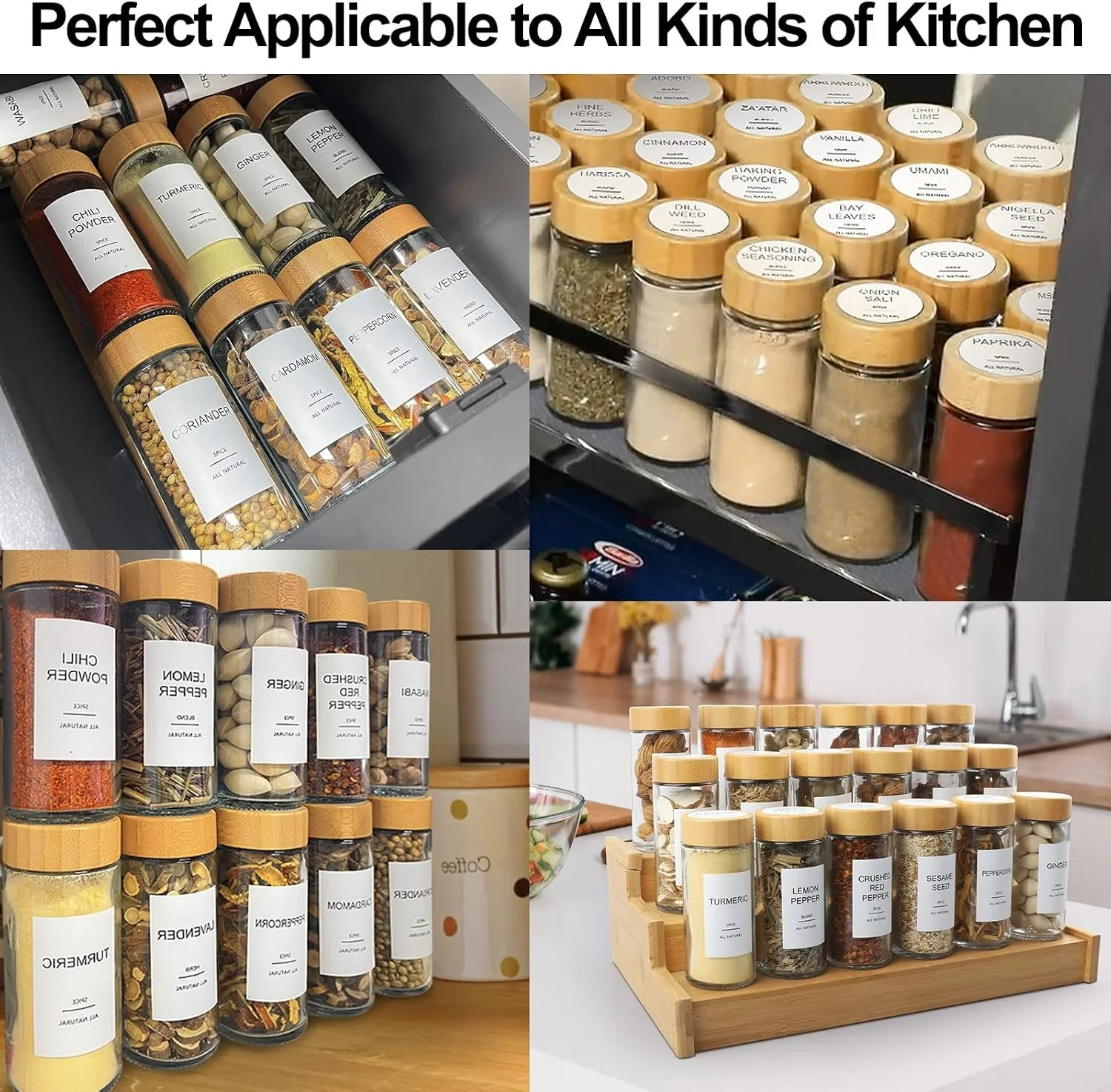
If you have a shallow drawer near the stove, a spice drawer organizer tray for kitchen cabinets can hold jars upright in slanted rows so you can read labels from above instead of digging through a jumbled drawer. This works best when paired with uniform containers, since mismatched jar heights can leave gaps or make the tray less efficient.
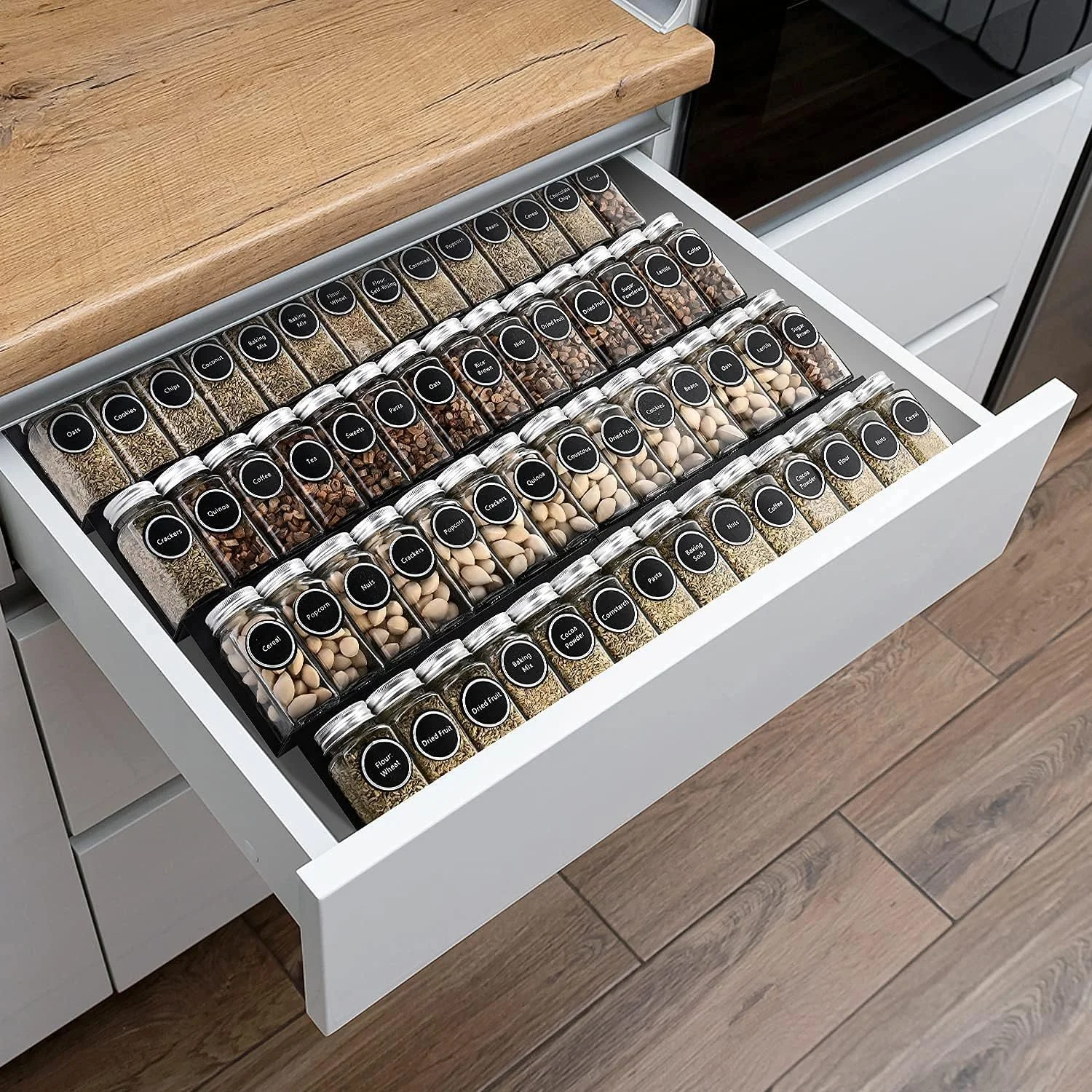
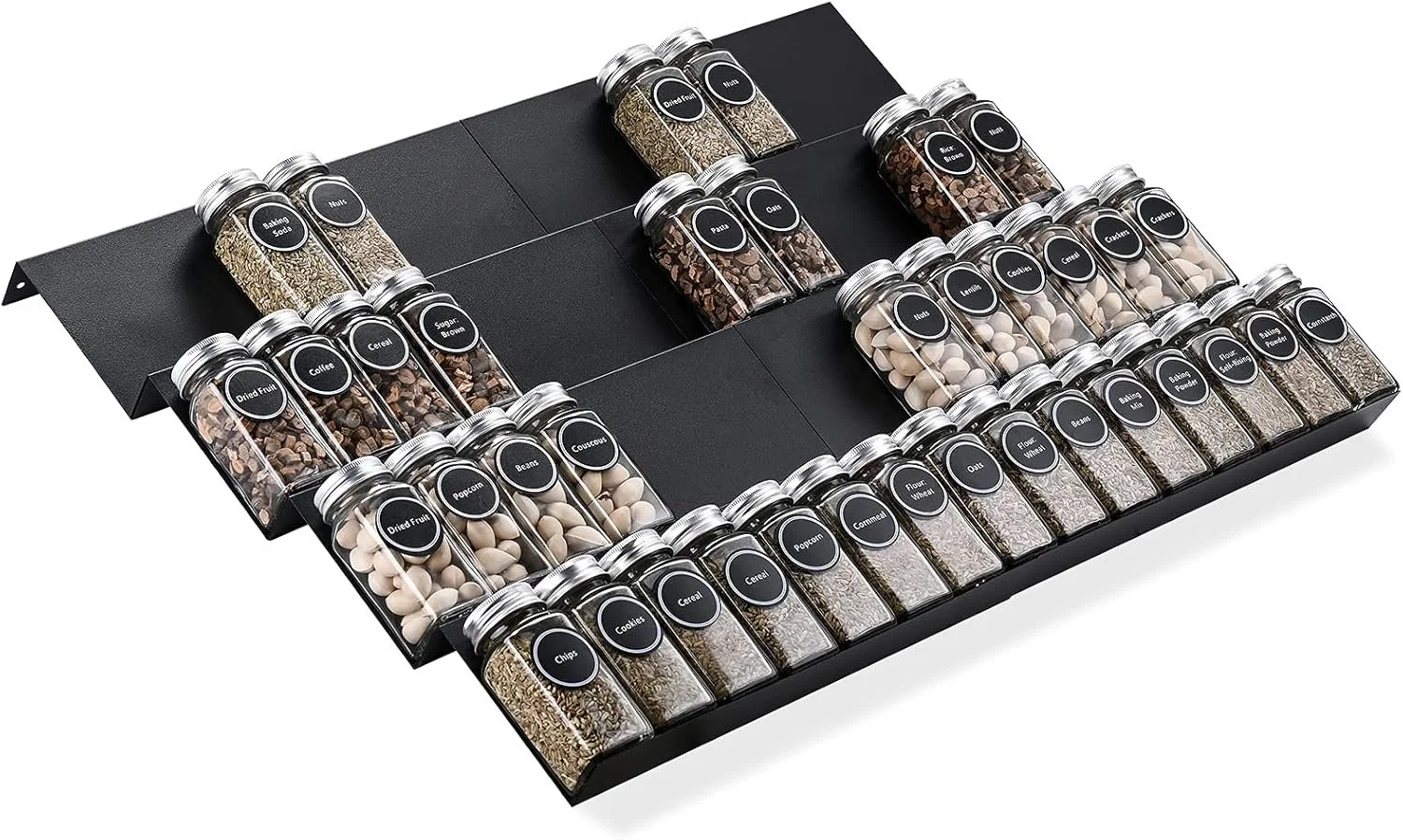
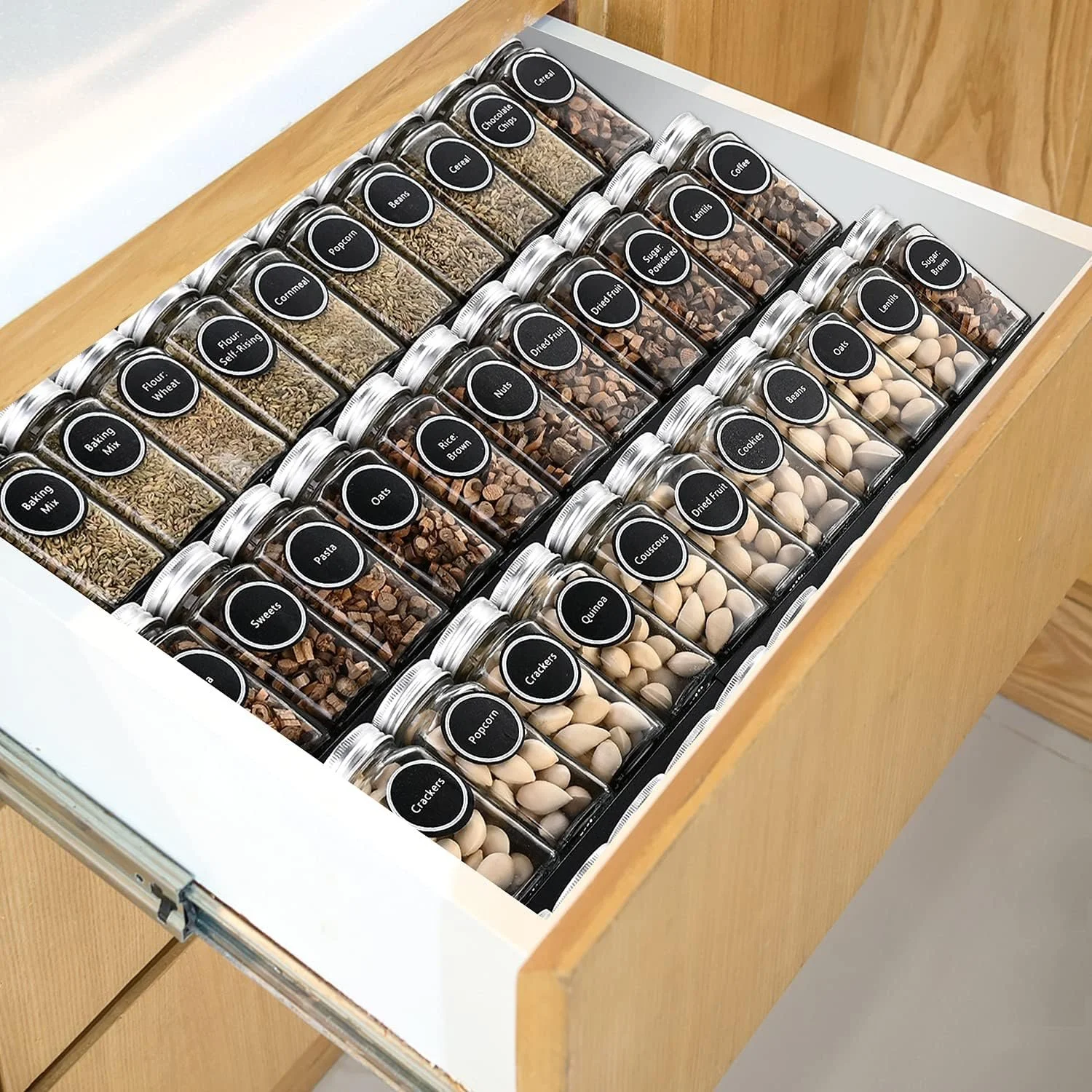
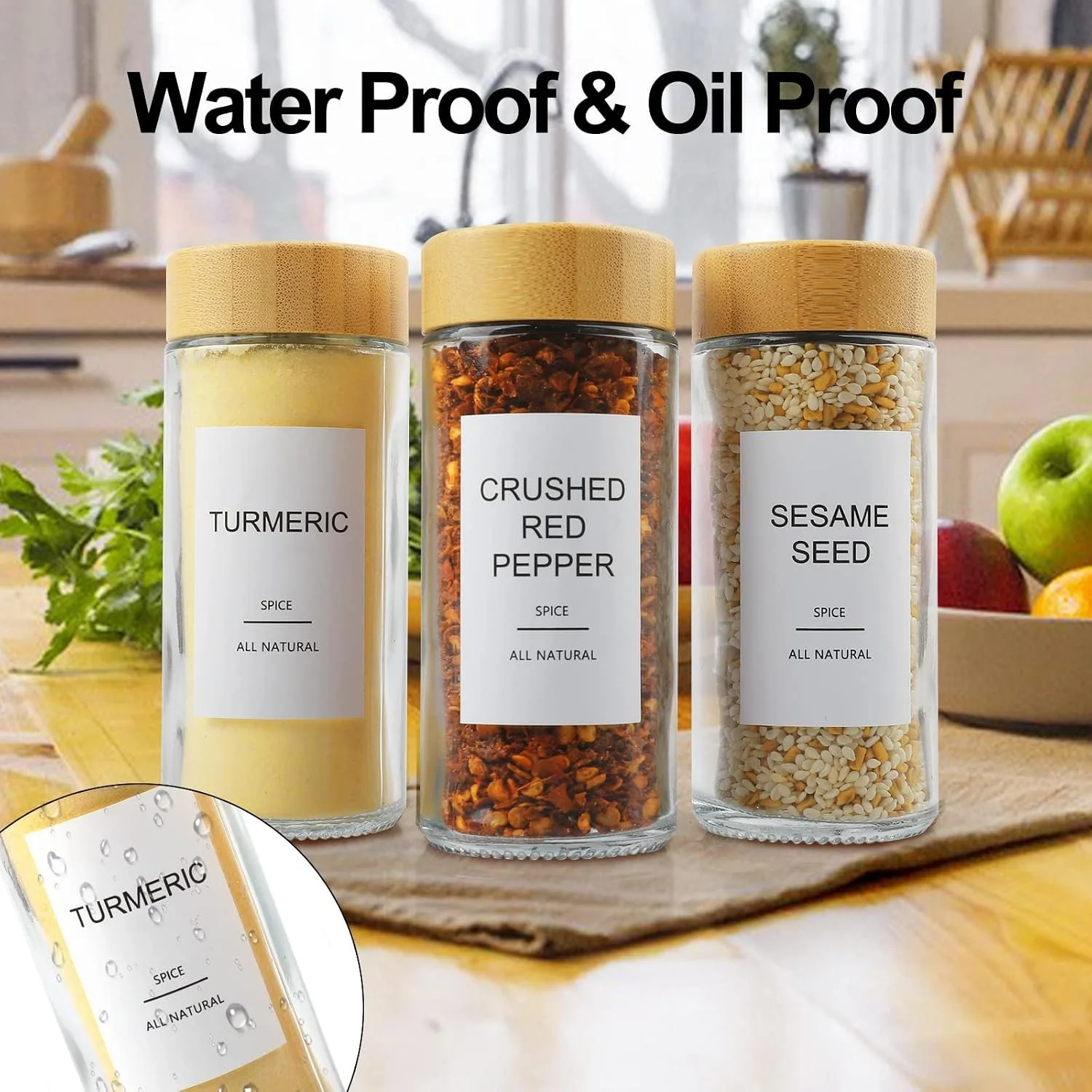
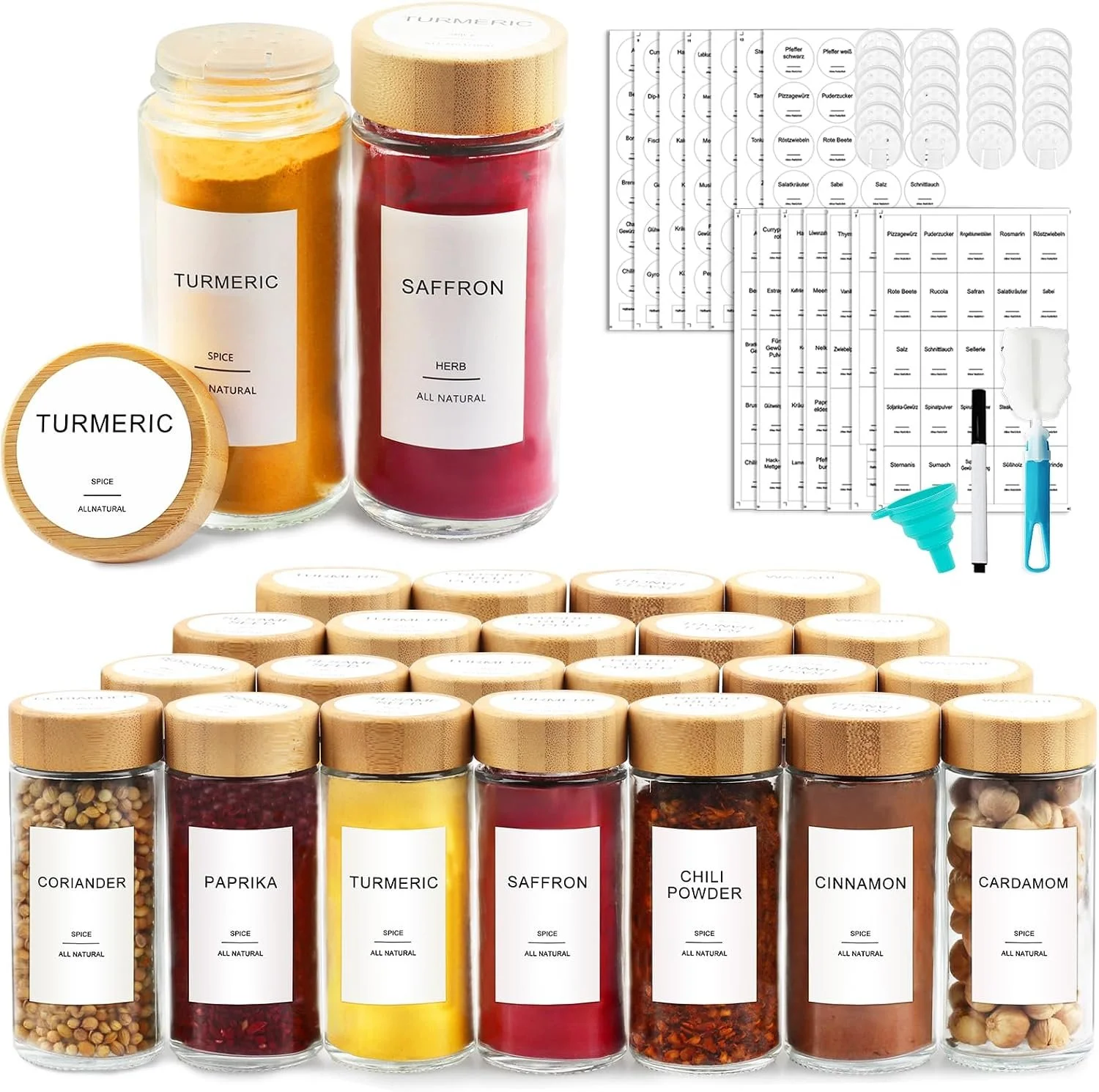
For a matching, refillable spice set, glass spice jars with airtight bamboo lids and shaker inserts offer a consistent look and functional shaker or pour options depending on the spice. Since this set includes a funnel and labels, it's a reasonable option for anyone starting a spice organization project from scratch, rather than trying to retrofit mismatched jars they already own.
Cabinet Shelf Risers for Wasted Vertical Space
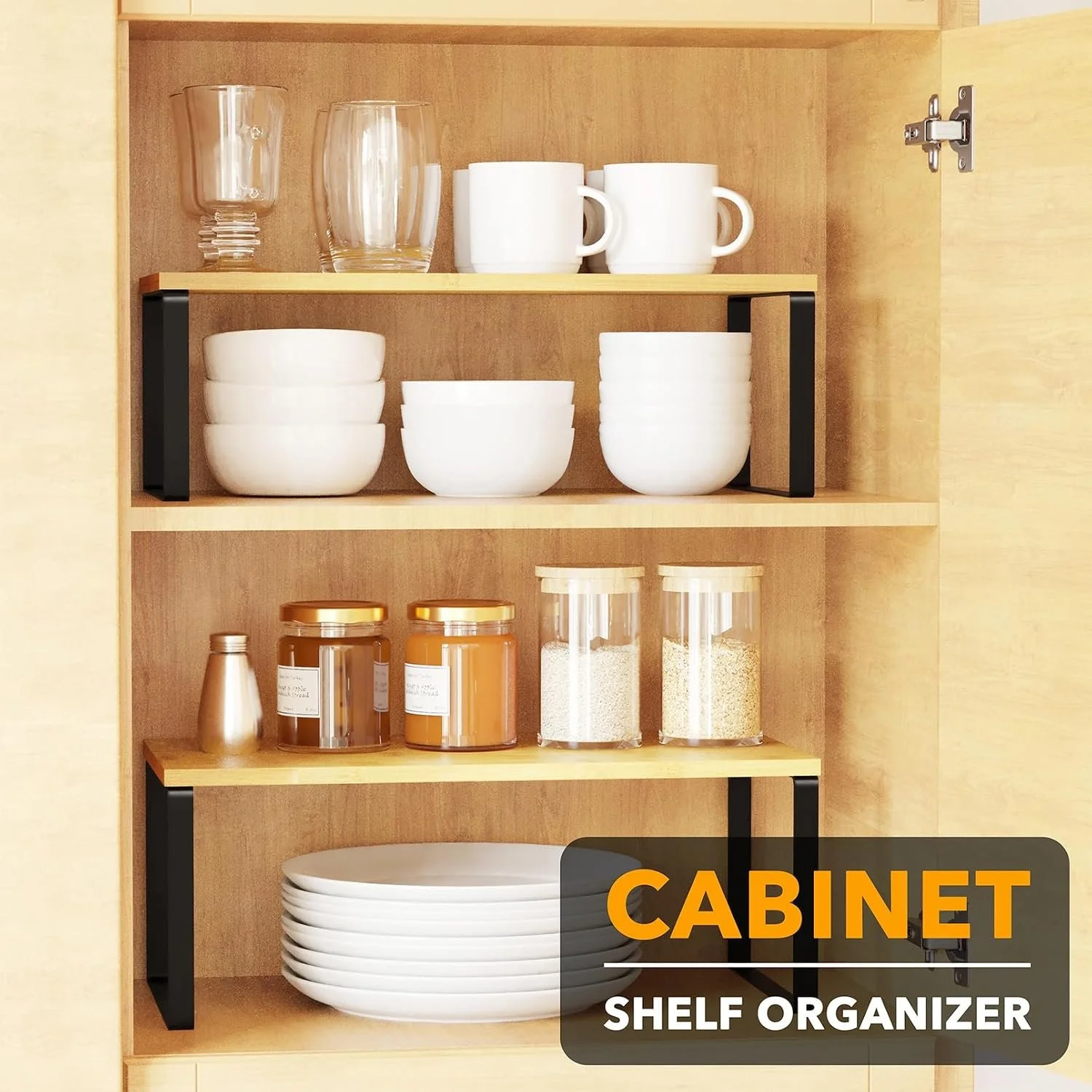
Most cabinets are taller than a single row of items needs, which leaves a gap of unused vertical space above shorter cans, jars, or boxes.
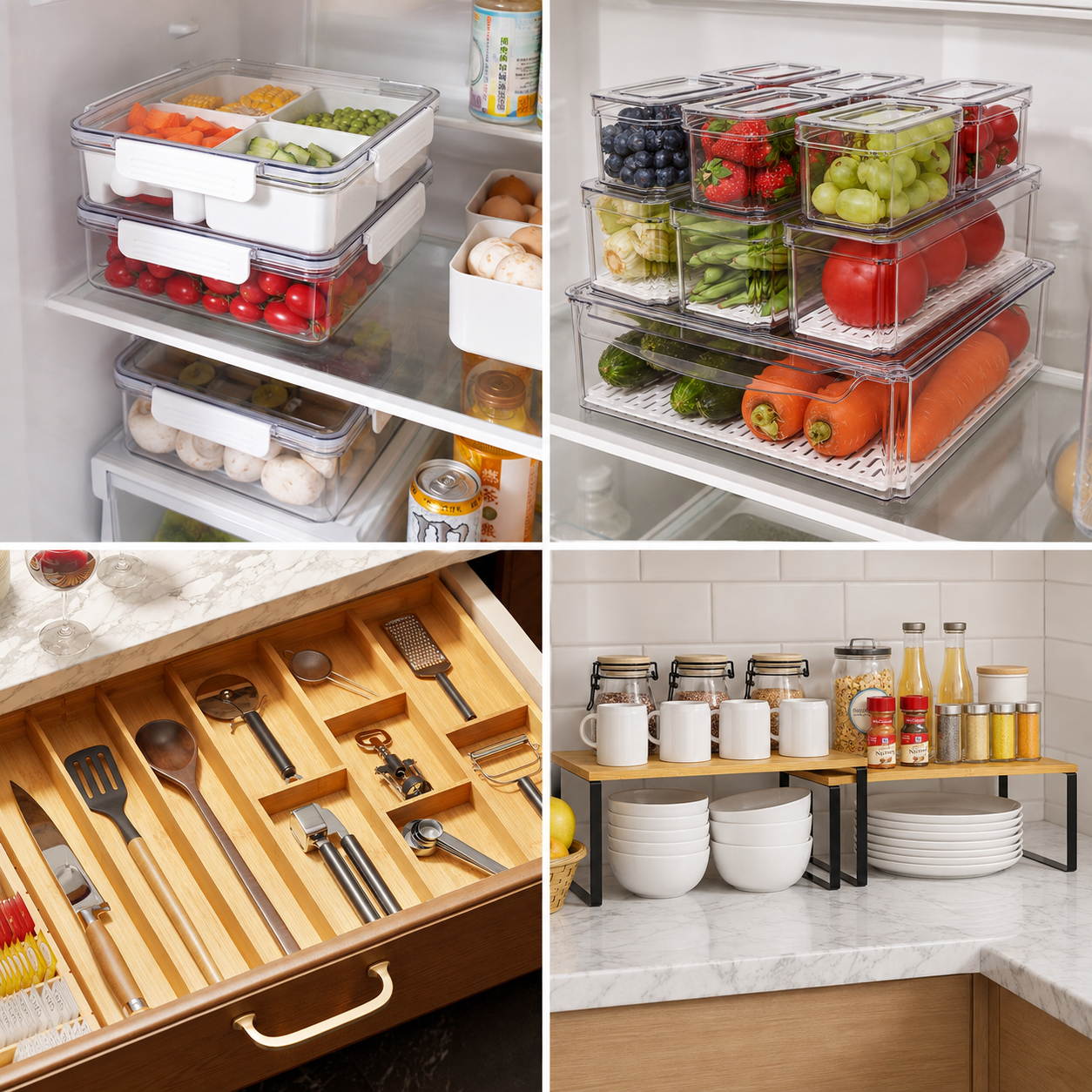
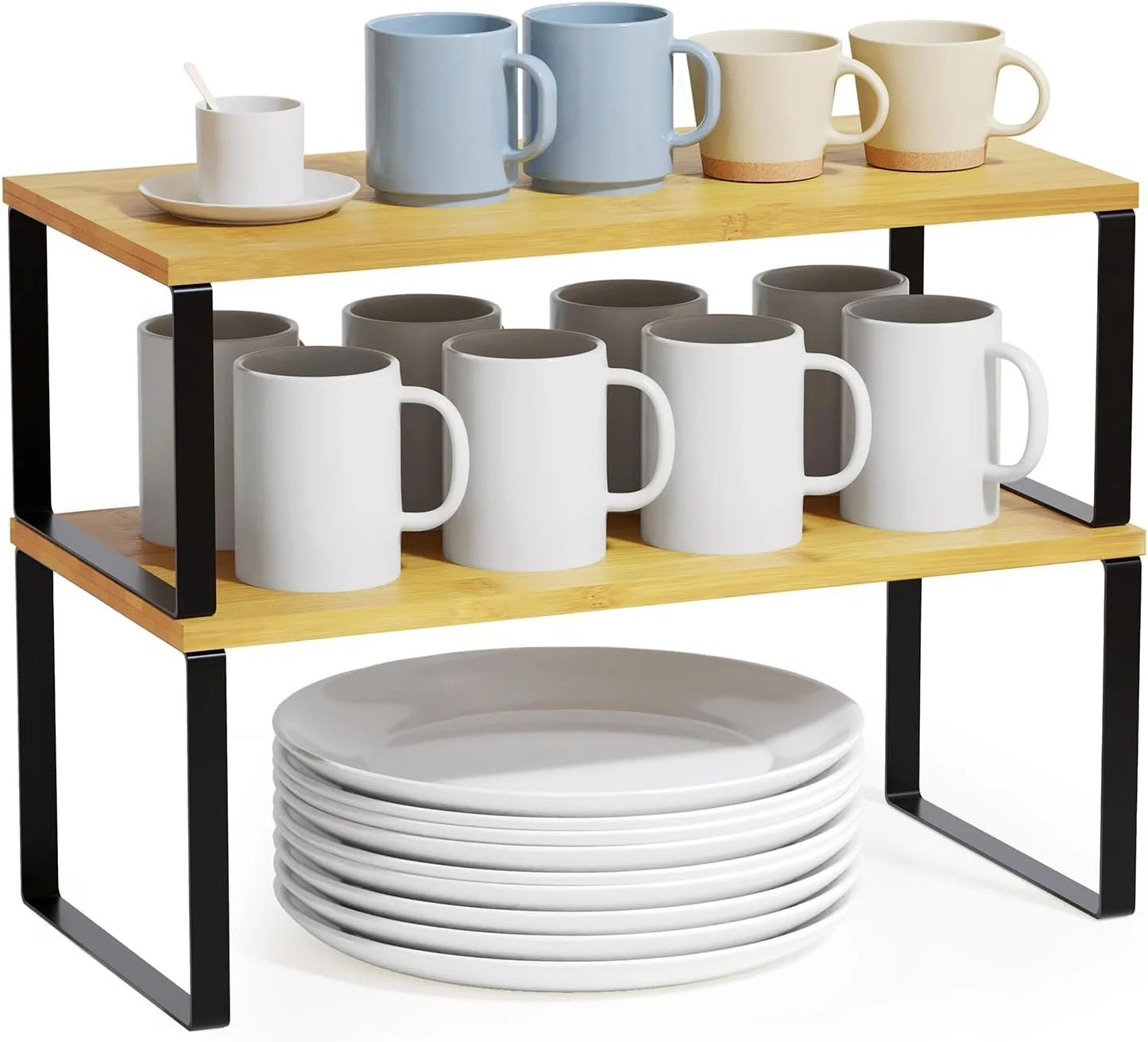
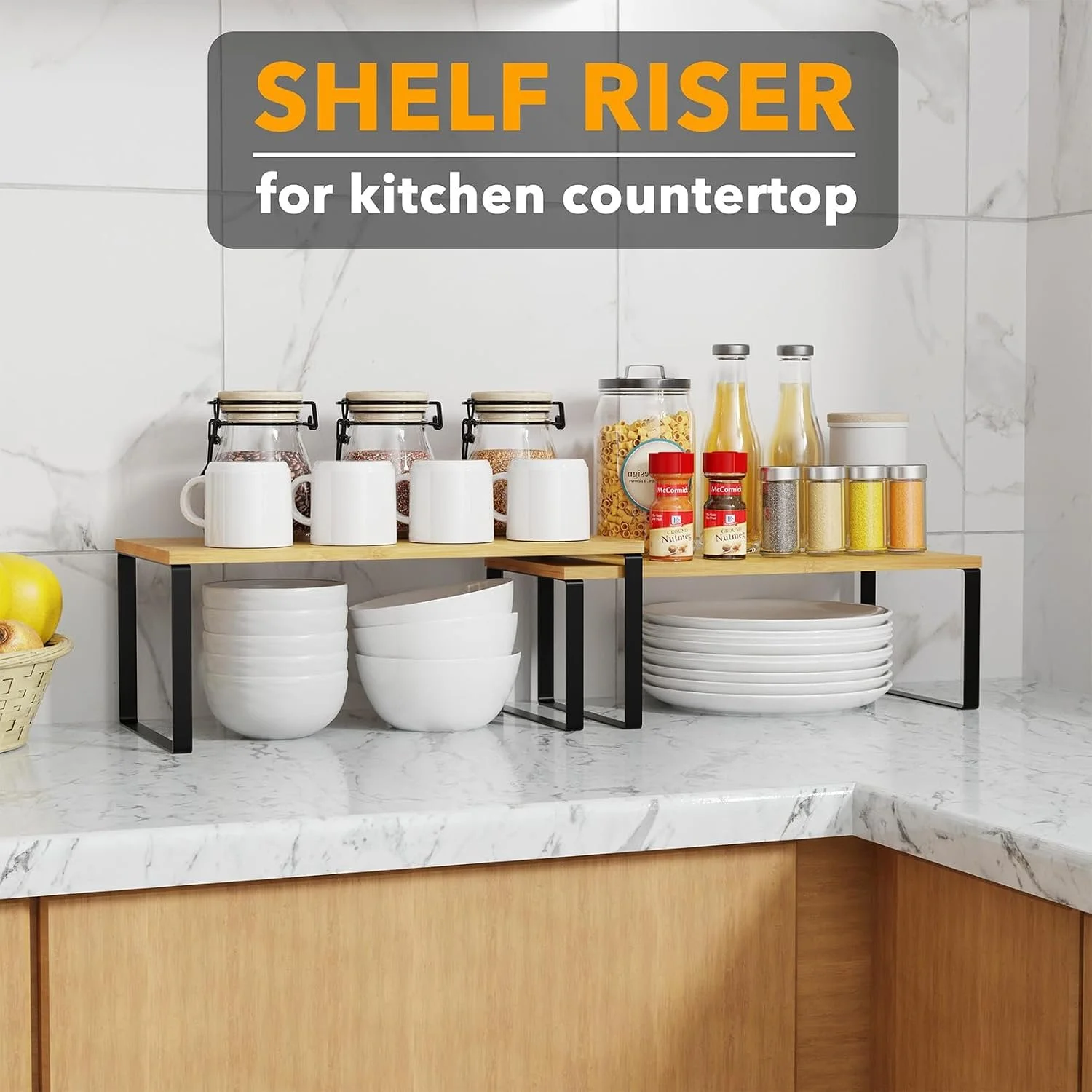
Stackable expandable shelf riser organizers for cabinets and pantries address this by creating a second, elevated tier above your existing shelf. This is especially useful for canned goods, spice jars, or small boxes, since it lets you use the vertical drop without stacking items directly on top of each other, where they'd be harder to identify or reach.
Utensil and Tool Organization
Kitchen clutter isn't limited to food. Drawers and cabinets full of utensils, tools, and gadgets can be just as disorganized as a pantry shelf.
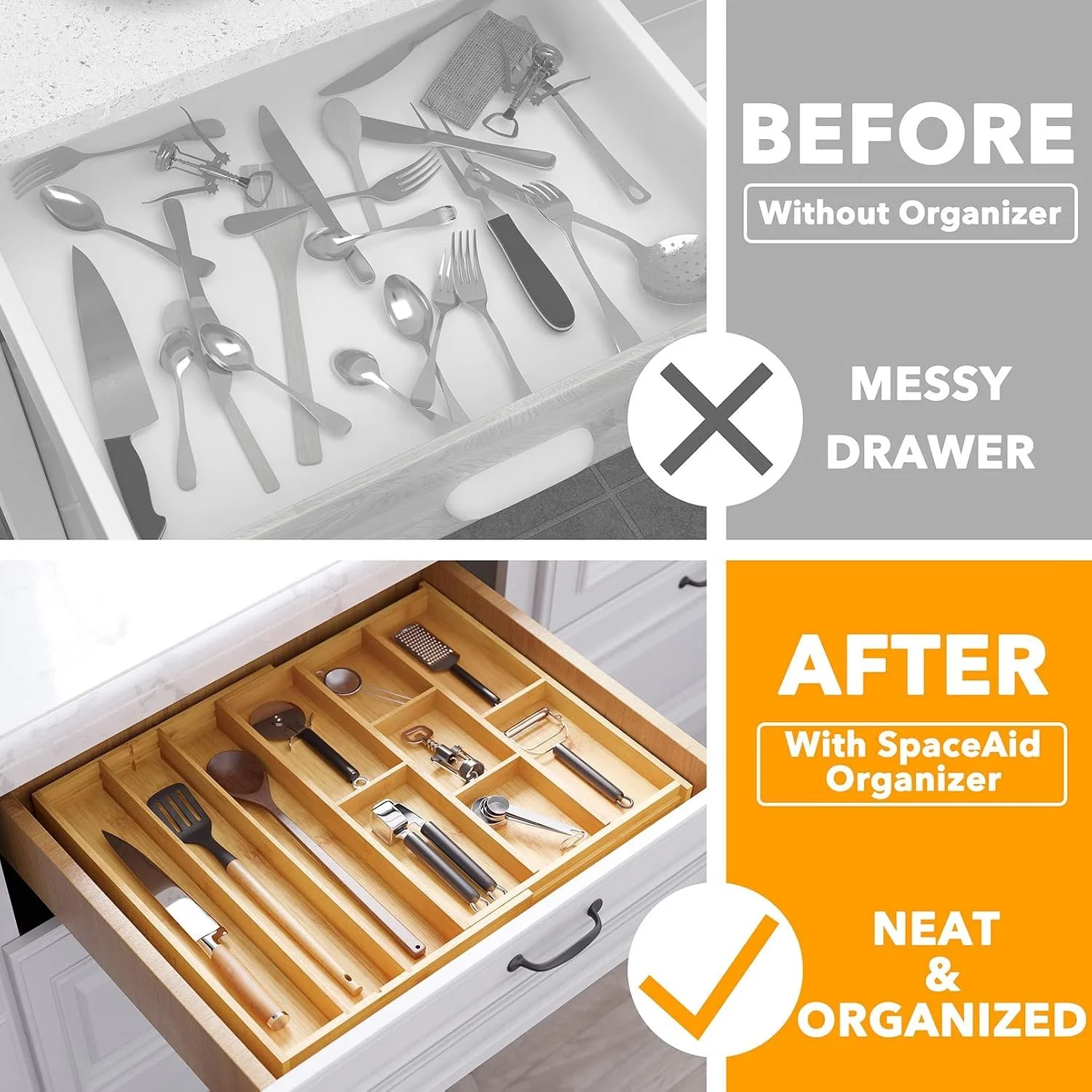
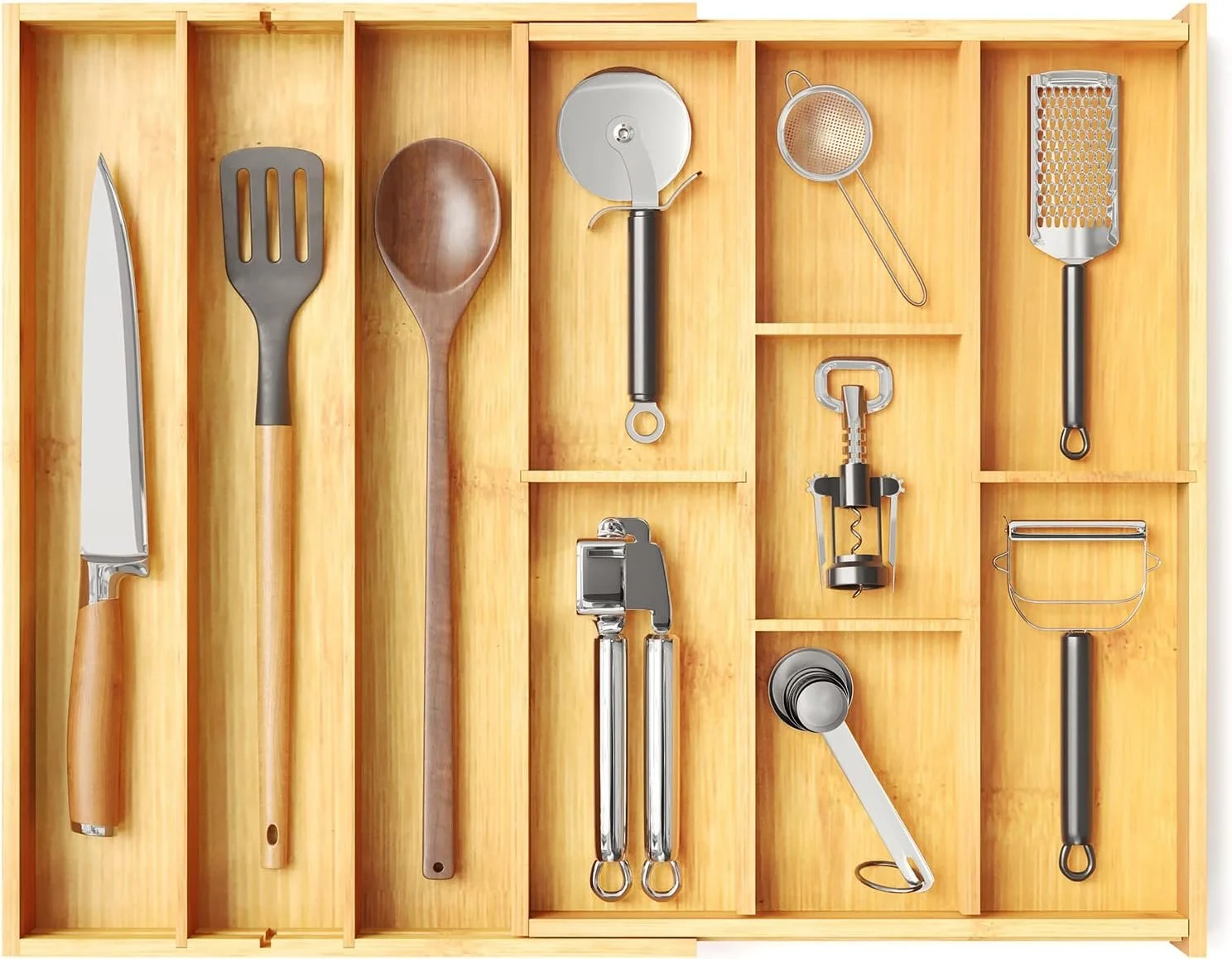
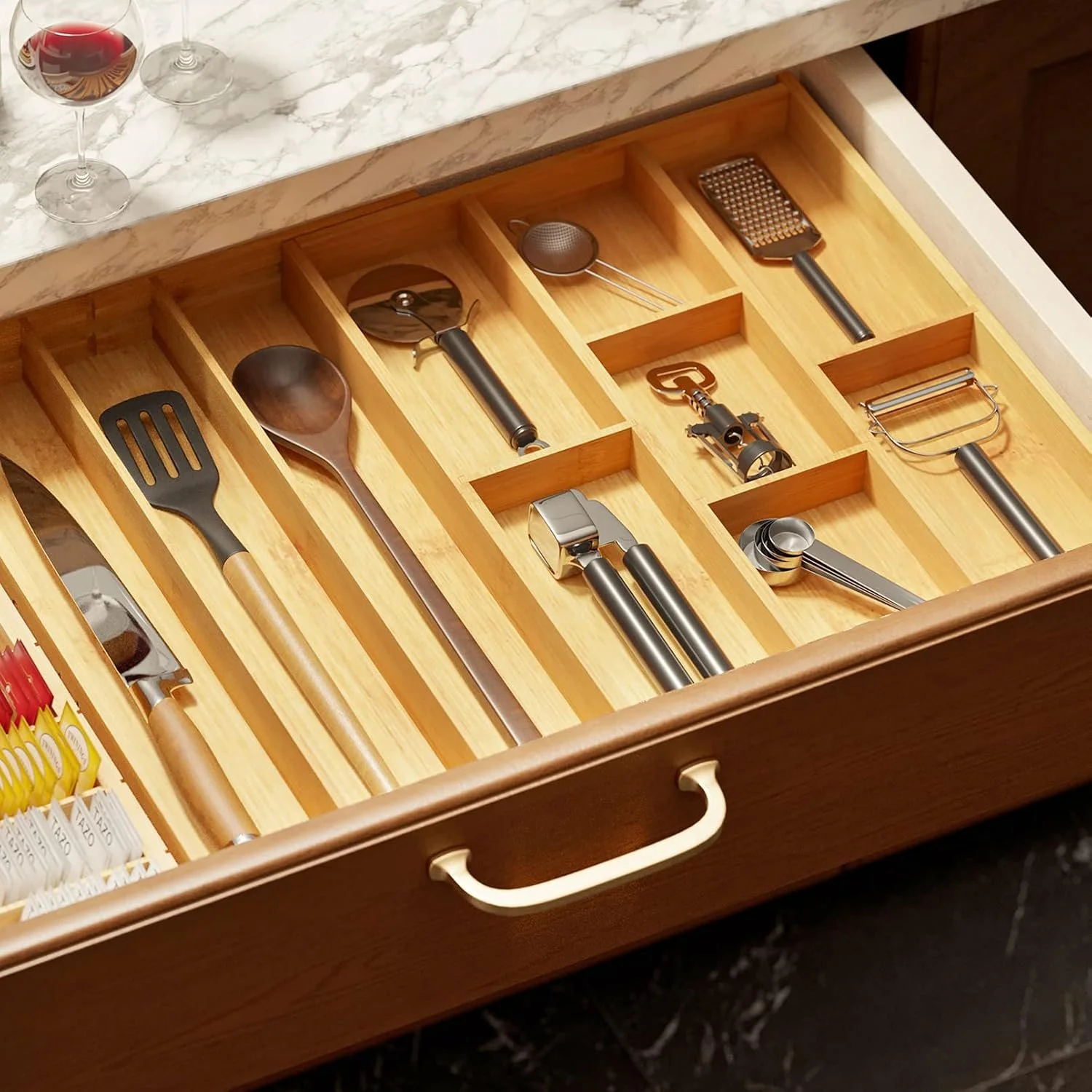
A bamboo expandable utensil drawer organizer with labels helps keep flatware and cooking tools sorted into defined compartments rather than sliding around loose. Because it's expandable, it can be adjusted to fit drawers of different widths, which is useful if you're not sure of your exact drawer dimensions ahead of time.
If you’re still setting up the kitchen itself, these kitchen gadgets for a first apartment focus on practical tools that solve everyday cooking and cleanup problems.
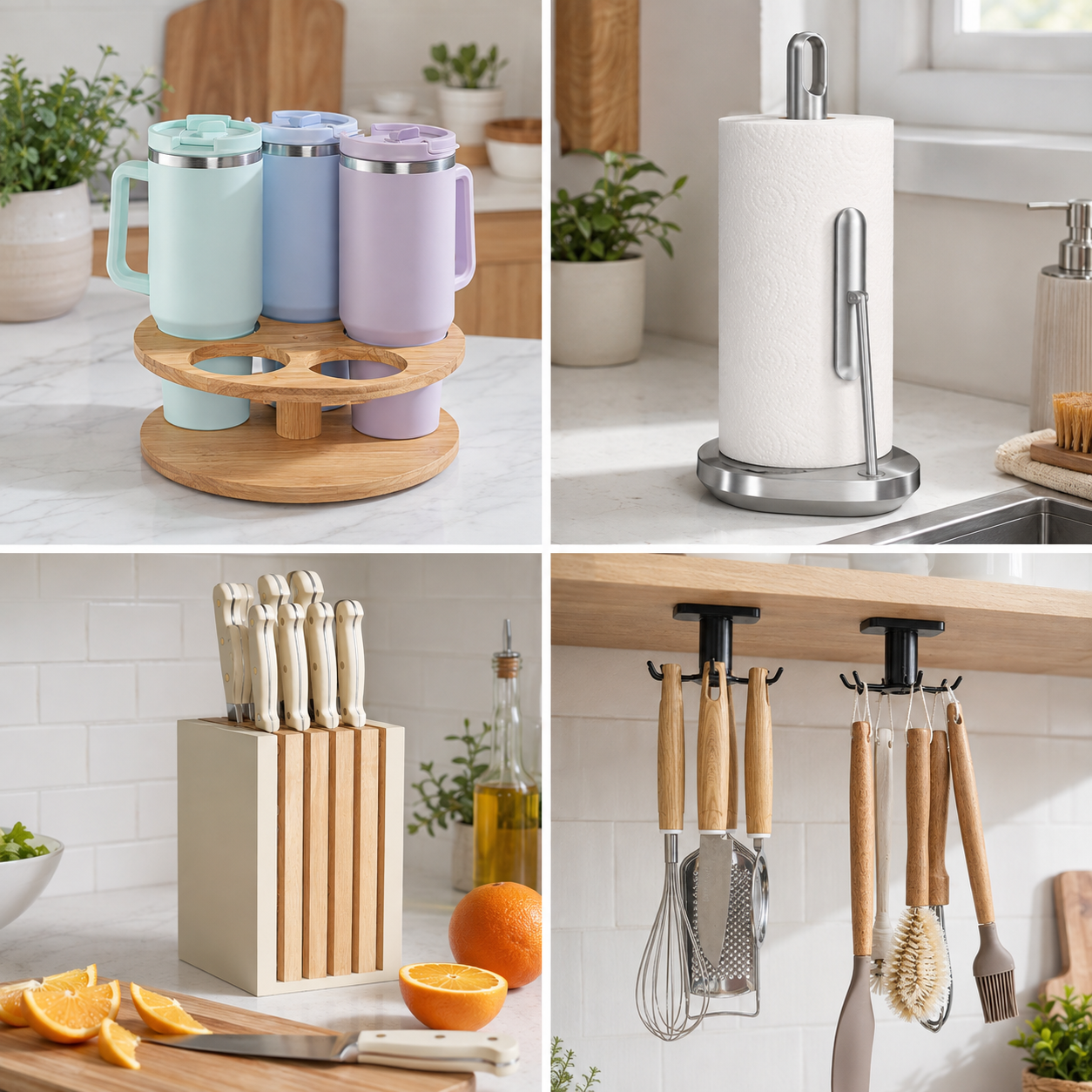
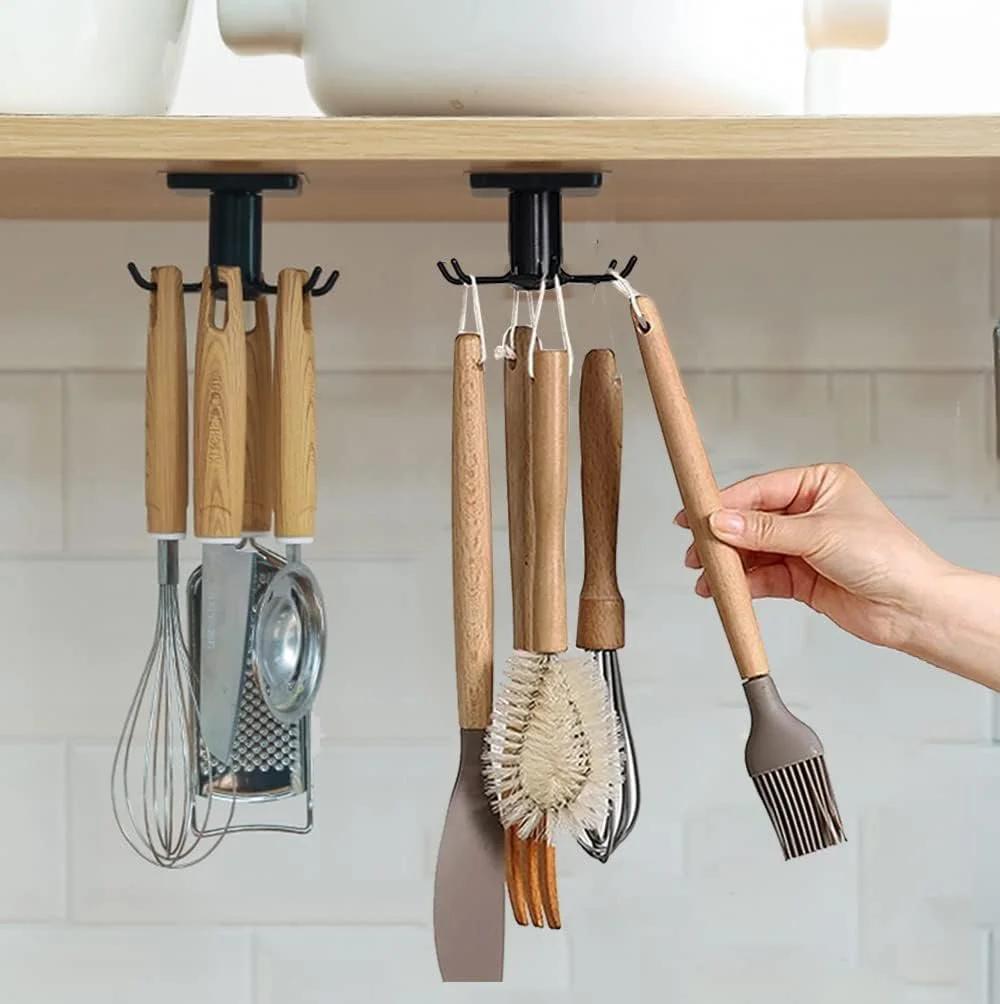
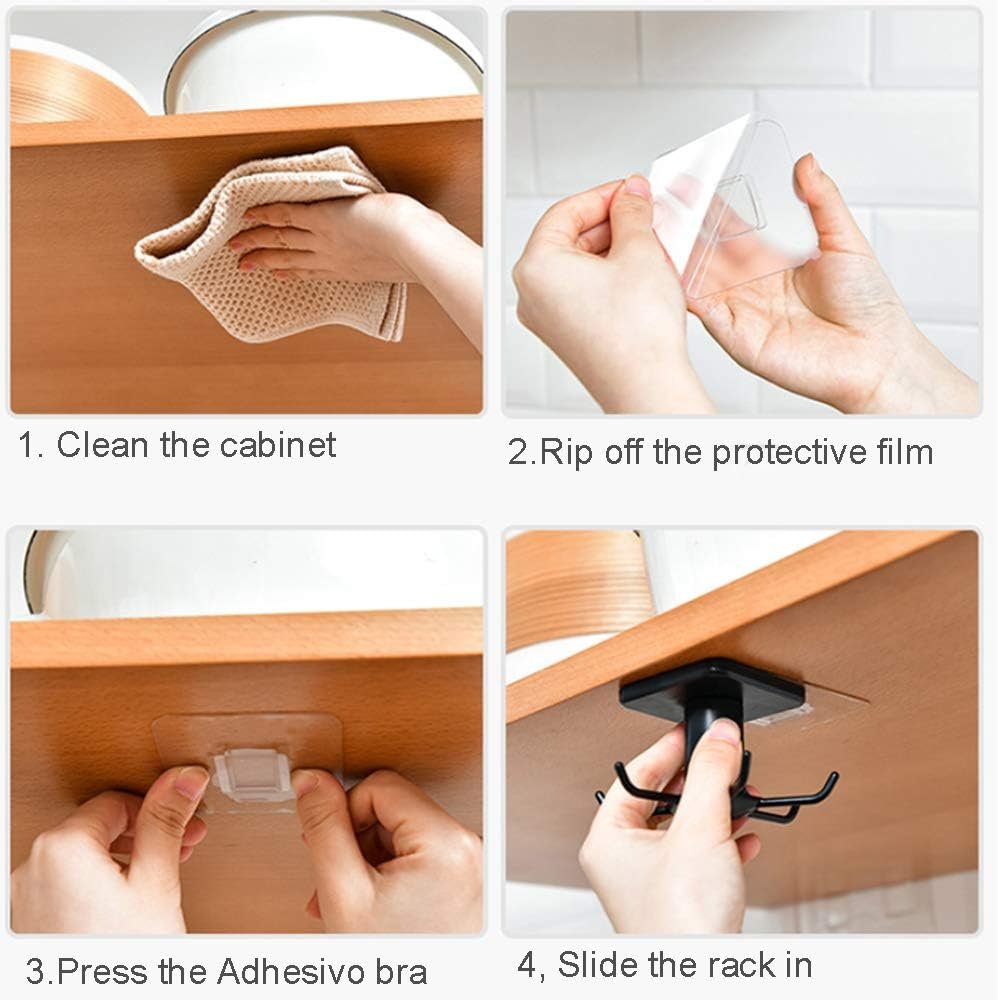
For tools you reach for constantly, like spatulas or tongs, under-cabinet rotating utility hooks for kitchen tools offer a way to keep frequently used items within arm's reach without cluttering a drawer or countertop. Mounted underneath a cabinet, these hooks free up drawer space for items that don't need to be grabbed mid-cooking.
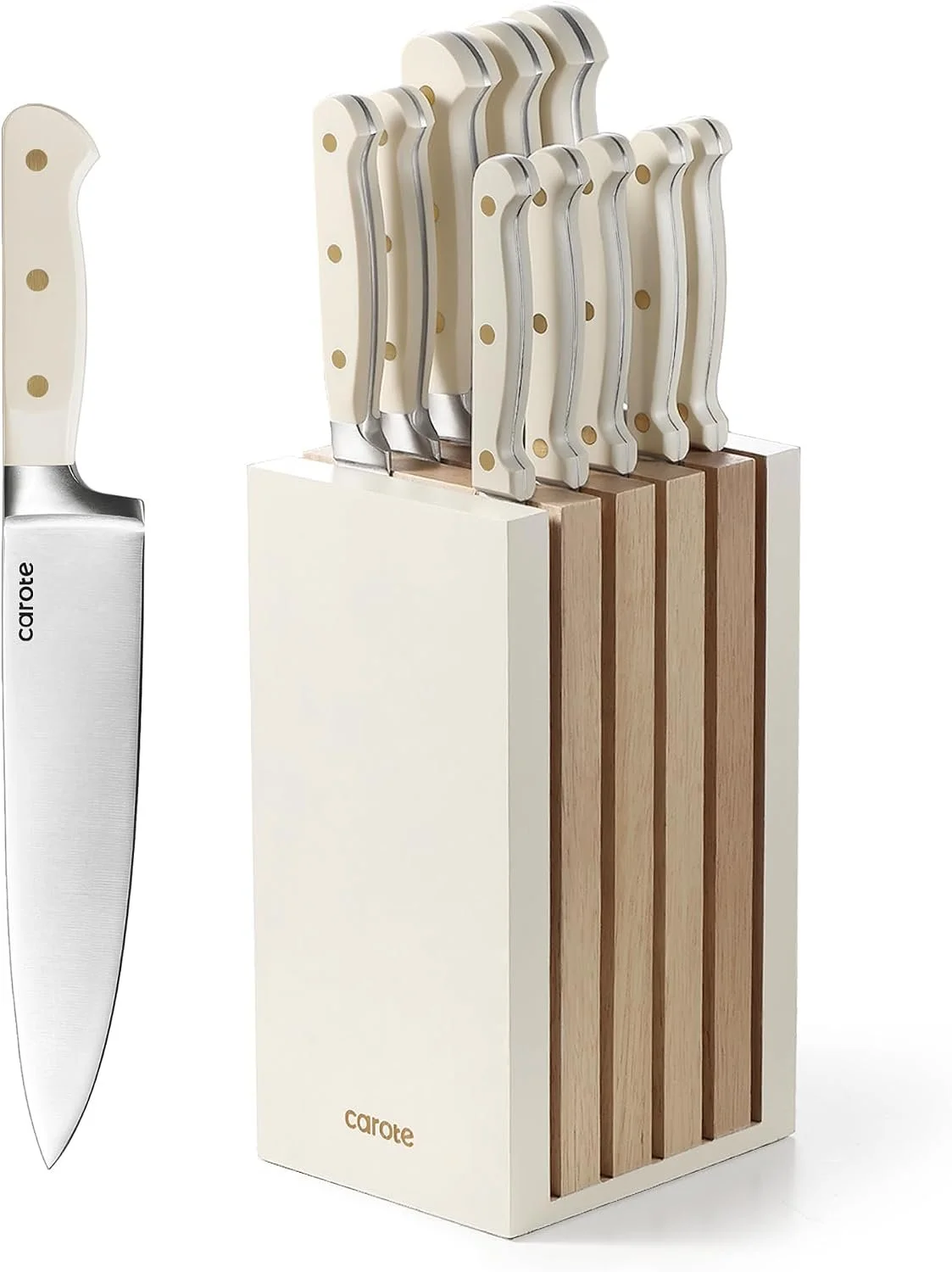
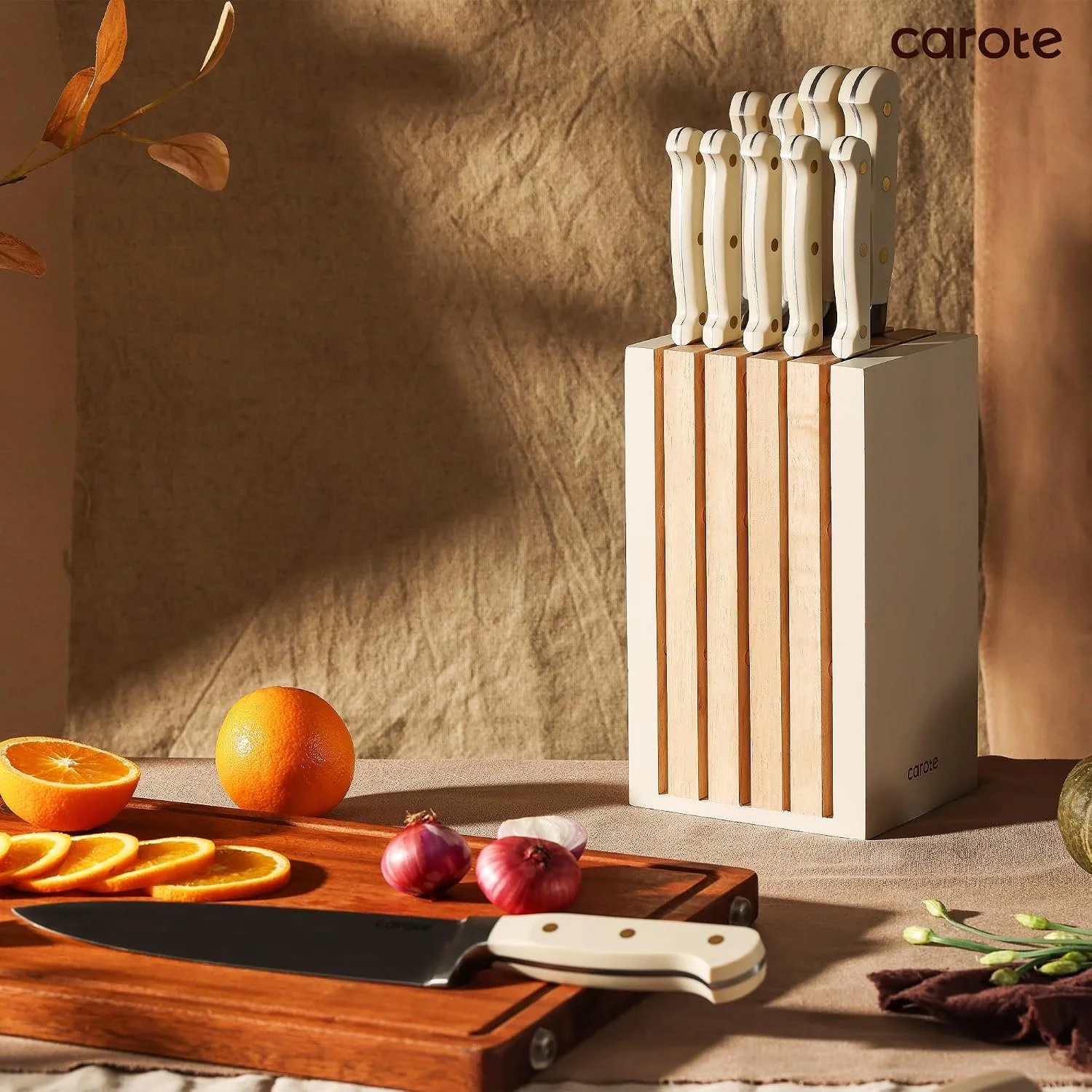
If you're also organizing knives, a magnetic wood knife block set for countertop storage keeps blades stored safely and visibly, rather than loose in a drawer where they can be a safety hazard or get dull from knocking against other tools. A wood block also tends to blend more easily into a kitchen's existing aesthetic than a bulky knife set case.
Under-Sink Organization for Cleaning Supplies
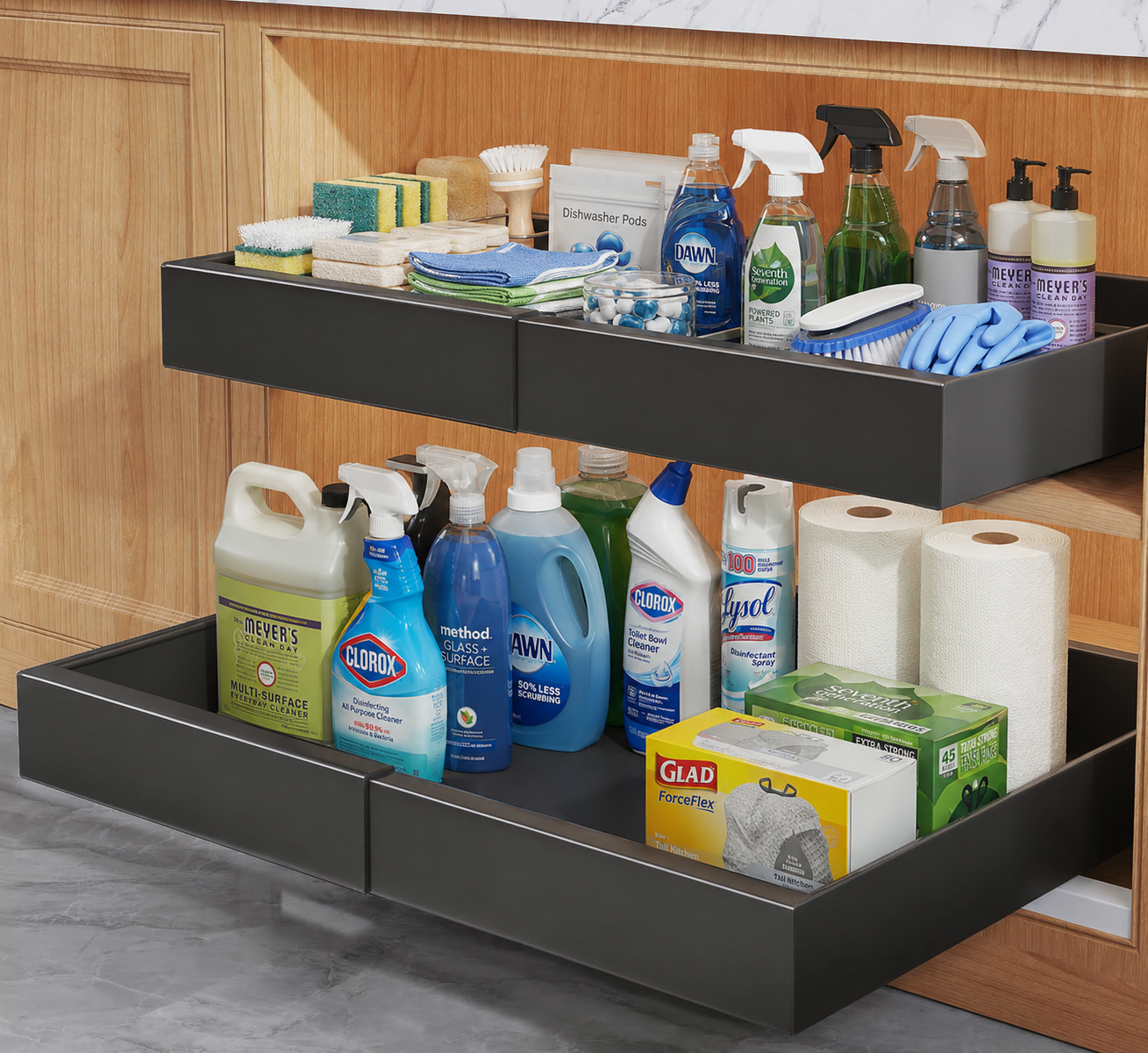
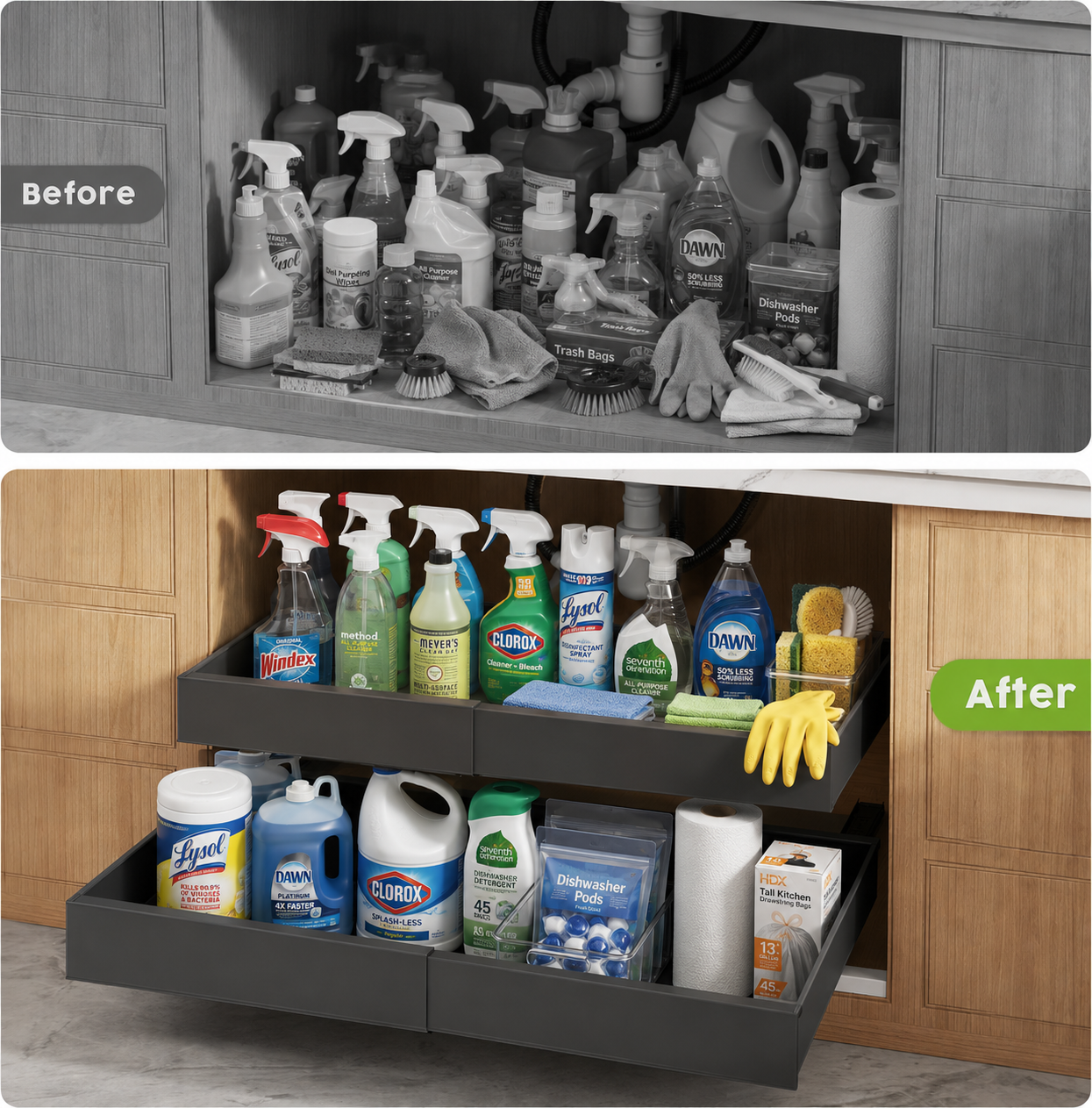
Under-sink cabinets are notoriously awkward: pipes interrupt the space, and bottles of cleaning supplies tend to get shoved in without any real system.
Pull-out slide organizers for deep under-sink or base cabinets can help here in the same way they help with deep pantry shelves, letting you slide supplies forward instead of kneeling and reaching into the back of the cabinet. Measuring the depth and width of the space before purchasing is especially important under the sink, since pipes and cabinet framing can limit how wide a slide-out tray can be.
Countertop Organization Without Adding Clutter
Countertop organization ideas often get overlooked because the goal is usually to remove things from the counter, not add more. But some tools genuinely reduce visual clutter rather than adding to it.
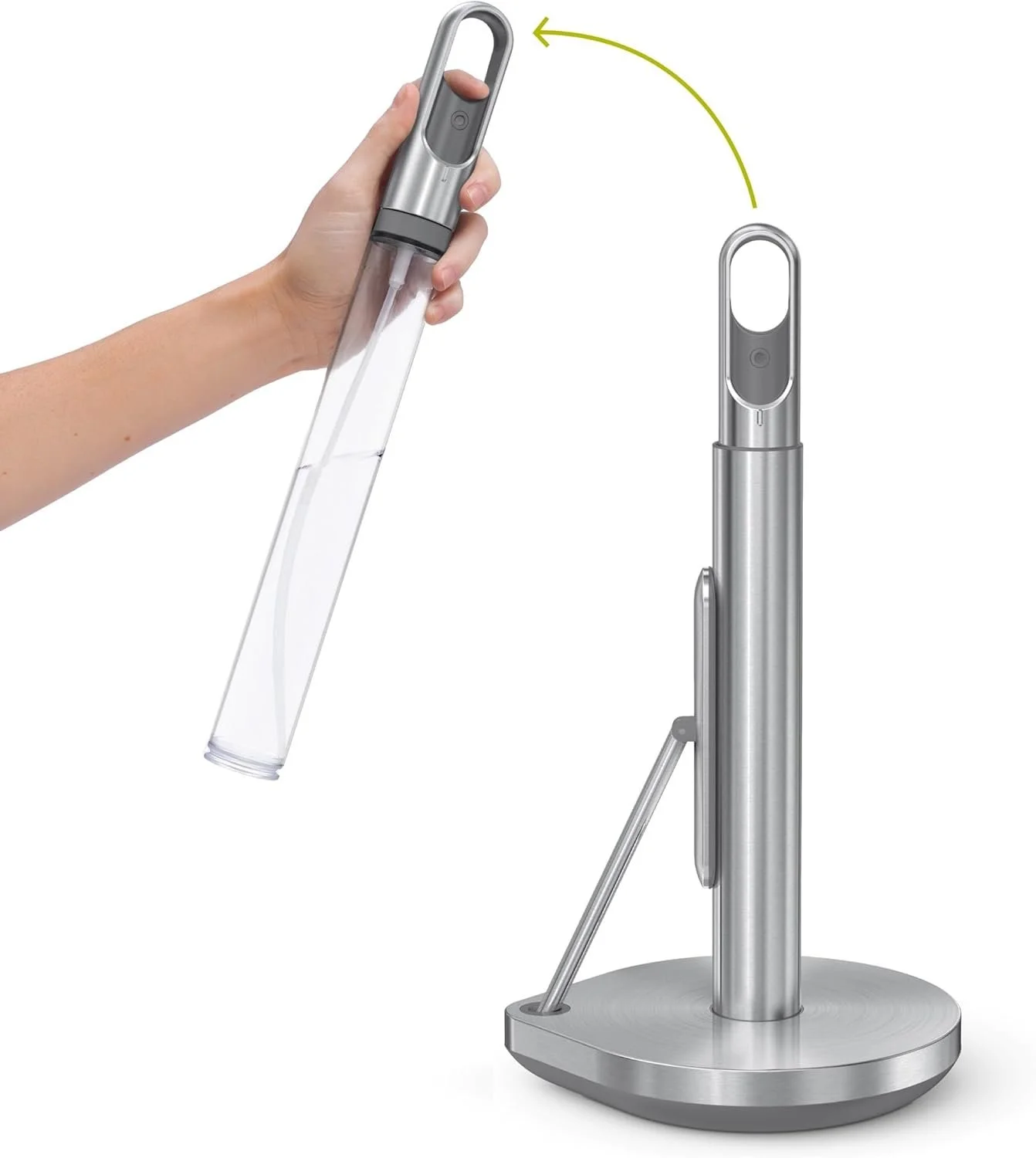
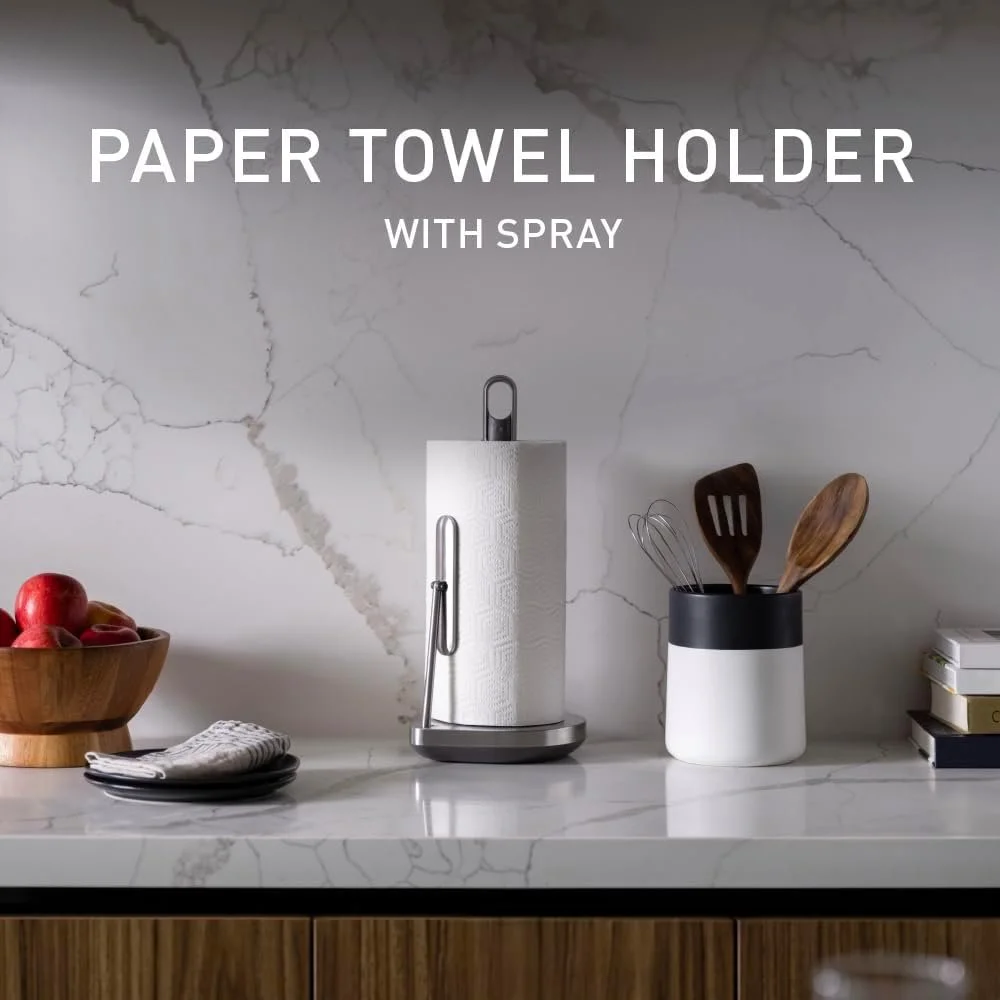
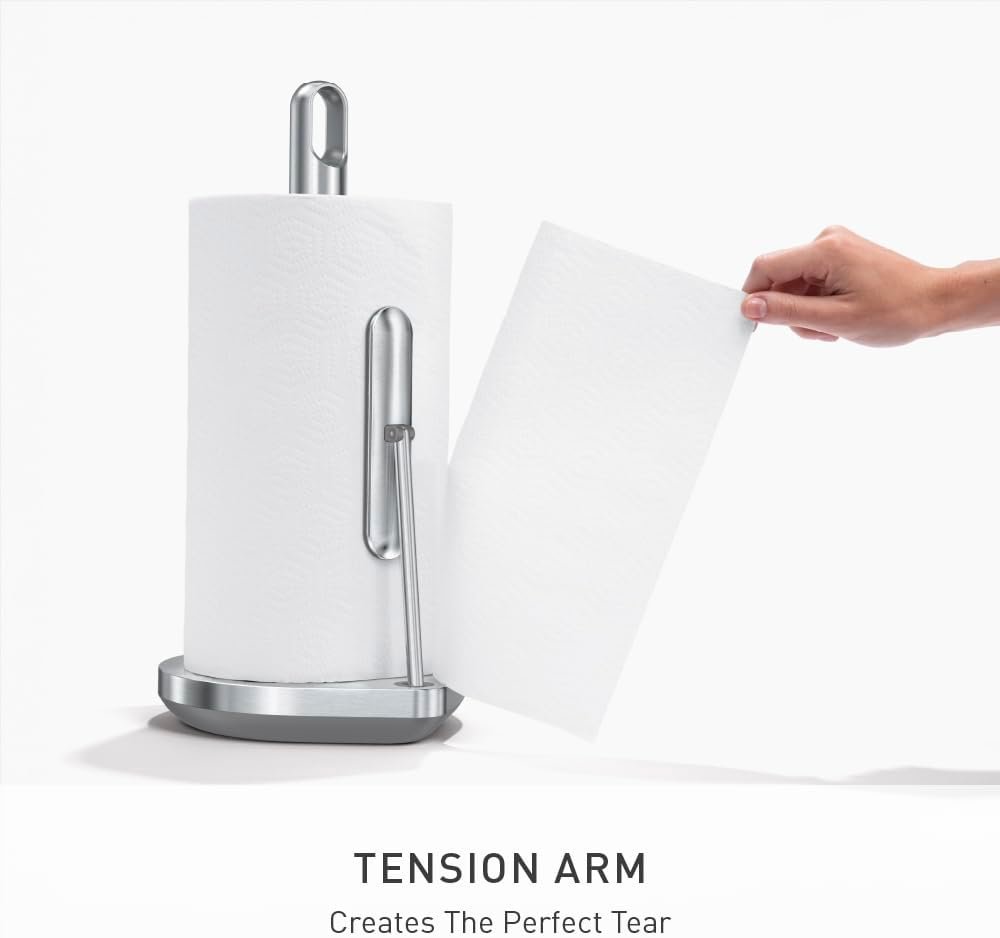
An all-in-one paper towel holder and countertop spray dispenser consolidates two items, a paper towel roll and a cleaning spray bottle, into a single weighted base. This can be a practical swap for anyone whose counter tends to accumulate a paper towel roll on its side plus a separate spray bottle, since combining them into one footprint frees up counter space for food prep.
Drink and Tumbler Storage
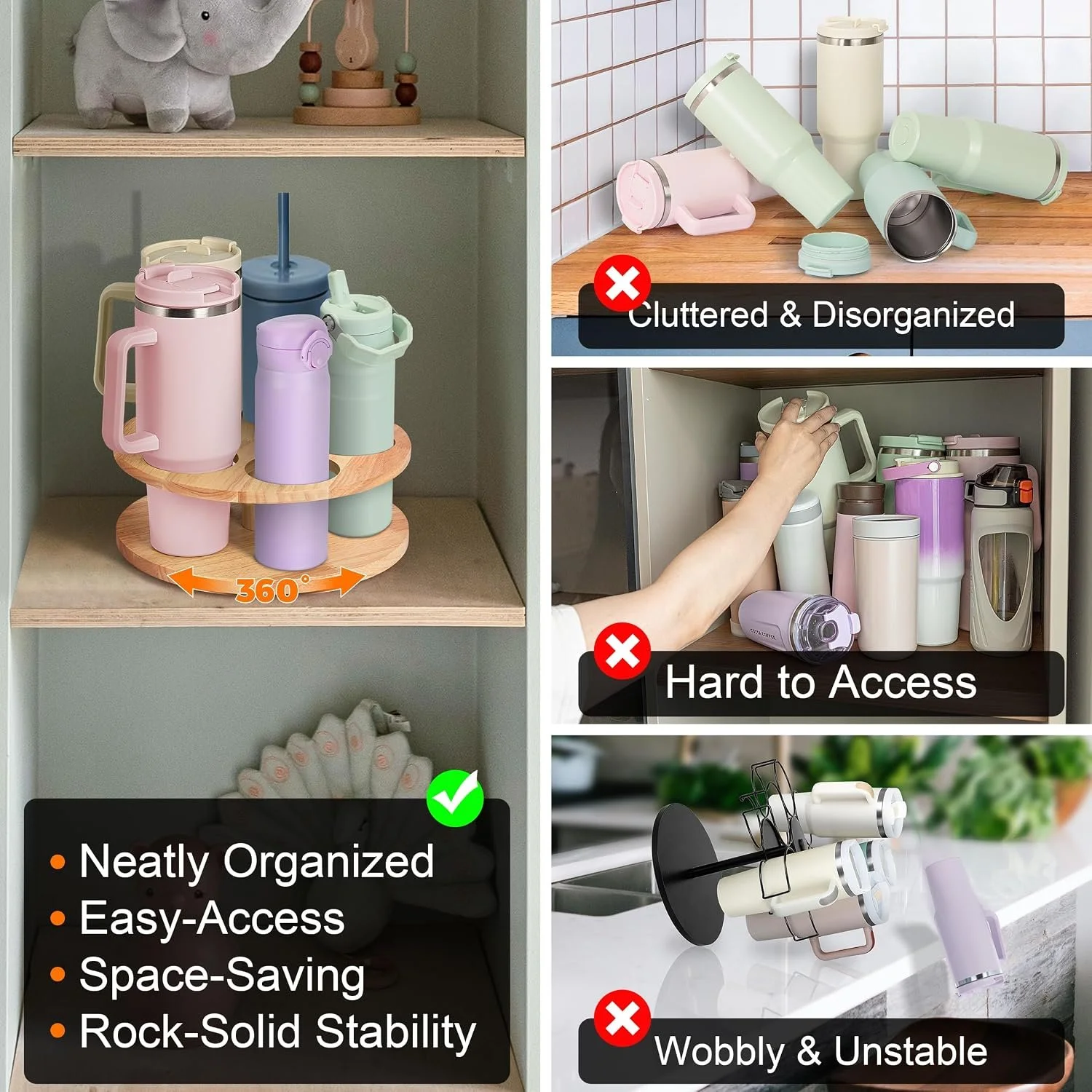
If your household has an ever-growing collection of insulated tumblers or water bottles, cabinet storage can get chaotic fast, especially with bottles that don't stack or stand well.
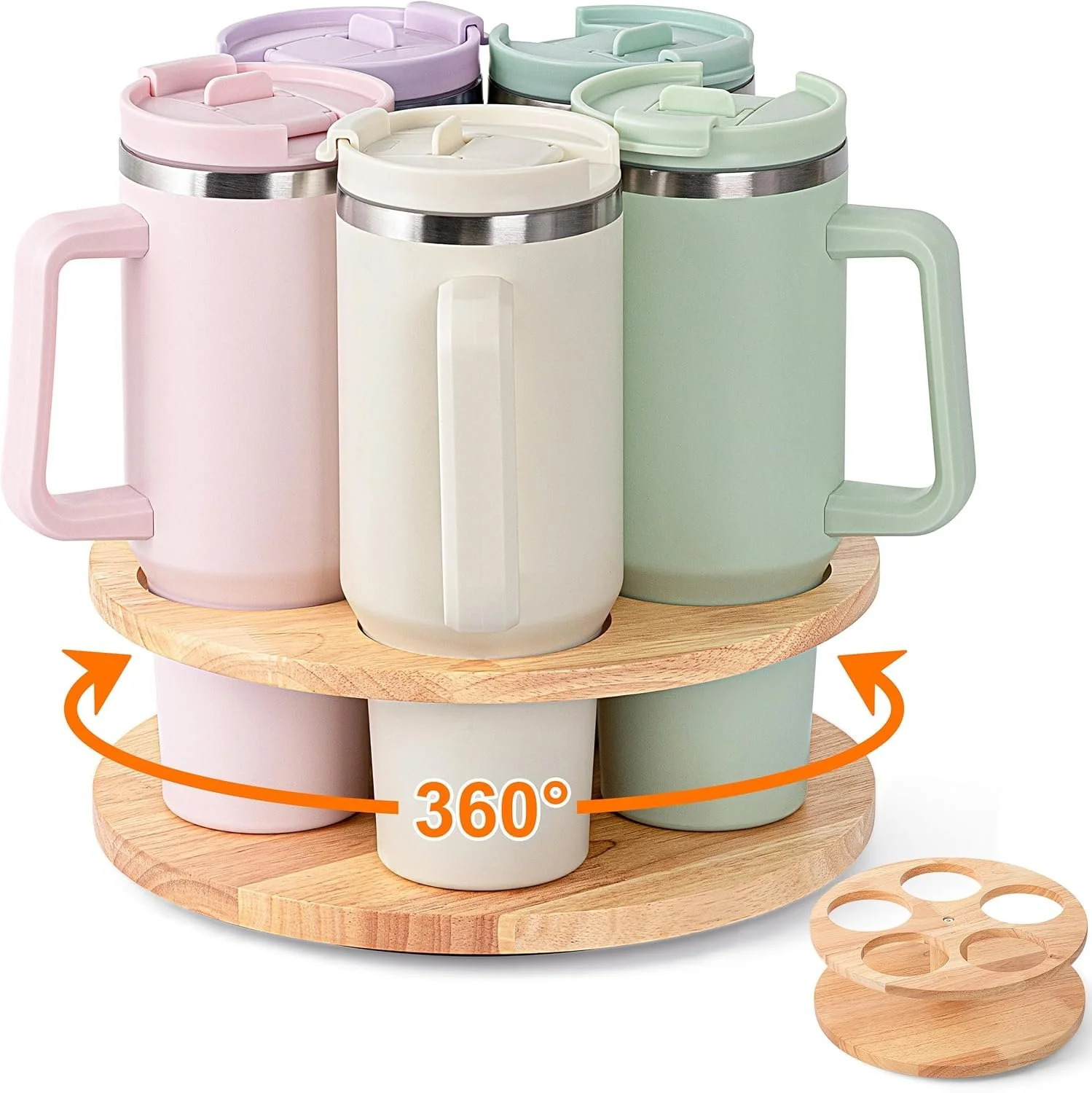
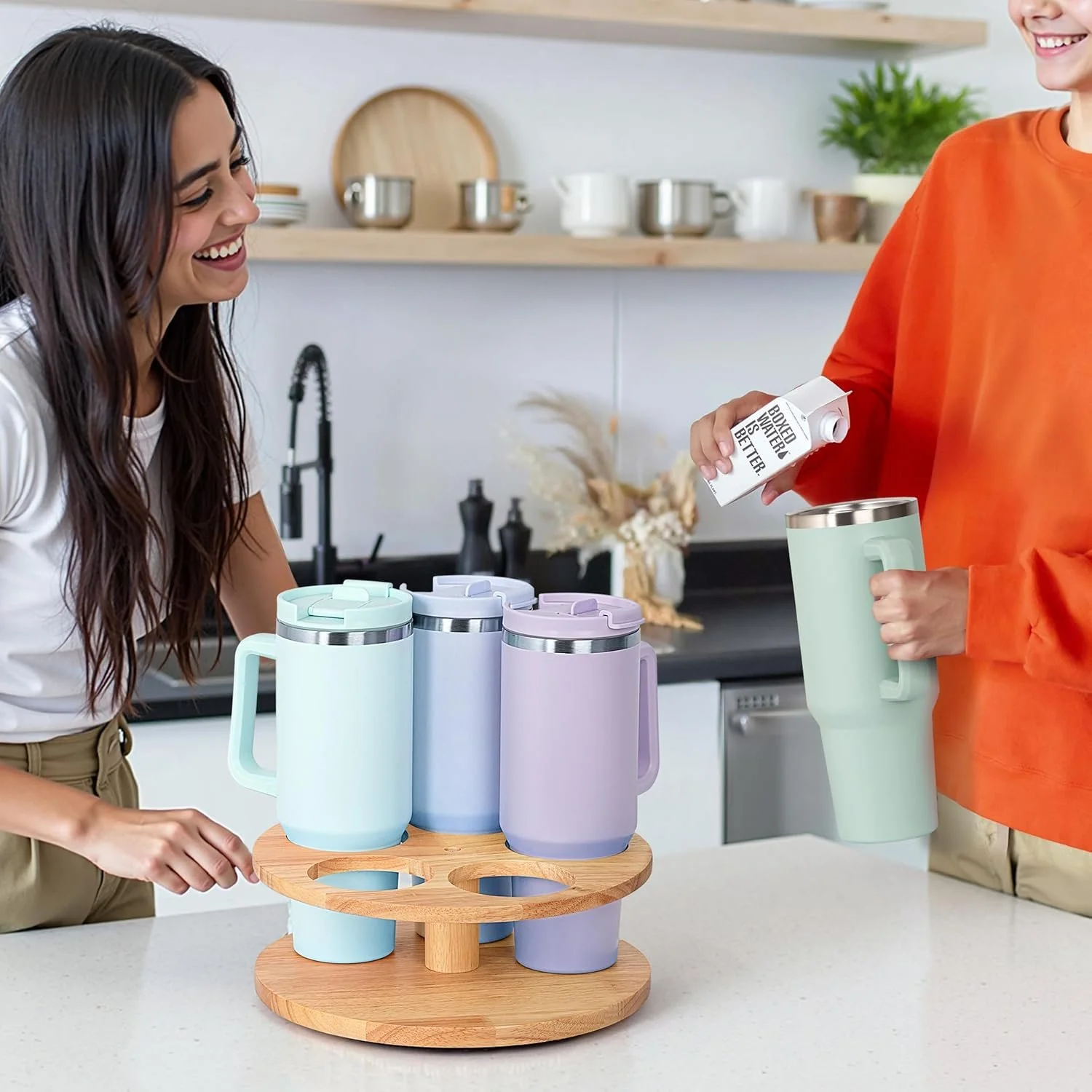
A 360-degree rotating wooden tumbler organizer for cabinet storage holds bottles upright and lets you rotate the rack to reach the one in back without pulling everything else out first. This is a practical option for households with several large-format tumblers that otherwise roll around loose on a shelf.
Refrigerator and Snack Storage
Organization doesn't stop at the pantry door. The refrigerator and snack storage often need the same zone-based thinking.
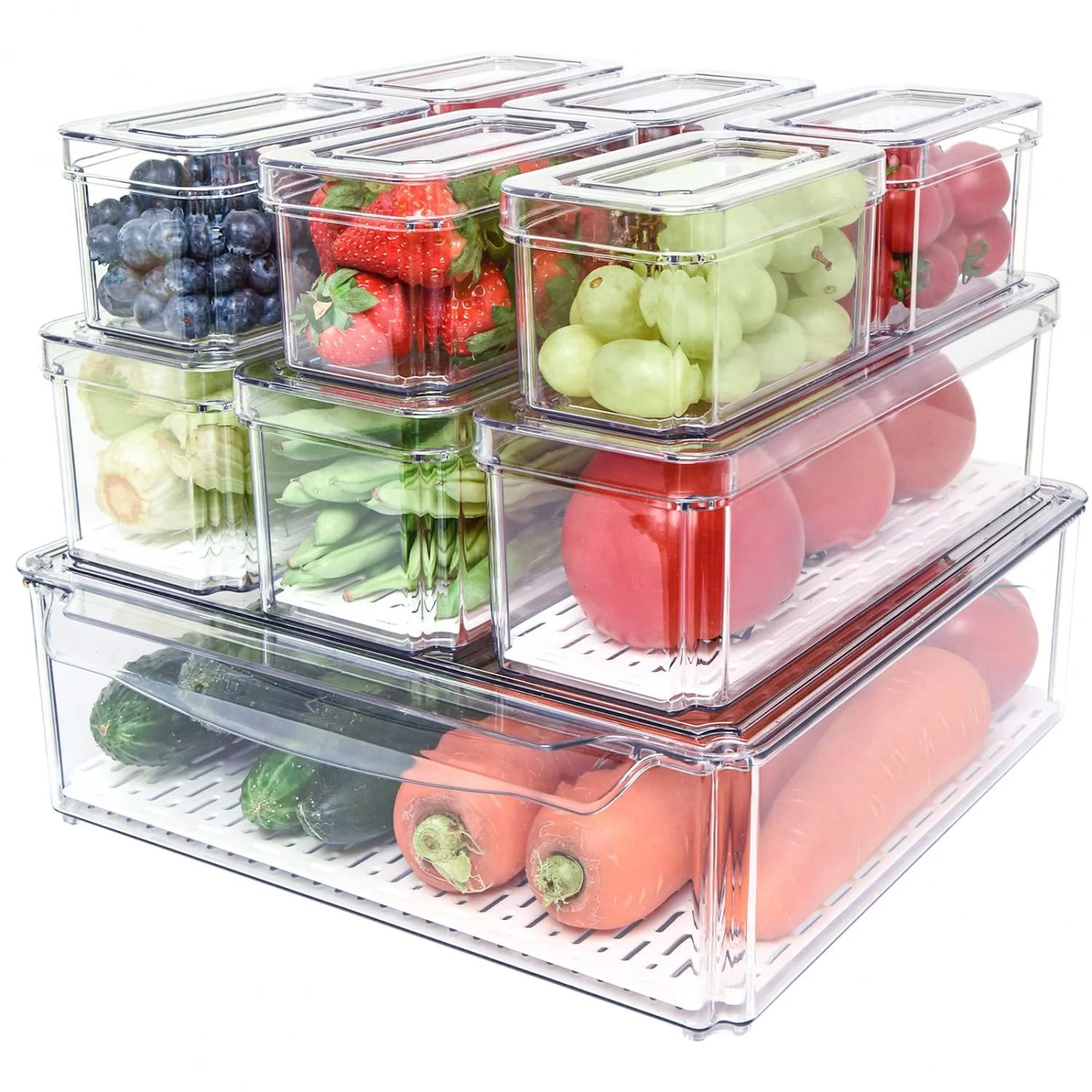
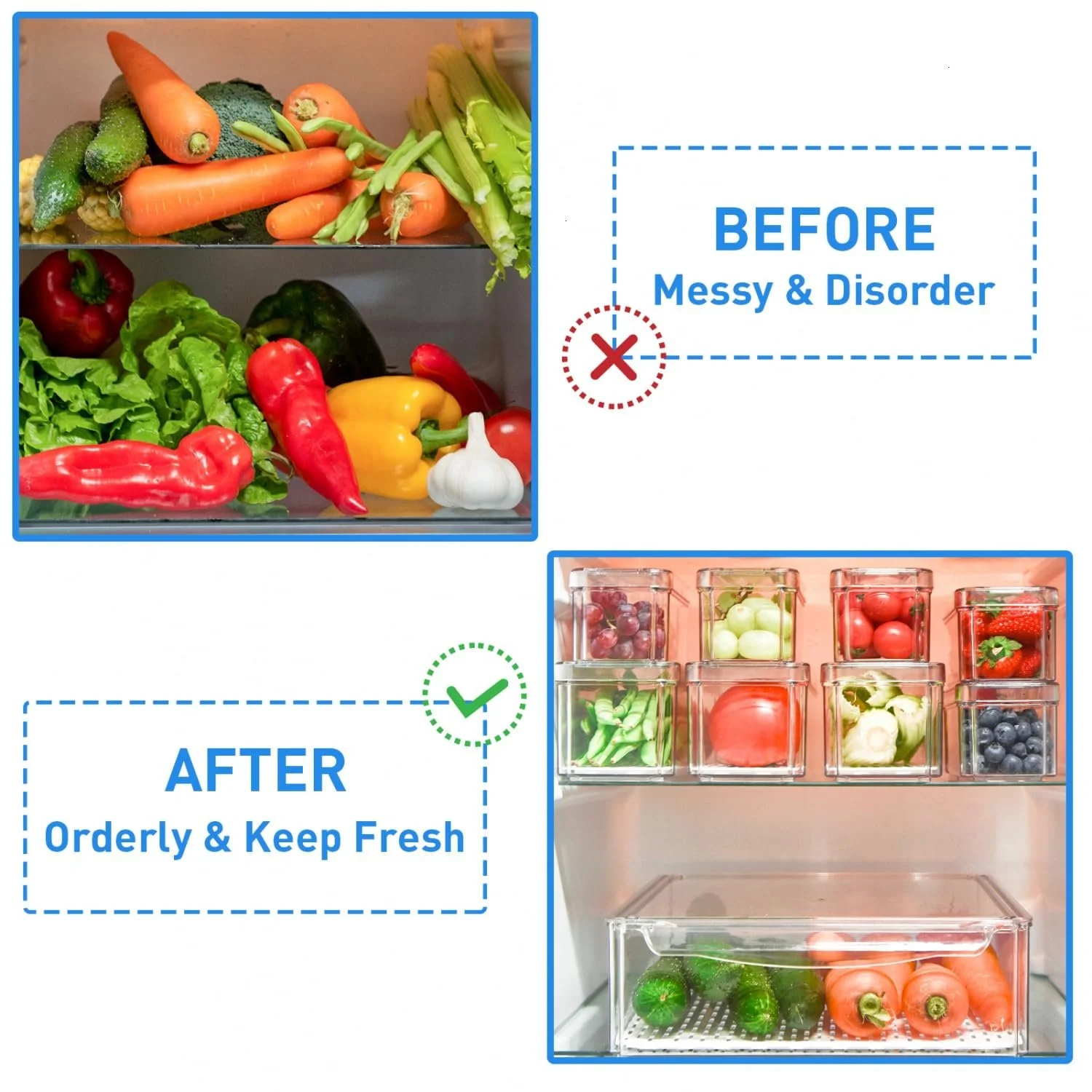
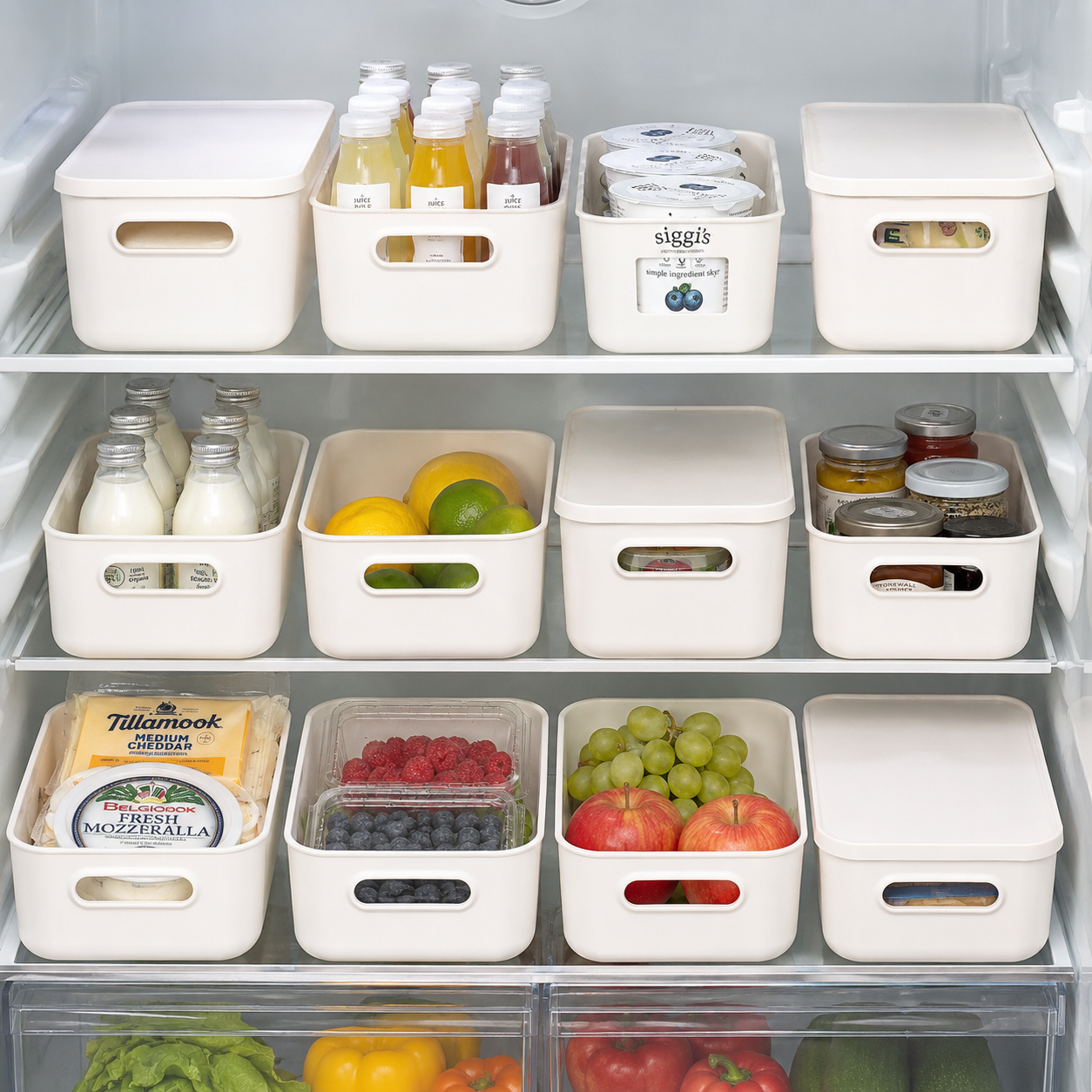
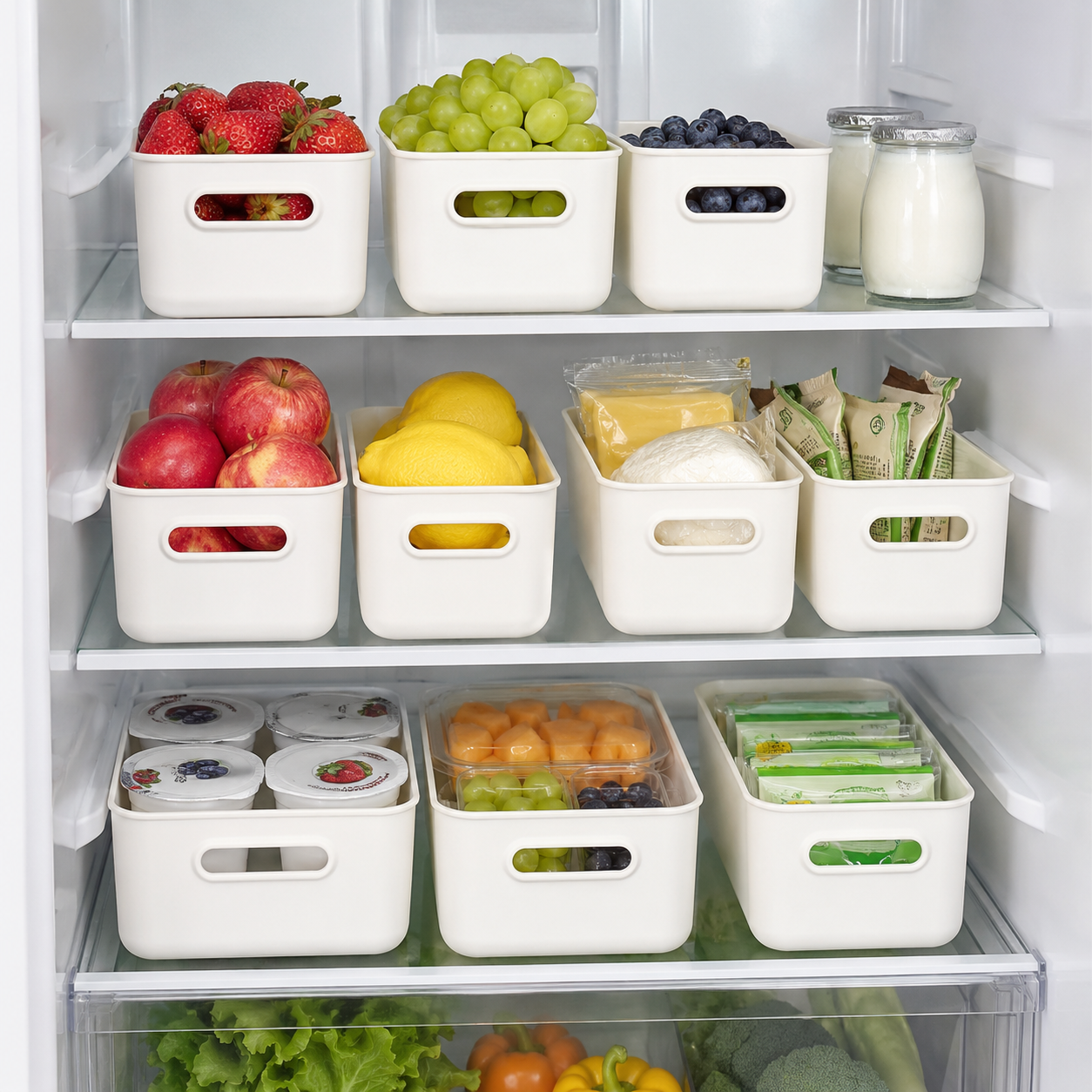
Stackable clear refrigerator storage bins with lids help keep produce, leftovers, or snacks contained and visible rather than loose on a shelf where smaller items get lost behind larger containers. Because they're stackable, they also make better use of fridge shelf height, similar to how stackable bins work in a pantry.
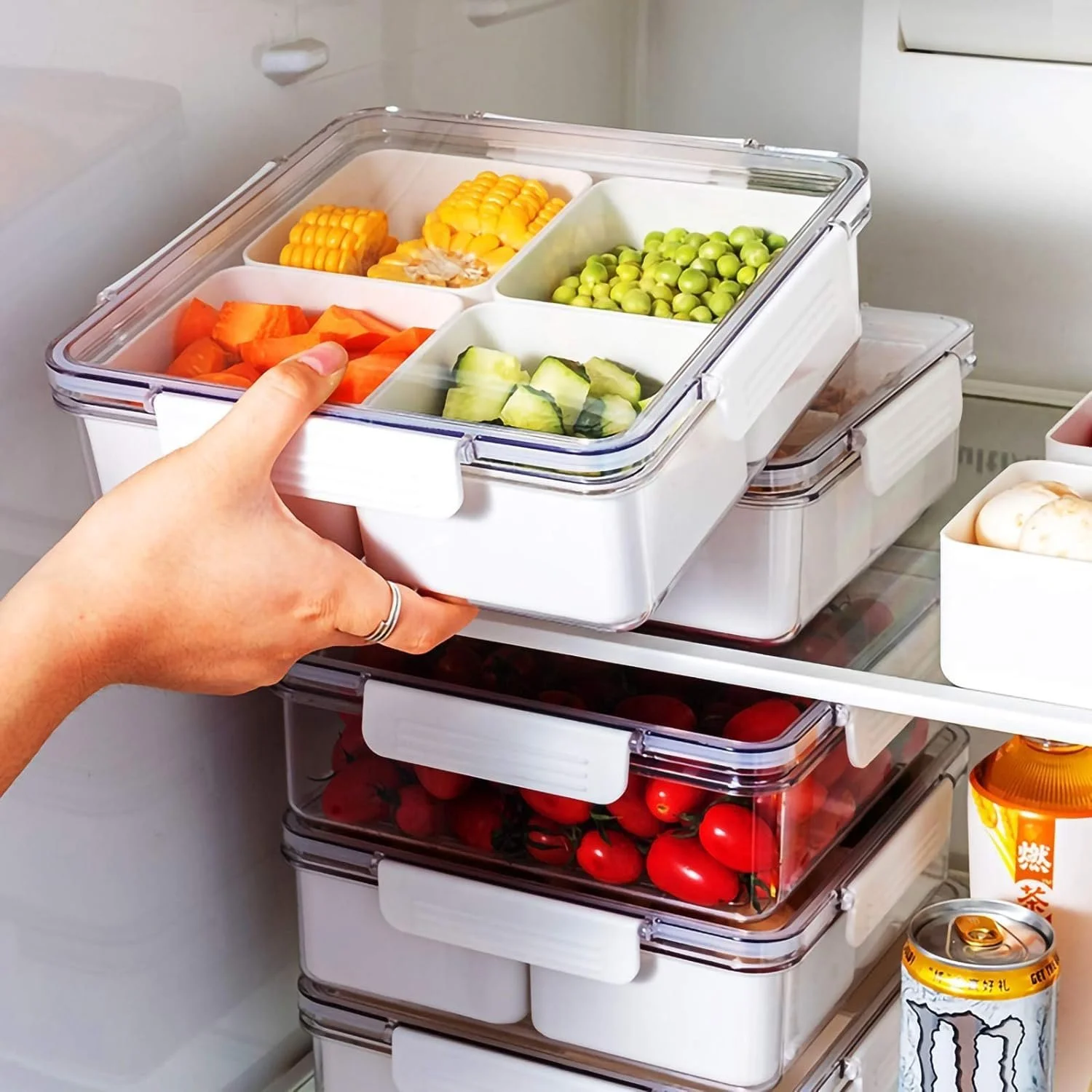
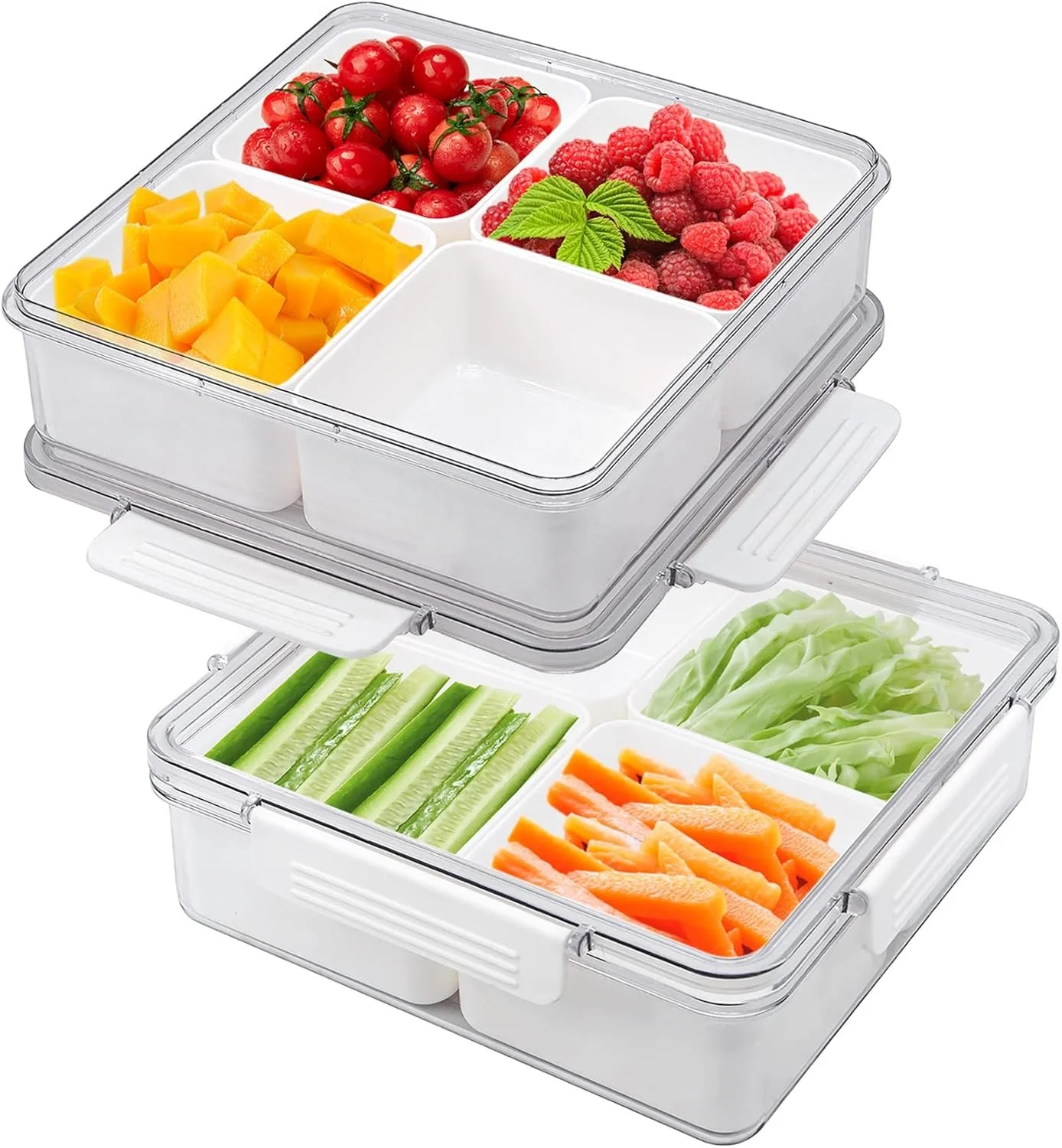
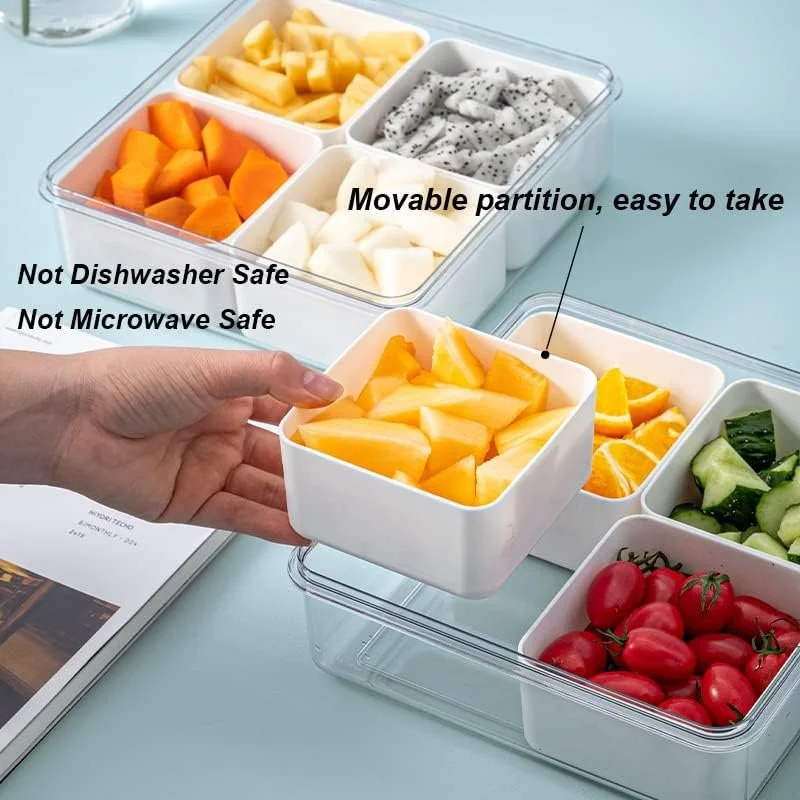
For portioned snacks or party prep, divided serving trays with lids for snacks and produce offer sectioned compartments that keep different foods separate, which is useful both for meal prep storage and for serving guests without needing separate dishes for each item.
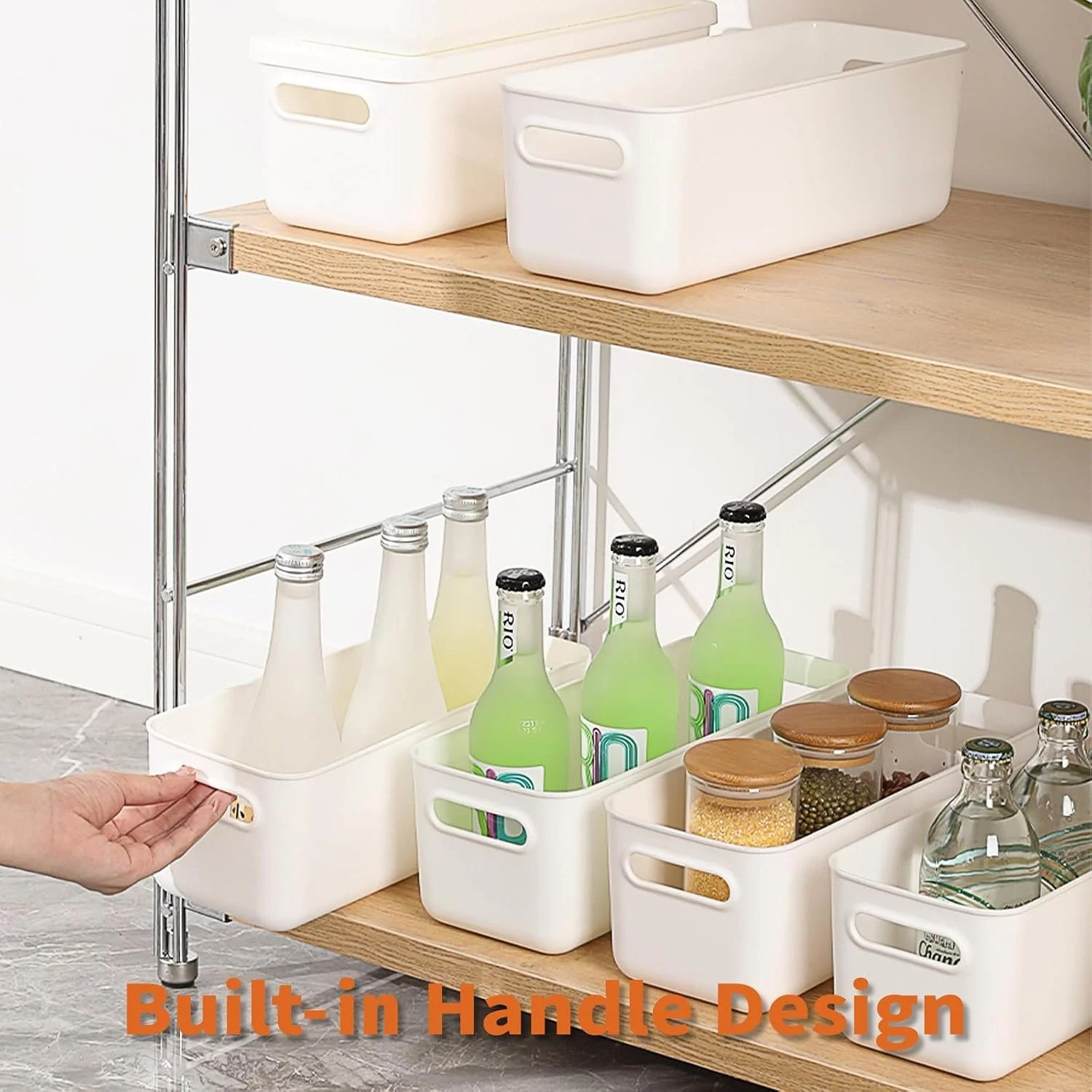
For general storage flexibility around the kitchen, whether that's organizing toys in a playroom-adjacent space, desktop supplies, or overflow pantry items, stackable plastic storage bins with lids in multiple sizes can be a flexible option since they come in a mix of sizes that can be assigned to whatever zone needs them most.
Labeling: The Step That Ties It All Together
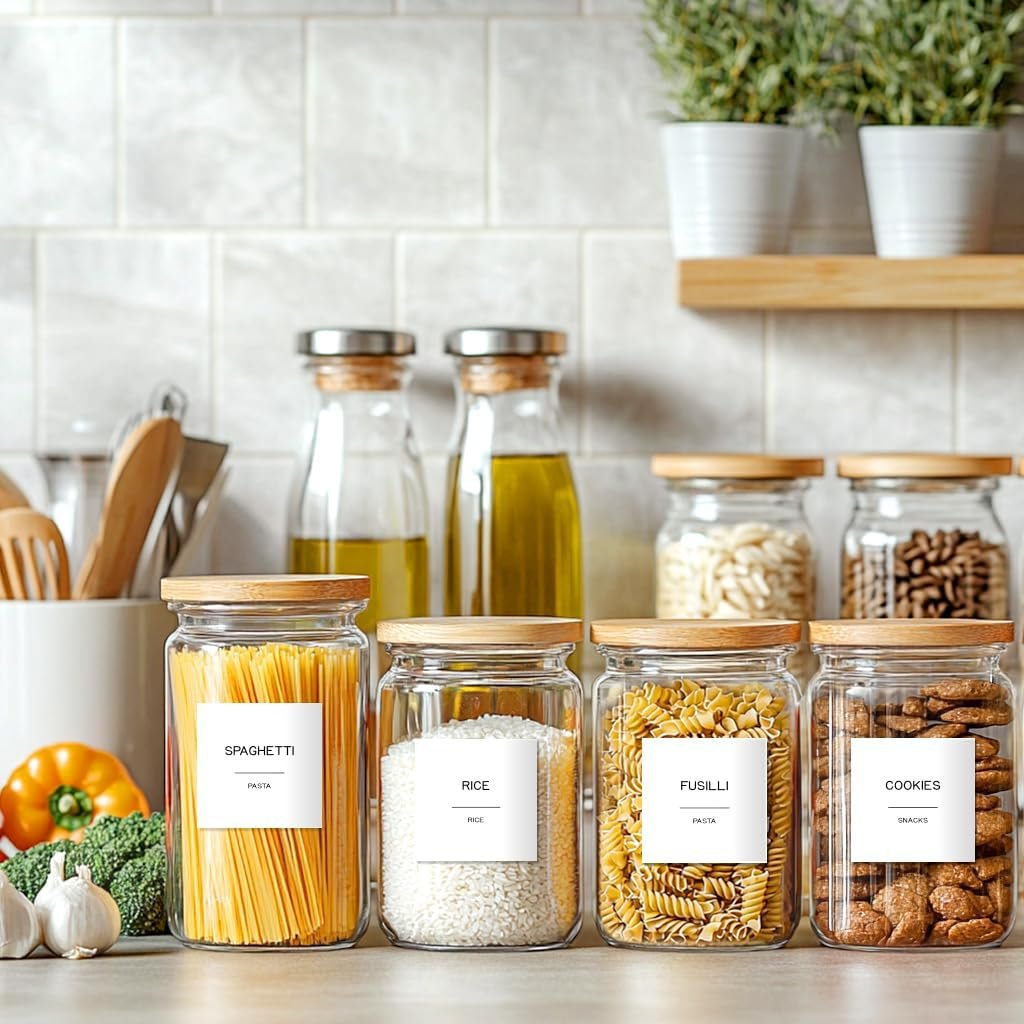
Even the best containers lose their usefulness if nobody can tell what's inside them at a glance, especially once decanted from original packaging.
Waterproof pantry labels for food containers and storage bins make it easy to identify contents on matching jars or bins without relying on handwriting that can smudge or fade. A minimalist, uniform label set also contributes to that clean, easy-to-scan pantry look many people are aiming for, though the functional benefit, being able to find what you need quickly, matters more than the aesthetic one.


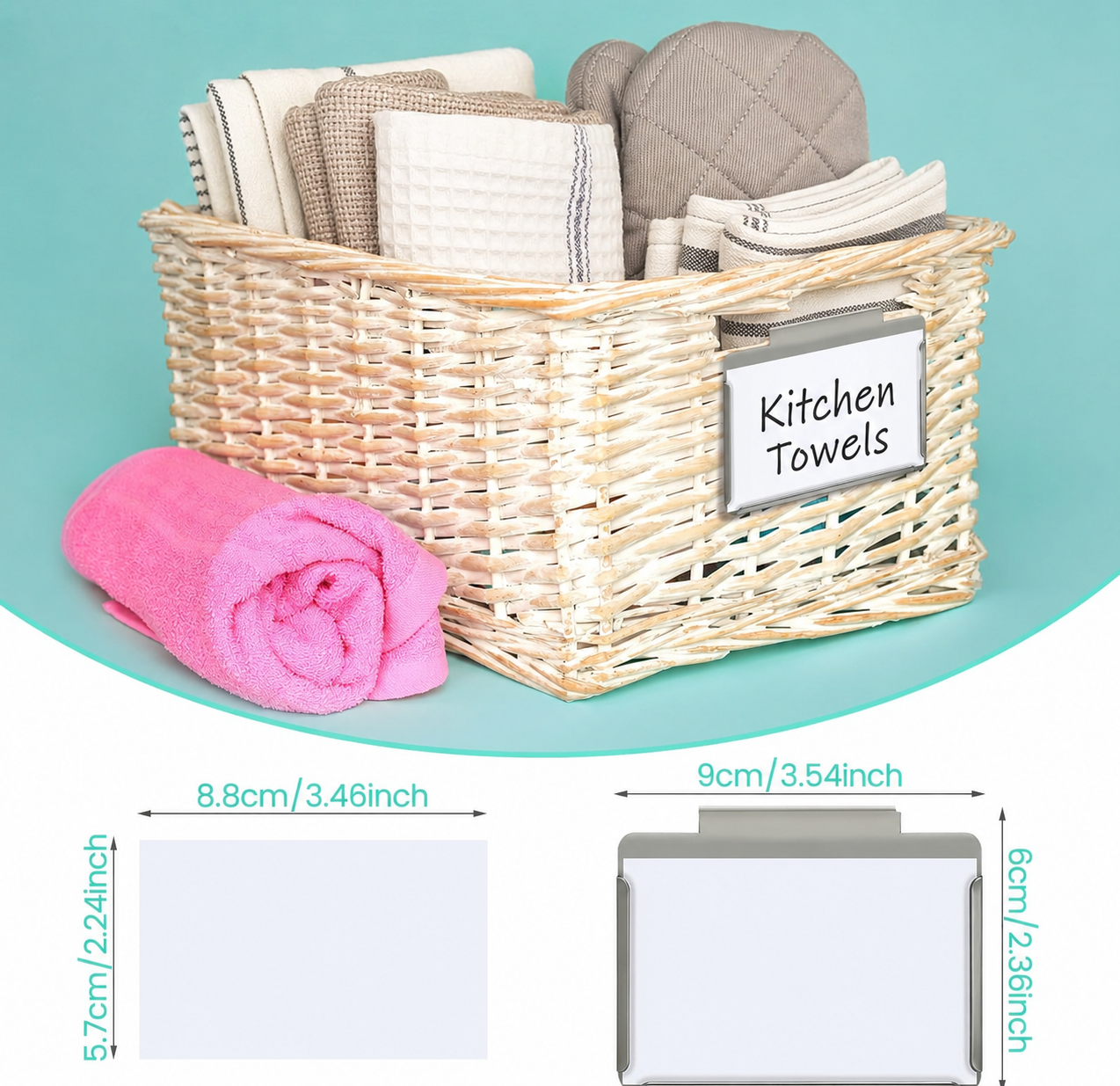
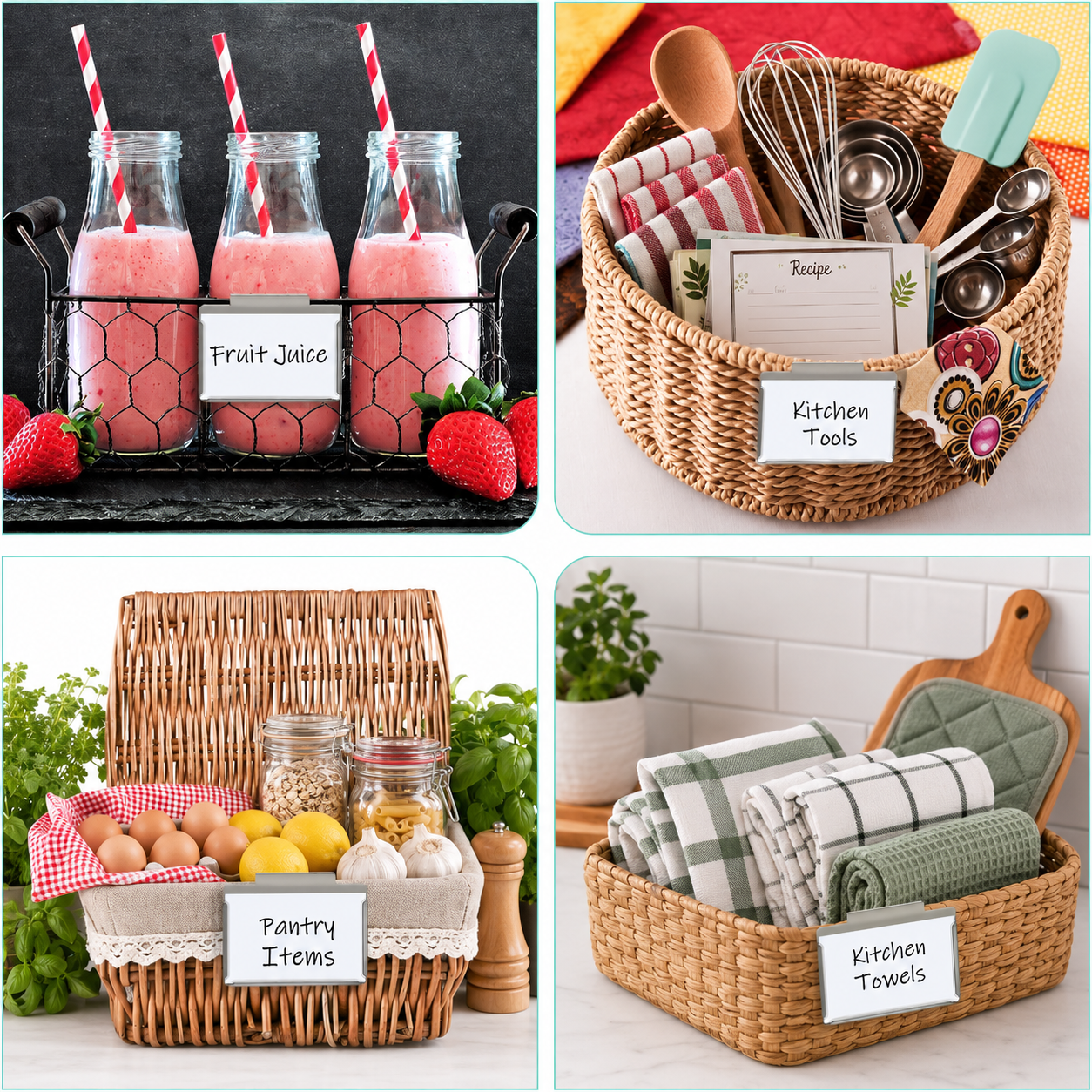
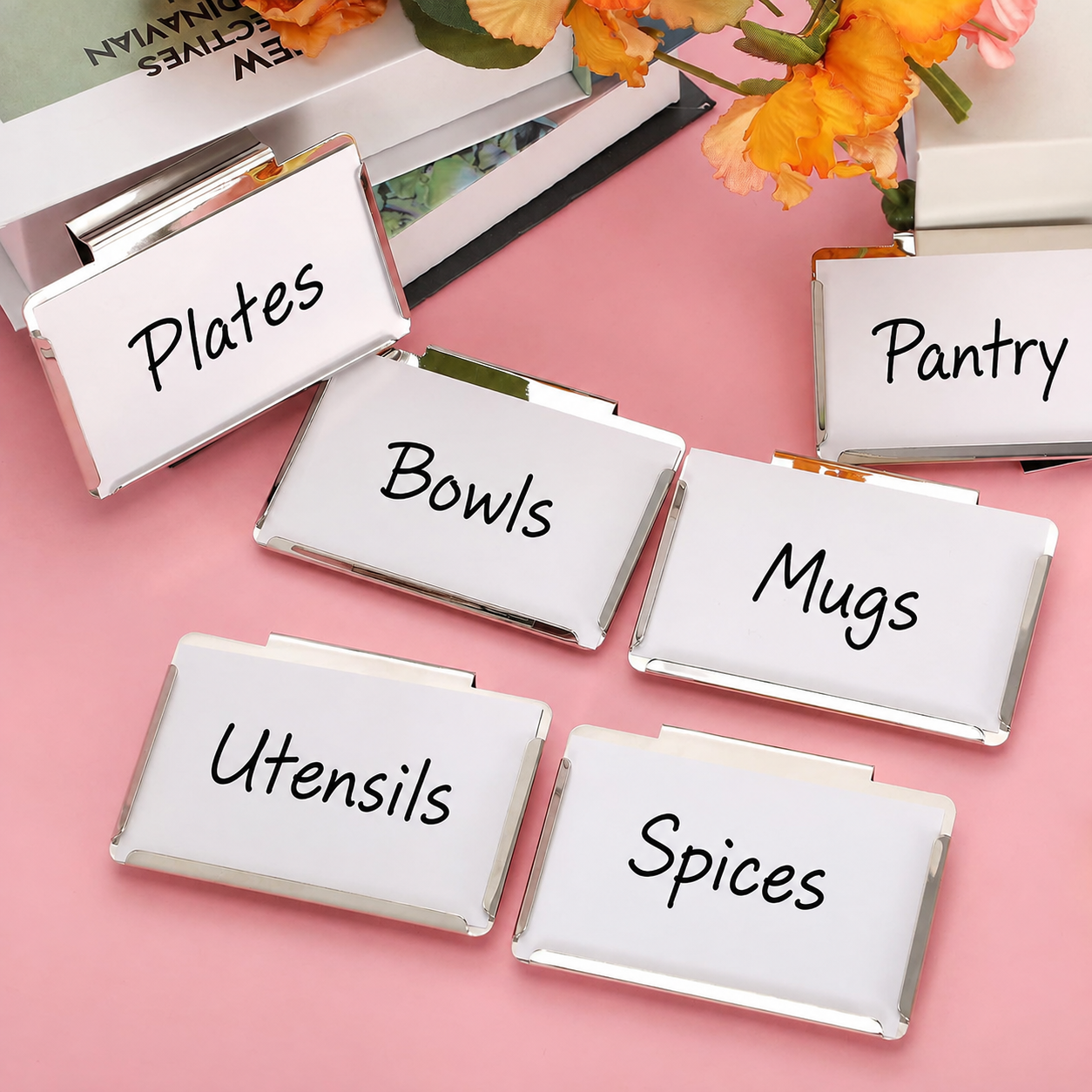
For labeling bins or baskets rather than jars, clip-on labels for storage bins and baskets attach directly to the container edge, which works well for opaque bins where you can't see contents through the material.
How to Decide What You Actually Need
It's easy to look at a full pantry organization system and want to buy everything at once, but not every kitchen needs every type of organizer. A few questions can help narrow things down:
Do items get lost because you can't see them, or because you can't reach them? Visibility problems usually call for clear bins or turntables; reach problems usually call for pull-out shelves or risers.
Is the clutter mostly food, mostly tools, or a mix of both? Tackling the bigger category first often has the most noticeable impact.
Do you already own containers that just need better labeling or grouping, rather than replacing everything?
Starting with the one or two areas that bother you most, rather than overhauling the entire kitchen at once, tends to be more sustainable and easier to keep up with long term.
If this is your first place, this first apartment checklist can help you separate true move-in essentials from organizers and extras that can wait.
Final Thoughts
Effective pantry and kitchen organization isn't about owning a specific set of products. It's about choosing systems that match your actual space, your actual habits, and the way your household really cooks and shops. Measuring your shelves and drawers first, grouping items into logical zones, and picking organizers that solve a specific, identified problem will get you further than trying to recreate someone else's pantry photo.
If any of the ideas above line up with a frustration in your own kitchen, they're worth exploring further, but the most important step is simply starting with whichever area causes you the most daily hassle.
FAQs:
1. Where should I start when organizing a messy pantry? Start by grouping items into zones based on how you use them, like baking, snacks, or breakfast, before buying any organizers. This makes it easier to see what storage you actually need.
2. How do I stop items from getting lost on deep pantry shelves? Turntables and pull-out shelves are two of the most effective solutions, since they either rotate contents forward or slide the whole shelf toward you instead of requiring you to reach into the back.
3. Do I need to measure my pantry before buying organizers? Yes. Measuring shelf depth, drawer width, and cabinet height before purchasing helps you avoid organizers that don't fit or that block doors from closing properly.
4. What's the best way to organize spices in a small kitchen? It depends on available space. A drawer near the stove works well with a slanted spice tray, while a stackable tiered rack is a better option if you only have shelf or countertop space available.
5. How can I keep pantry organization looking neat long-term? Consistent labeling and using matching containers for similar categories, like all baking staples in the same style of jar, makes it easier to maintain the system once it's set up, rather than letting it slowly slide back into clutter.
