
A small bedroom gets cluttered quickly. Clothes, shoes, bags, bedding, chargers and personal items all compete for a limited amount of space, and when there is nowhere obvious for something to go, it ends up on the chair, the floor or the dresser. The fix is not always more containers. Often it comes down to deciding what needs to live in the bedroom, matching storage to how often you use things, and making better use of space you already have.
This guide covers small bedroom storage ideas for clothes, closets, under-bed space, bedside items and everyday clutter. Most of them work with what you already own, and none of them require a particular kind of furniture, a big closet or permission to drill into the walls.

Before Adding Storage, Figure Out What Is Creating the Clutter
Storage works best when it solves a problem you can name. Before rearranging anything, spend a few minutes noticing where clutter actually collects. Common pressure points include:
clothes that have no clear home, or that are worn but not ready to wash
shoes that spread out from the closet or door
bags and backpacks
laundry, clean and dirty
paperwork and mail
beauty and personal-care items
chargers and electronics
bedding
seasonal items
sentimental items
hobby supplies
A few questions can help you sort this out:
What do I use every day?
What do I use only now and then?
What does not actually need to live in the bedroom?
What keeps ending up on the floor, the bed, the chair or the dresser?
The last question is the most useful. Items that keep landing in the same spot are usually telling you that their real home is too far away, too hard to reach or not defined. This is not about a dramatic purge. It is simply about noticing, so the changes you make fit the way you live in the room.
17 Small Bedroom Storage and Organization Ideas
1. Give Everyday Items the Easiest Storage Spots
The simplest principle behind a system that lasts is to store things according to how often you use them. Clothes you wear weekly, the charger you plug in every night, your daily bag and the shoes you reach for most should be the easiest things in the room to grab and put back.
Problems start when everyday items sit in boxes, behind seasonal items or at the back of a shelf. Putting those things away takes effort, so they get left out. Rarely used items can go higher, lower or farther back, because a little inconvenience costs you almost nothing when you only need them twice a year. If you start with only one change, making everyday items easier to reach is a practical place to begin.
2. Use Under-Bed Space for the Right Things
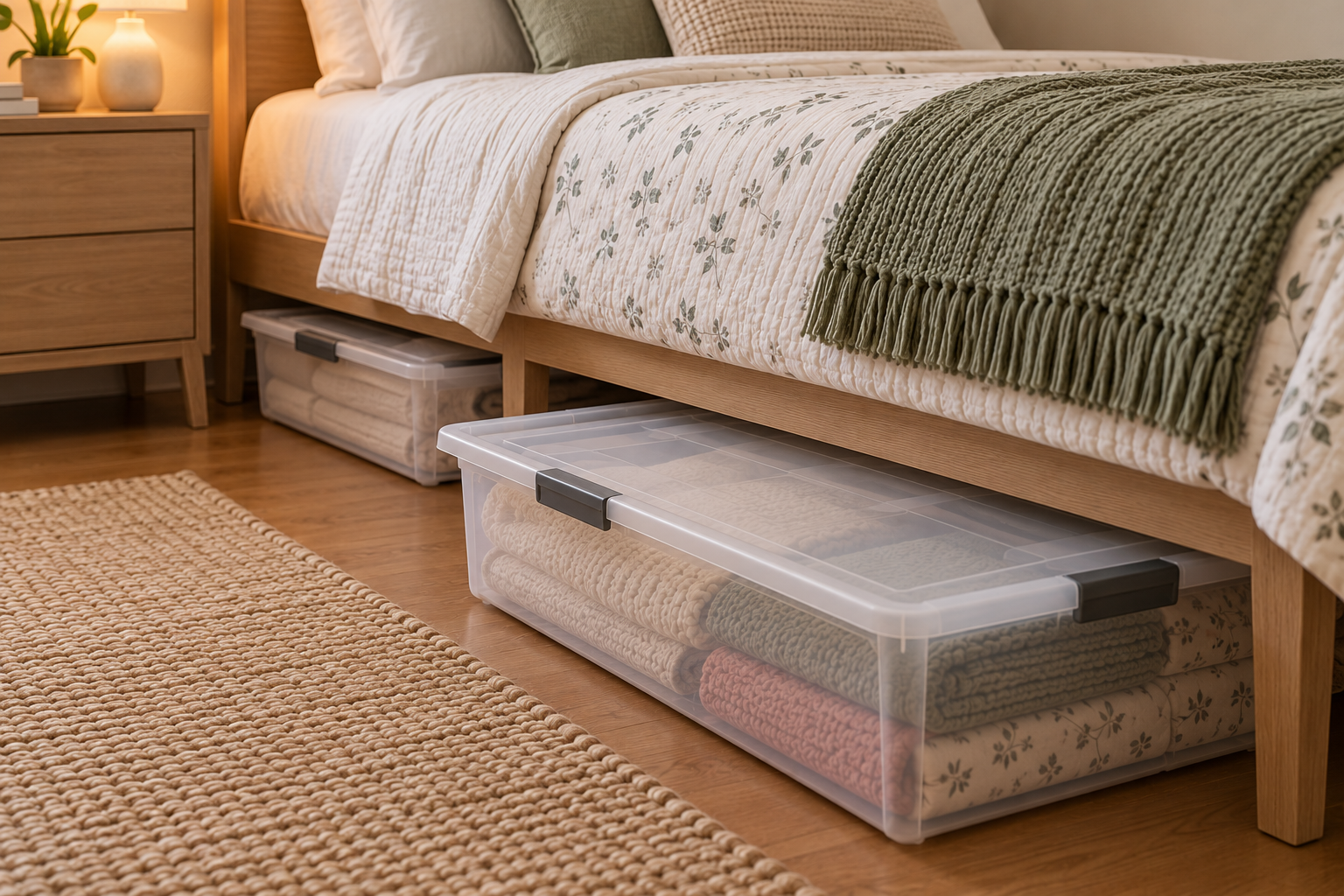
Under-bed space is useful, but only for certain items. It suits off-season clothes, extra bedding, spare linens and other things you reach for occasionally. It is a poor fit for anything you need daily, because pulling a container out from under the bed every morning gets old fast, and you will stop doing it.
Not every bed has usable clearance, either. Some frames sit nearly flat on the floor, and some beds have built-in drawers that already use the space. If yours has room, think about dust and access. Items that sit under a bed for months collect dust, so covered or enclosed storage helps, and it should slide out without you having to move other furniture first. If you have no clearance at all, skip this idea. It is one option among many, not a requirement.
3. Stop the Bedroom Chair From Becoming a Clothing Pile
The bedroom chair becomes a clothing pile because of a very ordinary category: clothes that have been worn but are not dirty enough for the laundry. They do not belong back in the drawer and they are not ready to wash, so they land on the chair.
Instead of fighting that habit, give it a home. A few hooks, one shelf, or a small section of the closet can serve as the in-between spot. Then set a loose limit on it. When the hooks are full, something goes back into the closet or into the wash. That gives the system a built-in signal without any rules to memorize. If you have no wall space for hooks, a single designated corner of the closet rod works too.
4. Keep the Bedside Area Limited to Nighttime Essentials
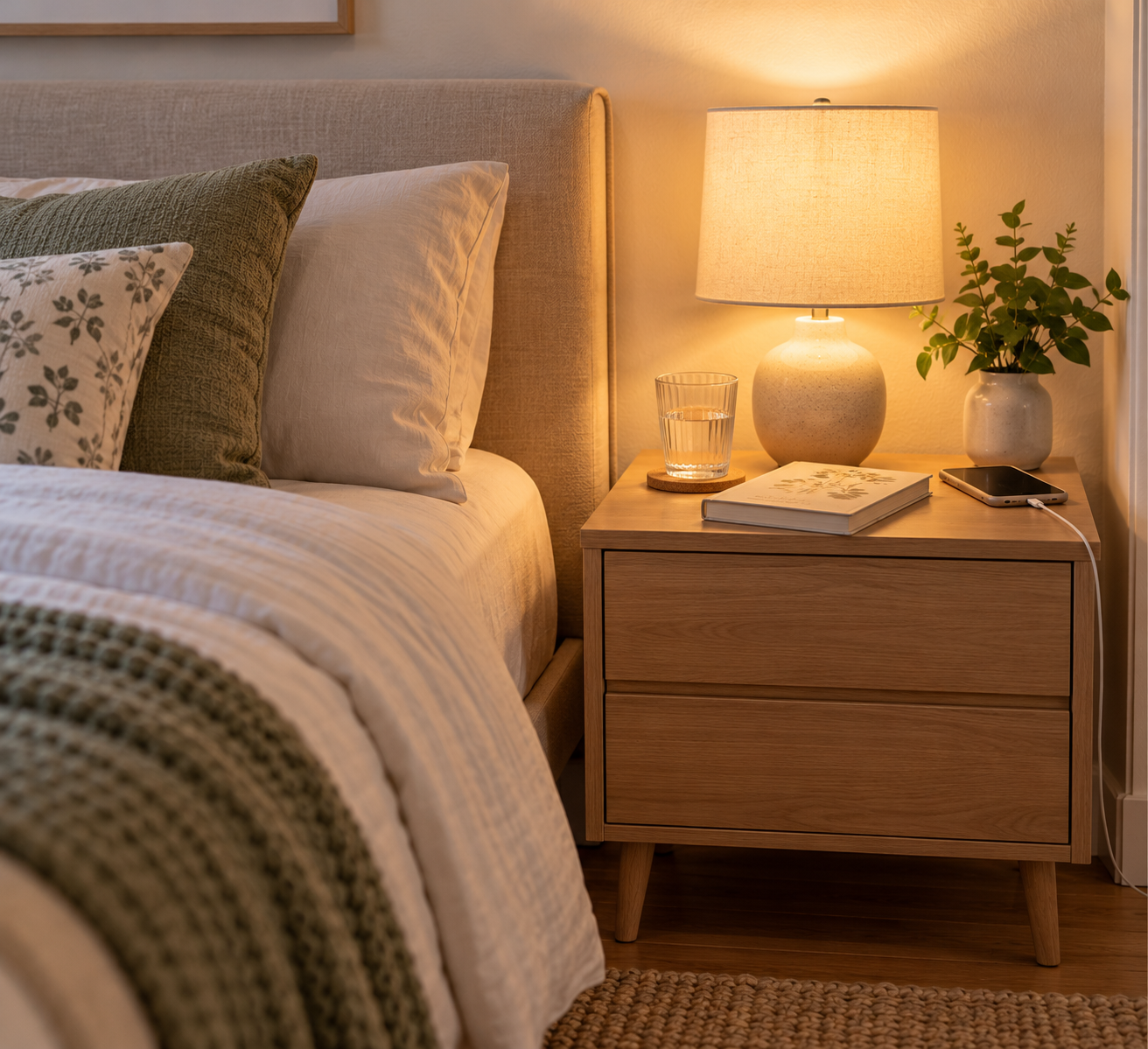
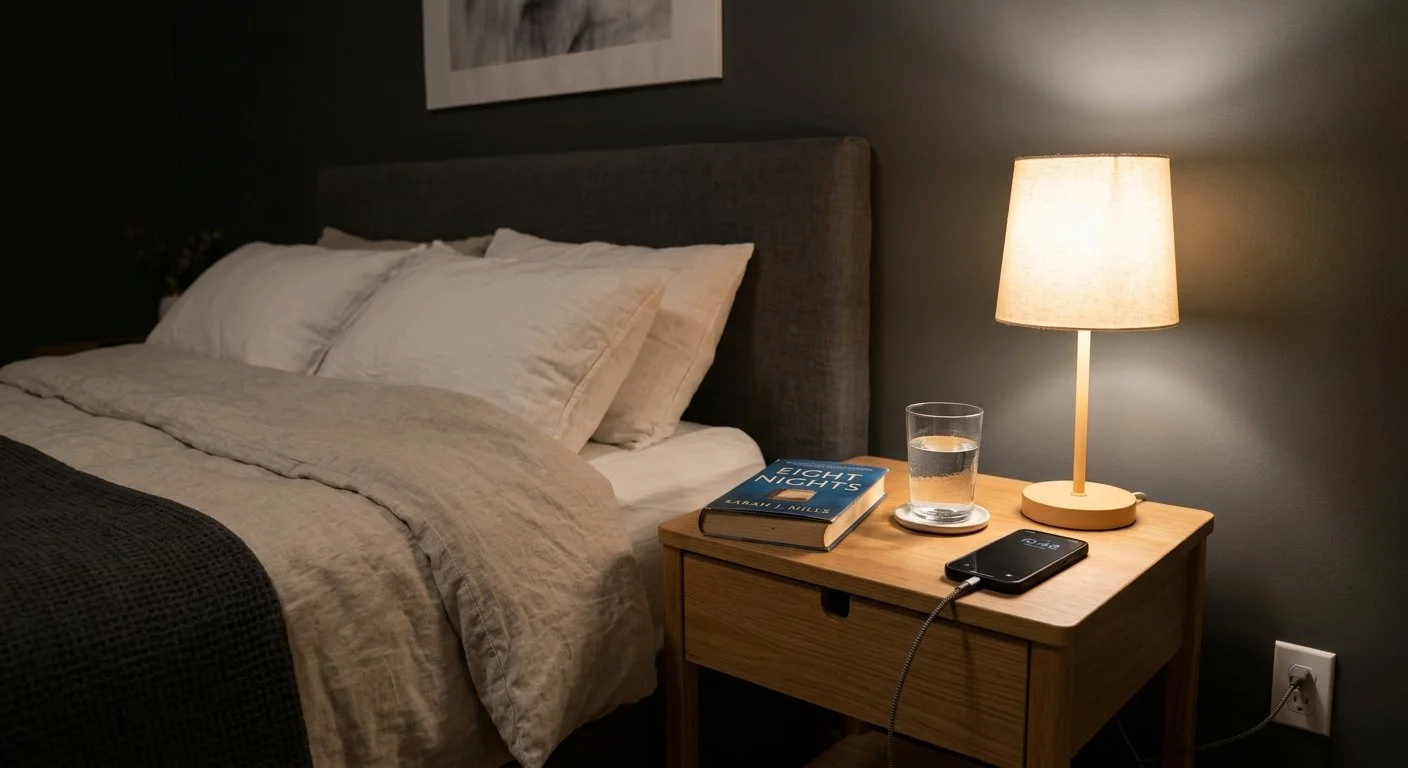
A bedside table or shelf has a small job. For most people that means a lamp, a phone and charger, a glass of water, the book they are currently reading and perhaps one or two personal items. Everything else is passing through.
Unrelated things end up at the bedside because it is convenient: it is close to where you drop things when you walk in or when you are winding down. A simple reset helps. Once a week, or whenever the surface feels crowded, pick up each item and ask whether it is something you use at night or in the morning. If not, take it to where it actually belongs. If the table has a drawer, it can hold a few extras, such as lip balm, earplugs or a notebook, but it works best when you can see everything in it at a glance.
5. Use Vertical Space Selectively
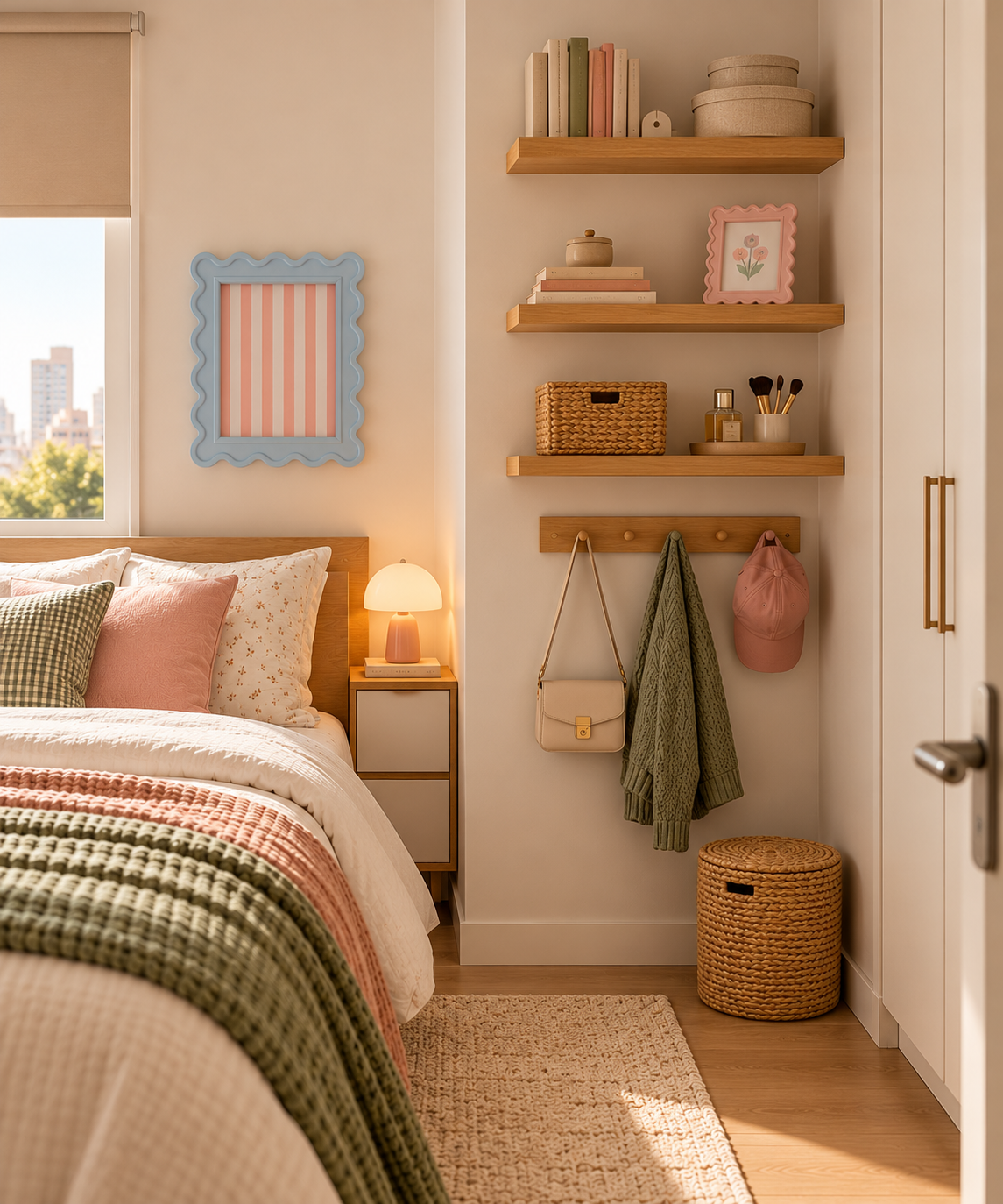
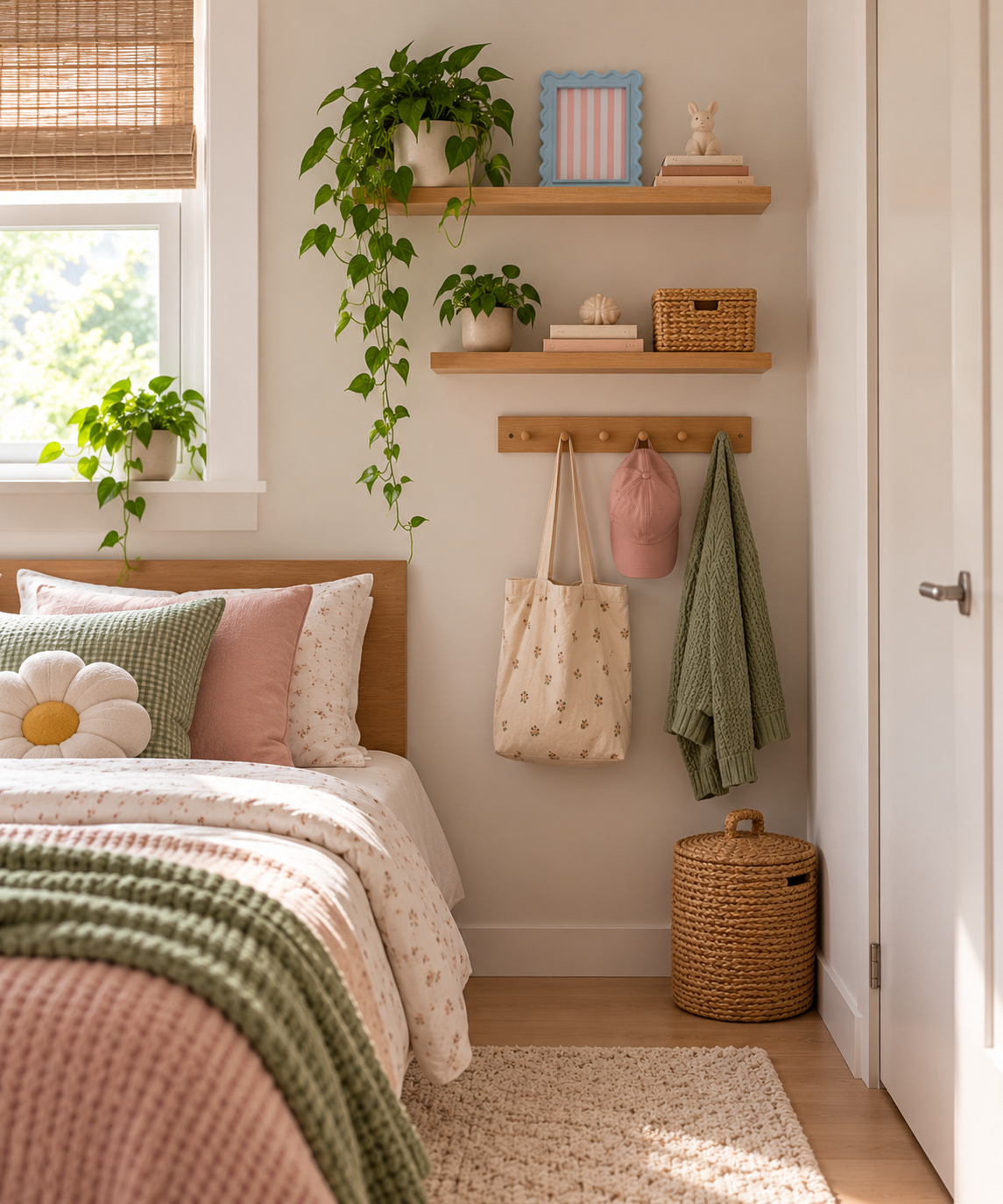
Walls and the upper areas of a room can provide useful storage opportunities when floor space is limited. Higher shelves, space over the door, wall hooks and tall furniture you already own can all hold items you do not need every day.
The key word is selectively. Using vertical space does not mean covering every wall. A wall packed with shelves and hooks can make a small room feel crowded and heavy. Choose one wall or one zone, keep the items at eye level or below for things you use often, and use the higher spots for lighter, less-used things. If you want something decorative on the wall too, our bedroom photo wall ideas show how to keep a display intentional rather than scattered.
If you rent, check your lease before drilling or mounting anything. Many leases restrict it, or require repairs when you move out. Over-the-door hooks, tension rods, adhesive hooks rated for the weight you plan to hang and freestanding tall furniture are all non-permanent options. Our guide to renter-friendly apartment ideas covers more ways to work around those limits.
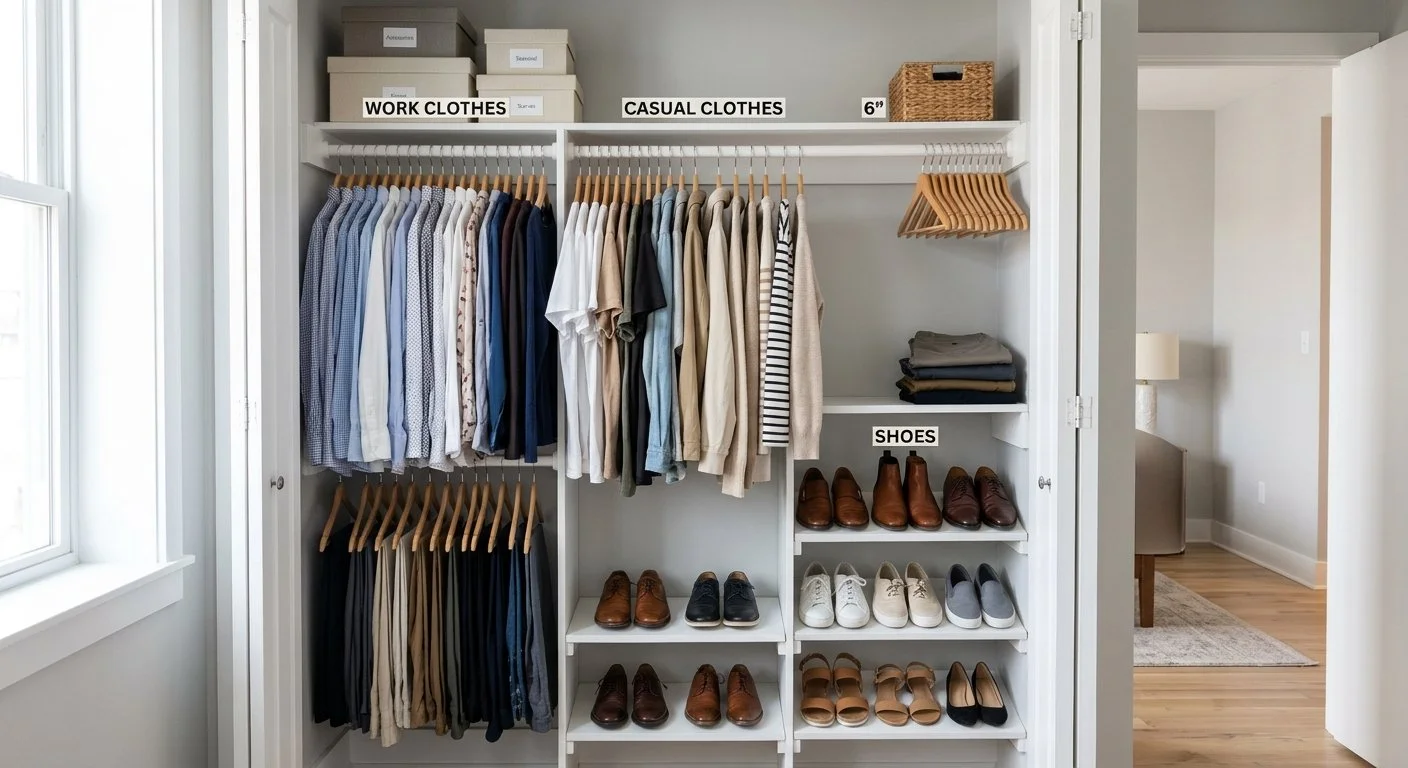
6. Make the Closet Work by Category, Not by Empty Space
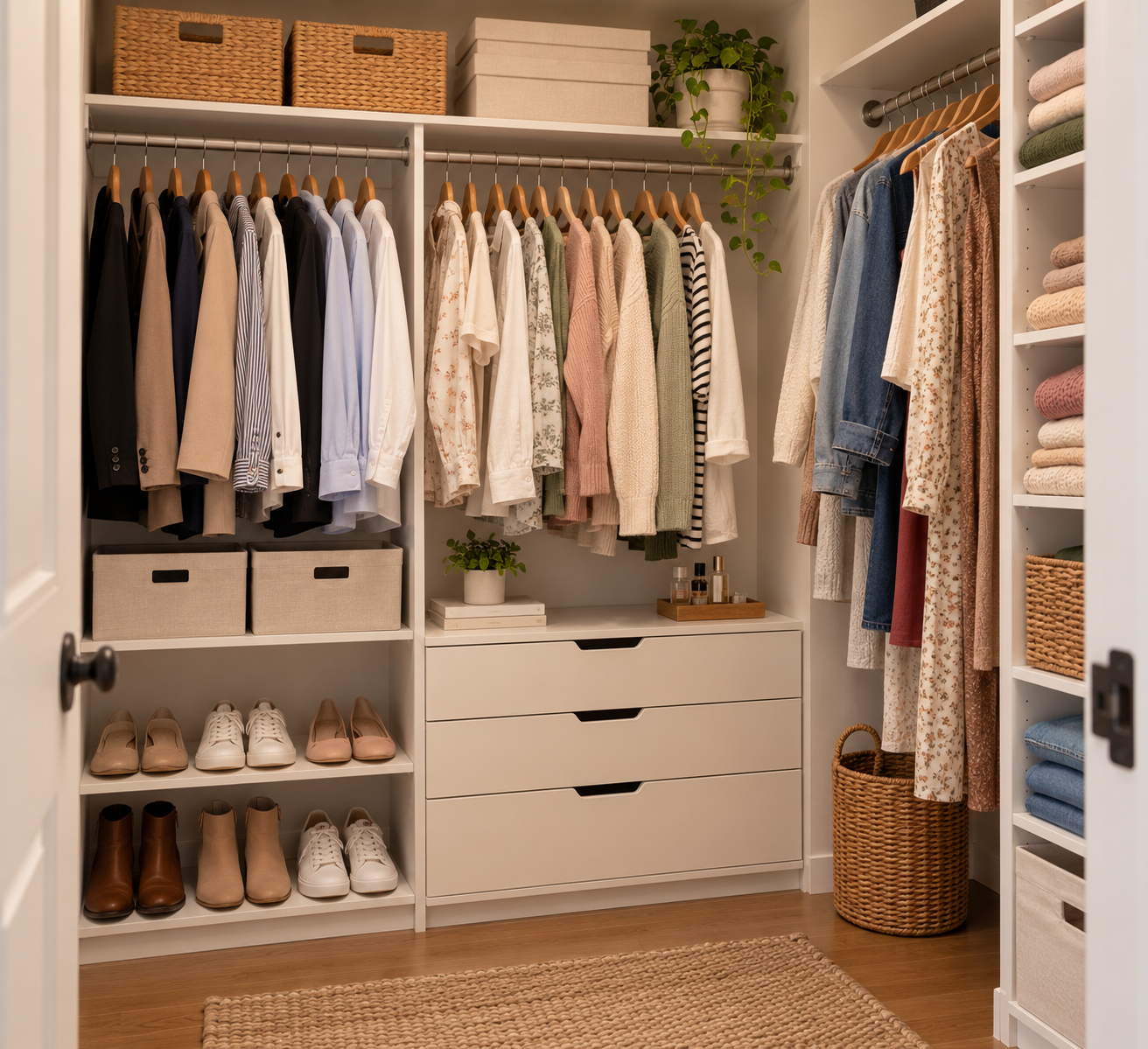
Small bedroom closet organization often goes wrong when the goal becomes filling every gap. A closet packed edge to edge is not necessarily useful. It is just full.
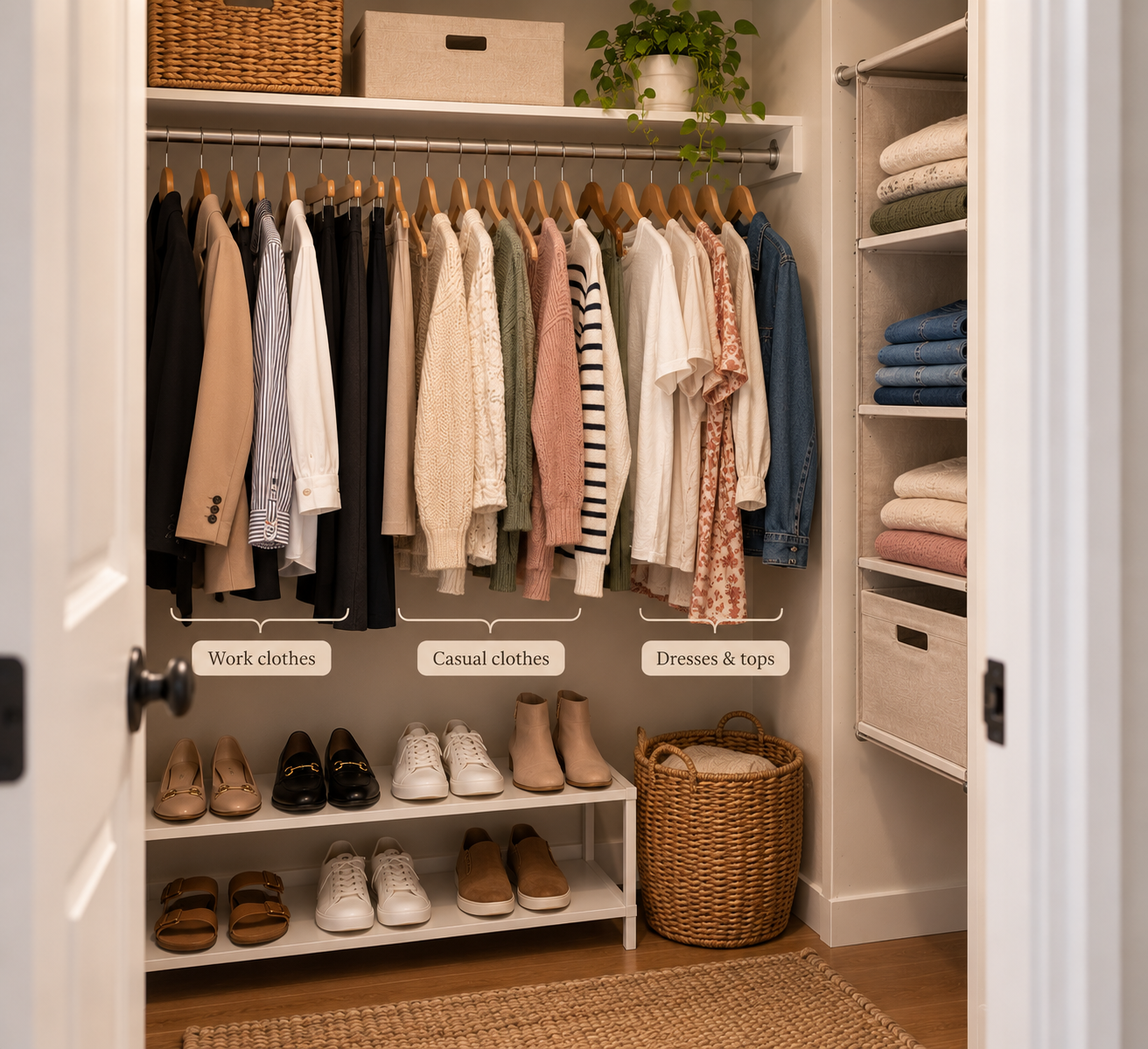
A more reliable approach is to group items by type or routine: work clothes, casual clothes, outerwear, shoes, accessories. When similar things sit together, you can see what you have, find what you need faster and notice where unused space really is. You may discover that half a shelf is sitting empty while the rod is jammed. Once items are grouped, you can adjust the layout so the categories you use most are the easiest to reach, instead of leaving everything wherever it happened to fit.
7. Reassess What Is Taking Up Hanging Space
Not everything needs to be on a hanger. Depending on the fabric and your own preference, some items work better folded, such as knits, T-shirts and casual pieces, while others, such as dresses, blazers and dress shirts, tend to do better hanging. Use ordinary common sense and what you already know about your clothes rather than a strict rule.
If your rod is overcrowded and your shelves or drawers have room, moving a few items from hanging to folded can free up space and make the closet easier to use. The reverse can also be true. If your drawers are packed and the rod has room, hanging a few more items may help. The goal is a balance that suits your clothes and the closet you actually have.
8. Use the Back of the Door With a Specific Purpose
The back of a bedroom or closet door is a handy spot for lightweight items: bags, scarves, belts, accessories or the pieces you wear most often. It works best with one defined purpose. If the door is for bags, it holds bags. If it is for tomorrow’s outfit and a couple of accessories, it holds that.
Without a purpose, the door becomes a place where miscellaneous items get hung until it looks cluttered. A few practical checks first: make sure there is enough clearance for the door to close, that hooks or hardware do not scratch the door or the frame, and that the weight is something the door can handle. Doors that open against a wall or a piece of furniture may not leave much room.
9. Give Shoes a Clear Limit
Shoes spread easily in a small bedroom, because they are bulky, they get taken on and off in different places and there are usually more pairs than there is clear floor. A few approaches help:
Keep the pairs you wear this season somewhere easy to reach.
Move rarely worn pairs elsewhere if you can, such as another closet, an entryway or a storage area.
Define one shoe zone, such as one side of the closet floor, one shelf or one spot by the door.
Avoid letting shoes expand into every unused gap.
The idea of a limit matters more than the method. When the shoe zone is full, that is the cue to decide what stays and what moves, rather than finding another corner.
10. Create One Home for Bags and Accessories
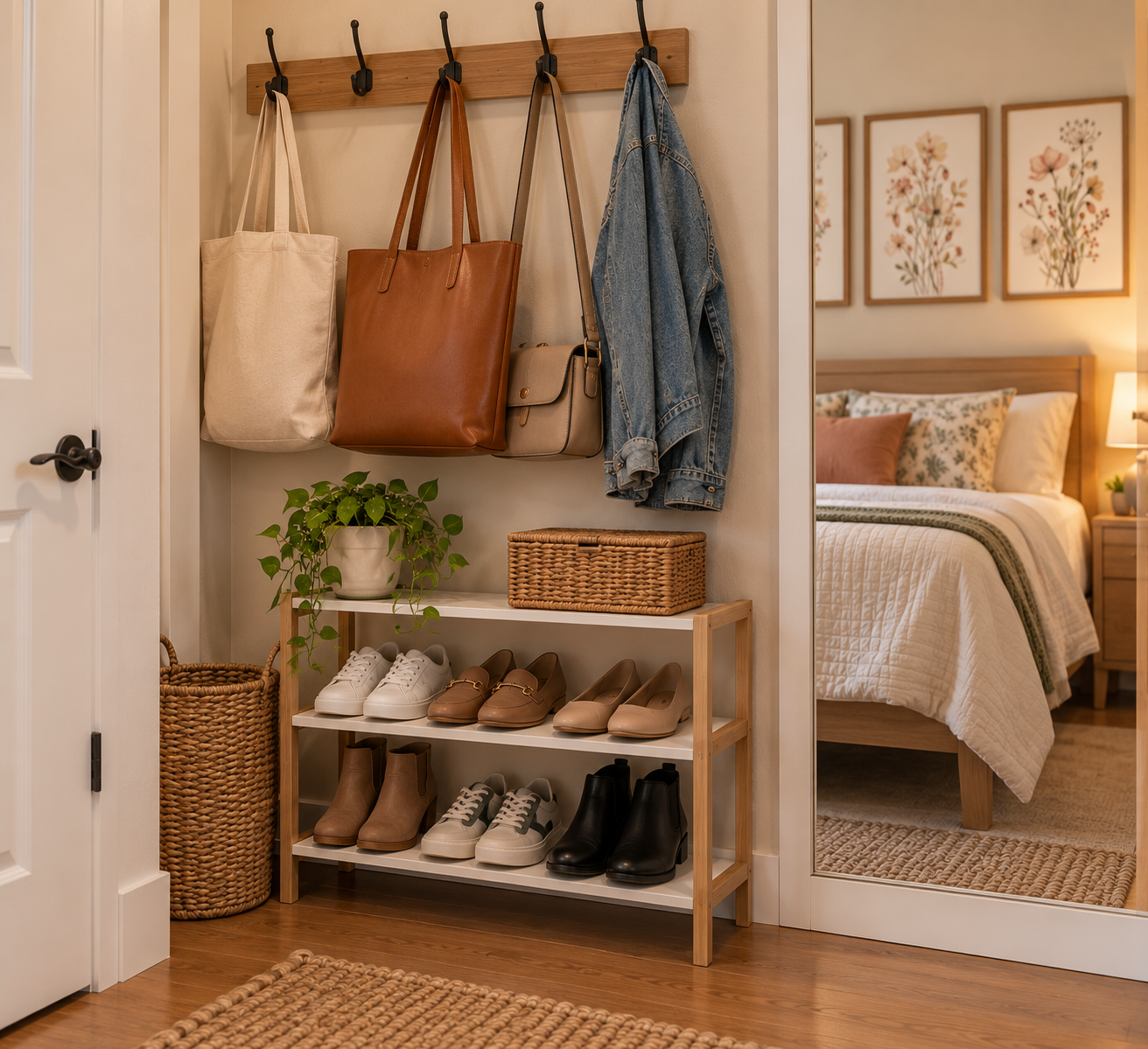
Handbags, backpacks, hats, belts, scarves and jewelry are small on their own, but when they are stored in different places around the room, they create visual clutter. A bag on the chair, a hat on the dresser and a belt on a doorknob can create visual clutter even when each item seems minor on its own.
Try giving them a single home and grouping inside it by type or by how often you use them. Everyday bags and accessories can be the easiest to reach, and special-occasion pieces can go farther back. A single hook rail, one shelf or one drawer is often enough. What matters is that when you come in the door, you know exactly where each thing goes.
11. Keep the Dresser Top From Becoming a Drop Zone
Dresser tops collect receipts, jewelry, cosmetics, keys, mail, spare clothes and random objects, because they are flat, at hand height and close to where you walk in. A practical reset looks like this:
Keep only a few daily-use items on top, such as a tray with jewelry and keys, or a small mirror.
Move unrelated items to the places they actually belong.
If you need a spot for temporary items like mail or receipts, define one small area for them, and clear it on a regular basis.
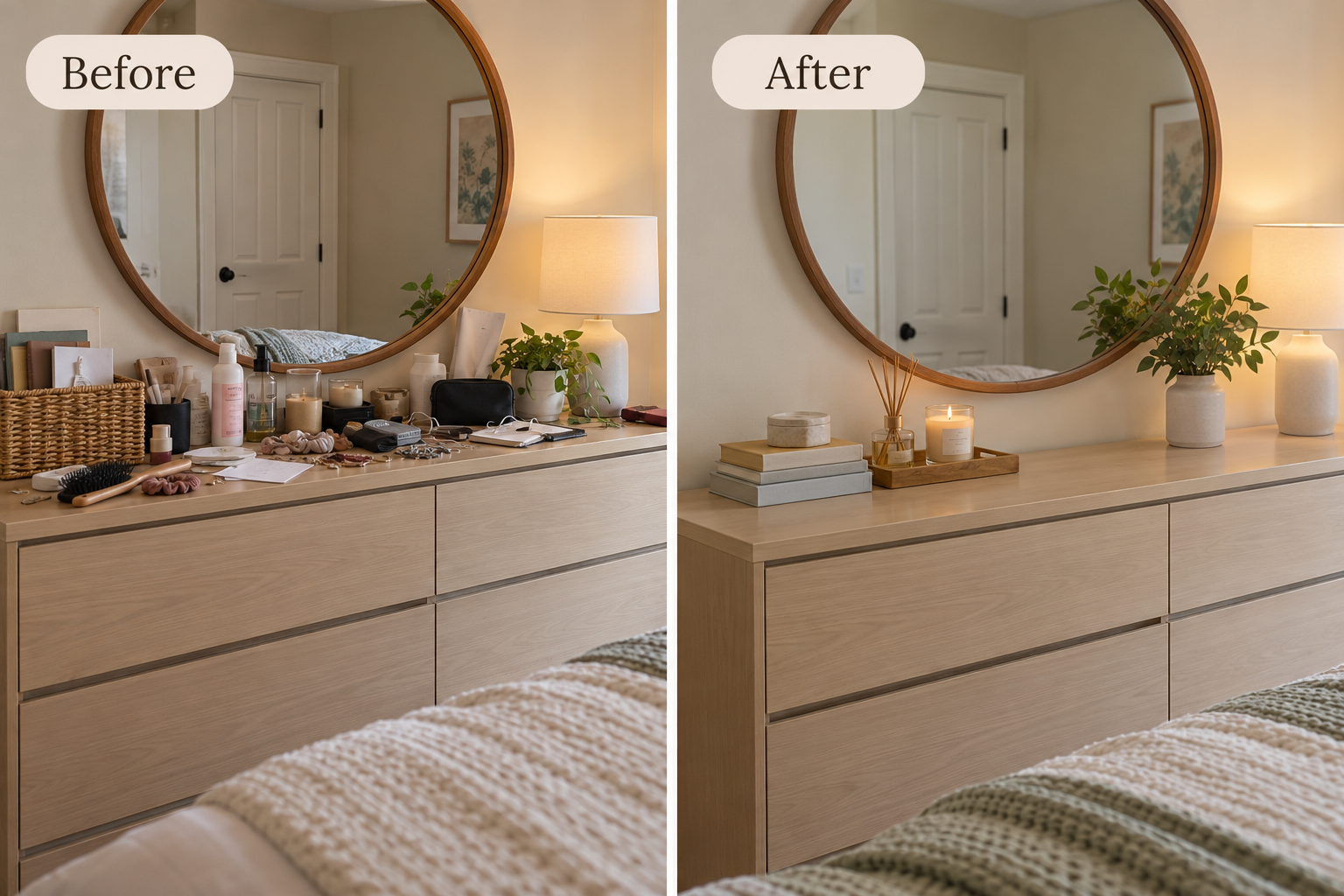
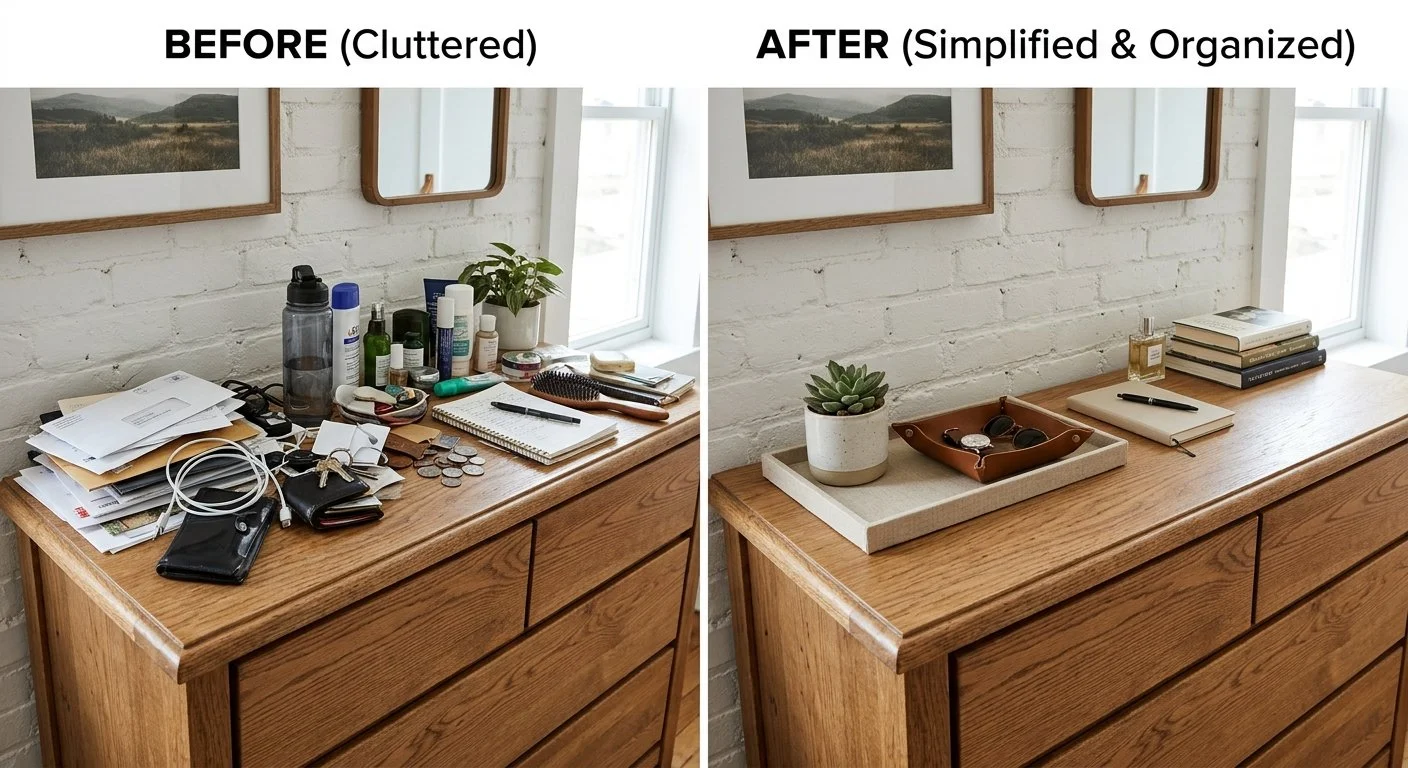
A completely bare surface is not necessary. Some personal items on a dresser make a room feel like yours. The goal is for what is there to be there on purpose.
12. Make Existing Drawers Easier to Use
Before thinking about new storage, look at the drawers you already have. A few small changes can make them work better:
Group similar items together so you are not searching through everything.
Keep the most-used pieces near the top or the front.
Avoid tall stacks where you have to take everything apart to reach one item.
Every so often, remove things that no longer belong there, such as clothes you no longer wear or items from another room.
You do not need to follow a particular folding method. Use whatever lets you see and reach what is in the drawer without disturbing the rest.
13. Store Seasonal Items Away From Prime Storage Areas
Winter sweaters in July and beach items in January do not need the most convenient space in the room. Rotating seasonal clothes, heavier bedding and occasional accessories out of your prime storage areas frees up room for what you are actually using now.
This depends on where you live. In places with strong seasonal changes, a twice-yearly swap may make sense. In milder climates, you may only need a small rotation, or none at all. If you do rotate, the under-bed space, the top of the closet or a spot outside the bedroom are all good places for the out-of-season items.
14. Keep Laundry From Taking Over the Room
Laundry tends to take over when its path is unclear. Where does dirty laundry go? Where do clean clothes wait before being put away? When these questions have no answer, laundry piles up on the bed, the chair or the floor.
Instead of aiming for a perfect schedule, focus on removing ambiguity. Choose a clear spot for dirty laundry, whether that is a hamper, a basket or a bag. Decide that clean laundry does not live on the bed or chair, even if putting it away happens a day later than you would like. And choose a routine that is realistic for you, whether that is folding while watching something, putting clothes away on a certain day or doing it in two short rounds. A system you will keep doing beats an ideal one you will not.
15. Use Hidden Storage Without Forgetting What Is There
Hidden storage includes space under the bed, on top of the closet, inside rarely used furniture or behind a door. It is useful, but it only works if you can remember what is there and get to it.
Simple grouping and basic labels can help. Keep one category per container, such as winter bedding or travel items, and write what is inside on a piece of tape or paper. There is no need for an elaborate labeling system. If you find you cannot remember what is stored in a spot, or never open it, that is a sign to either simplify what is in there or to move those items out of the bedroom entirely.
16. Leave Some Storage Space Empty
Filling every drawer, shelf and closet section to capacity makes organization harder. When everything is packed, putting something away means moving other things, and that is when items start landing on surfaces again.
A little empty space does a few useful jobs. It gives items an easy place to return to, it gives you flexibility when your routines or wardrobe change, and it means you do not have to compress or rearrange everything every time you add something. There is no magic percentage to aim for. If you can put an item away without moving three others, you probably have enough room.
17. Remove One Storage Problem Before Adding Another Organizer
Organizing products can become clutter too. A bin that holds things you do not need, or a shelf that crowds the room, solves nothing. Before adding another organizer, it helps to ask:
What exactly will go in it?
Where will it live?
Will it make the item easier to reach?
Am I organizing something I do not actually need to keep in the bedroom?
Sometimes the better solution is to remove, relocate or consolidate. Moving a rarely used item to another room, combining two half-empty containers or giving up a storage spot you never use can do more than adding something new.
How to Organize a Small Bedroom Step by Step
If you want a sequence to follow, this is a practical order. It is not a decluttering challenge, and you do not have to do it all in one go. You can work through it over a weekend or one step at a time.
Clear the bed. Having an empty surface gives you a place to work.
Collect loose items. Pick up what is on the floor, the chair and the surfaces, and bring it to the bed.
Sort by category. Group things before putting them away, for example clothes, bags, papers, bedding and personal items. Sorting first shows you what you actually have.
Identify what belongs elsewhere. Some things, like dishes, tools or items from another room, are in the bedroom only by habit. Set them aside to return.
Put everyday items in the easiest spaces. Daily clothes, chargers and your regular bag get the most accessible spots.
Move occasional and seasonal items to less accessible storage. Under the bed, the top of the closet or another room all work.
Reset the closet. Group clothes by category and decide what hangs and what folds.
Clear the bedside and dresser surfaces. Keep only what you use there and put the rest where it belongs.
Establish homes for laundry, shoes and bags. Give each a clear, defined spot.
Live with the system before buying anything. Give it a couple of weeks. You may find that you need less than you thought, and anything you do add will be chosen for a specific problem.
This kind of thinking, matching storage to use and avoiding extra pieces, applies to other rooms as well. Our small living room ideas follow the same approach.
Small Bedroom Storage Ideas When You Don’t Have Much Closet Space
Not every bedroom has a generous closet, or a closet at all. These situations call for slightly different approaches.
If You Have a Very Small Closet
When closet space is tight, prioritize hanging space for the items that need it and use other furniture for the rest. A dresser, a chest or under-bed storage can hold folded items. Keep the closet for what you wear most, move off-season clothes elsewhere, and avoid using the floor for anything but shoes or a small basket.
If You Have No Closet
Without a closet, the goal is to create defined zones rather than scattering clothes around the room. You can use:
an existing dresser for folded clothes
hooks, where permitted, for daily pieces and bags
freestanding furniture you already own, such as a bookcase or shelving unit
under-bed space for off-season items
one dedicated clothing area, so that clothes live in one place rather than spreading
This does not depend on buying a wardrobe. A clear, single zone for clothing helps the room feel intentional even if the storage itself is simple.
If Two People Share the Bedroom
Sharing a bedroom works better with some intentional division. Consider:
dividing storage so each person has their own zones, such as a side of the closet, certain drawers or a specific shelf
avoiding unclear shared surfaces, such as a dresser top where items from both people pile up
agreeing on common storage for shared items like bedding, spare linens or travel gear
Using neutral zones, such as “this side” and “that side,” or “top two drawers” and “bottom two drawers,” tends to be simpler than trying to share every space equally.
If the Bedroom Also Functions as a Workspace
When a bedroom includes a desk or work area, the main challenge is keeping work from spreading. A few things help:
keep work materials contained to one area
close, cover or clear the work zone at the end of the day, so the room can shift back to rest
prevent office supplies, cables and papers from creeping onto the bedside table, dresser or bed
Even a small visual separation, like a tray for work items that can be put away, helps the room feel like a bedroom again at night.
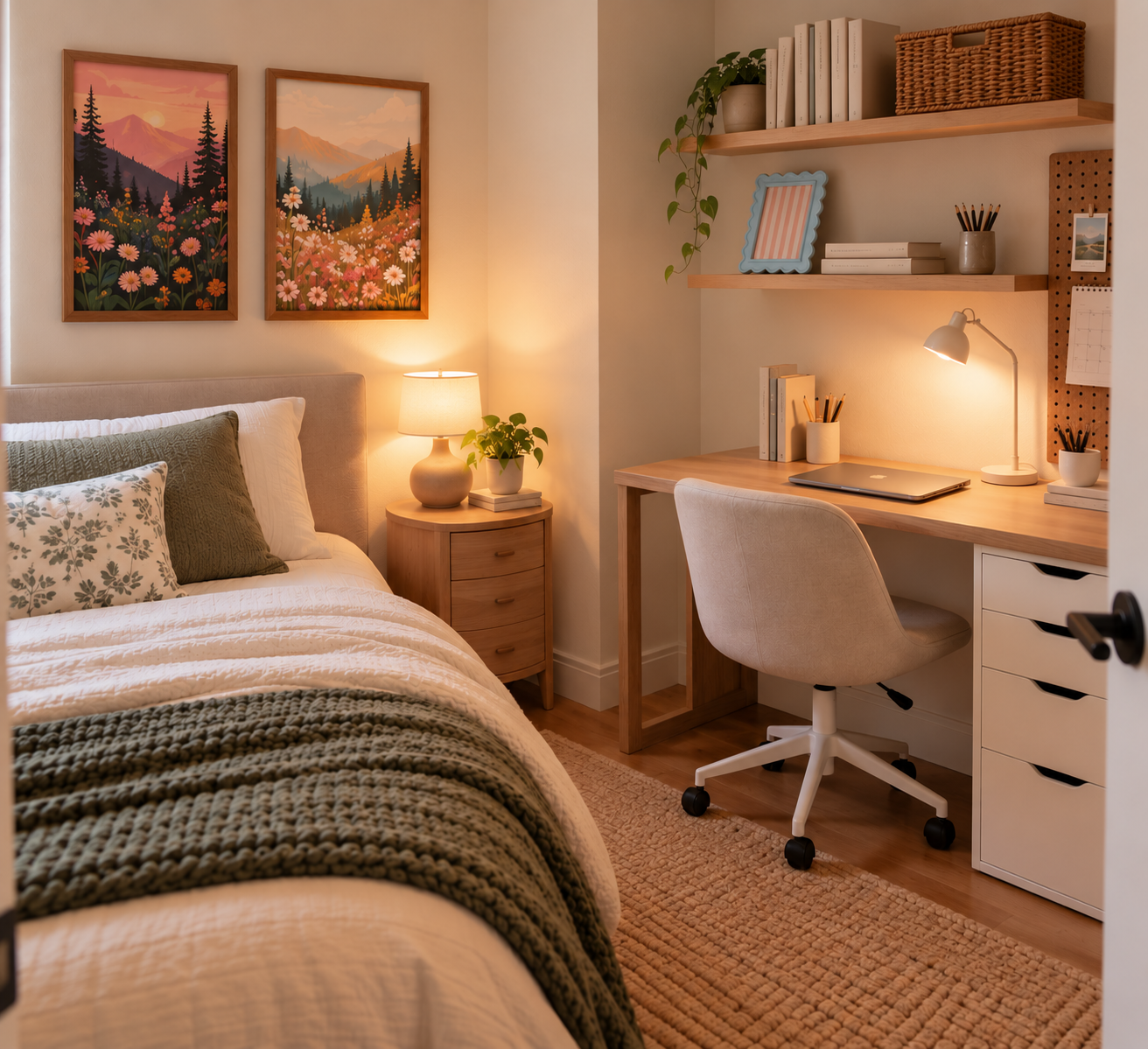
What Makes a Small Bedroom Look More Cluttered?
Sometimes a room feels cluttered and it is hard to say why. These are common culprits:
clothes on visible surfaces
too many small storage pieces
open storage packed tightly
bags and shoes without a home
furniture that blocks circulation
every wall or shelf being filled
multiple unfinished organization systems
objects stored far from where they are used
duplicate storage furniture
If you recognize a few of these, you do not need to remove everything. Often one or two changes, like clearing a chair or reducing the number of small bins, is enough to change how the room feels.
None of this means the room has to look minimalist. Personal decor, meaningful objects and things you love can stay. A room that feels comfortable and personal is a good goal, and if you want ideas for keeping a bedroom warm rather than sterile, our cozy bedroom ideas are a good place to look.
Small Bedroom Organization Ideas You Can Try Without Buying Anything
Organization should come before shopping for organizers. Many small bedroom organization ideas cost nothing and can be done in an hour or two:
Move rarely used items out of prime storage. Free up the easiest spots for what you use daily.
Reorganize drawers by frequency of use. Put the most-worn pieces at the front or top.
Clear one surface. Start with the bedside table or dresser top and see how it feels.
Rotate seasonal clothes. Move off-season items to less convenient storage.
Relocate items that belong in another room. Return dishes, tools, books and other strays to their proper places.
Use existing hooks or furniture more intentionally. Give each hook or shelf a single purpose.
Consolidate duplicate storage zones. If two containers hold the same type of item, combine them.
Move furniture slightly if it improves access. A few inches can make a drawer or closet door usable.
Limit what lives beside the bed. Keep it to nighttime essentials.
After trying these, you will know what is still missing, if anything. At that point, any additional storage you add solves a clear problem.
A 20-Minute Bedroom Reset Routine
Once the room is organized, a short routine helps keep it that way. This is about maintaining the system, not deep cleaning. A realistic 20-minute version might look like this:
5 minutes: Put clothing where it belongs, whether in the closet, the drawers or the laundry.
5 minutes: Clear the bedside and dresser surfaces.
5 minutes: Return loose items to their storage zones.
5 minutes: Reset laundry, shoes and bags.
Do not expect the room to be perfect afterwards. If you only manage ten minutes on a busy night, that still helps. The point is to catch small messes before they become big ones, and a routine you can keep up with is worth more than an ambitious one that fades.
A Small Bedroom Is Easier to Organize When Everything Has a Clear Home
Organizing a small bedroom starts with understanding what is actually creating the clutter. From there, a few principles go a long way. Everyday items deserve the easiest storage, and less-used items can move to secondary spaces. Empty space is useful rather than wasted, and more organizers are not automatically better. The best system is the one you can realistically maintain.
You do not need to do everything at once. Pick one or two ideas that match the problem you notice most, try them for a while and adjust. If you would like more ideas for small spaces and bedrooms, you can keep exploring the rest of Lulonta.
