
An accent wall can add color or definition to a room, but choosing a wall simply because it is empty can make the space feel less balanced rather than more intentional. The most useful accent wall ideas start with a few practical questions: where does the eye already go, how is the furniture arranged, how does light move through the room, and how much contrast can the space comfortably hold?
This guide walks through living room, bedroom, small-space and renter-friendly accent wall ideas, along with ways to choose a wall and a color. It also covers the situations where an accent wall may not help at all. An accent wall is optional, and plenty of rooms look calmer and more settled without one.
How to Choose the Right Wall for an Accent Wall
A good starting point is the wall your eye already notices. In many rooms that is one of these:
The wall behind the bed
The wall behind the sofa
A fireplace wall
The wall in a dining area
The end wall of a hallway
The wall you see first when you walk into the room
These walls often work because they already act as a visual anchor. Giving one of them a little more emphasis tends to feel natural, since you are reinforcing something the room is already doing.
There are exceptions, though. A wall may not make a good accent wall if:
Several doorways break it up. The treatment gets chopped into sections and reads as patchy instead of deliberate.
Large furniture hides most of it. If a wardrobe or bookcase covers the wall, the color or texture mostly disappears.
It competes with an existing focal point. A bold wall next to a fireplace or a big window can pull attention in two directions.
The room already has strong pattern or color. A busy rug, patterned curtains or vivid furniture may be doing the work already.
Highlighting it would make the layout feel lopsided. Emphasizing a wall pushes visual weight toward it, which isn’t always where the room needs it.
Note that the wall opposite the door is not automatically the right choice. It is a common suggestion, but it only works when that wall is also a calm, uninterrupted surface in your particular room.
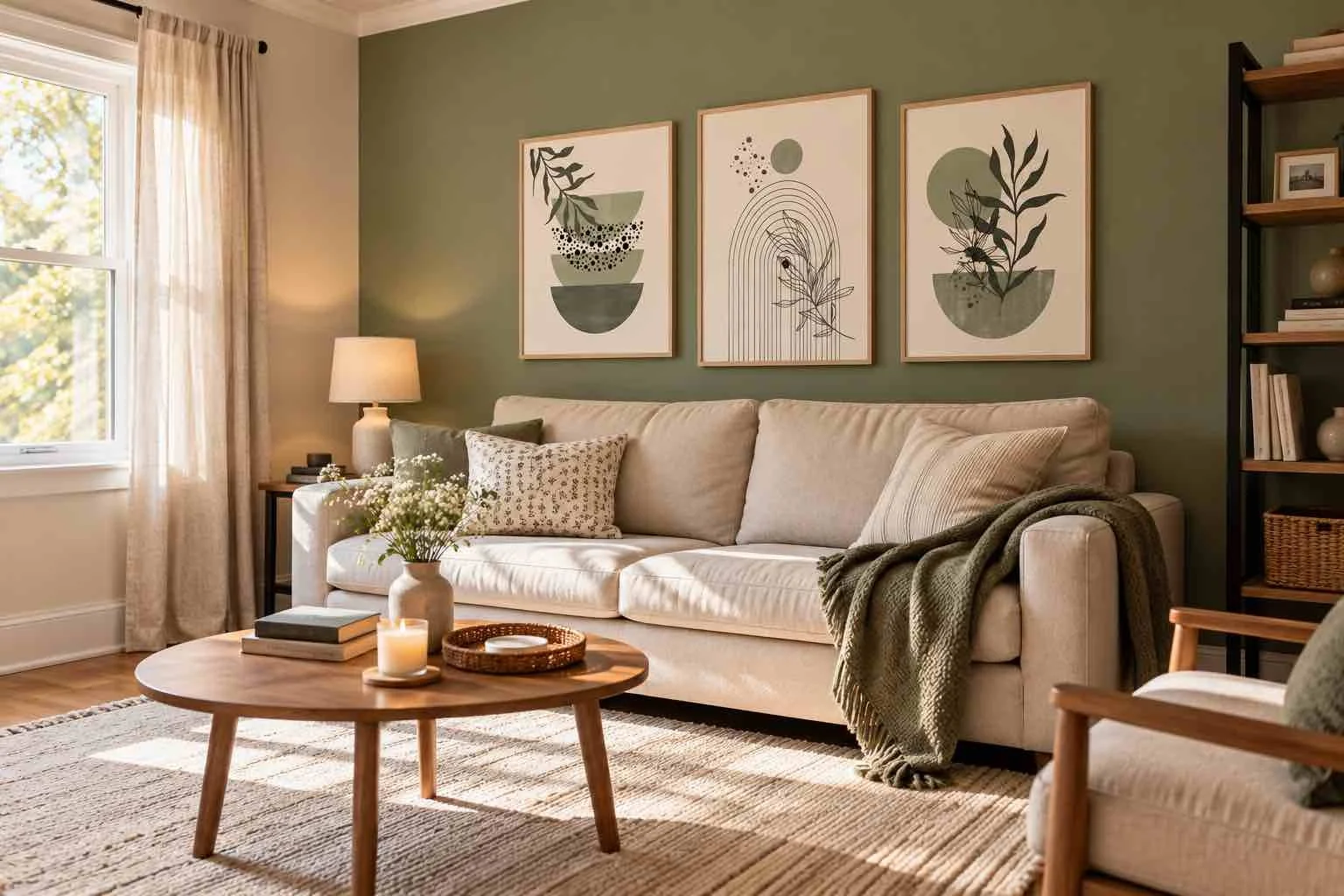
16 Accent Wall Ideas for Different Rooms and Styles
Not every idea below will suit your home, and that is fine. Think of this list as a menu of approaches. Each one has trade-offs, and several can be combined or skipped entirely.
1. Use One Solid Paint Color
A single solid color is the simplest way to create an accent wall, and it is the approach most people picture when they search for paint accent wall ideas. It works because the wall becomes noticeably different from its neighbors without adding any pattern.
What shapes the result is contrast. A color only slightly deeper than the other walls reads as gentle definition, while a much deeper or more saturated color reads as a strong statement. Saturation matters too: a muted, grayed color usually feels quieter than a bright one, even at a similar depth.
Consider the surrounding walls and your furniture. A deep color behind a light sofa creates clear separation, while the same color behind a dark sofa can blur the edges of the furniture. Light also changes the outcome, since the same paint can look quite different on a wall that gets direct sun versus one that sits in shade. Looking at a sample on the wall at different times of day can give you a better sense of how the color works with the room’s changing light.
The trade-off is that a solid color gives you less visual interest than texture or pattern, and a strong color is more of a commitment to repaint later.
2. Choose a Deeper Version of a Color Already in the Room
If your room already has a color story, a deeper tone of one of those colors can create contrast without introducing a whole new palette. A light neutral room might take a deeper warm beige, a muted green or a dusty blue, depending on what is already in the rugs, curtains or artwork.
This approach tends to feel connected because the accent wall echoes something the eye has already seen. It can be a gentler route if you are unsure about bringing in a completely new color.
It is sometimes said that darker colors always make a room feel smaller. In practice the effect depends on light, room shape and how the color is balanced against everything else. A deeper wall can change how visually prominent that surface feels, and the effect will depend on the room’s light, proportions, furniture and surrounding colors.
3. Try a Soft, Low-Contrast Accent Wall
An accent wall does not need to be dramatic. A low-contrast version, where the wall is only a shade or two different from the others, can add definition while keeping the room restful.
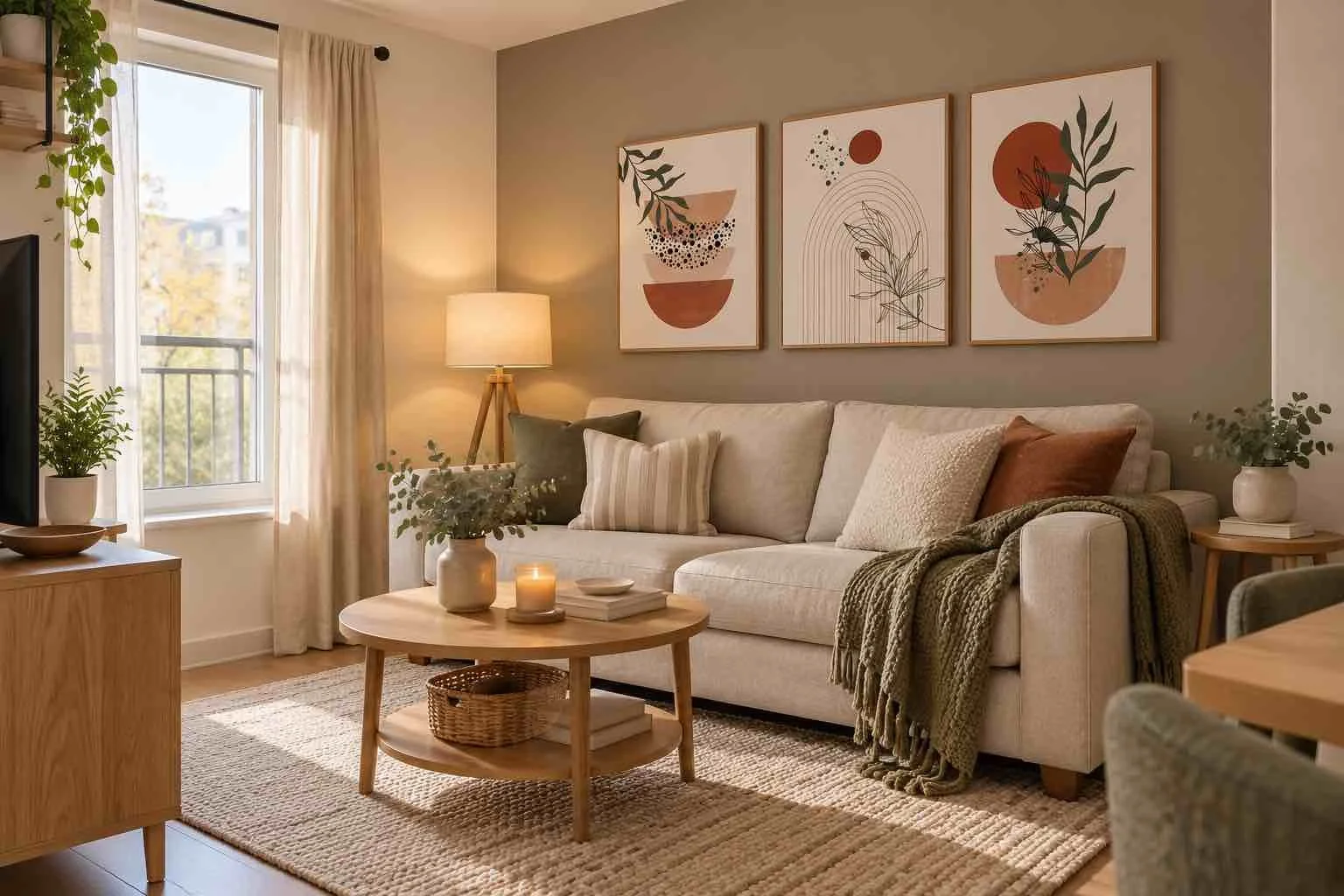
This can be especially useful in small bedrooms, calm living rooms, apartments, and rooms that already contain several colors. If you are browsing accent wall color ideas and feel nervous about committing to something bold, a soft shift in tone is a reasonable place to begin. A warm greige against a lighter neutral, or a pale sage next to off-white walls, adds a subtle layer that you notice more gradually.
The trade-off is that very low contrast can look like a mistake or an uneven paint job if the difference is too slight. A sample on the wall, viewed in both daylight and lamp light, helps show whether the difference reads as intentional.
4. Use a Painted Shape Instead of the Whole Wall
Instead of painting an entire wall, you can paint a shape within it. Common examples include:
A large arch
A rectangle behind a desk
A painted block behind a bed
A color section behind shelving that is already in place
A painted shape can define a zone without dominating the whole room. It is a good fit for studio apartments or open spaces where you want to mark an area, such as a work corner, without committing a full wall to color.
The shape should relate to something real in the room, like the width of the bed or the span of a desk. A shape that floats without connection to the furniture can feel arbitrary. It also helps if the edges are crisp, so taking time with preparation matters more than the shape itself.
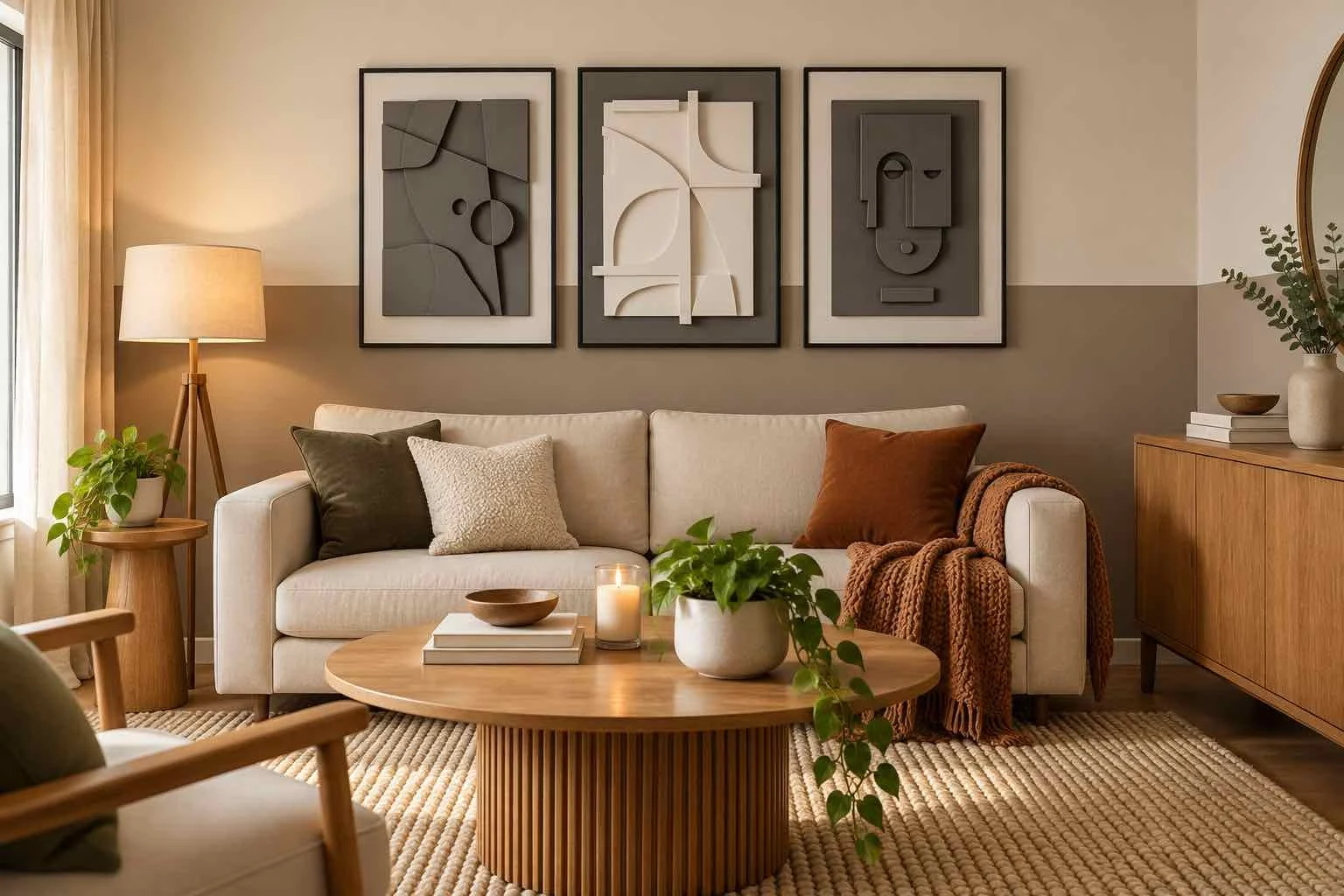
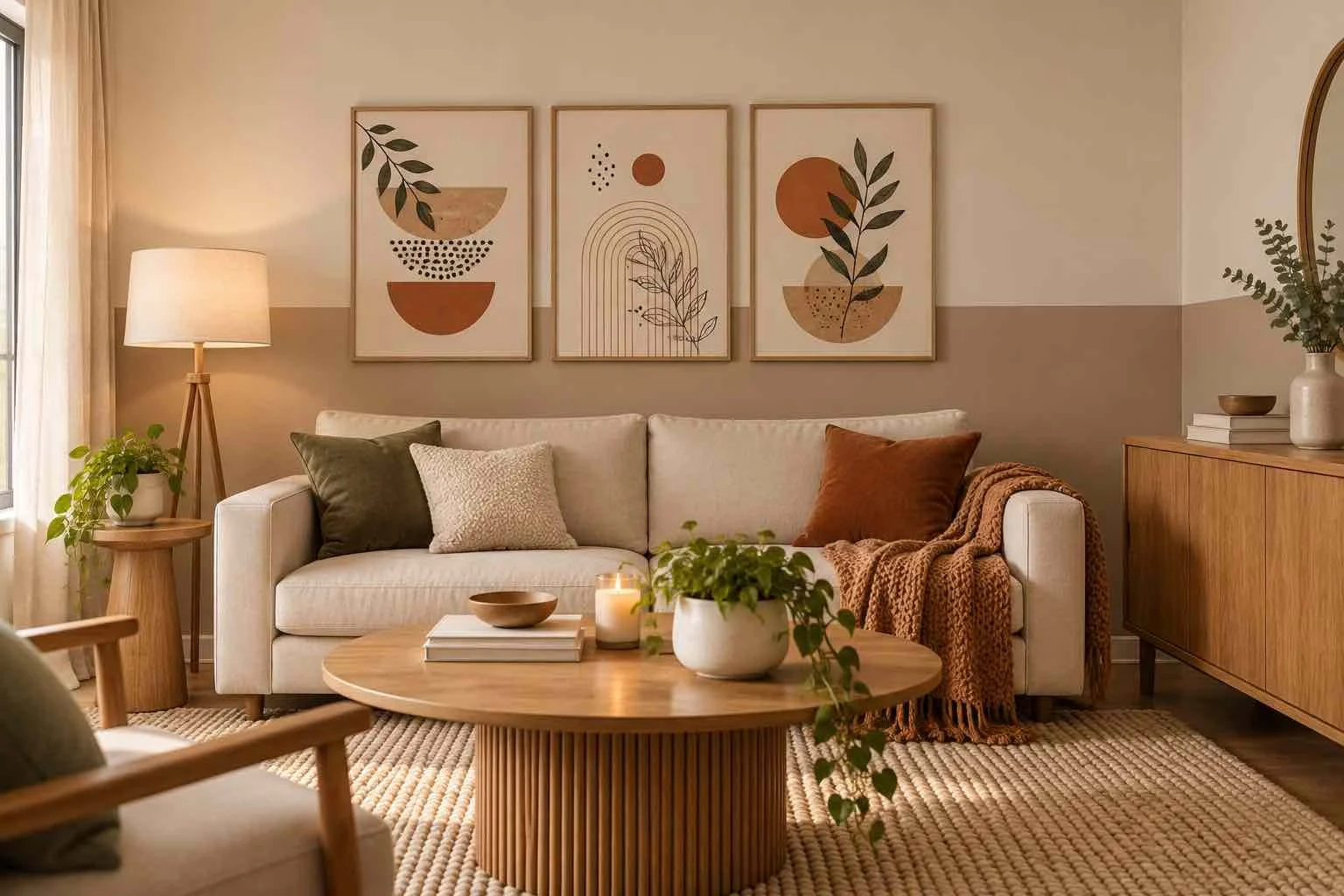
5. Use Two-Tone Paint or a Half-Wall Effect
A horizontal color division, with one color below and another above, can add structure to a wall. The lower color can visually relate to the height of furniture, such as a sofa back, a sideboard or a headboard, which helps the furniture feel grounded.
This works best when the dividing line connects to something in the room, like a window sill, a piece of furniture or an existing molding line. A division that doesn’t relate to anything can feel like it floats. Rather than following a fixed measurement, it is usually better to look at what is on or against the wall and choose a line that works with it.
The trade-off is that a horizontal line can emphasize the room’s height proportions, so it is worth looking at how it sits against the ceiling and furniture before committing.
6. Let Wallpaper Create the Accent
Wallpaper can introduce pattern or texture in a way paint cannot. Styles range from subtle patterns and botanical designs to geometric prints, textured-look papers and mural-style patterns.
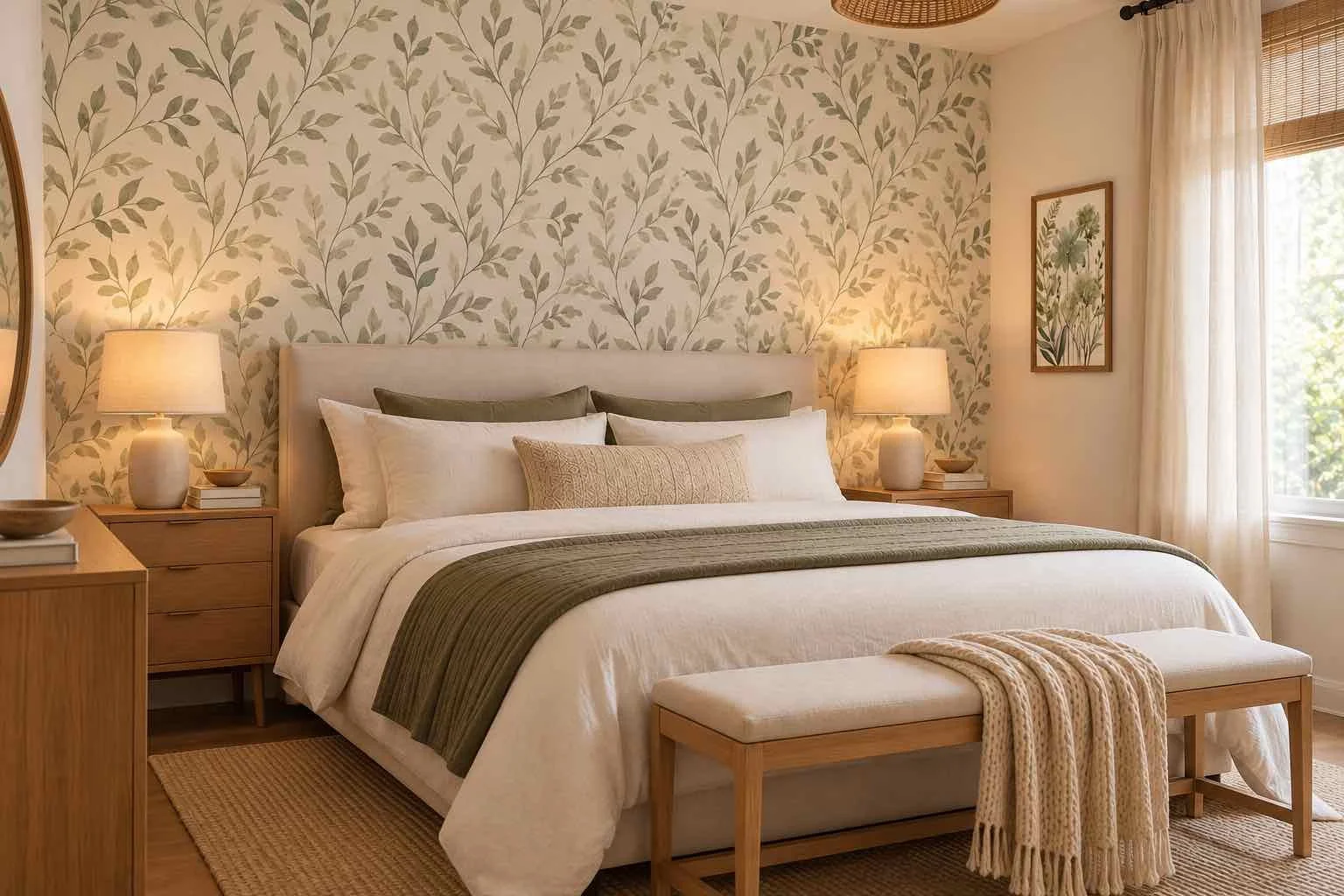
Pattern scale matters a great deal. A large, highly detailed pattern can overwhelm a room that already holds many visual elements, while a quieter, smaller-scale or tone-on-tone design tends to sit more comfortably next to patterned textiles and busy shelves. If the room is already full of pattern, a plain painted wall might serve better.
For rentals, removable or peel-and-stick wallpaper is often suggested, but removable products vary, and results depend on the paint, the wall surface and the product. Renters should check lease requirements, follow the manufacturer’s instructions and test a small, inconspicuous area first. No removable product should be assumed to be risk-free for the wall underneath.
7. Use Existing Architectural Details as the Accent
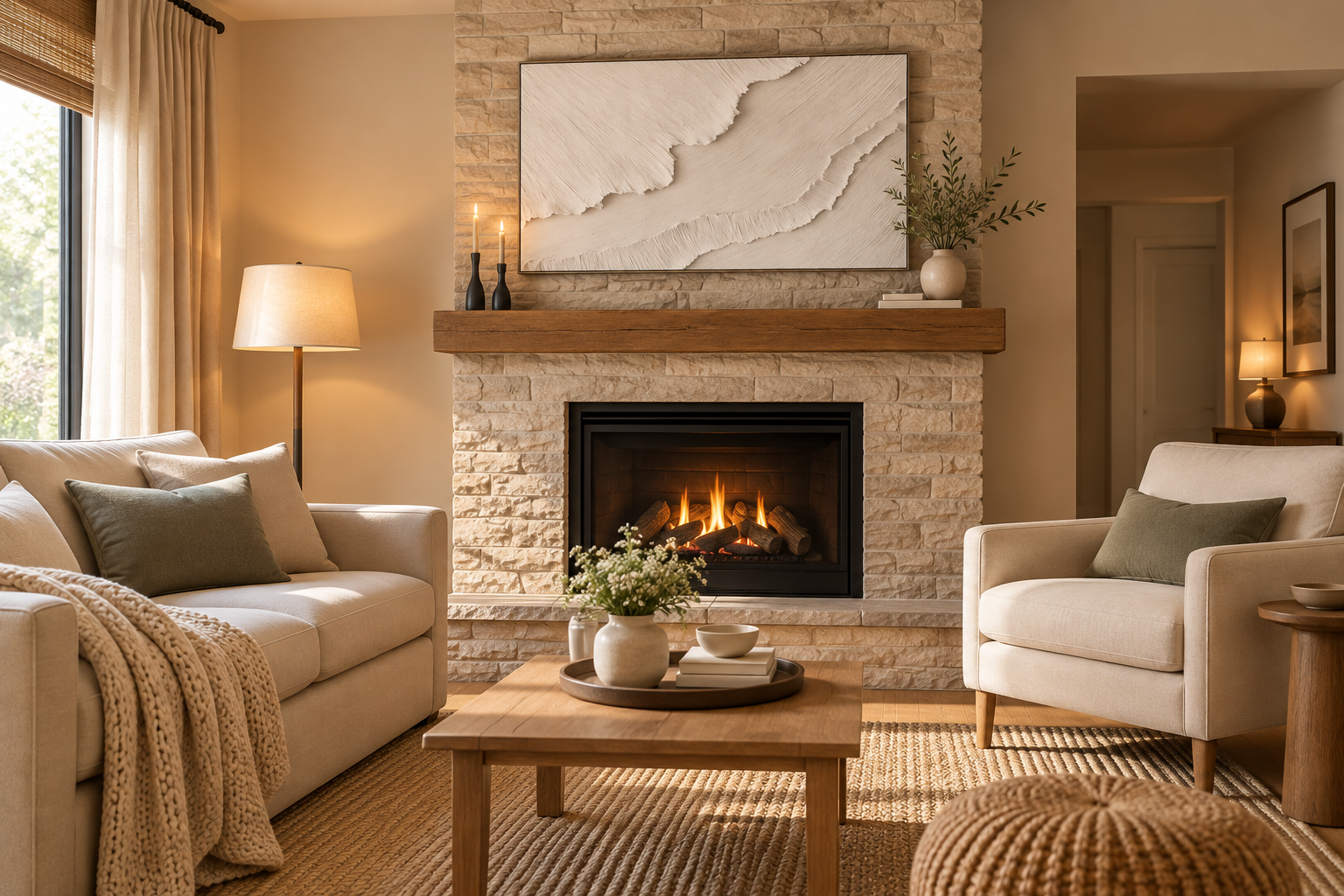
Sometimes the room already has a focal wall. A fireplace, a niche, an alcove, existing paneling, exposed brick or built-in shelving can all serve as the accent on their own.
In that case, the room may not need another feature. It may need only a bit of color on or around the detail, or restrained styling that lets it stand out. Adding a second statement wall elsewhere could create competition instead of balance.
Before painting a detail like brick or built-ins, it is worth thinking about whether the existing finish is part of what makes the wall appealing. In a rental, changing these features is usually a conversation for the landlord.
8. Use Wall Paneling or Molding as a Design Feature
Paneling and molding add depth through shadow and line. Common styles include board-and-batten, vertical paneling, picture-frame molding and slatted treatments. Because they rely on texture and structure, they can make a wall stand out even in a single color.
These are permanent or semi-permanent features, so installation should suit the wall and the property. Depending on the wall and the materials, it may call for experienced installation. Renters should check lease restrictions before making any permanent alterations.
The trade-off is that paneling brings a distinct style. It tends to suit some homes more naturally than others, and a very detailed treatment can feel heavy in a small room.
9. Create an Art-Focused Accent Wall
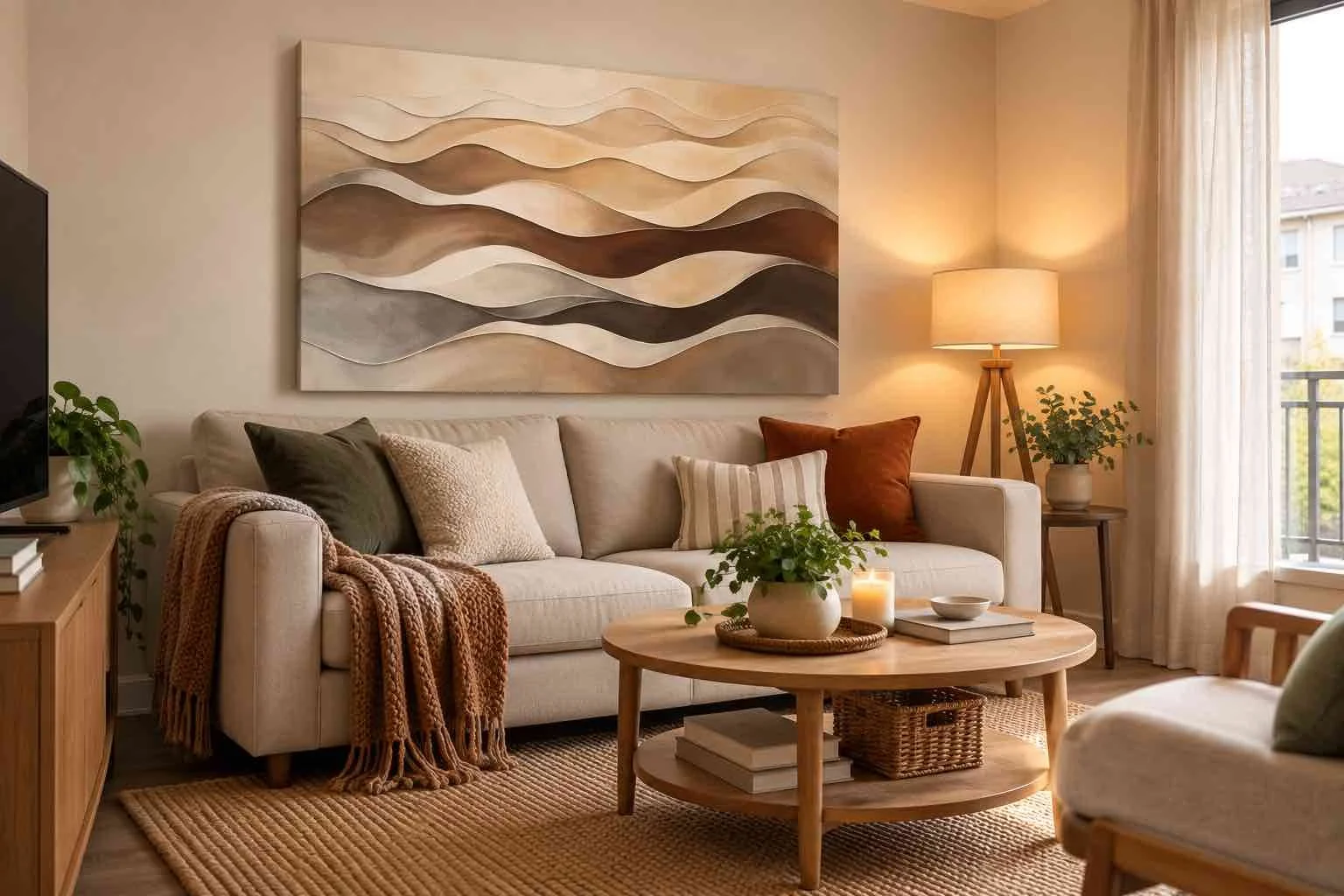
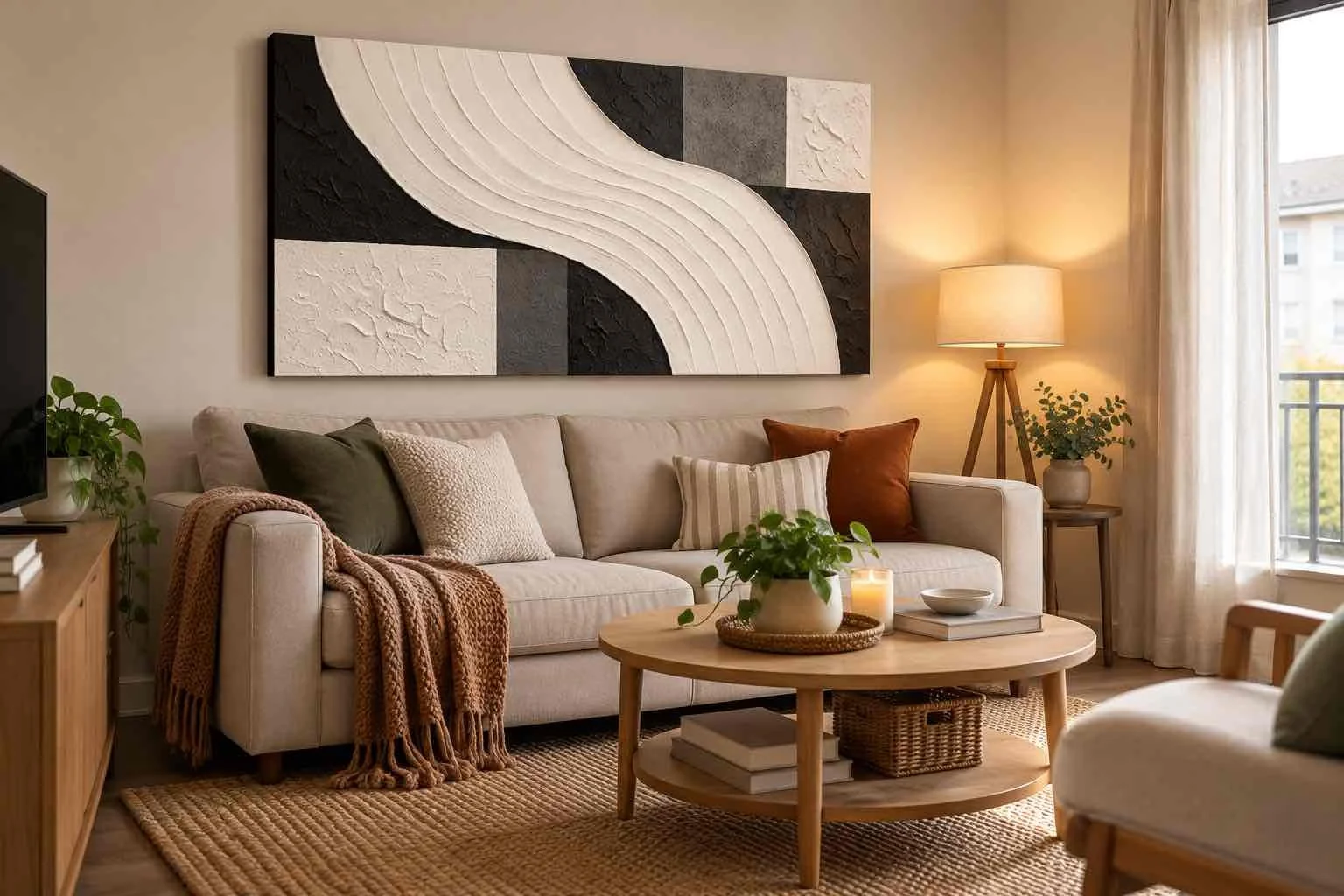
You can make a wall visually dominant without changing its surface at all by filling it with artwork. Three common approaches:
One large piece that anchors the wall
A small, intentional grouping with consistent spacing
A gallery-style arrangement with a mix of sizes
The point here is dominance and focus. Artwork lets one wall become the room’s main visual statement. If you want more on arranging photos and frames specifically, our bedroom photo wall guide goes into layout in detail.
Art-focused walls work best when the surrounding walls stay quieter. If every wall has frames, none of them stands out. Hanging should also suit the weight of the pieces and the wall, using appropriate hardware.
10. Define the Wall Behind a Sofa
For living room accent wall ideas, the wall behind the sofa is a natural candidate. Paint, art, wallpaper or an existing architectural detail can all work here.
This wall tends to succeed when the sofa already anchors the room. The sofa and the wall should feel connected, like one composition, not two separate focal points. If the sofa is pushed against a wall that is interrupted by doors or windows, another wall may offer a stronger option.
If you are working with limited square footage, our small living room ideas cover layouts that can help you decide which wall to emphasize.
11. Highlight the Wall Behind the Bed
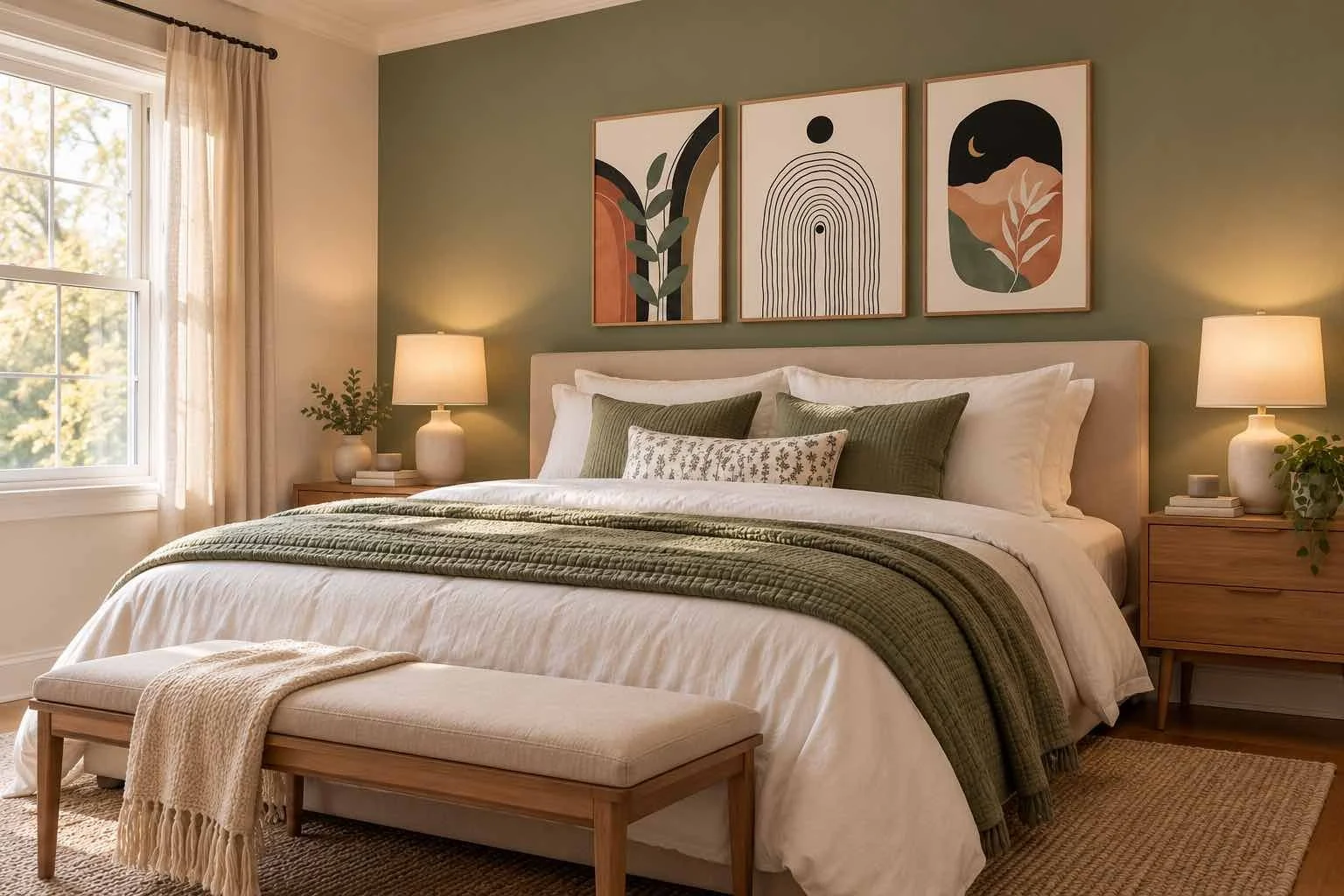
For bedroom accent wall ideas, the headboard wall is a common choice. Color, subtle pattern or art can all work. This wall often succeeds because the bed already gives it visual importance, so the accent feels like part of the furniture arrangement.
That said, it depends on the layout. If the bed wall contains a window, sits next to a door, or is angled under a sloped ceiling, a different wall may carry an accent more comfortably. It is also worth thinking about how the wall looks from the door, since in some rooms the bed wall is not the one you see first.

12. Define a Dining Area in an Open-Plan Room
In an open-plan space, one accent wall can visually mark out a dining corner, breakfast area or small apartment eating zone without adding a divider. The color or treatment signals that this area has its own purpose.
This is about visual zoning, not furniture. The accent wall helps the eye read the room as having distinct parts, even if there is nothing physically separating them. It tends to work best when the chosen wall belongs clearly to that zone, so the color doesn’t seem to float between areas.
13. Use an Accent Wall in a Small Entryway
A small entry wall can provide color, personality and a sense of arrival without needing much decor. Because the wall is often seen briefly, a bolder color can feel appropriate here, even if you would hesitate to use it in a larger room.
The treatment should work with the way the entry is actually used, such as where coats hang and where doors swing. For layout questions, see our very small entryway ideas, which cover the practical side.
14. Use an End Wall in a Narrow Space
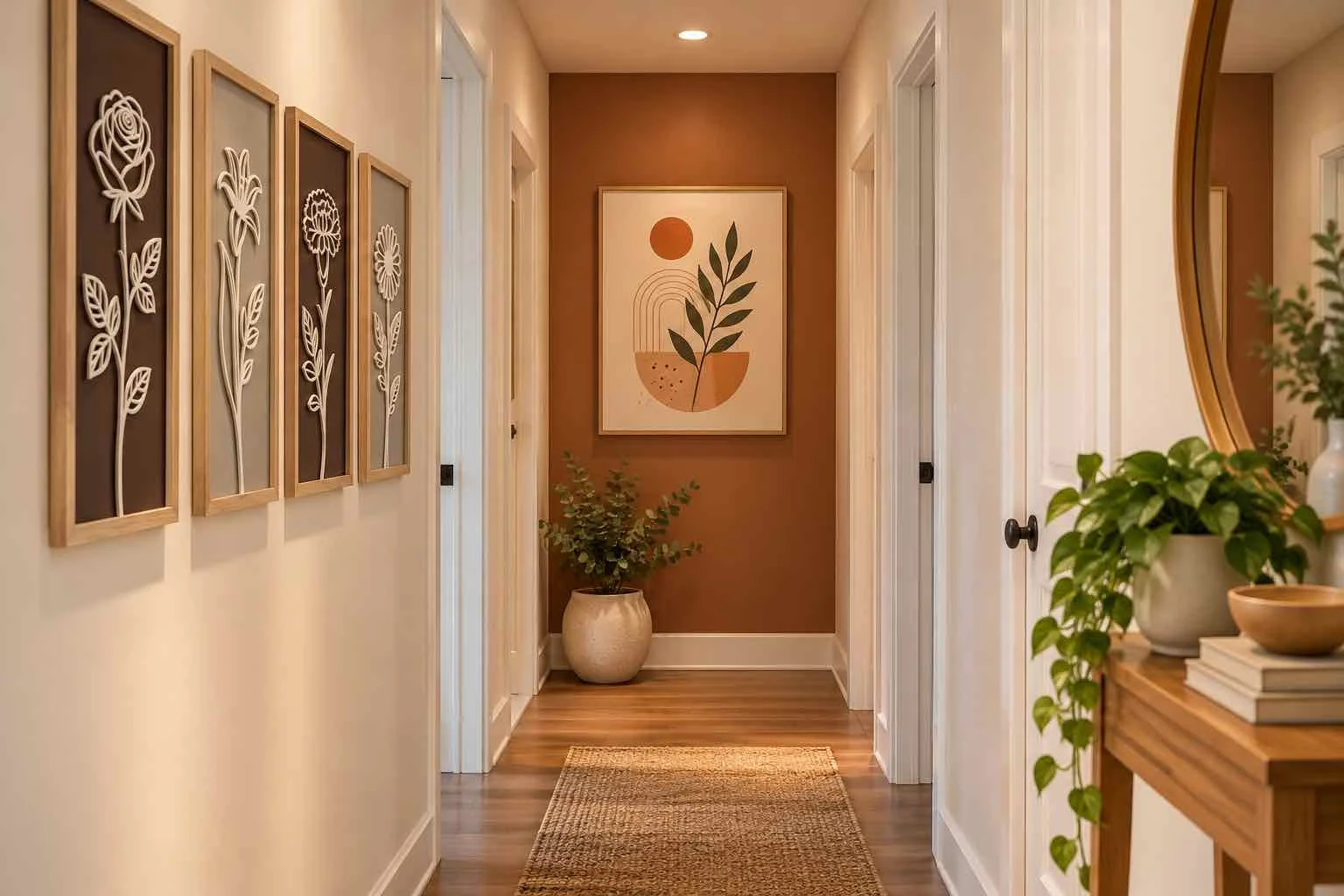
In a hallway, a narrow room or a long open-plan area, emphasizing the end wall can shift where the eye is drawn. Instead of seeing the length of the space first, the eye is led toward a destination.
The effect varies from room to room, so it is better not to expect that it will make the space feel wider or shorter. It can be a useful way to give a long space a purpose, particularly if the end wall is clear of doors. Our narrow hallway ideas show how this can sit alongside the rest of a hallway.
15. Use Texture Instead of Strong Color
Texture can create contrast even when the palette stays neutral. Some examples:
Existing brick
Wood tones
Textural wallpaper
A fabric wall hanging
Architectural molding
This is a helpful route if you prefer a calm palette but want one wall to feel different. The variation comes from light catching on surfaces, not from a change in color.
Keep weight in mind. Heavy items need proper hanging methods suited to the wall, and it is worth avoiding anything that doesn’t feel secure.
16. Let the Room Decide Whether You Need an Accent Wall at All
Sometimes the best decision is no accent wall. Ask yourself:
Does the room already have a focal point?
Is there already a strong rug, artwork or patterned furniture?
Would another feature compete with what is there?
Does the wall actually need emphasis?
Would keeping all the walls consistent feel calmer?
If the answers suggest the room is already balanced, leaving the walls consistent is a perfectly good design choice. An accent wall should solve something or add something the room wants, not fill a gap because it is there.
Living Room Accent Wall Ideas
Living room accent wall ideas depend heavily on what is already happening in the space. Here are some of the common situations.
Behind the Sofa
A wall behind the sofa works when the sofa is the anchor of the seating area. Color, wallpaper or art can all tie the two together. The aim is for wall and sofa to look like a single composition. If the sofa is a similar color to the wall, a little contrast in tone can stop the furniture from blending in.
Fireplace Wall
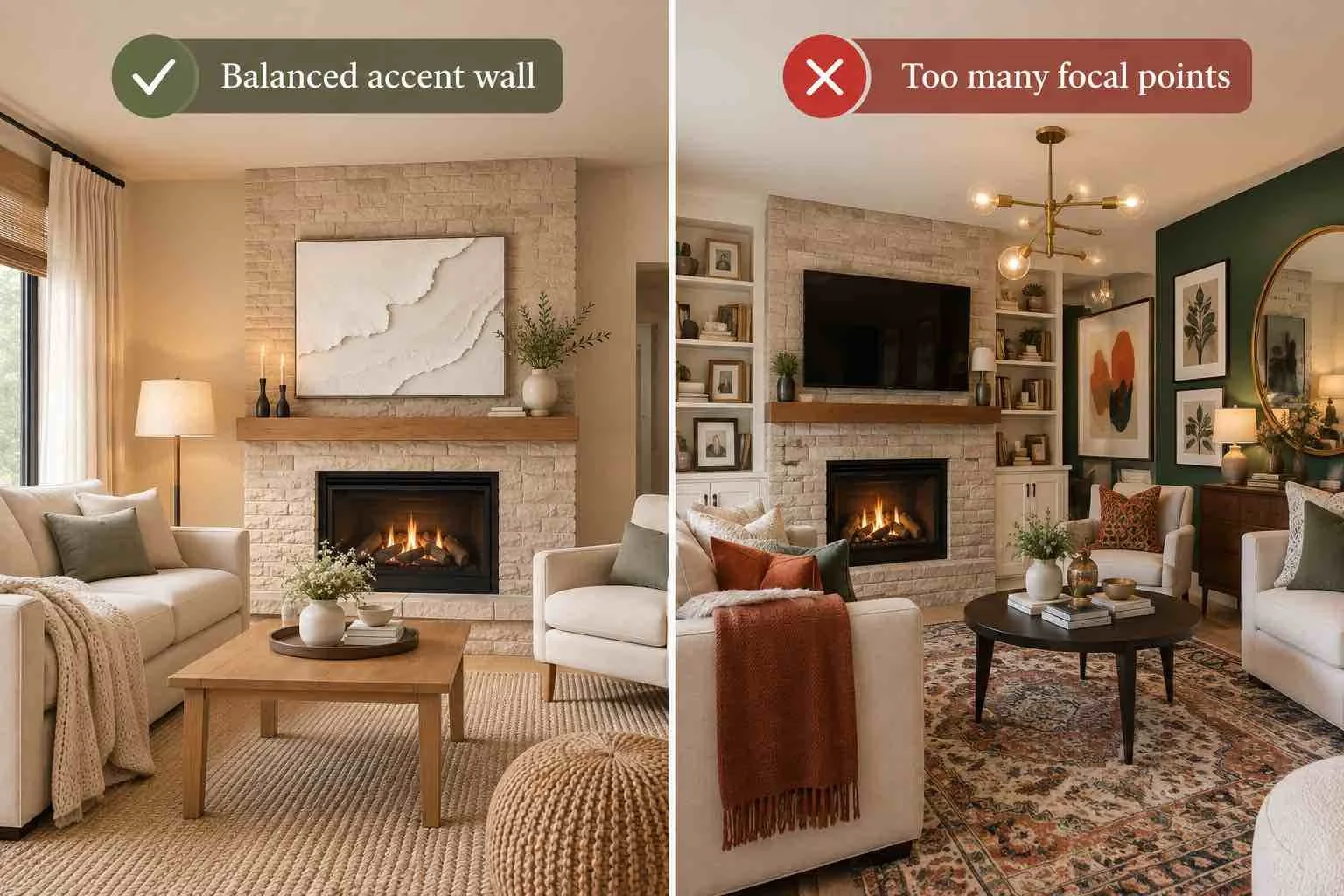
An existing fireplace often creates a natural focal point on its own. In that case, you may only need a bit of color or restrained styling around it. Adding a second feature elsewhere in the room can compete with the fireplace instead of supporting it.
TV Wall
A darker or more visually defined wall can sometimes help a television feel more integrated, since the contrast between screen and wall is reduced. Even so, the treatment shouldn’t create distracting contrast around the screen, and a busy pattern behind a TV can be tiring to look at. Reflections and window position are worth checking too.
Open-Plan Living Room
In an open-plan space, an accent wall can help visually identify the living zone, separating it from the kitchen or dining area. Choosing the wall that sits behind the main seating usually helps. For more layout thinking in compact spaces, see our small living room ideas.
Bedroom Accent Wall Ideas
Bedroom accent wall ideas often center on the headboard wall, though the options go beyond that:
Painted color: a deeper or softer tone behind the bed
Wallpaper: a quiet pattern or textured paper that adds depth
Subtle texture: wood tones, paneling or a fabric hanging
Artwork: a large piece or arrangement above the headboard
A quieter contrast can work well in a bedroom when you want the wall to add definition without becoming the room’s strongest visual element, but bolder treatments can work too.
Some people enjoy a bolder wall in the bedroom, and what matters is how the room feels to you.
If you want ideas for a warm, grounded palette, our earthy cozy bedroom ideas show how color and texture can work together. For arranging photos and prints, the photo-wall guide mentioned earlier covers layouts in more depth.
Accent Wall Ideas for Small Spaces
Small spaces can have accent walls, and the approach is mostly about restraint and clarity. Some points to consider:
Control the contrast. In a compact room, a gentler difference between walls can keep things feeling open.
Mind pattern scale. Large or detailed patterns can dominate a small wall.
Look at existing furniture. If the furniture is already busy or dark, a quieter wall may balance it.
Avoid competing focal points. One emphasized area usually reads more clearly than several.
Keep circulation visually clear. Walkways and doors should not feel crowded by the treatment.
Choose one area to emphasize. A single wall tends to work better than several partial ones.
Strong colors can work in small spaces. The old idea that small rooms must use light colors is not a rule. The result depends on light, contrast, room shape, furniture and how much patterned or colorful decor is already present. A small room with plenty of daylight and simple furniture may carry a deep color well, while a small room with many colors already may feel calmer with a soft tone.
Renter-Friendly Accent Wall Ideas
Renter friendly accent wall ideas focus on getting emphasis without altering the wall, or on altering it only within what your lease allows. Some practical approaches:
Paint only if permitted. Some leases allow painting, sometimes with conditions about restoring the color.
Removable wallpaper where appropriate. Products vary in how they behave on different paint and surfaces.
Large artwork. A large piece or grouping creates a focal wall without touching the surface.
A textile wall feature. A fabric hanging or tapestry can add color and texture.
Removable visual treatments allowed by the lease.
Furniture and art arrangement. A focal wall can come from what is placed on it, not what is applied to it.
A few cautions apply. Removable wallpaper can still affect paint in some cases, adhesive hooks are not guaranteed to be damage-free, and temporary treatments are not allowed everywhere. Check your lease, follow the product instructions, and test removable materials in a small, inconspicuous area where appropriate.
For more ideas that suit shorter-term homes, see our renter-friendly apartment ideas.
How to Choose an Accent Wall Color
Accent wall color ideas are easier to narrow down when you start from what is already in the room. Look at:
Furniture: the sofa, bed frame or cabinets that will sit near the wall
Flooring: wood tones, tile or carpet color
Textiles: rugs, curtains and bedding
Artwork: colors you could echo or contrast with
Natural light: how bright the room is and which way it faces
Artificial light: warm or cool bulbs can shift how a color looks
Undertones: whether a color leans warm, cool, green, pink or gray
Contrast: how noticeable you want the difference to be
From there, there are a few directions you might take:
Related or tonal color: a deeper or lighter version of a tone already present
Complementary contrast: a color that stands apart from the existing palette
Darker or lighter variation: the same color family with a change in depth
A muted version of an existing color: a softer take on something already in the room
None of these is the correct choice. Colors also don’t have guaranteed emotional effects, so it is better to choose based on how the color looks in your light and with your furniture. Testing a sample on the actual wall and checking it in the room’s natural and artificial light can be more useful than choosing from a color chart alone.
Common Accent Wall Mistakes
A few patterns tend to cause problems:
Choosing a random empty wall. Emptiness isn’t a reason. Without a purpose, the wall can feel disconnected from the rest of the room.
Creating several competing accent walls. When multiple walls stand out, none of them does, and the room can feel busy.
Ignoring furniture placement. If furniture covers or crowds the wall, the treatment is hidden or looks awkward.
Ignoring lighting. A color that looks right in one light can look flat or heavy in another.
Using pattern without considering existing decor. Patterned wallpaper next to patterned textiles can feel overwhelming.
Highlighting an awkward wall unintentionally. Emphasis draws attention, including to uneven corners, doors or odd proportions.
Choosing a treatment before deciding what the room needs. Starting with a material or trend can lead to a wall that doesn’t solve anything.
Assuming every small room needs a pale accent. Contrast, light and furniture matter more than a fixed rule.
Copying a trend that doesn’t fit your home. A look that works in one space may not suit another’s light, scale or style.
Making permanent changes in a rental without permission. This can lead to costs or disputes, so it is worth checking before starting.
How to Decide Whether an Accent Wall Fits Your Room
Here is a short checklist to work through before committing:
What is already the natural focal point?
Which wall is visible first?
What furniture sits against the wall?
Is there already enough visual contrast?
Will this wall compete with a fireplace, TV, large artwork or view?
Does the room need more definition, or less visual clutter?
Is the change appropriate for a rental?
Am I choosing the wall because it improves the room, or simply because it is empty?
If most answers point toward a clear, uninterrupted wall that supports the room’s layout, an accent wall may be a good fit. If the answers are mixed, it may be worth waiting or choosing a lighter-touch option, like art.
Accent Wall Ideas You Can Try Without Buying Much
A noticeable accent wall doesn’t have to involve new purchases. Some options use what you already have:
Use leftover paint, if it suits the wall and the room
Rearrange existing artwork
Move one large artwork to the focal wall
Simplify the other walls so one becomes more prominent
Use existing textiles or decor on the wall
Reposition furniture to strengthen an existing focal wall
The visual effect often comes from contrast and placement more than from adding more objects. Clearing a wall can be as effective as filling one, because a calm surface next to a more visual one creates a natural difference.
An Accent Wall Works Best When It Supports the Room
A good accent wall starts with the room’s natural focal point and takes furniture and lighting into account. Contrast doesn’t need to be dramatic, and a soft shift can be just as intentional as a bold one. Small rooms can carry strong color when light, scale and furniture support it, and renters have non-permanent options that don’t change the wall at all.
Not every room needs an accent wall. The most useful choice is the one that supports the room as it already is, instead of competing with it. If you’re planning other spaces, you’re welcome to explore more Lulonta decor guides for practical, small-space-friendly ideas.
