
10 Small Entryway Ideas That Actually Solve the Clutter Problem
You walk in the door and immediately trip over shoes. Your keys are somewhere, probably. Bags are piled on the floor, coats are draped over a chair, and the whole space feels like controlled chaos before your day has even started.
Small entryways in apartments and narrow homes are notoriously hard to keep organized, not because you're doing something wrong, but because most entryway setups aren't actually designed for the amount of space you have. These small entryway ideas are chosen specifically for tight, narrow, apartment-sized spaces where every inch counts, and they're built around a simple idea: give the things that pile up their own designated spot.
This post contains affiliate links. If you purchase through our links, we may earn a small commission at no extra cost to you.
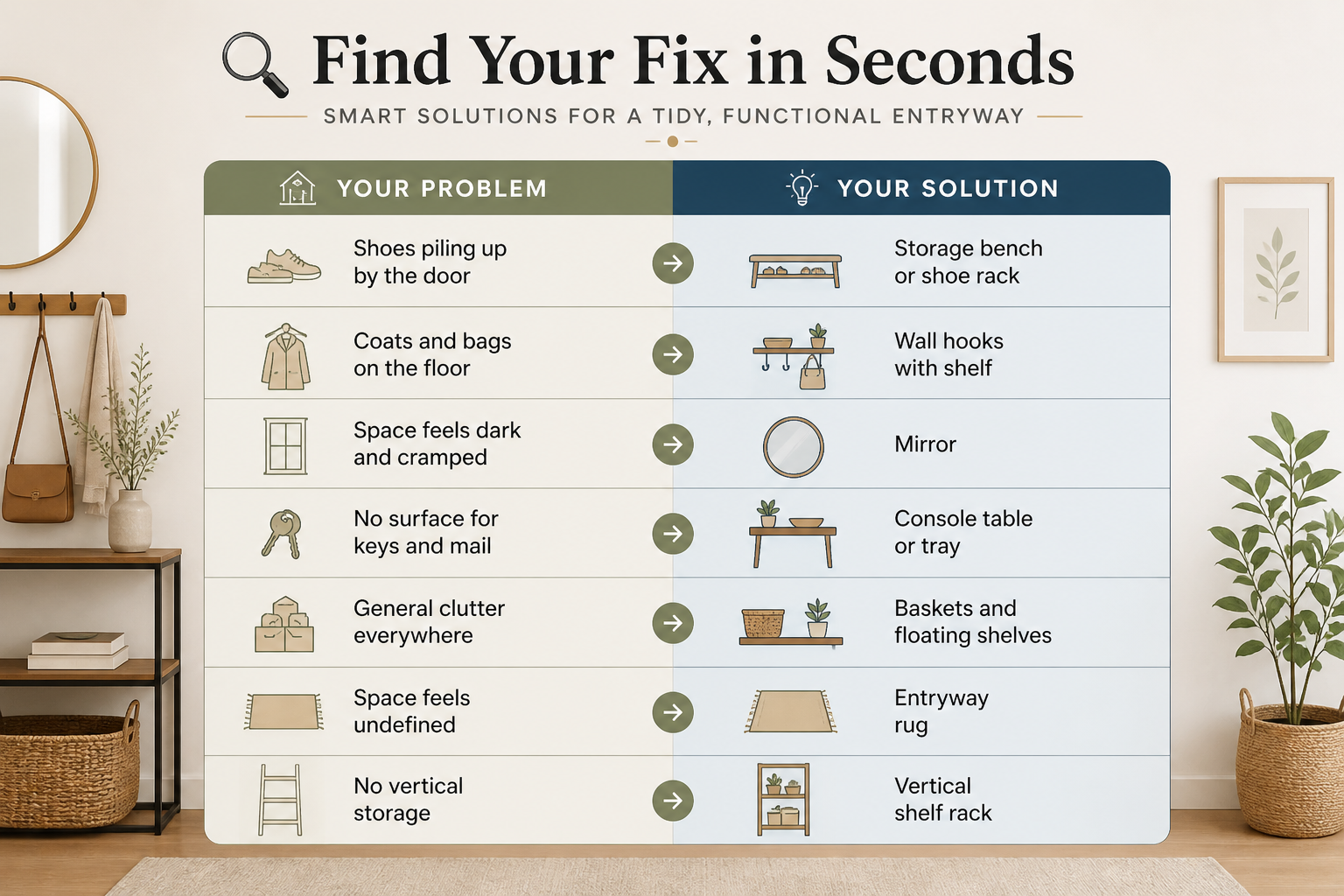
Quick Fix table, find your specific problem.
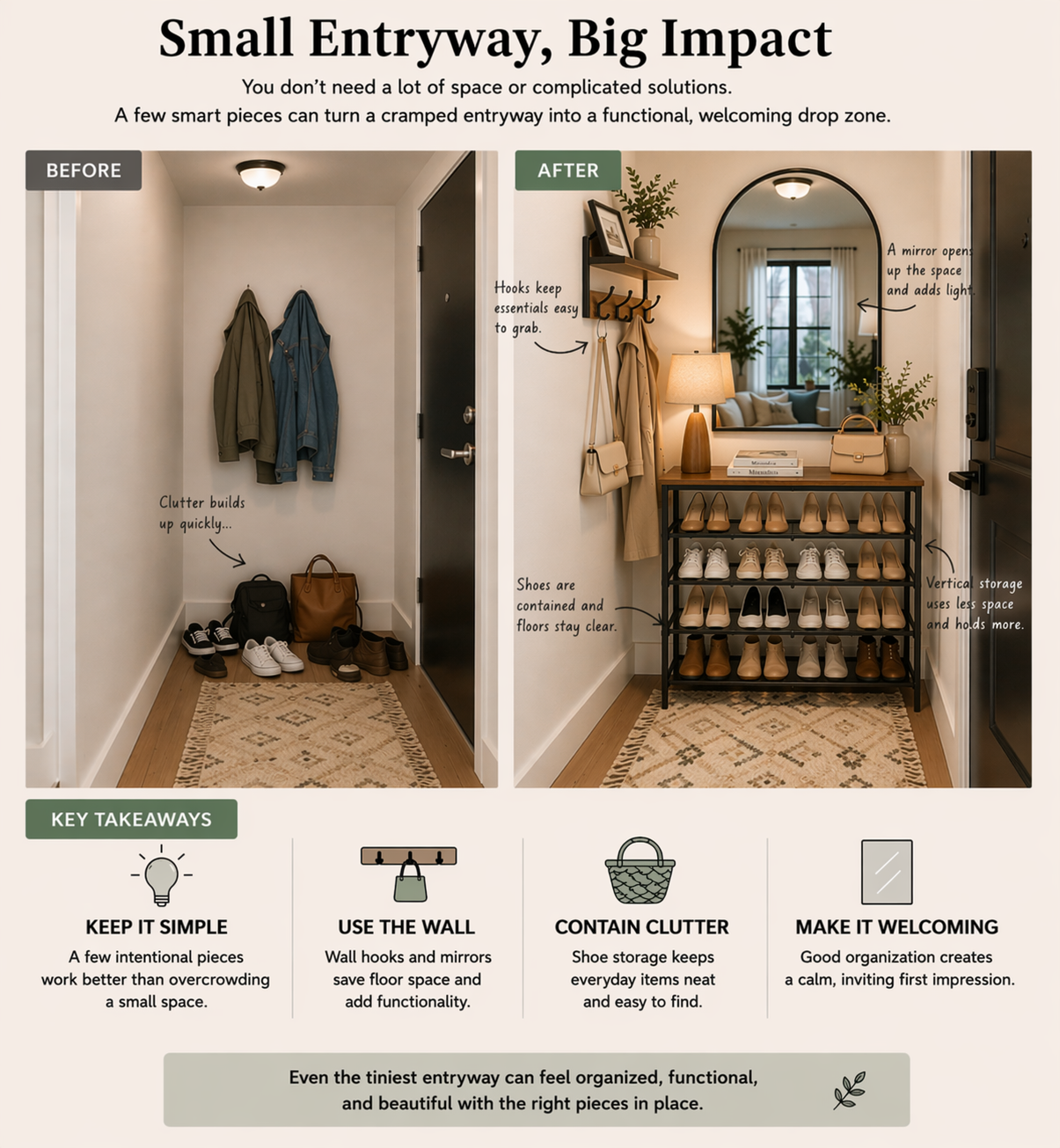
What's the Best First Fix for a Small Entryway?
If your entryway has one problem that bothers you most, it's usually shoes or coats taking over the floor. A narrow storage bench with hooks above it addresses both at once, and it's a reasonable place to start before working through the rest of this list.
Beyond that first move, it helps to think about which of these three problems you're actually solving before buying anything:
Too much on the floor (shoes, bags, bench): look at a storage bench, a slim shoe rack, or a vertical storage shelf.
Nowhere for things to hang (coats, bags, leashes): wall hooks, ideally paired with a shelf above.
No sense of "arrival" (the space just blends into the rest of the room): a console table, a rug, or a mirror does more of that visual work than storage does.
Most small entryways benefit from one solution from the first category and one from either of the other two, rather than trying to add everything on this list at once.
Measure Before You Buy Anything
A few measurements are worth taking before ordering entryway furniture, since even a few extra inches matters in a tight space:
The clear walkway width you need to maintain once a bench, shelf, or table is in place
The door's swing radius, so nothing blocks it from opening fully
The wall space actually available for hooks or floating shelves, including any light switches or thermostats in the way
Ceiling height if you're considering a tall vertical shelf or a floor mirror
How Deep Should Entryway Furniture Be?
Depth is usually the measurement that trips people up, since online listings tend to emphasize width and height first. A few general ranges to work from:
Entryway benches: a slim bench typically runs 14 to 18 inches deep. Anything deeper starts to compete with walkway space in a genuinely narrow entryway.
Console tables: look for 10 to 14 inches deep for a tight space. Standard console tables are often closer to 16 to 18 inches, which can feel bulky against a narrow wall.
Wall hooks and floating shelves: these typically project 4 to 8 inches from the wall, which matters most when they're installed close to a doorway that swings open.
Shoe racks: slim vertical racks are often 10 to 14 inches deep, compared to 20+ inches for a standard horizontal rack.
As a general rule of thumb, keep at least 24 to 30 inches of clear walkway width after furniture is in place, more if the entryway is a main path to other rooms rather than a dead end. If you're deciding between two similar pieces, the shallower option is usually the safer choice in a small space, since it's easier to add a second piece later than to return one that doesn't fit.
What to Do When You Have Almost No Entryway
Not every home has a defined entryway at all. In a lot of small apartments, the front door opens directly into the living room, a hallway, or even the kitchen, with no dedicated space to work with. A few ways to handle that:
Create a "zone" instead of a room. A rug placed just inside the door, even without any furniture, gives your brain and your guests a visual cue that this spot functions as an entryway. This works even in a totally open-plan layout.
Use the back of the door. An over-the-door hook rack or a slim over-the-door shoe organizer can absorb coats, bags, and shoes without needing any adjacent wall or floor space at all.
If you’re working with rental restrictions throughout the rest of your home too, these renter-friendly apartment ideas include more no-drill storage, lighting, and small-space solutions.
Claim a single piece of furniture instead of a whole zone. A single narrow console table, or even just a small bowl on an existing shelf near the door, can function as your entire "entryway system" if that's all the space allows.
Think vertically before horizontally. If there's no floor space to spare, a slim wall-mounted unit or a handful of hooks will do more than trying to fit any kind of bench or table.
Accept that "entryway" might mean one square foot. In genuinely tiny spaces, a single hook and a single small tray by the door can solve the two most disruptive problems (coats and keys) even without room for anything else on this list.
The goal in a space like this isn't to recreate a full entryway setup, it's to solve the one or two problems that actually cause friction each time you walk in.
Section 1: Get Shoes and Coats Off the Floor
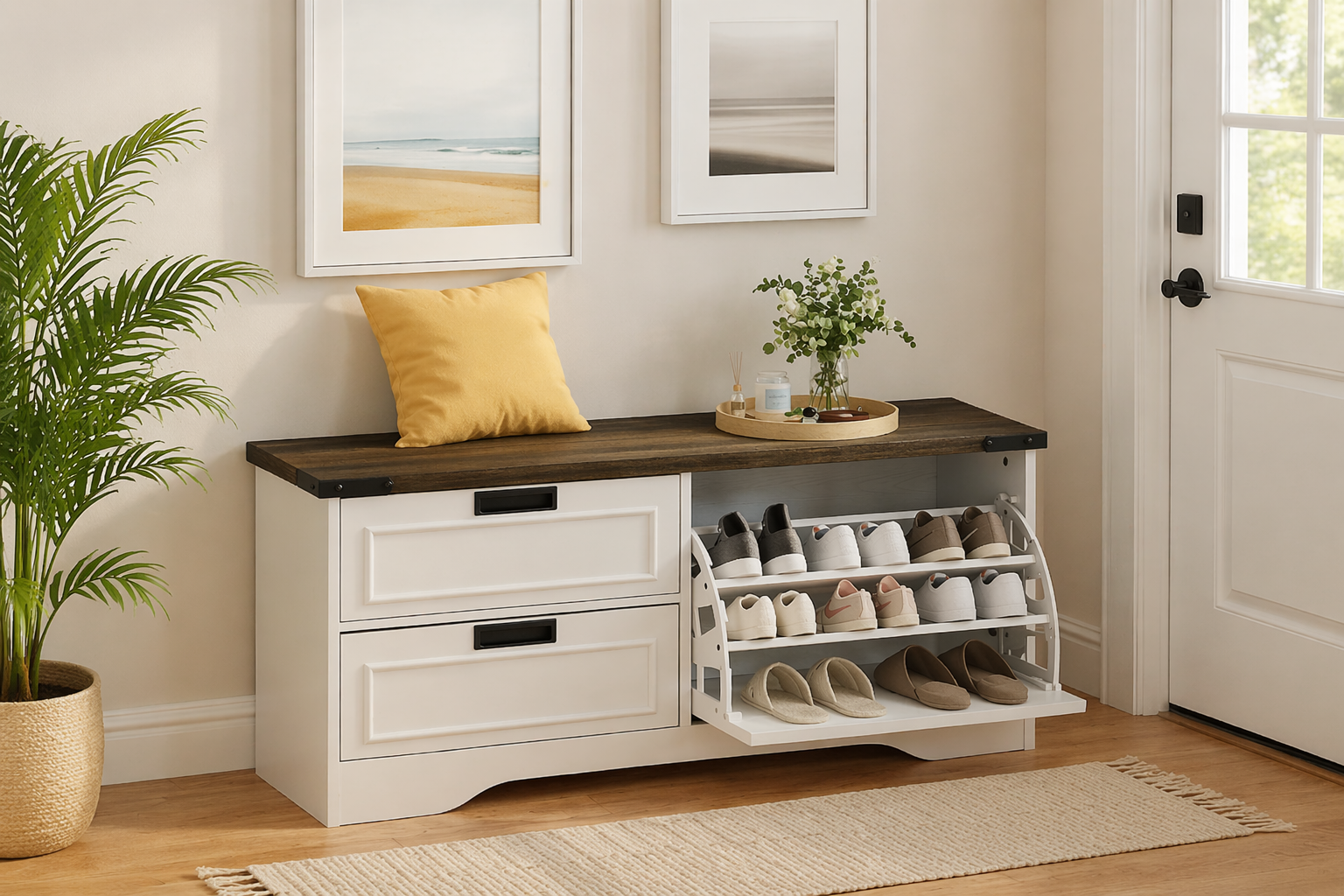
1. Narrow Entryway Bench with Storage
A storage bench solves two problems in one piece: it gives you somewhere to sit while putting on shoes, and it hides what's underneath. Choosing a slim profile matters here more than usual, since a bench that's too deep can block a walkway in a tight entryway.
Best for: an entryway where shoes consistently pile up near the door.
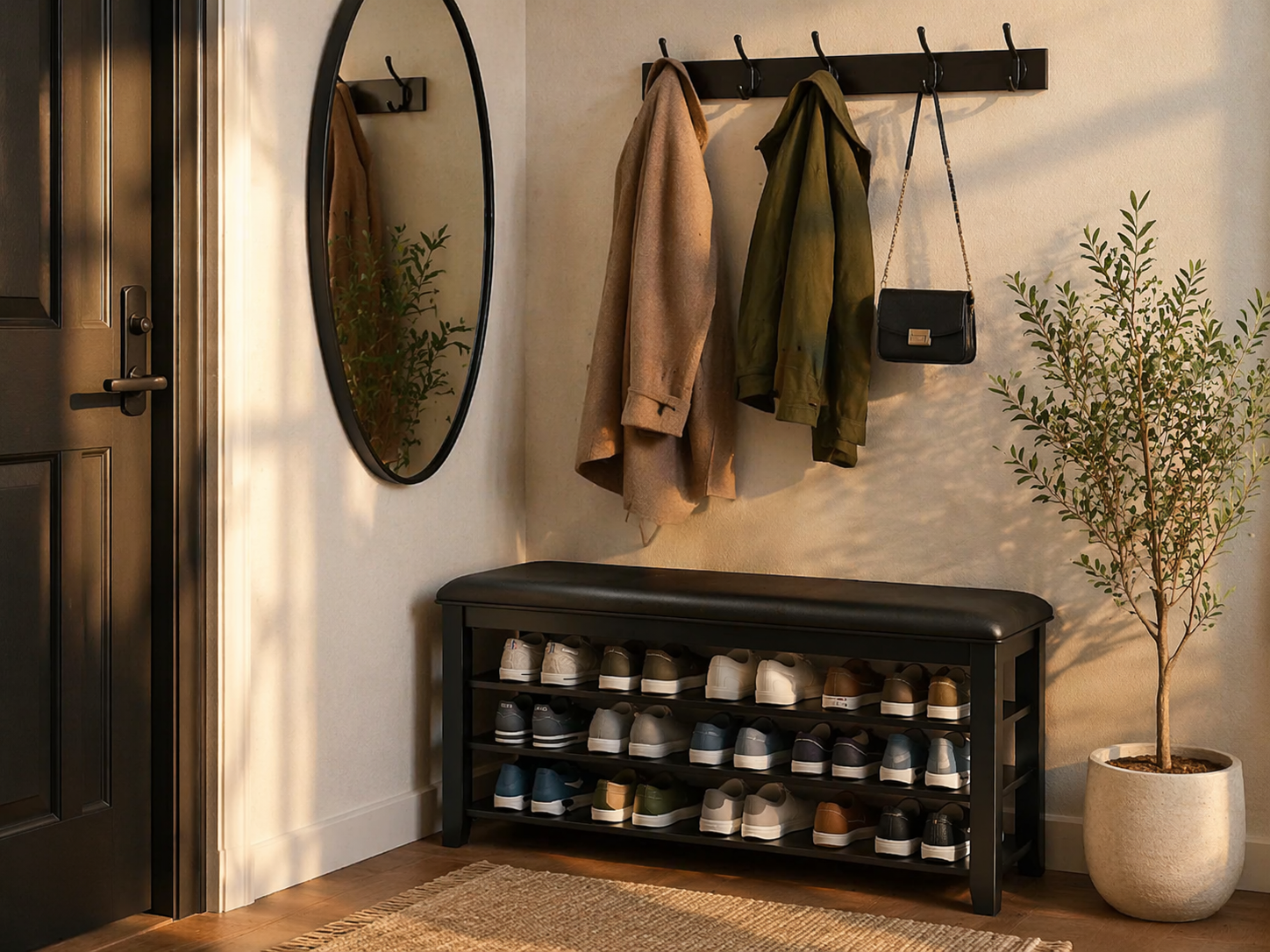
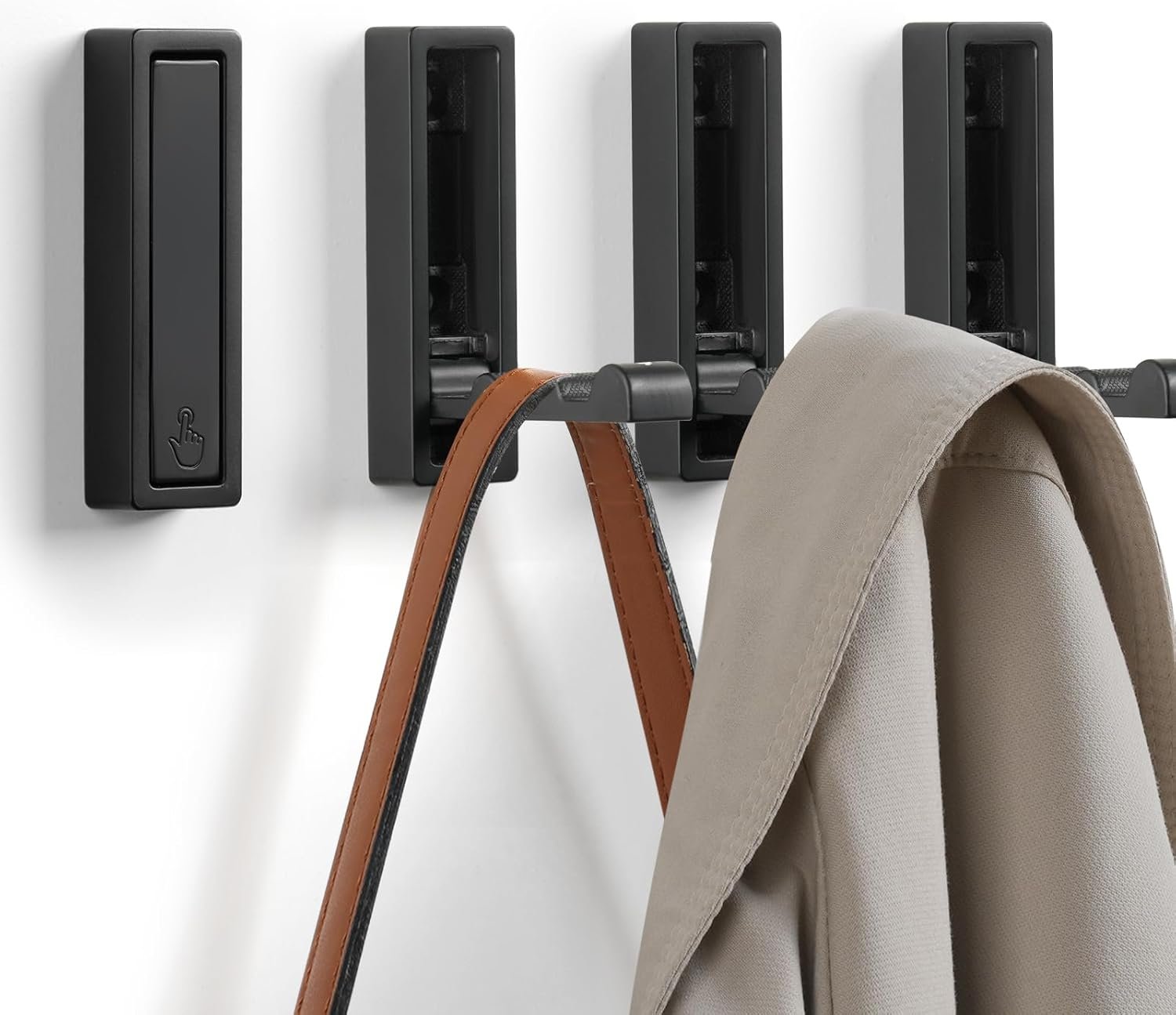
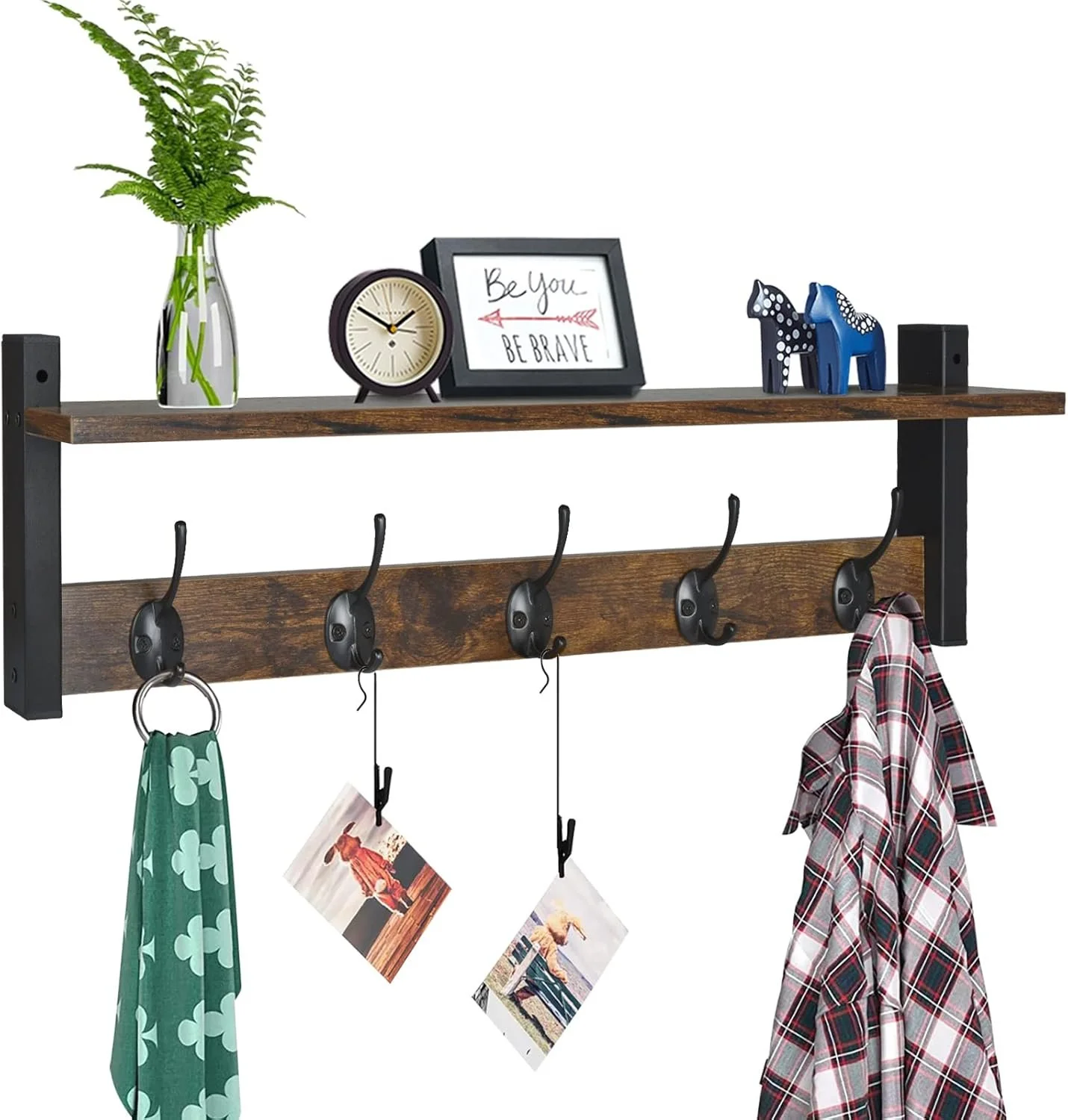
2. Wall Hooks with a Shelf
Wall hooks take coats, bags, scarves, and leashes off the floor or a chair entirely, using zero floor space in the process. Installing them in a clean horizontal line, and limiting how many items stay on display at once, keeps the look intentional rather than cluttered.
Best for: narrow entryways where floor space is genuinely limited.
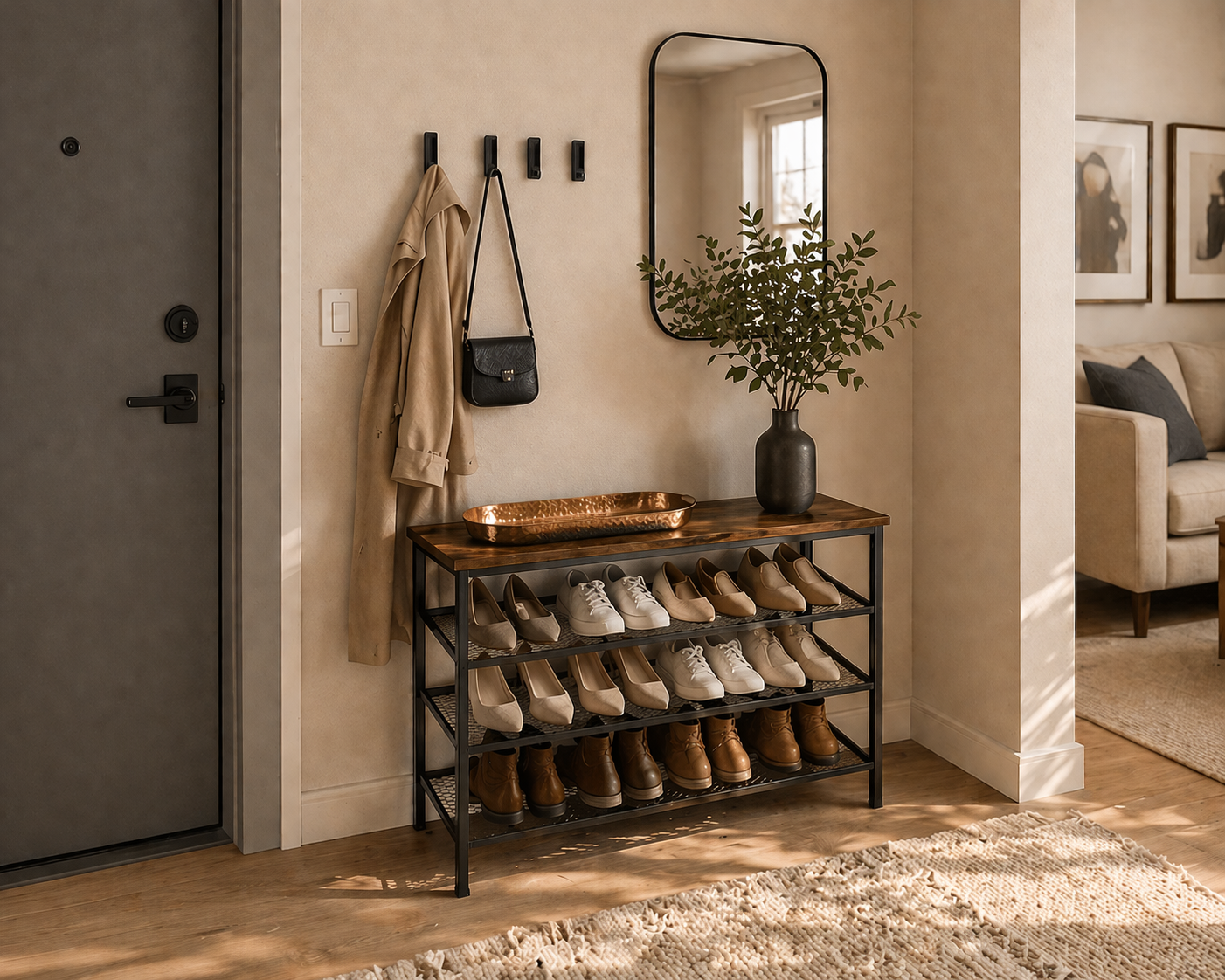
3. Slim Vertical Shoe Rack
A vertical shoe rack holds more pairs than a similarly sized flat rack, without eating into floor space. Keeping only everyday pairs near the door, and storing occasional-use shoes elsewhere, helps the rack stay usable rather than becoming another overflow spot.
Best for: anyone with more shoes than floor space to store them on.
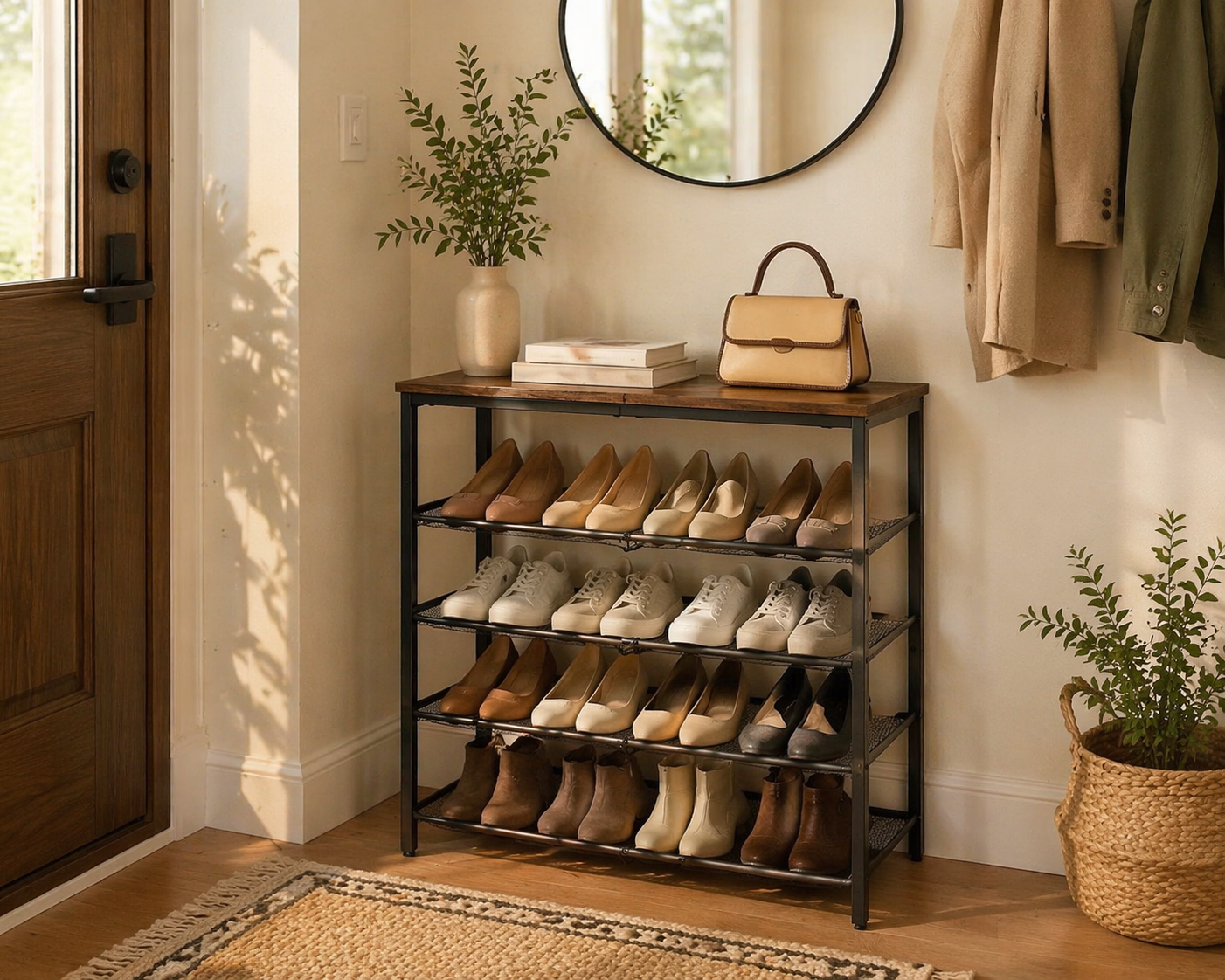
5-tier shoe rack for entryway with adjustable mesh shelves, holding up to 20 pairs. A sturdy, space-saving organizer with a rustic industrial design.
Love the idea of making a small space feel bigger? Check out these Small Bathroom Decor Ideas That Look Expensive But Are Budget-Friendly— the same mirror and light tricks work beautifully in tiny bathrooms too.
Section 2: Add Storage Without Adding Bulk
4. Floating Shelves
Floating shelves move storage up the wall, keeping the floor clear for keys, mail, small decor, or a plant. Installing one or two shelves, rather than a full wall of them, tends to look more intentional in a small space and avoids visually crowding the entryway.
Best for: apartments where floor space is at a premium.
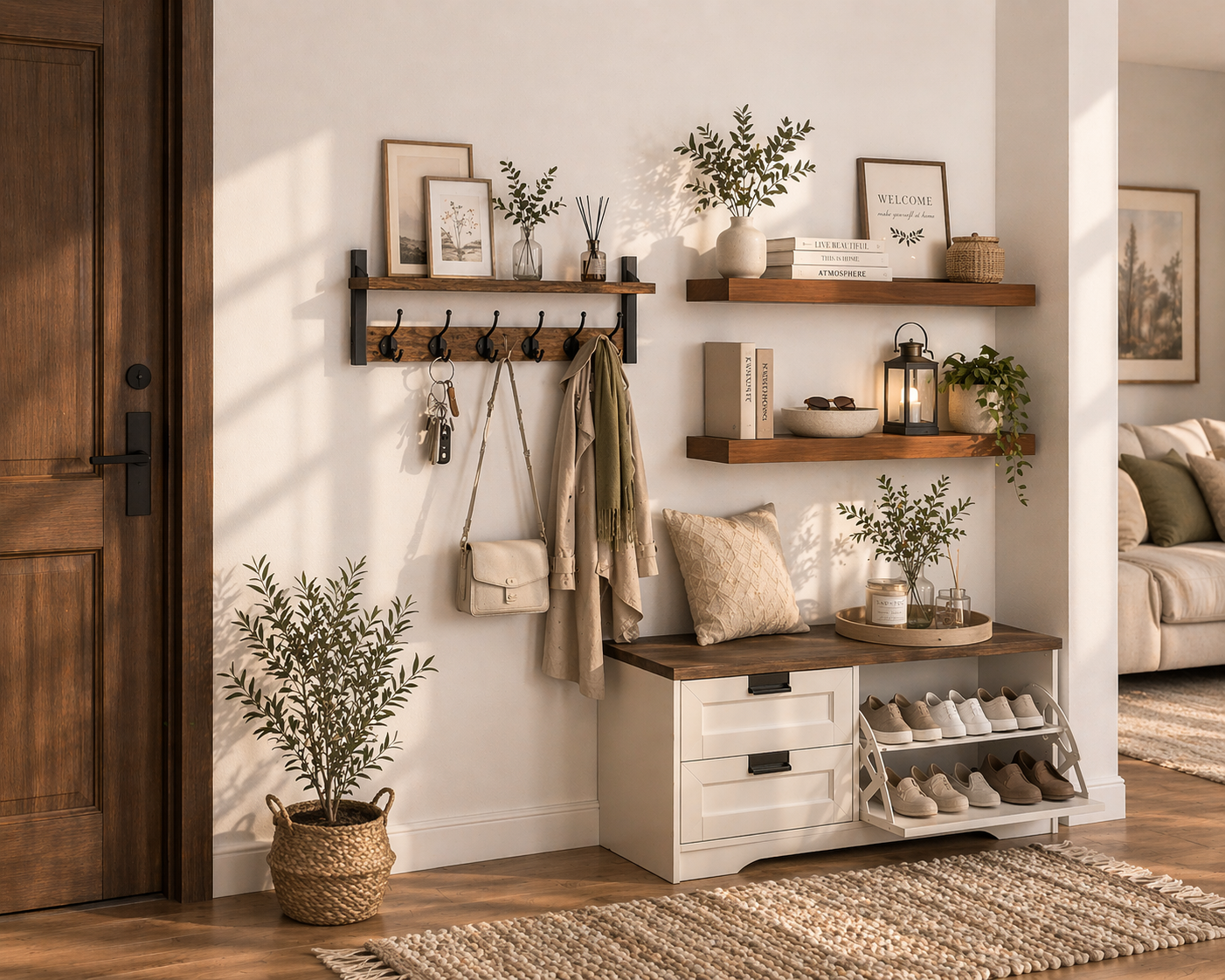

Oak floating shelves set of 2, perfect for small entryways. Real wood design with heavy-duty support up to 50 lbs, ideal for stylish wall storage without taking up space.
5. Woven Storage Baskets
Baskets give a home to the small things that don't otherwise have one, scarves, dog accessories, reusable bags, tucked under a bench, on a shelf, or in a corner. They're a low-cost way to contain clutter without needing to sort through it immediately.
Best for: a quick, styled way to hide miscellaneous small items.
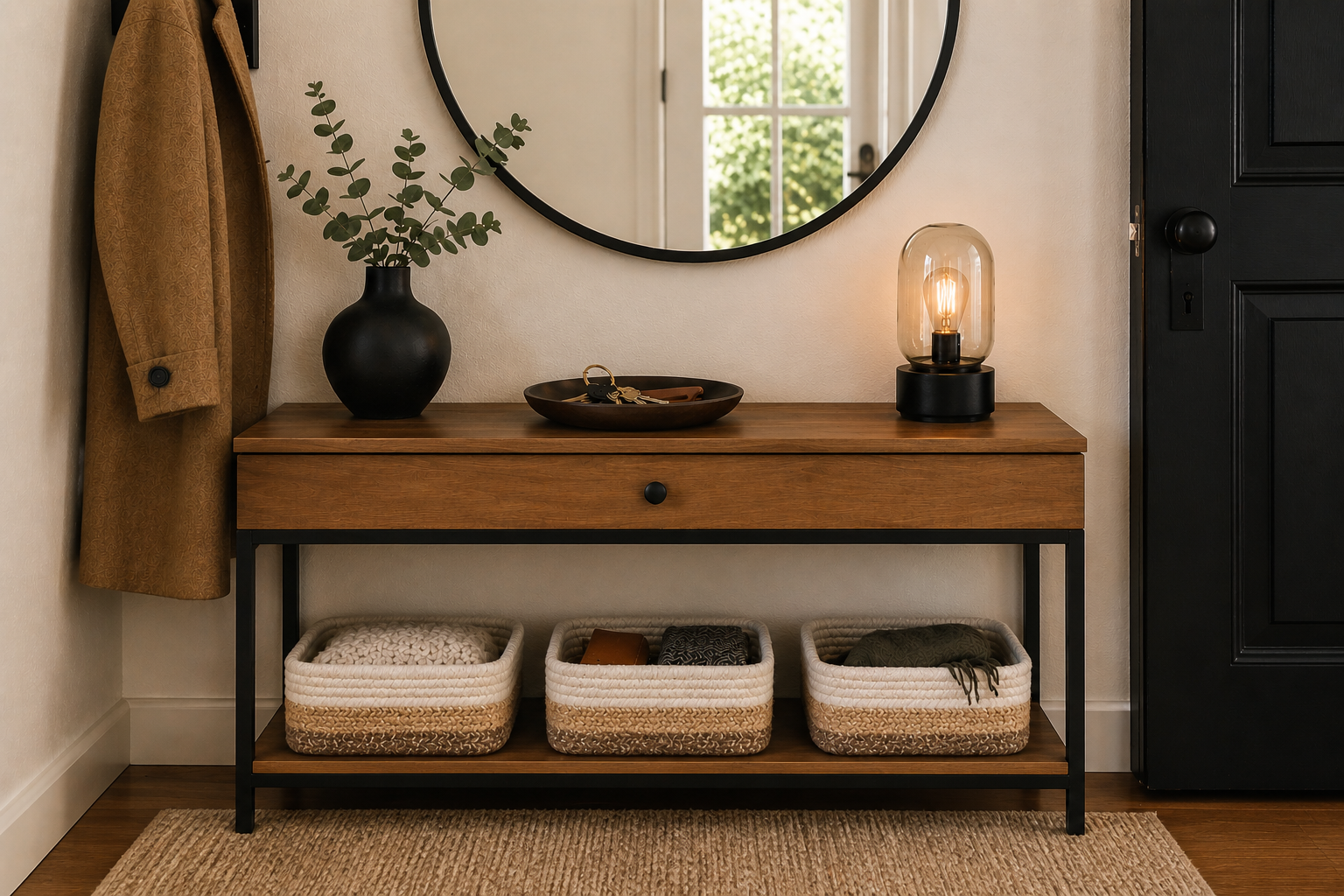
Small woven storage baskets set of 3, perfect for tiny entryways. Soft cotton rope design keeps keys, mail, and essentials organized while adding a warm, clutter-free look.
If you love the basket and texture look, you'll enjoy theseEarthy Cozy Bedroom Ideas for Small Rooms That Feel Warm and Relaxing- same cozy organized energy, different room.
6. Vertical Storage Shelf
When wall hooks and a bench aren't enough, a slim vertical shelf stacks additional storage upward, holding baskets, shoes, or daily essentials in roughly a foot of floor space. This tends to work best as an addition to the pieces above rather than a first purchase, since it's the most space it will still occupy in the room.
Best for: very small entryways that need more storage capacity than a bench or hooks alone can provide.


Section 3: Make the Space Feel Like an Actual Entryway
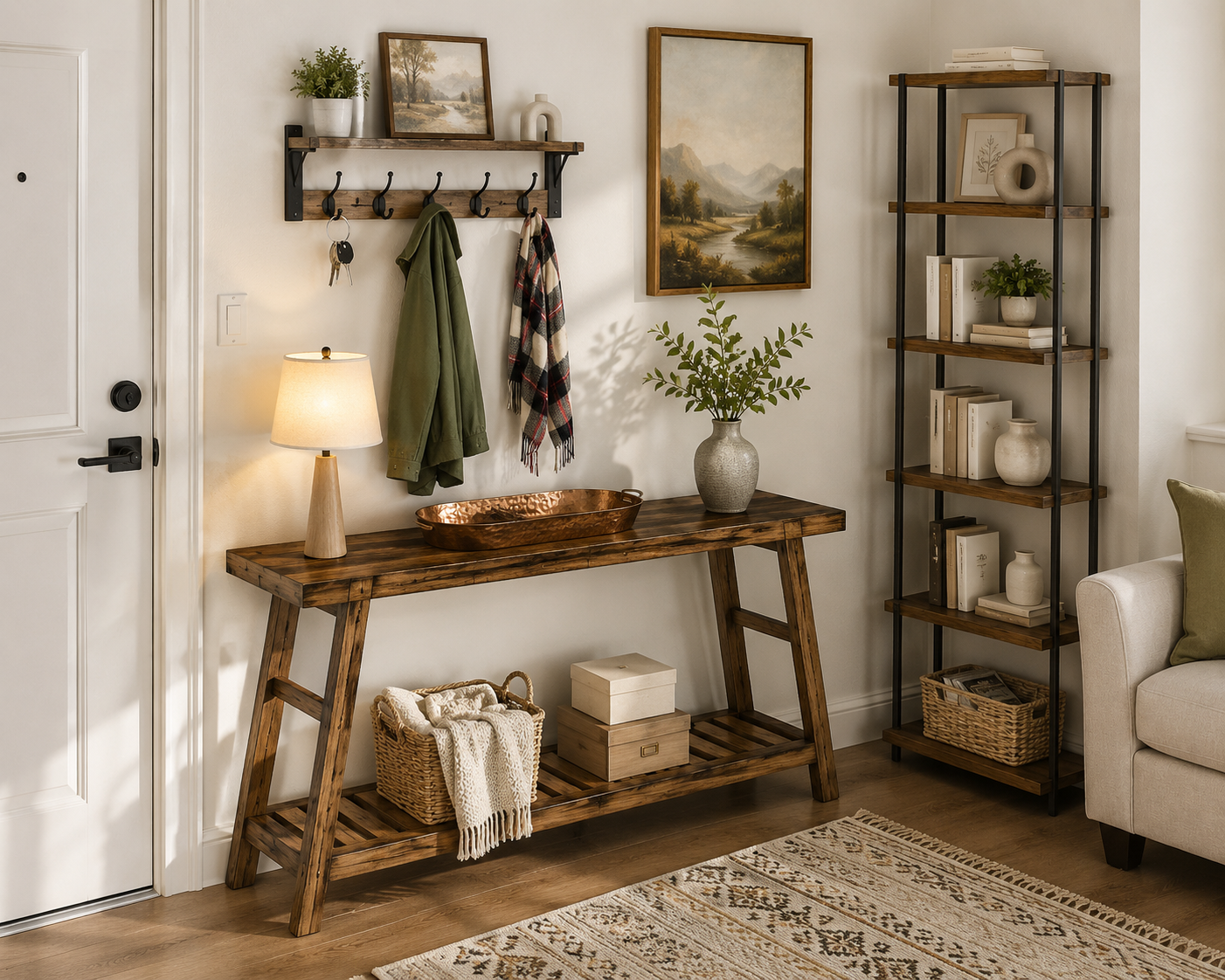
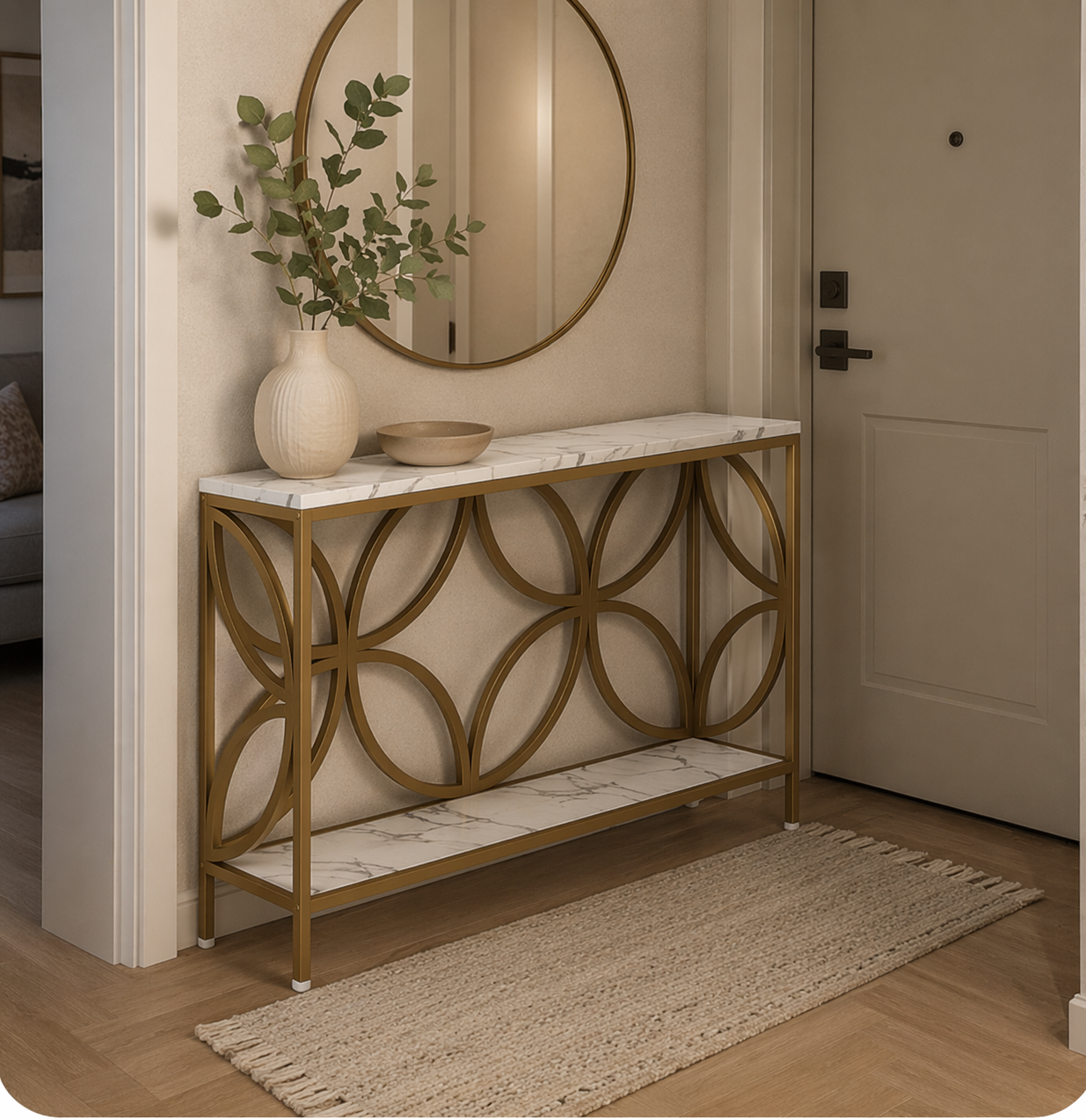
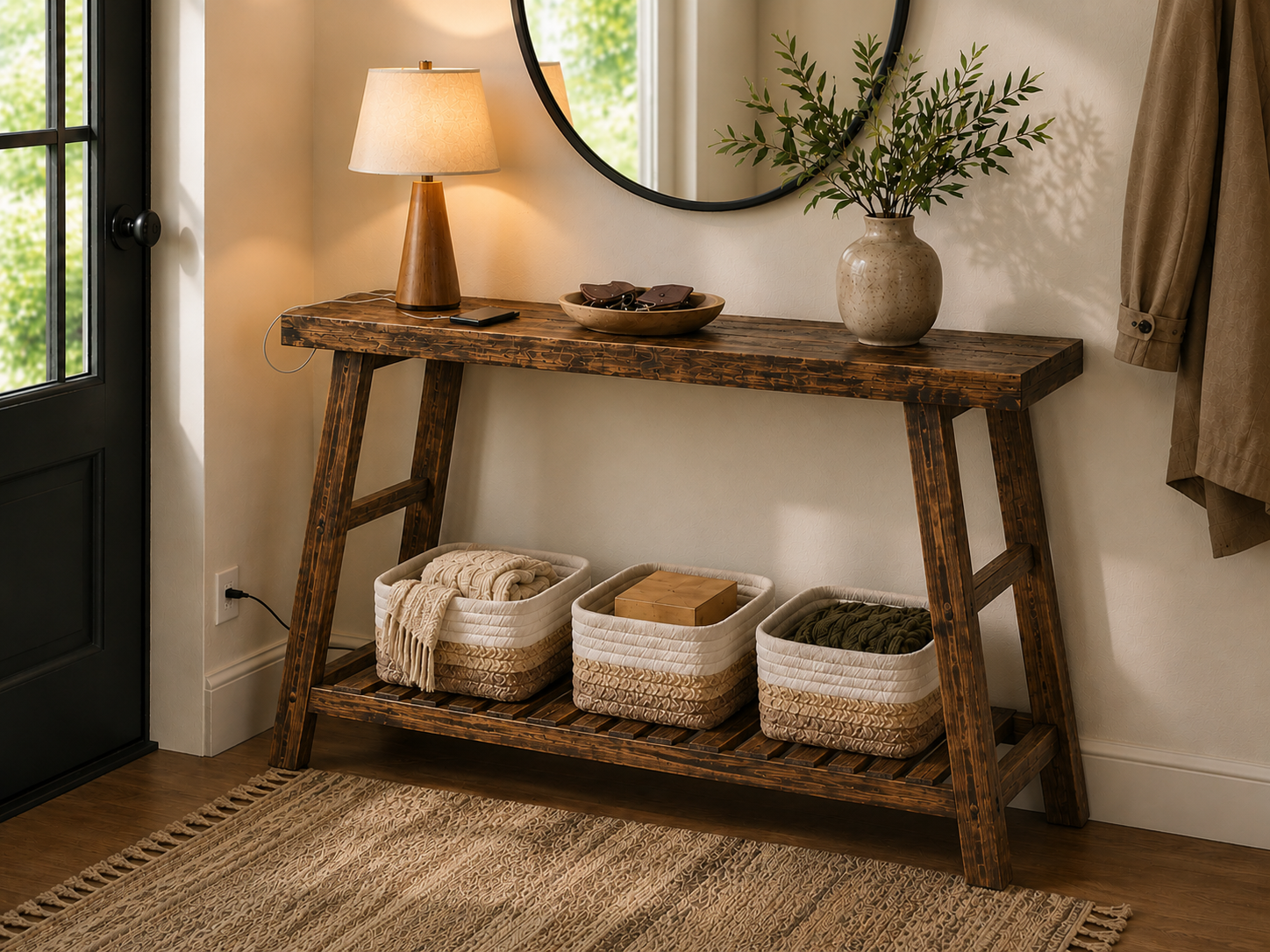
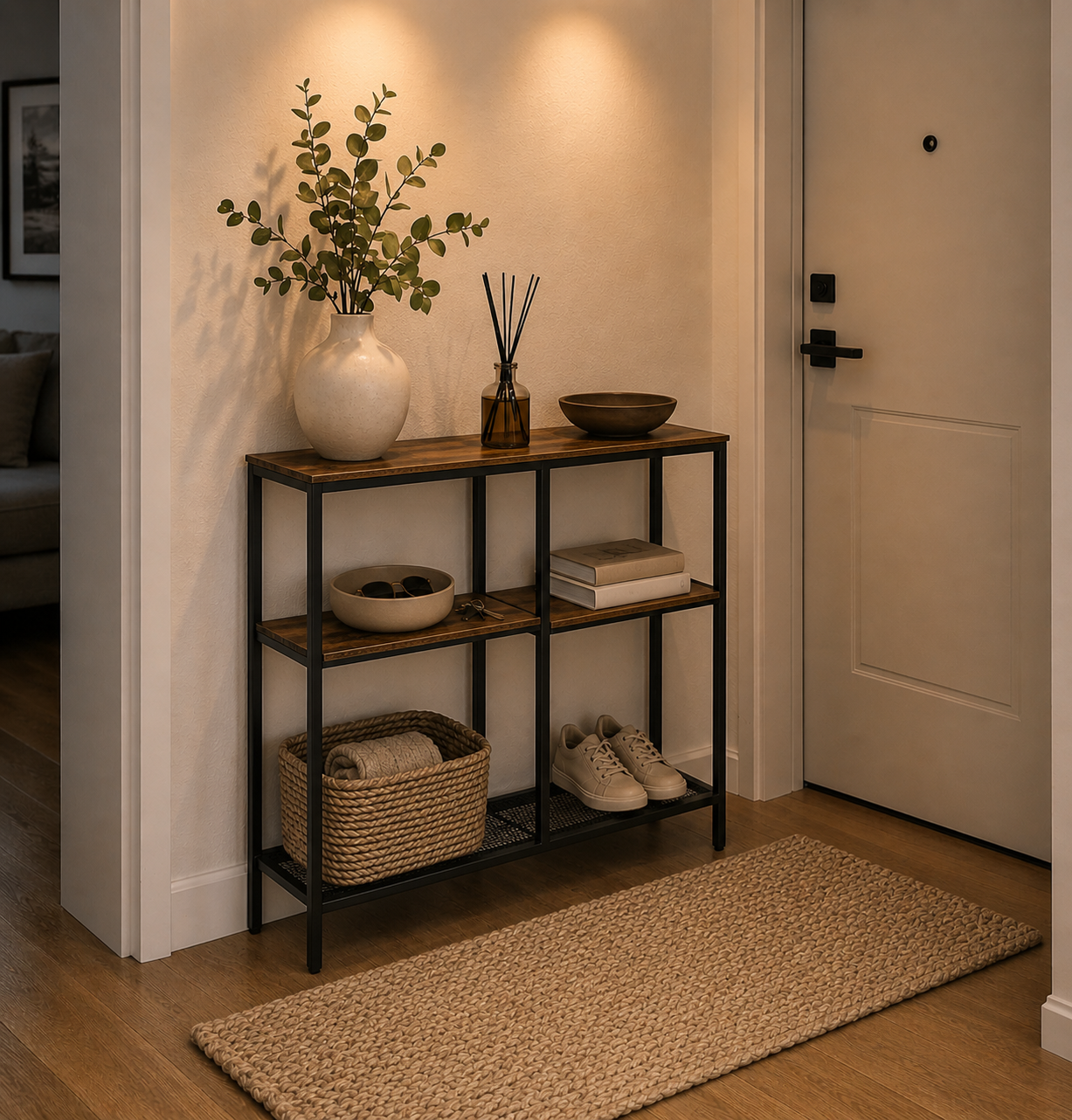
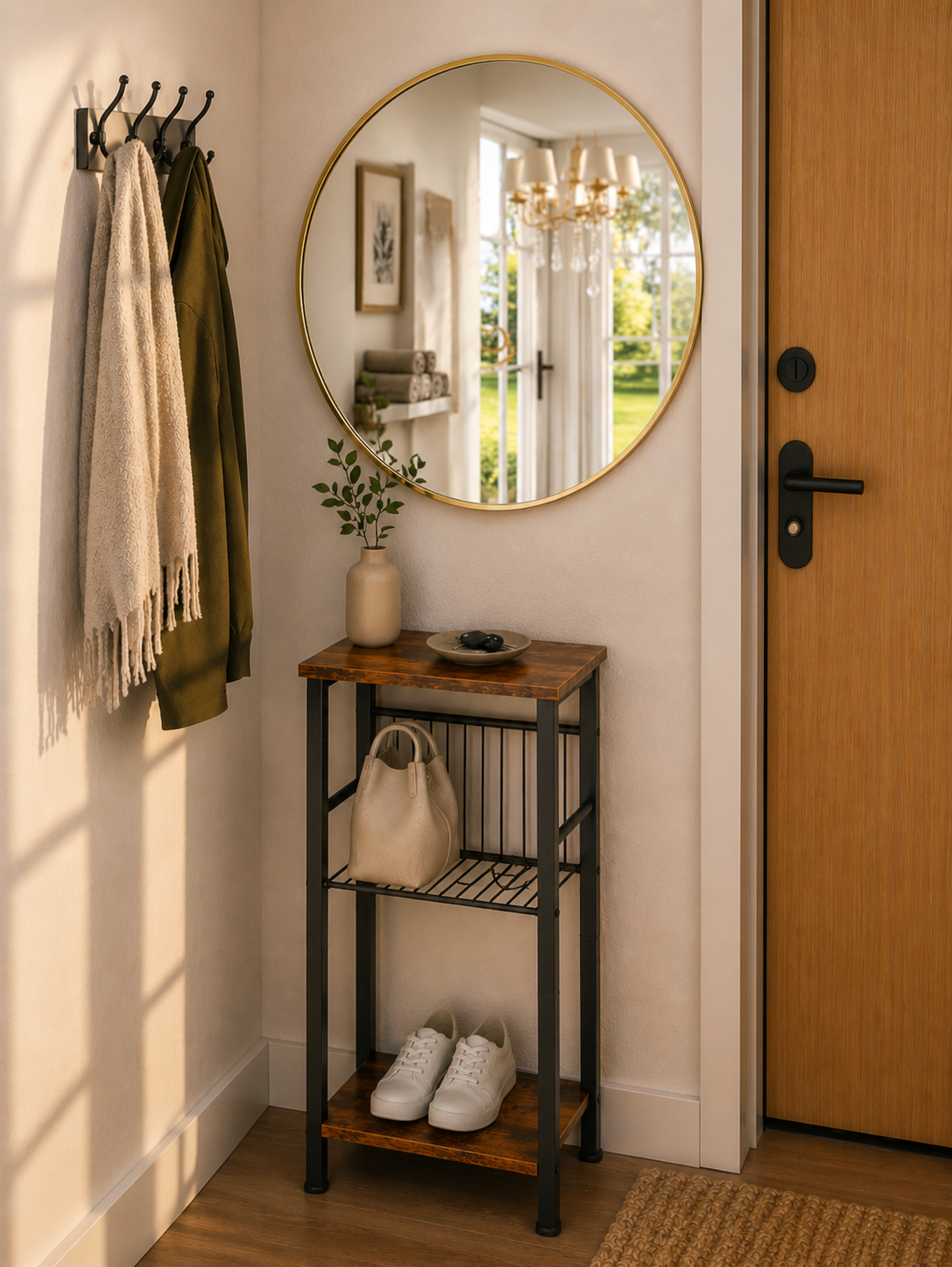
7. Narrow Console Table
A slim console table gives a random patch of floor near the door an actual purpose: keys in a tray, mail in a basket underneath, a small plant or candle on top. Look for a genuinely narrow profile (measure the walkway first) rather than a standard-depth table, which can easily overwhelm a tight space.
Best for: an entryway that feels undefined or disorganized even when it's clean.
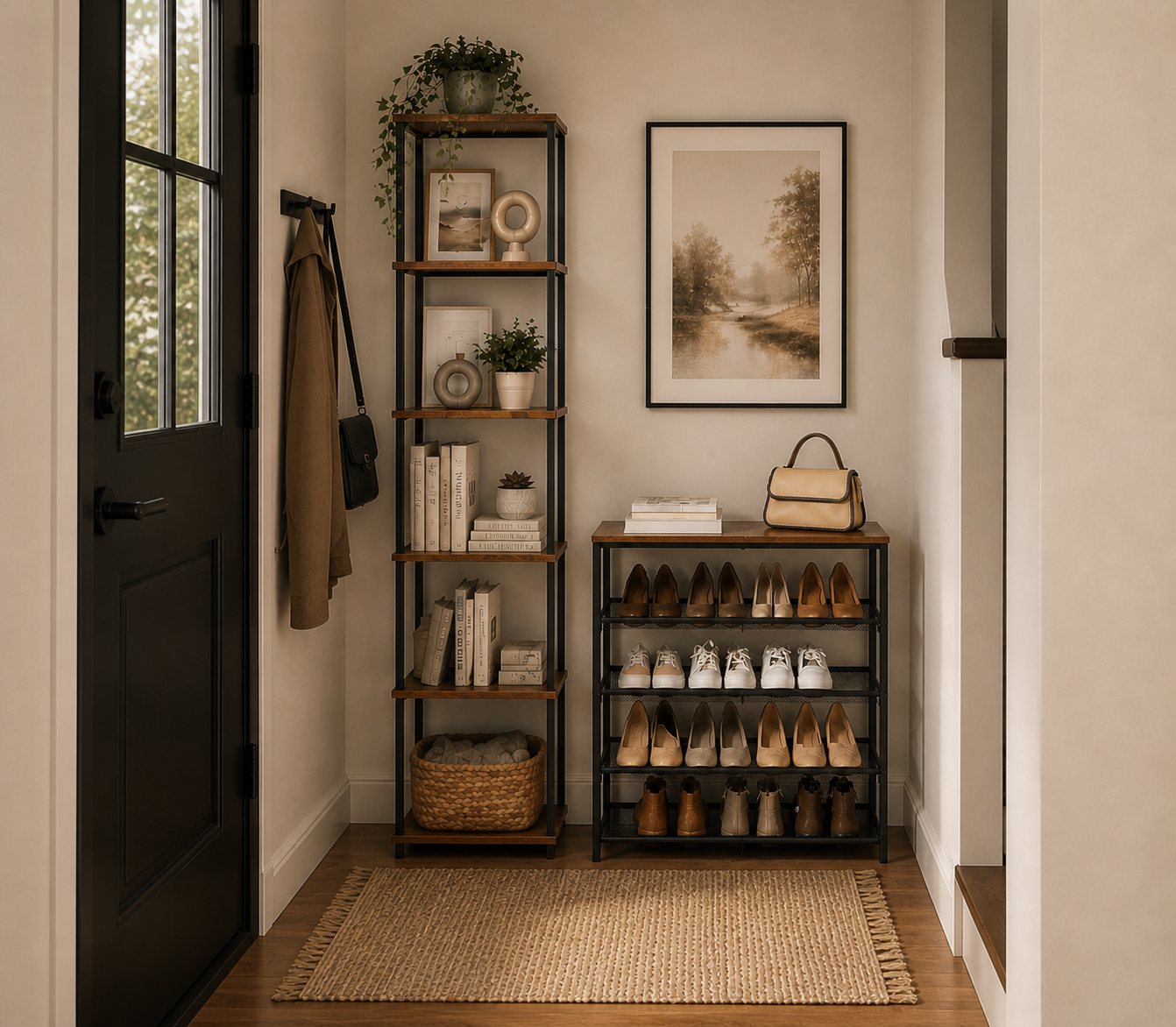
Slim 6-tier shelf unit perfect for small entryways and tight spaces. Easy tool-free assembly, sturdy design, and vertical storage to keep your space organized without taking up floor space.
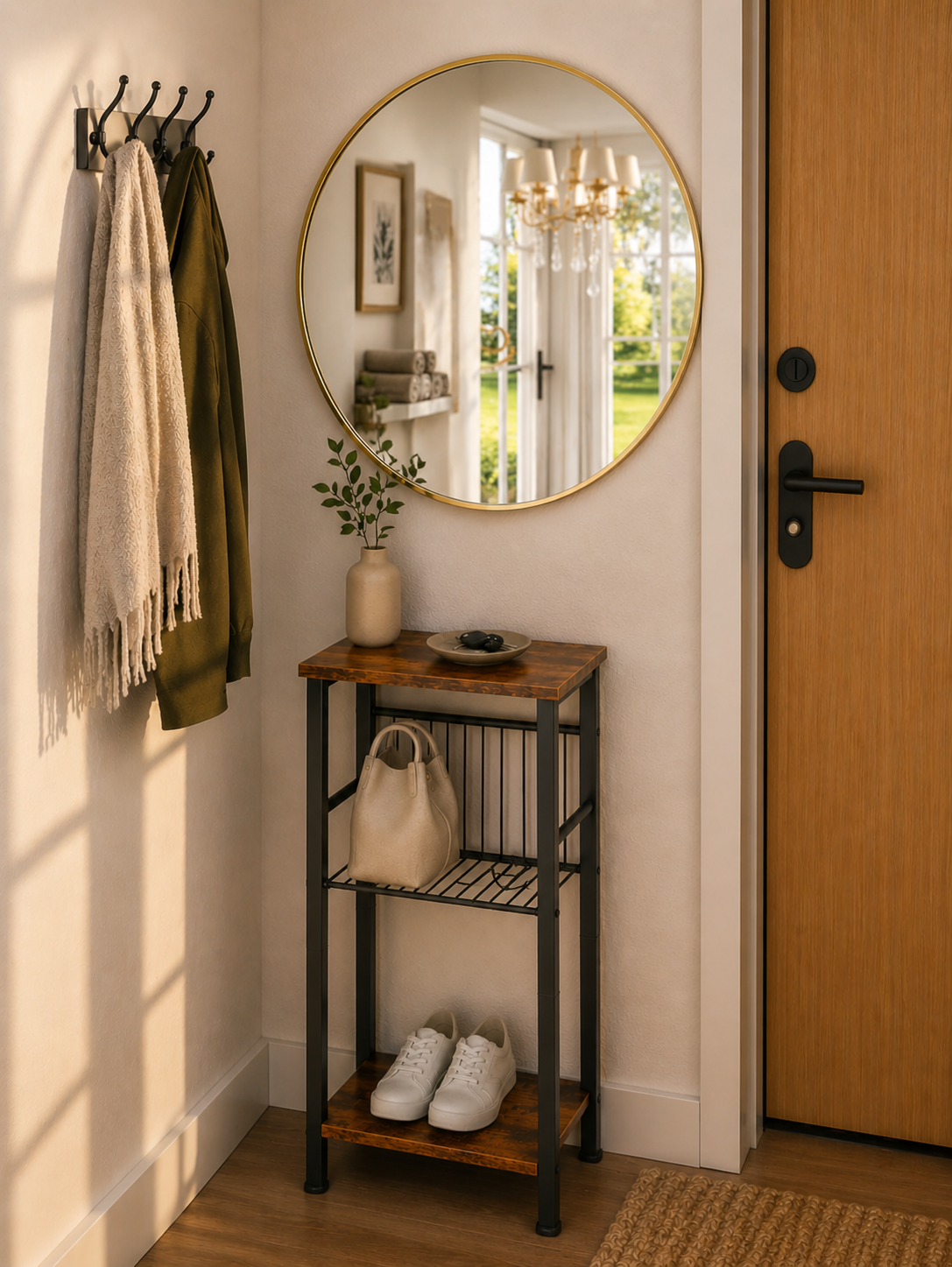
8. Arched or Round Wall Mirror
A mirror can make a dark or cramped entryway feel more open by reflecting available light and adding a sense of depth, without adding bulk or taking up floor space. Placing it across from a window, where there is one, makes the most of the effect.
Best for: entryways that feel dark, tight, or closed-in.

9. Non-Slip Entryway Rug
A rug visually marks where an entryway begins and ends, which matters especially in open-plan apartments where the entryway blends into the rest of the room. It also helps protect flooring and catches dirt before it spreads further into the home. Look for a rug rated for heavy foot traffic and confirm it has a non-slip backing, since a rug that shifts underfoot is a real trip hazard in a high-traffic spot.
Best for: open-plan homes where the entryway doesn't have a clear visual boundary.
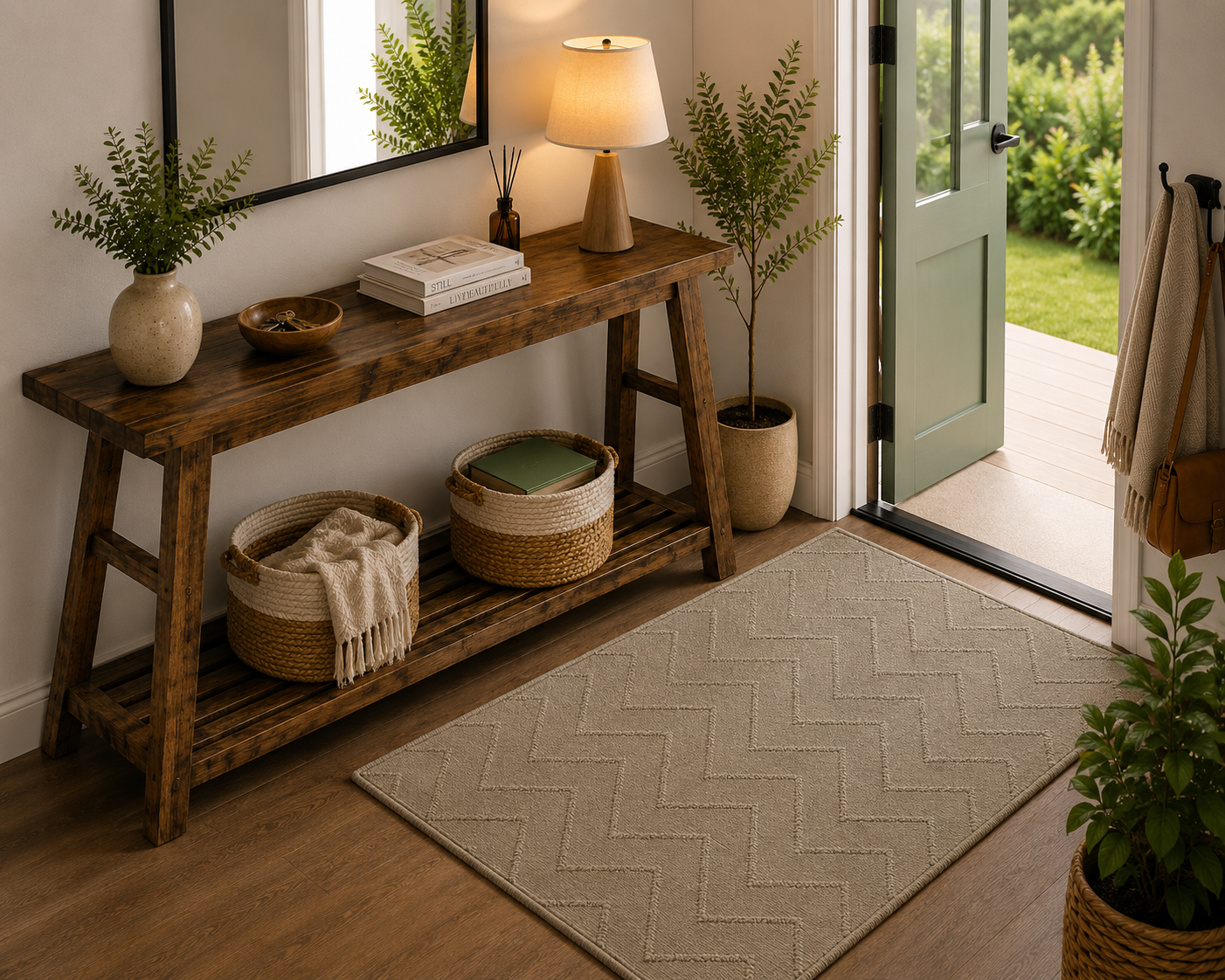
Keep your entryway clean and dry with this large absorbent door mat. Non-slip, pet-friendly, and machine washable, perfect for muddy shoes and busy homes.
10. Decorative Entryway Tray
A small tray on a console table, bench, or shelf gives daily grab-and-go items (keys, wallet, sunglasses) one consistent spot. It works best when it's used only for a handful of daily items rather than becoming a general catch-all, which can turn it into clutter of its own.
Best for: anyone who regularly spends time looking for the same few items before leaving the house.
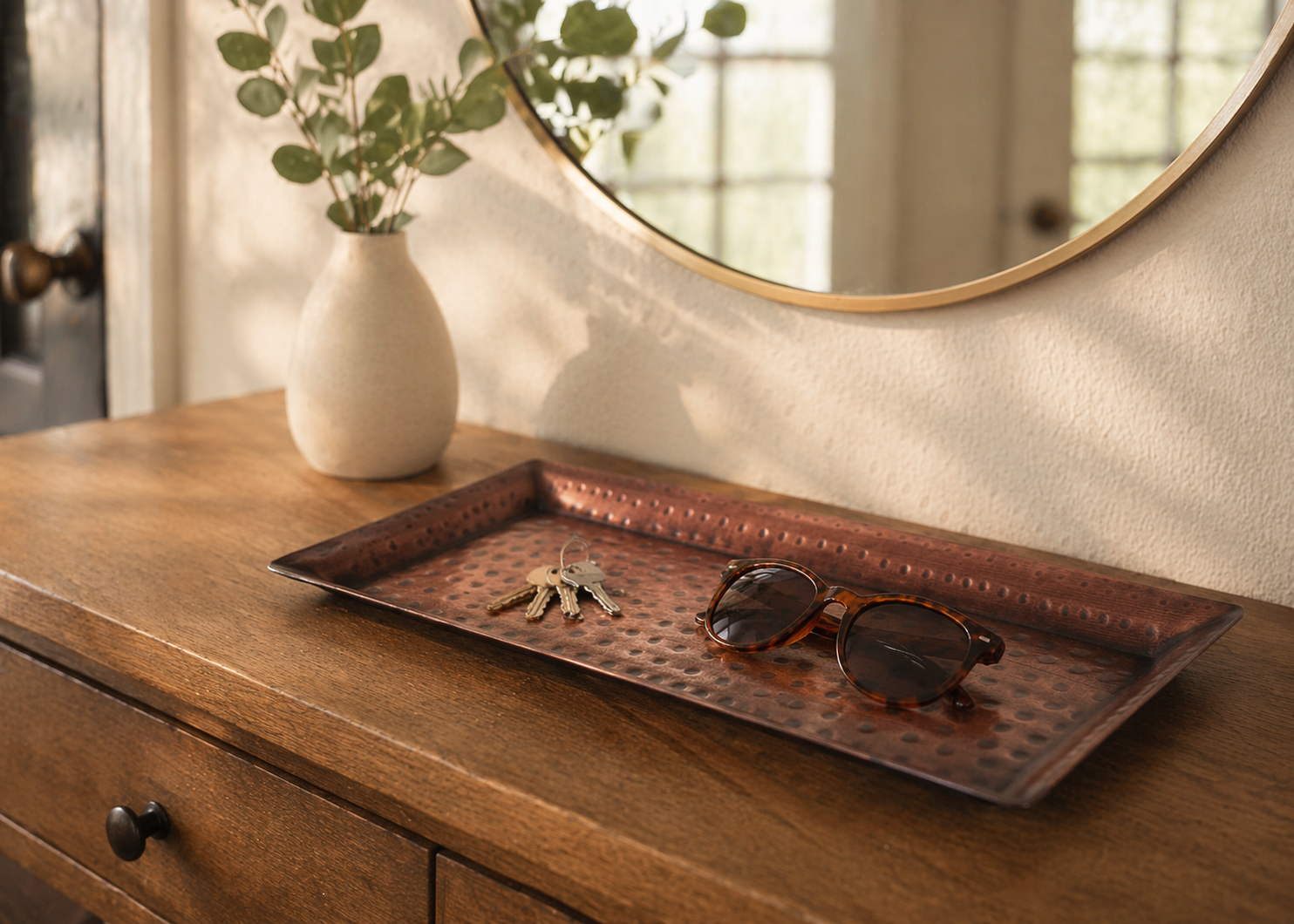
Decorative metal tray set perfect for small entryway tables. Ideal for organizing keys, candles, and essentials while adding a warm, elegant touch to your space.
While you're getting organized, these posts might help too:
🛁 Small Bathroom Decor Ideas That Look Expensive But Are Budget-Friendly
🛏️ 20 Earthy Cozy Bedroom Ideas for Small Rooms That Feel Warm and Relaxing
Small Entryway Mistakes to Avoid
A few patterns tend to make a small entryway feel more cluttered than it needs to be:
Buying storage before deciding what's actually causing the mess. A console table won't help if the real problem is a floor full of shoes. Spend a few days just noticing what actually piles up before buying anything.
Choosing furniture that's too deep for the space. A few inches matters more here than in almost any other room; measure before assuming something will fit (see the depth ranges above).
Skipping the wall. Vertical space above a bench or beside a door is often the easiest place to add storage without shrinking the walkway.
Turning a catch-all tray into an actual catch-all. A tray works best with a handful of daily items, not everything that would otherwise sit on the floor.
Blocking the door's swing radius. A bench, table, or shoe rack placed too close to the door can catch on it every time it opens, which is easy to miss until the furniture is already in place.
Over-furnishing a space that only needs one or two fixes. In a genuinely small entryway, three or four pieces of furniture can end up creating more clutter than the shoes and coats did in the first place.
No-Buy Organization Ideas
Not every small entryway problem needs a new purchase. A few options that cost little or nothing:
Repurpose a small table, shelf, or bowl you already own as a mini console or catch-all, rather than buying something new specifically for the entryway.
Use a basket or bin you already have to catch shoes near the door before investing in a dedicated rack.
Try adhesive or over-the-door hooks if you're renting and want to test wall storage before committing to anything permanent, or if you want to avoid wall damage entirely.
Use a folding chair or step stool you already own as a temporary shoe-changing spot instead of buying a bench right away, especially if you're not yet sure a bench will fit.
Rotate seasonal items in and out rather than storing everything at once. Off-season coats and shoes stored elsewhere in the home free up entryway space for what's actually in use.
Declutter first. Sorting through what's currently living in the entryway (old mail, shoes you don't wear, bags you don't use) often solves more of the problem than a new organizer will, and it's worth doing before measuring for anything new.
If this entryway is part of a new apartment setup, this first apartment checklist can help you prioritize the essentials you actually need before buying more organizers or decor.
Start With the Problem That Bothers You Most
You don't need to do everything on this list at once. Pick the one or two problems that actually bother you day to day, the shoe pile, the coat chaos, the keys you can never find, and start there. A well-matched fix for your actual space and habits will do more than trying to solve every entryway problem in one weekend.
