
A clothing label can look like a row of tiny shapes, dots and lines that is easy to ignore, until you are standing at the laundry basket wondering whether a shirt can go in the dryer, whether bleach is allowed or whether it needs a gentler wash cycle.
The good news is that laundry care symbols follow a simple logic. Once you recognize the five main symbol families (washing, bleaching, drying, ironing and professional care), most labels become much easier to read. This guide walks through each family, explains what the dots, bars and X marks add, and points out the mistakes that trip people up most often.
Care labels use standardized symbol systems, and they are not identical everywhere. This article primarily follows the ASTM care-symbol system used in the United States and reflected in FTC guidance. International ISO/GINETEX symbols use the same five basic care categories but can differ in details such as temperature notation, natural-drying symbols and professional-care markings. Always follow the label attached to the garment.
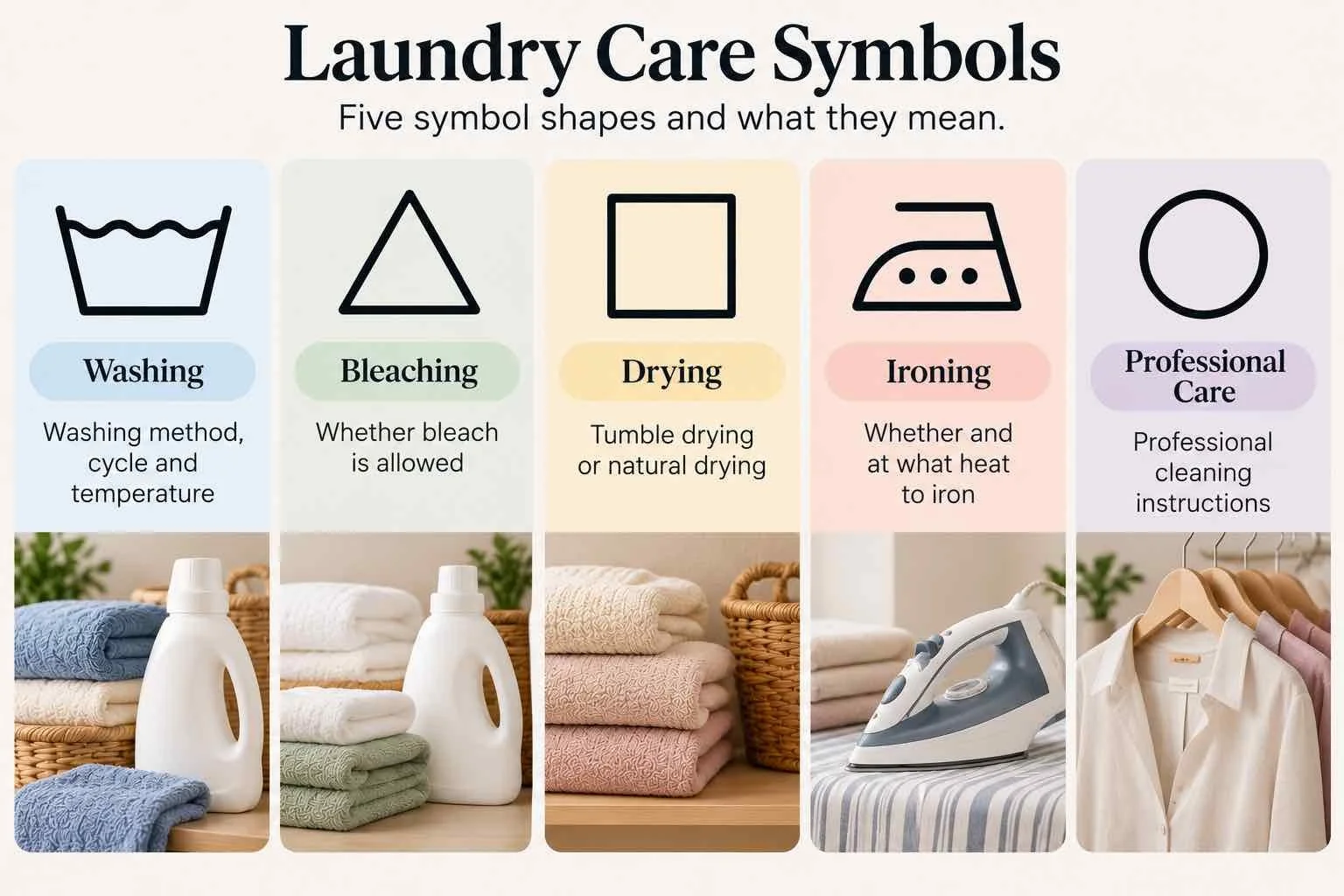
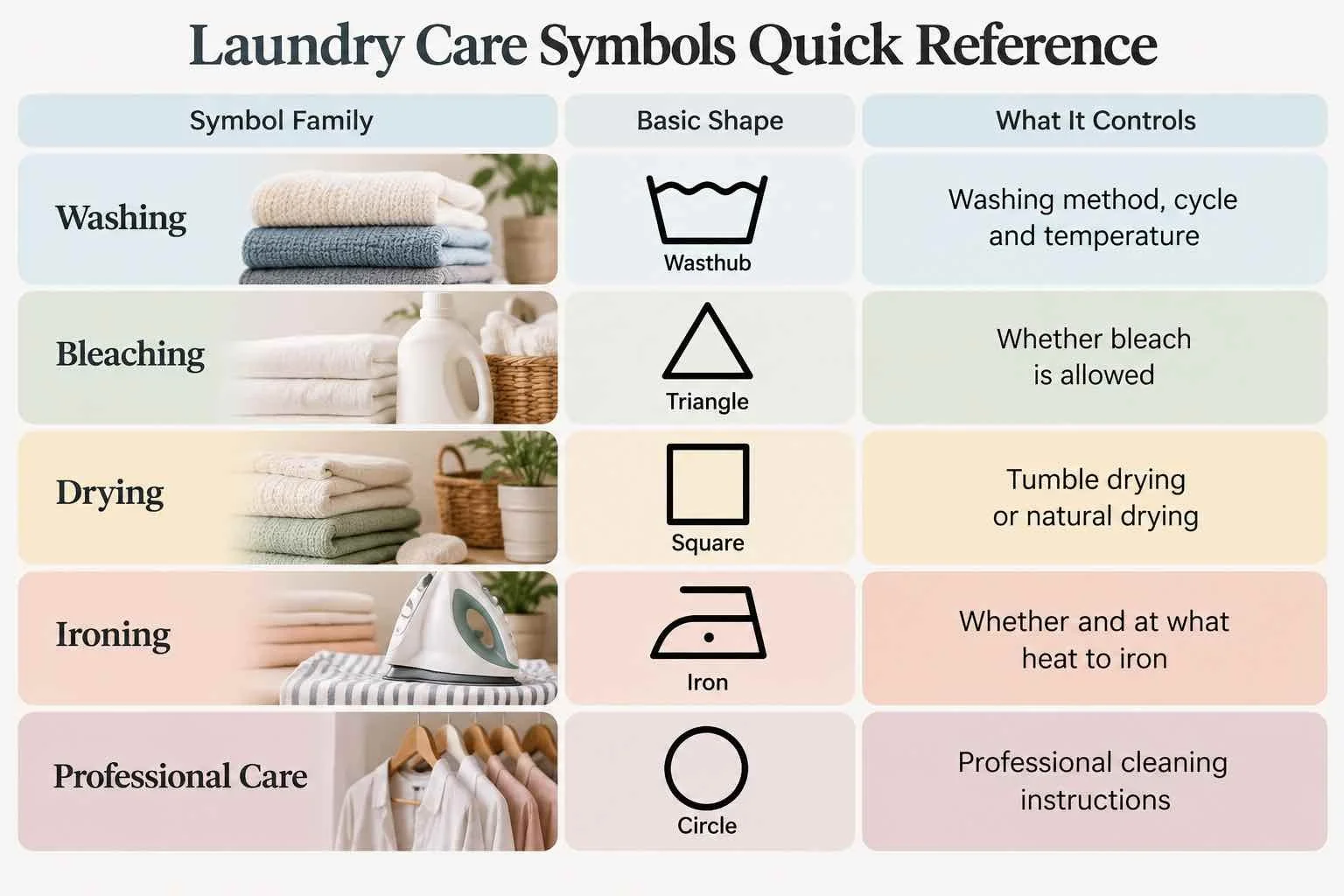
The Five Basic Laundry Care Symbol Shapes
Care-symbol systems are built around five base shapes:
Washtub = washing
Triangle = bleaching
Square = drying
Iron = ironing
Circle = professional textile care (dry cleaning and similar)
An X through any of these symbols generally means that treatment should not be used. Dots and lines added to a symbol give more detail, such as how hot, or how gentle, the treatment should be. Each family gets its own section below.
How to Read the Extra Marks on Laundry Symbols
The base shape tells you the category. The extra marks tell you how to handle it.
What Does an X Mean?
A crossed-out symbol means the treatment shown by that symbol should not be used. Some examples:
Crossed-out tub = do not wash
Crossed-out triangle = do not bleach
Crossed-out dryer symbol (square with a circle) = do not tumble dry
Crossed-out iron = do not iron
The X only cancels the one treatment it covers. A crossed-out bleach triangle says nothing about washing, and a crossed-out dryer symbol says nothing about whether the garment can air dry.
What Do Dots Mean?
Dots usually stand for temperature or heat level, but what they mean depends on which symbol they sit inside. On U.S. labels, dots can appear in three places:
Wash tubs, where the dots stand for the maximum water temperature
Tumble-dry symbols, where the dots stand for the heat setting
Irons, where the dots stand for the iron's heat level
More dots generally means a higher limit within the same symbol, but you cannot compare dots across symbols. Two dots in a dryer symbol and two dots in a wash tub are not the same kind of instruction, so always check which shape the dots are inside.
What Do Lines Under a Symbol Mean?
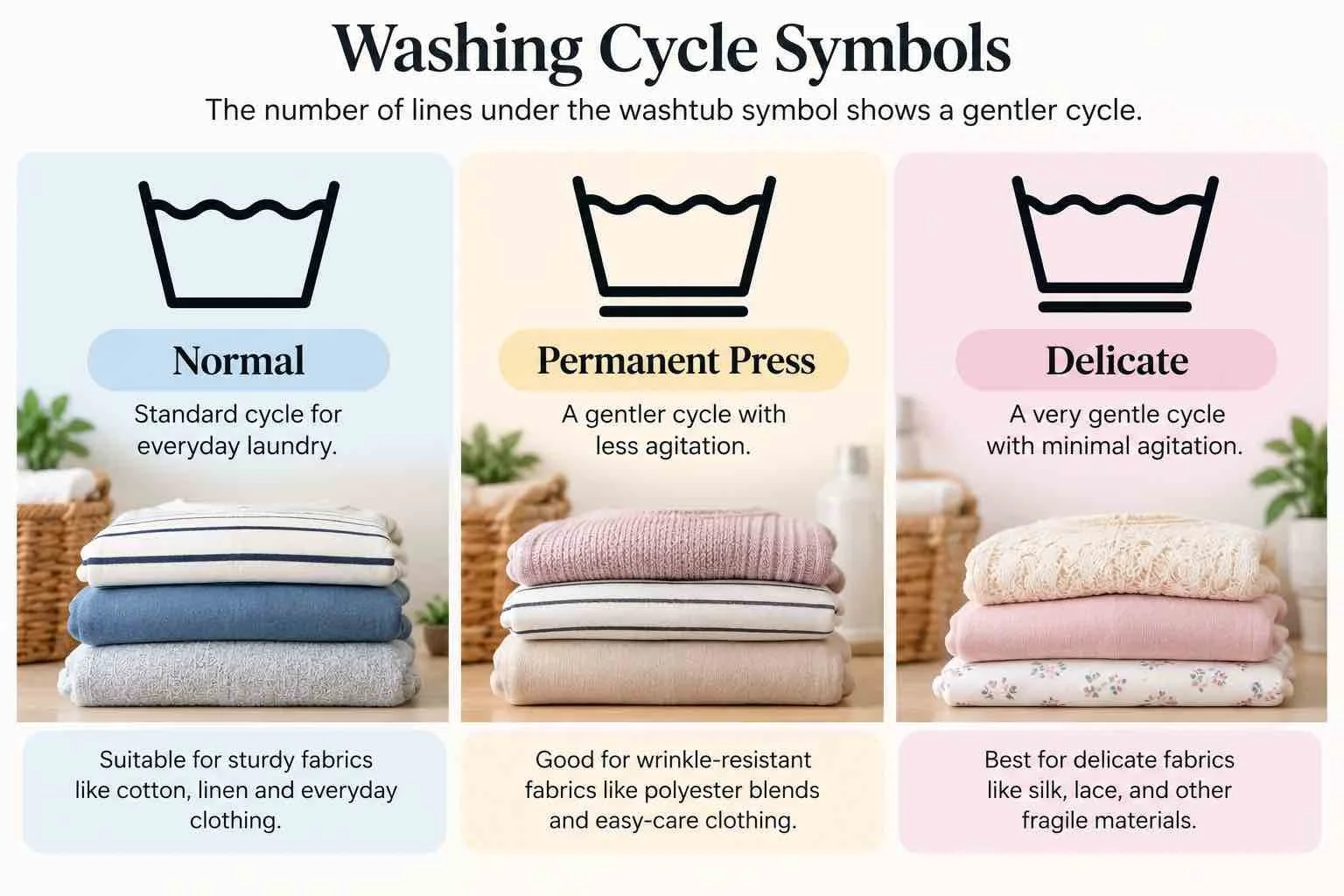
Bars drawn beneath a washing or drying symbol signal a gentler process or cycle:
One bar commonly corresponds to a permanent press cycle, which uses reduced mechanical action
Two bars indicate a gentler, delicate-type process
These bars sit underneath the main symbol. They are different from the lines drawn inside a square for natural drying (covered below), which describe how to dry a garment without a dryer.
Washing Symbols Explained
The washing symbols are built around the washtub. Together, the tub, any bars beneath it and any dots inside it tell you the method, the cycle and the maximum water temperature.
Machine Wash
A plain wash tub means machine washing is allowed. On its own it describes the method, and the details about cycle and temperature come from the marks added to it.
Hand Wash
A tub with a hand in it means the garment should be hand washed, following the instructions on the label. Labels do not spell out a universal hand-washing method in symbol form, so if the label includes written wording about the water or technique, follow that.
Do Not Wash
A crossed-out tub means the garment should not be washed. This does not automatically mean "dry clean it." Check the rest of the label for other care instructions, since a professional-care symbol or written wording may explain what is expected.
Normal Wash Cycle
A tub with no bars beneath it is the normal cycle. It signals that no special reduction in machine action is called for.
Permanent Press / Mild Cycle
One bar beneath the tub points to a permanent press or mild cycle, which uses reduced mechanical action compared with the normal cycle.
Gentle or Delicate Cycle
Two bars beneath the tub point to a gentle or delicate cycle, an even gentler process than permanent press.
Washing Temperature Dots
In the U.S. ASTM system, dots inside the tub show the maximum water temperature. The values below follow the ASTM care-symbol standard used for U.S. labels:
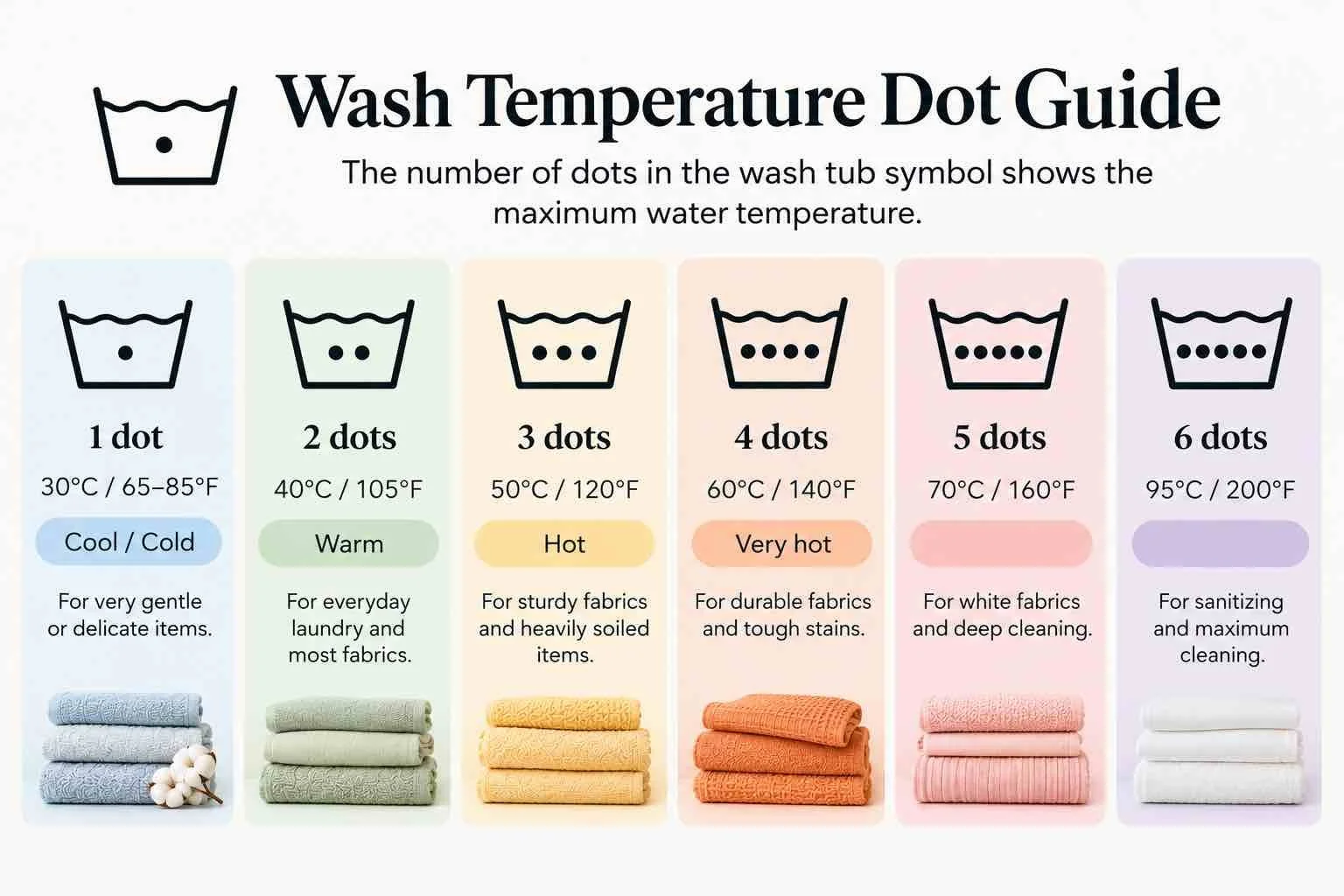
These are maximums, meaning the label is telling you the hottest water the garment is meant to handle. Follow the exact symbol shown on your garment, and keep in mind that this dot system is a U.S.-style notation. International labels often use a number instead (see the comparison section below).
Bleaching Symbols Explained
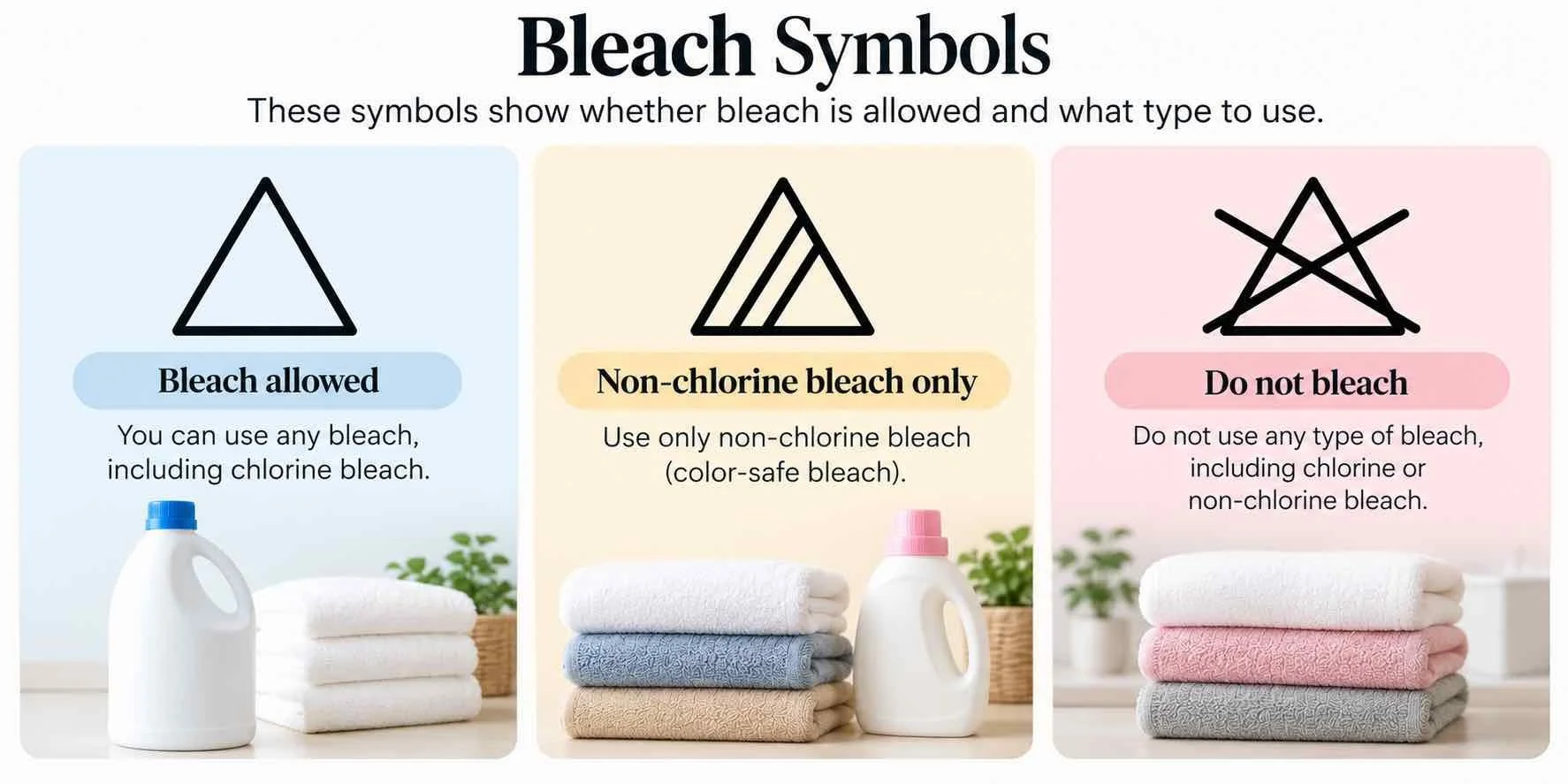
Bleaching symbols use the triangle. They tell you what is allowed, not what is required.
Any Bleach Allowed When Needed
A plain triangle means any type of bleach may be used when needed. This is permission, not an instruction. It does not mean the garment should be bleached, It means the label permits any bleach when needed; it does not mean bleach is necessary.
Non-Chlorine Bleach Only
A triangle with two diagonal lines inside means that if bleach is used, only non-chlorine bleach should be used. Again, it restricts the type of bleach where bleaching is needed rather than telling you to bleach.
Do Not Bleach
A triangle with an X through it means do not bleach. Take it at face value and leave bleaching out for that garment.
Drying Symbols Explained
Drying symbols are drawn inside a square. The most important distinction is this: a square with a circle inside refers to tumble drying in a machine dryer, while a square with other markings (such as lines) refers to natural drying, meaning no dryer.
Tumble Dry
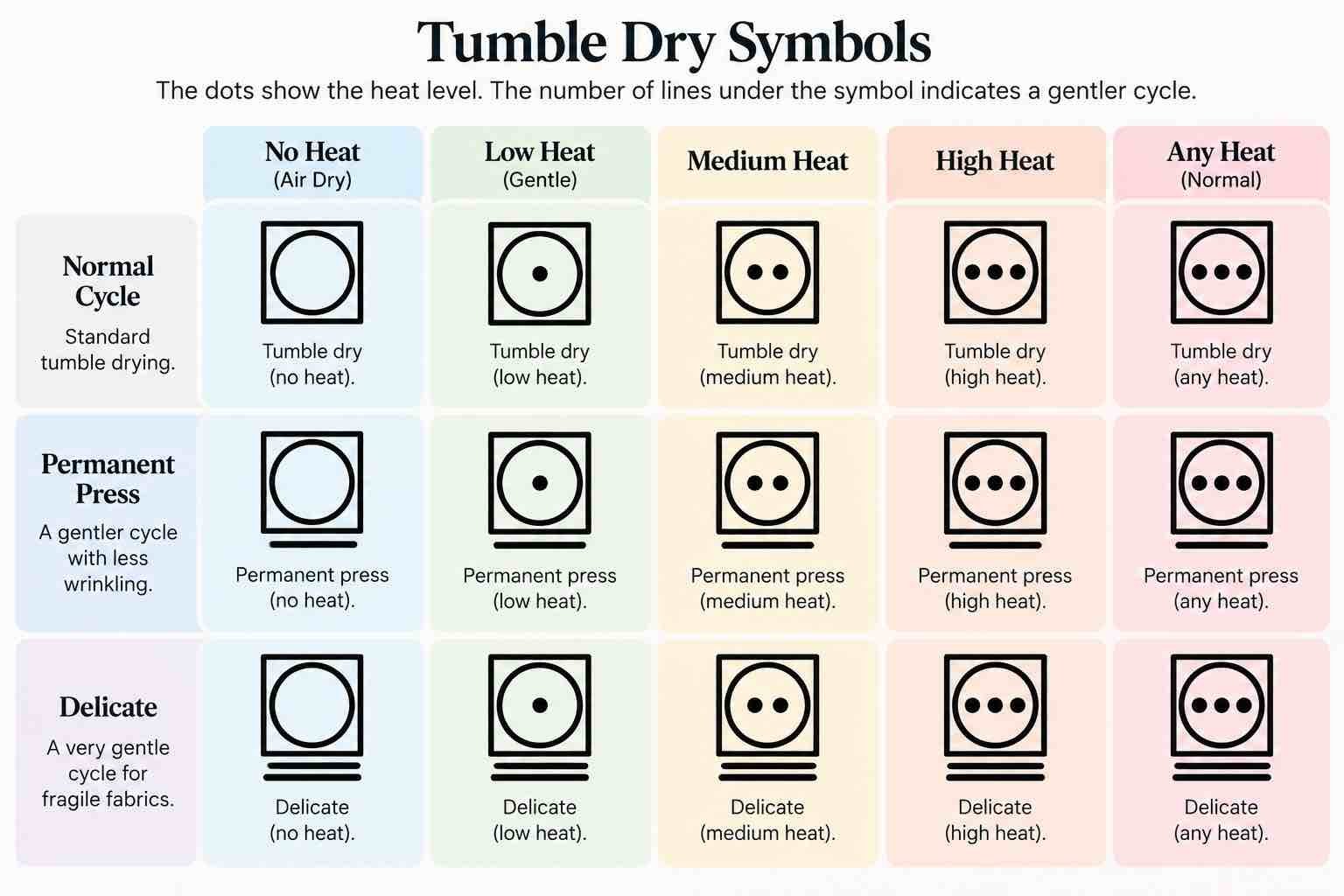
A square with a circle inside means tumble drying is allowed. Dots inside the circle, or a plain circle, refine the heat setting.
Do Not Tumble Dry
A crossed-out square with a circle means do not tumble dry. This does not necessarily mean "do not dry at all." Look elsewhere on the label for a natural drying instruction such as line dry or dry flat.
Tumble Dry Heat Levels
In the U.S. system, the dots inside the dryer circle show the heat setting:
Plain circle, no dots: tumble dry, any heat
One dot: low heat
Two dots: medium heat
Three dots: high heat
Solid (filled) circle: no heat or air only
International labels use a similar dot idea for the dryer, but do not assume the details are identical. Go by the symbol on your label.
Permanent Press Tumble Dry
One bar beneath the dryer symbol points to the permanent press cycle, which uses reduced mechanical action and a cool-down period suited to that cycle.
Gentle / Delicate Tumble Dry
Two bars beneath the dryer symbol point to a gentle or delicate tumble-dry cycle.
Natural Drying Symbols
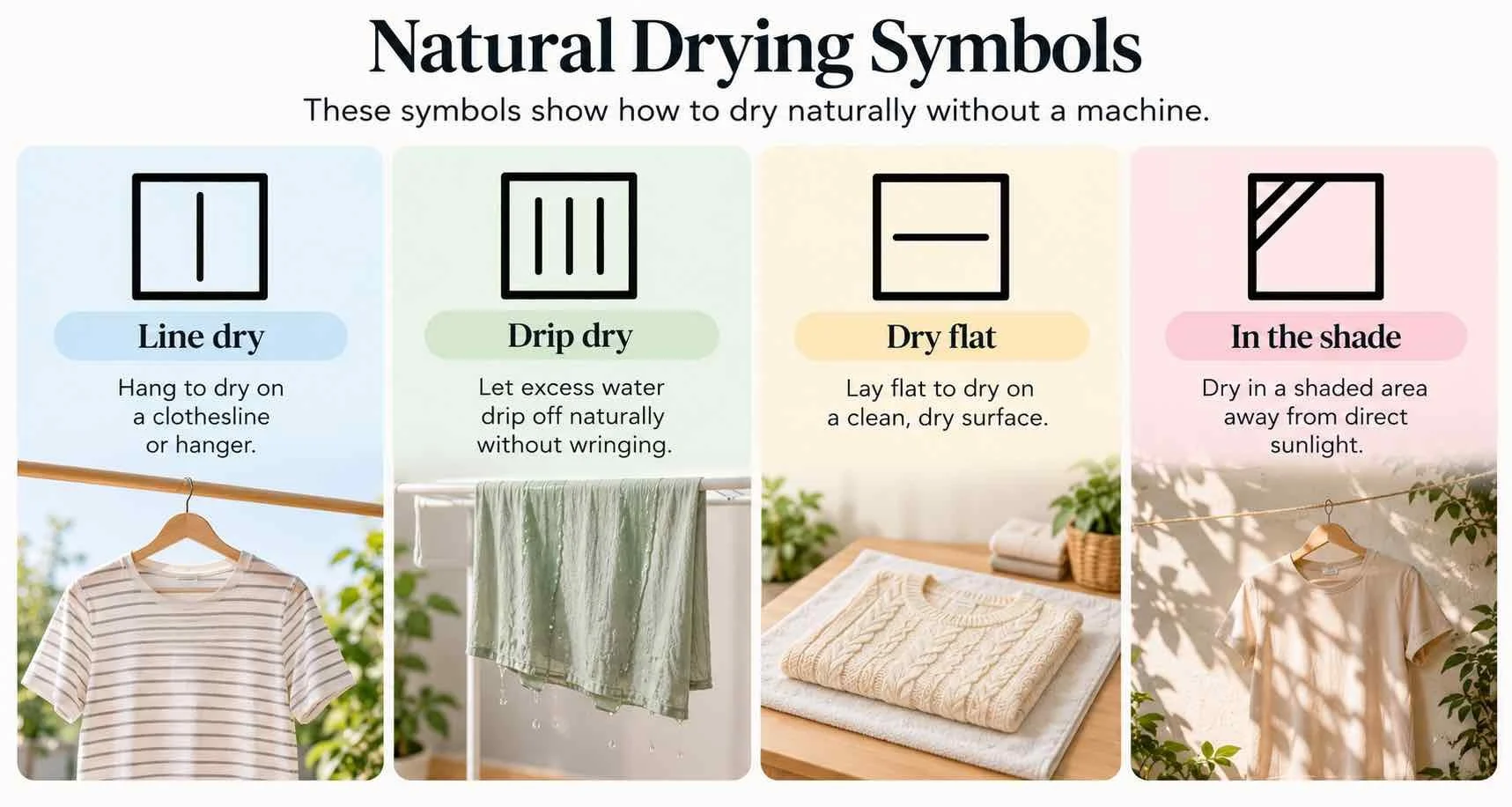
Some garments are meant to be dried without a tumble dryer. These instructions also appear in the square, but without the circle:
Line dry / hang to dry: a curved line across the top of the square. Hang the garment to dry.
Drip dry: three vertical lines inside the square. Hang the garment wet, without wringing it out, and let the water drip off.
Dry flat: a horizontal line through the middle of the square. Lay the garment flat to dry instead of hanging it.
In the shade: diagonal lines added in the corner of line dry, drip dry or dry flat. This tells you to keep the garment out of direct sunlight while it dries.
Labels can also use a crossed-out wringing symbol to mean “do not wring.” No drying times are given on labels, so these symbols describe the method rather than how long it will take.
Ironing Symbols Explained
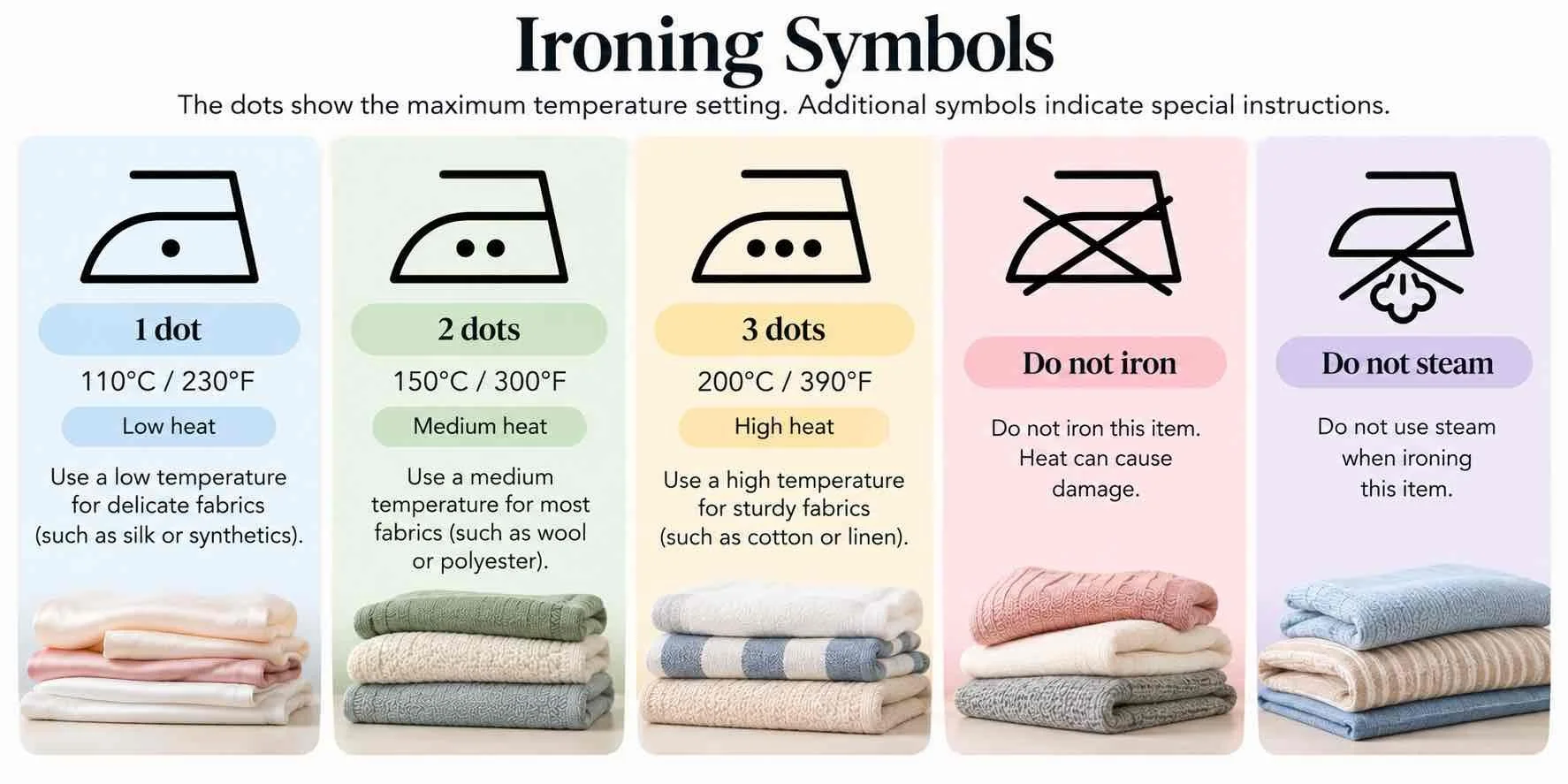
Ironing symbols use the shape of an iron, with dots to show the heat level.
Ironing Allowed
A plain iron, with no dots, means ironing is allowed. Check for dots or other marks to see whether a particular heat level is called for.
Low Heat
One dot means low heat. In the U.S. chart based on the ASTM standard, the maximum for one dot is 110°C (230°F).
Medium Heat
Two dots mean medium heat, with a maximum of 150°C (300°F).
High Heat
Three dots mean high heat, with a maximum of 200°C (390°F).
Iron dials do not always line up exactly with printed temperatures, so use these as a guide and follow the dots on your label.
Do Not Iron
A crossed-out iron means do not iron the item.
Do Not Steam
An iron symbol with steam marks crossed out means no steam. This is different from "do not iron." A garment marked no steam can still be ironed, just dry, while a crossed-out iron means no ironing at all.
Professional Cleaning and Dry-Cleaning Symbols
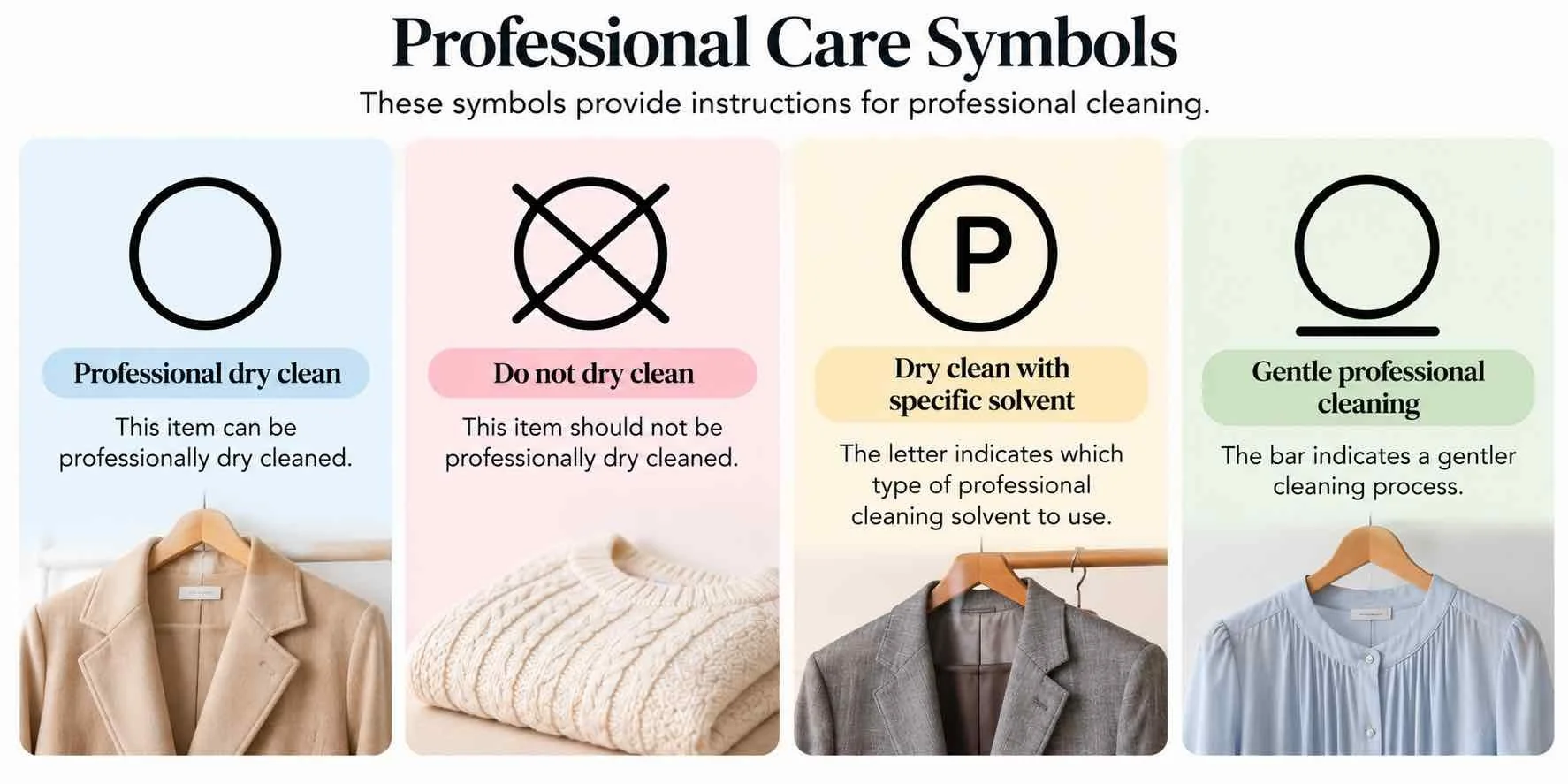
The circle family covers professional textile care. Letters inside the circle identify the professional cleaning process. You may see P or F on current ASTM-style labels, while some older U.S. labels may also use A. A crossed-out circle means do not dry clean.
Newer ASTM and international systems may also use W inside the circle for professional wet cleaning. Bars beneath the circle indicate a gentler professional cleaning process. These symbols are primarily instructions for professional textile cleaners rather than processes to reproduce at home.
None of this is meant to be reproduced at home. If a garment shows a circle symbol and you are unsure what to do with it, take it to a professional cleaner and let them interpret it.
U.S. Laundry Symbols vs. International Care Symbols
The U.S. commonly uses ASTM-style care symbols, while ISO/GINETEX symbols are widely used in many other parts of the world. They share the same broad categories (wash, bleach, dry, iron, professional care) and a similar visual logic, but they are not interchangeable in every detail. Differences can include:
Temperature notation
Some of the graphics
Natural-drying symbols
Professional-cleaning details
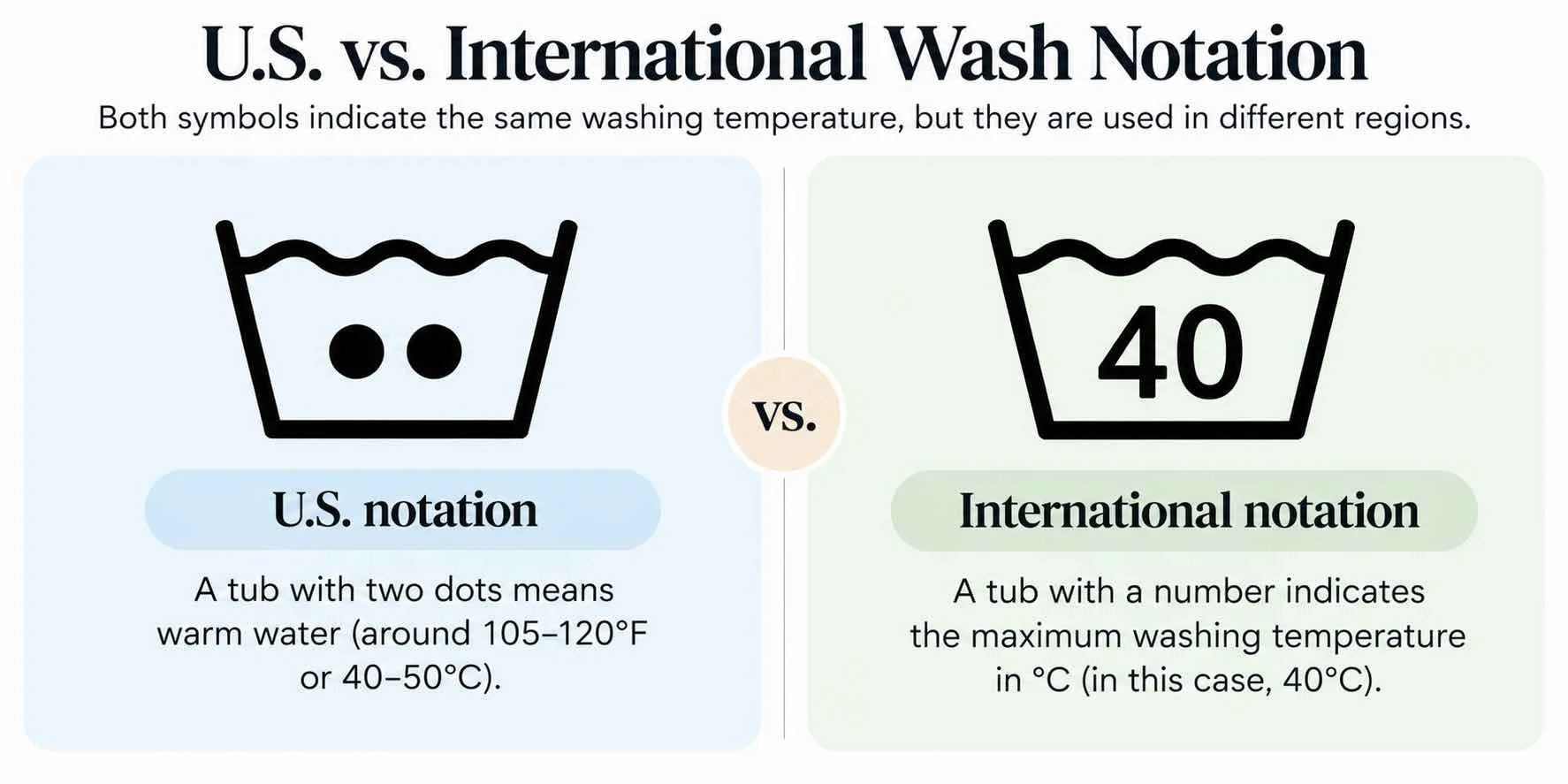
The clearest example is washing temperature. International labels may show a number inside the wash tub representing the maximum temperature in degrees Celsius, while U.S. labels may use dots. A tub with the number 40, for example, is giving a Celsius limit, while a tub with two dots is giving the U.S. dot-based limit.
Neither system is used everywhere, and clothing sold in one country is sometimes made for another. If you buy or receive clothing from abroad, check carefully which notation your label uses.
Laundry Care Symbols Quick Reference
And the three modifiers in short:
X = Do not use that treatment
Dots = Heat/temperature information, depending on the symbol
Bars underneath = Gentler process/cycle
How to Read a Clothing Care Label Step by Step
Care symbols usually appear in a set order, which makes a quick top-to-bottom check easy:
Find the washing symbol (the tub).
Check whether machine washing or hand washing is allowed.
Check the temperature dots and any bars for the cycle.
Look at the bleach symbol (the triangle).
Check the drying symbol (the square), and whether it means tumble drying or natural drying.
Check the ironing instructions.
Look for a professional-care circle if one is present.
Read any written instructions on the label too.
That last step matters. Many labels add written wording next to the symbols, such as "wash separately" or "wash inside out," and that wording is part of the instructions.
Common Laundry Symbol Mistakes
Most laundry label errors come from a handful of misreadings:
Assuming "do not tumble dry" means "do not dry." It only rules out the dryer. Look for a line dry, drip dry or dry flat symbol instead. Skipping this step can leave you with a damp garment and no plan.
Confusing "bleach allowed" with "bleach required." A plain triangle is permission, not a recommendation. Treating it as an instruction can lead to bleaching things that did not need it.
Ignoring lines under the wash tub. Bars change the cycle. A garment with two bars and a normal cycle are not treated the same, and a harsher cycle than the label calls for is exactly what the bars are there to prevent.
Assuming all dots mean the same thing. Dots in a tub, a dryer and an iron describe different things. Check which shape holds the dots before reading them.
Confusing a dry-cleaning circle with the circle inside a dryer square. A lone circle is professional care. A circle inside a square is tumble drying. Mixing them up can send a dryer-safe garment to the cleaner, or a dry-clean item into the dryer.
Ignoring ironing restrictions. A no-steam or low-heat mark exists for a reason. Skipping it can mean the wrong heat on a delicate surface.
Assuming old or removable tags follow the same system. Older garments, secondhand pieces and clothing made for other markets may use different symbols, so confirm which system you are reading.
Treating machine-control icons as clothing-care-label symbols. Icons on the washer are not the same as the label on your garment (see the next section).
Laundry Symbols vs. Washing Machine Symbols
These two terms sound alike but refer to different things. Laundry care symbols are the instructions printed on clothing and textile care labels. Washing machine symbols may refer to the icons on the washer itself, such as cycle selectors, temperature buttons or program icons.
They are not necessarily the same system. Machine icons vary by manufacturer and model, and a symbol on a dial may not match anything on a garment label. If you need to know what a control on your machine does, check the appliance manual. This guide covers clothing labels only and does not decode brand-specific washer controls.
What If a Care Label Is Missing or Unreadable?
Labels fade, get cut out or wear away. If yours is gone, a few cautious steps help:
Check manufacturer information if you have it, such as a hangtag, packaging or the brand's website.
Look for another label on the garment. Some pieces have more than one tag, or a second label sewn inside a seam or pocket.
Consider the fabric composition if it is listed, but do not assume fiber content alone determines safe care. Dyes, finishes and construction also matter.
If the item is valuable, delicate or uncertain, seek appropriate professional guidance before treating it.
Guessing care instructions from fabric type alone is not reliable, so when in doubt, check before you wash.
How Laundry Care Symbols Can Make Laundry Routines Easier
Reading labels once, and sorting accordingly, can simplify the whole routine. Understanding the symbols can help you:
Sort items more intentionally
Catch delicate or gentle-cycle pieces before they go in with the rest
Separate items that should not tumble dry
Identify pieces that need professional care
Avoid rereading tiny label text every time
If you are setting up a laundry area that makes sorting and drying easier, these small laundry room ideas are a practical place to start.
Frequently Asked Questions About Laundry Care Symbols
What are the five main laundry symbols?
Washing (the tub), bleaching (the triangle), drying (the square), ironing (the iron) and professional care (the circle).
What does an X over a laundry symbol mean?
It means the treatment shown by that symbol should not be used. A crossed-out tub means do not wash, a crossed-out triangle means do not bleach, a crossed-out dryer symbol means do not tumble dry and a crossed-out iron means do not iron.
What do dots mean on laundry symbols?
Dots show temperature or heat level, depending on the symbol they appear in. In a wash tub they indicate maximum water temperature, in a dryer symbol they indicate the heat setting and in an iron they indicate the heat level.
What do lines under a washing symbol mean?
Bars under the wash tub indicate a gentler cycle. One bar commonly means permanent press or a mild cycle, and two bars mean a gentle or delicate cycle.
What does a circle mean on a clothing label?
A lone circle refers to professional textile cleaning, such as dry cleaning. A circle inside a square is different: that is the tumble-dry symbol.
What does a triangle mean on a clothing label?
It refers to bleaching. A plain triangle allows any bleach when needed, a triangle with diagonal lines allows non-chlorine bleach only and a crossed-out triangle means do not bleach.
Are laundry symbols the same in every country?
No. The systems are similar in structure but not identical. The U.S. commonly uses ASTM-style symbols, while ISO/GINETEX symbols are widely used internationally, and details such as temperature notation can differ.
Does "do not tumble dry" mean the item cannot be dried?
No. It means the dryer should not be used. The label may include a natural drying instruction, such as line dry or dry flat, so look for it.
Laundry Care Symbols Are Easier Once You Know the Five Basic Shapes
The whole system comes down to a short list:
Washtub = washing
Triangle = bleaching
Square = drying
Iron = ironing
Circle = professional care
X = treatment not allowed
Dots and bars modify the instruction
Always read the entire label, including any written wording, and remember that U.S. and international systems can differ slightly. Once the five shapes are familiar, a glance at a care tag tells you most of what you need. For more practical, everyday home guides, keep exploring Lulonta.
