
Kitchen Cabinet Organization Ideas That Make Small Kitchens Easier to Use
Disorganized kitchen cabinets are rarely the result of not having enough storage. More often, the problem is poor placement, too many items competing for the same space, shelf heights that don't match what's being stored, and a layout that wasn't designed around how the kitchen is actually used.
The goal of organizing kitchen cabinets isn't to fit as much as possible into every available inch. It's to make the things you reach for every day easy to find and easy to put back, while giving everything else sensible, out-of-the-way storage.
Most cabinets can be improved significantly before buying a single organizer. This guide starts with the decisions and habits that make the biggest difference, and introduces a small number of helpful products where they genuinely add something a free solution can't.
1. Start With One Cabinet, Not the Whole Kitchen
Trying to reorganize every cabinet at once usually leads to stopping halfway through and ending up with more mess than you started with. One cabinet at a time is easier to finish and easier to learn from before moving on.
Before rearranging or buying anything, empty the cabinet completely. Set everything on the counter and go through it honestly.
A simple decision framework for each item:
Does this belong in this cabinet, or would it make more sense somewhere else?
Is this a duplicate of something I already have? Do I need both?
When did I last use this? If it's been more than several months and it's not seasonal, it may not need prime cabinet space.
Is this item here because it's convenient, or just because it ended up here?
Once you've removed what doesn't belong, group similar items together before putting anything back. Grouping reveals how much space a category actually needs, which makes it easier to decide whether it fits where it currently lives or would work better elsewhere.
Resist the urge to fill the cabinet back up immediately. Empty space in a cabinet is not wasted space, it's what makes a system easy to maintain.
2. Organize Cabinets Around How You Actually Use the Kitchen
The most practical organization principle for kitchen cabinets is also the simplest: the things you use every day should be the easiest to reach, and the things you use occasionally should be stored out of the way.
This sounds obvious, but most cabinets are organized by habit rather than intention, items end up where they were first put away, not where they make the most sense.
Think through your actual daily routine:
Which mugs do you reach for every morning? Those should be at comfortable arm height, near wherever you make coffee or tea.
Which plates and bowls do you use at most meals? Those belong in a cabinet close to the table or dishwasher, not on a high shelf.
Which pots and pans come out most nights? Store them near the stove, not across the kitchen.
Which serving dishes or specialty cookware do you use occasionally? Those can go on higher shelves or toward the back of deeper cabinets.
Prime-access storage is anything below eye level and within comfortable reach without stretching or bending. Reserve it for daily-use items.
Secondary storage is everything above head height or requiring extra effort to reach. This is where backup items, seasonal pieces, and things used only occasionally belong.
Rethinking placement before adding any organizers often frees up more usable space than any product would.
3. Measure Before Buying Any Cabinet Organizer
This step is skipped more often than any other, and it's why many purchased organizers end up returned, unused, or stuffed into a corner.
Before shopping for any cabinet organizer, measure and write down:
Cabinet width — the internal width between the side walls
Usable depth — how far back you can realistically store items
Shelf height — the clearance between one shelf and the one above it
Distance between shelves — especially relevant if you're adding under-shelf organizers
Door clearance — whether the door swings past any shelf edge and by how much
Hinge placement — some hinges protrude inside the cabinet and limit usable width
Under-sink pipe location — pipes, disposal units, and shutoff valves reduce usable floor space and can block certain organizer styles
Product photography tends to make organizers look smaller, more compact, and more adaptable than they actually are in a real cabinet. Reading dimensions in a listing is not the same as picturing those dimensions inside a specific cabinet.
Write measurements down before you open a browser. It takes a few minutes and saves a lot of frustration.
4. Make Better Use of Vertical Cabinet Space
Tall cabinets with fixed shelving often have significant wasted space above dishes, mugs, or glasses, air that could hold something useful but doesn't.
The first thing to check is whether your shelves are adjustable. Many standard kitchen cabinets have shelf-peg systems that allow height changes. Moving a shelf down a few inches to better match the height of what's stored there can immediately create a second usable tier above it, with no purchases needed.
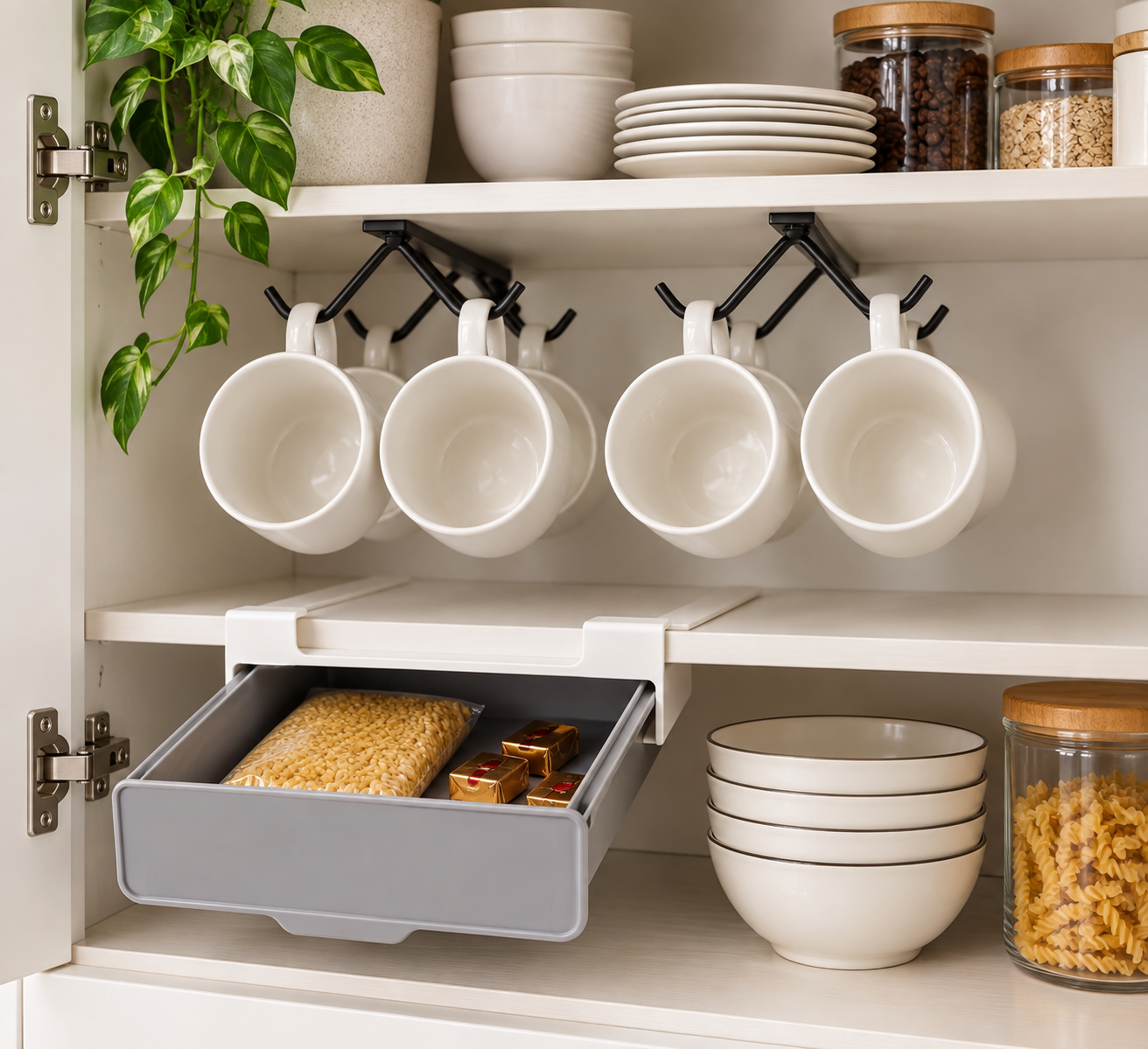
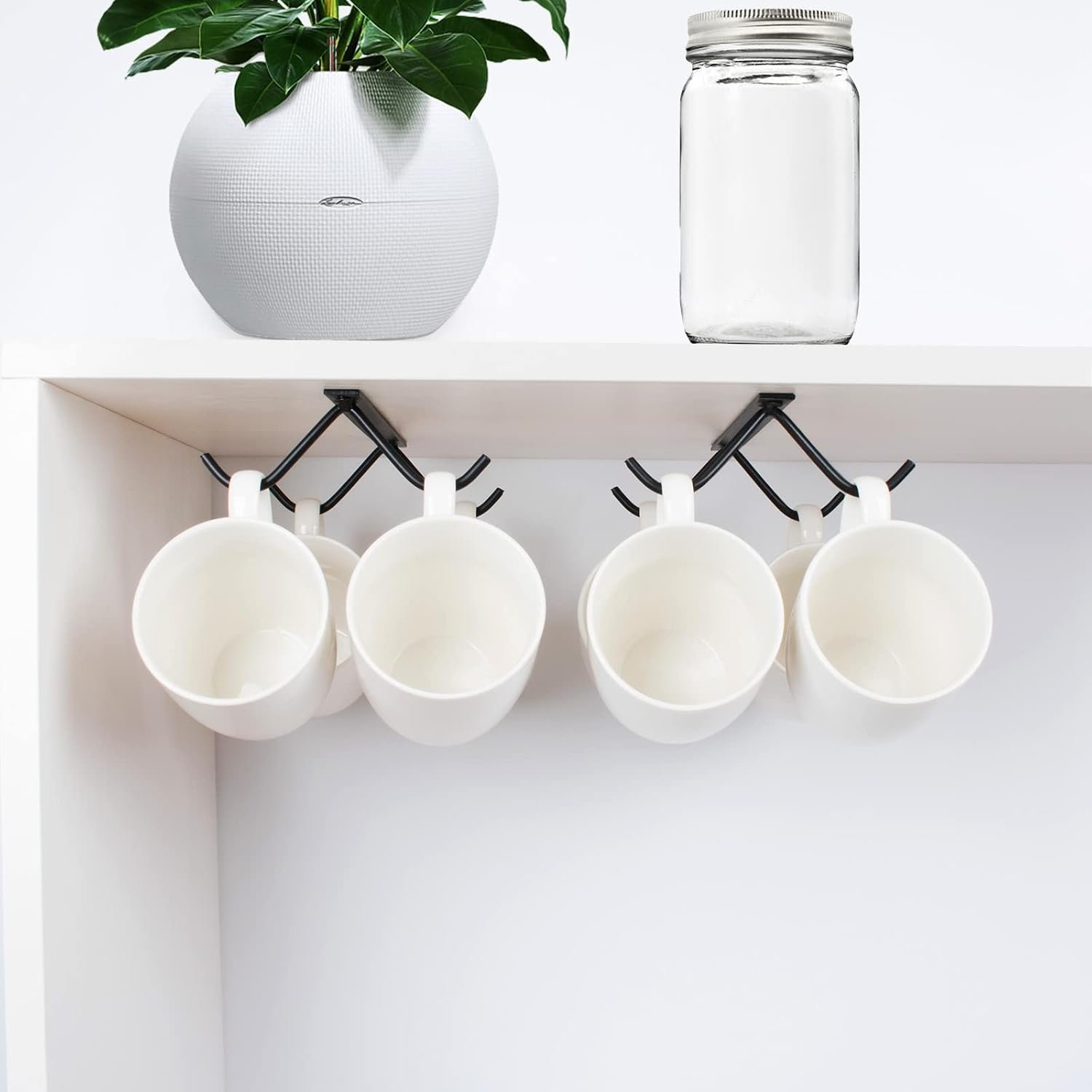
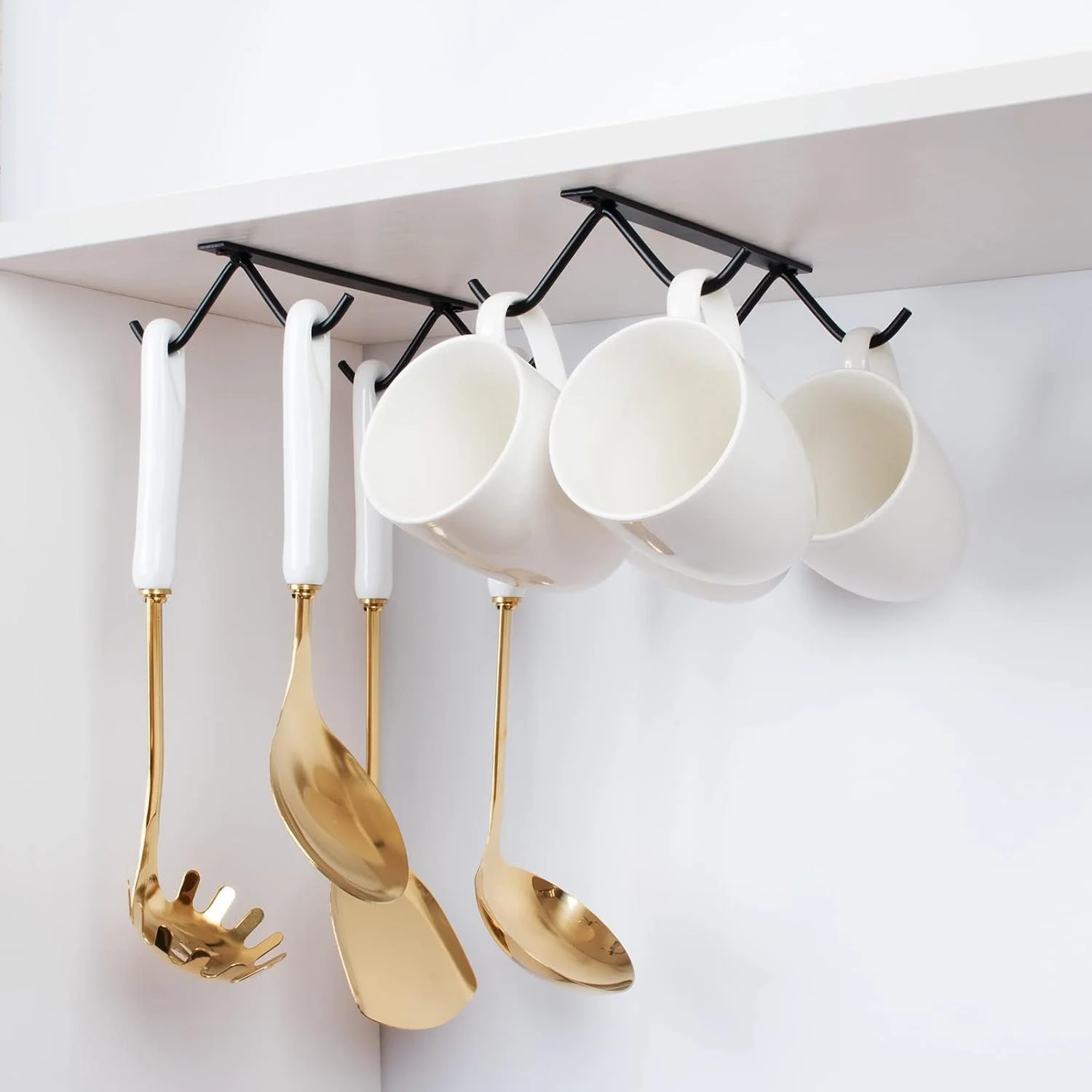
If shelves are fixed, or if the wasted space is underneath a shelf rather than above it, a cabinet hook mug holder is one way to use that gap. This style of organizer hooks over the shelf edge and suspends mugs below it, freeing the shelf surface for plates or other items.
Before buying one, check:
The shelf thickness (hook organizers are designed for a specific range)
5. Organize Plates Without Building Unstable Stacks
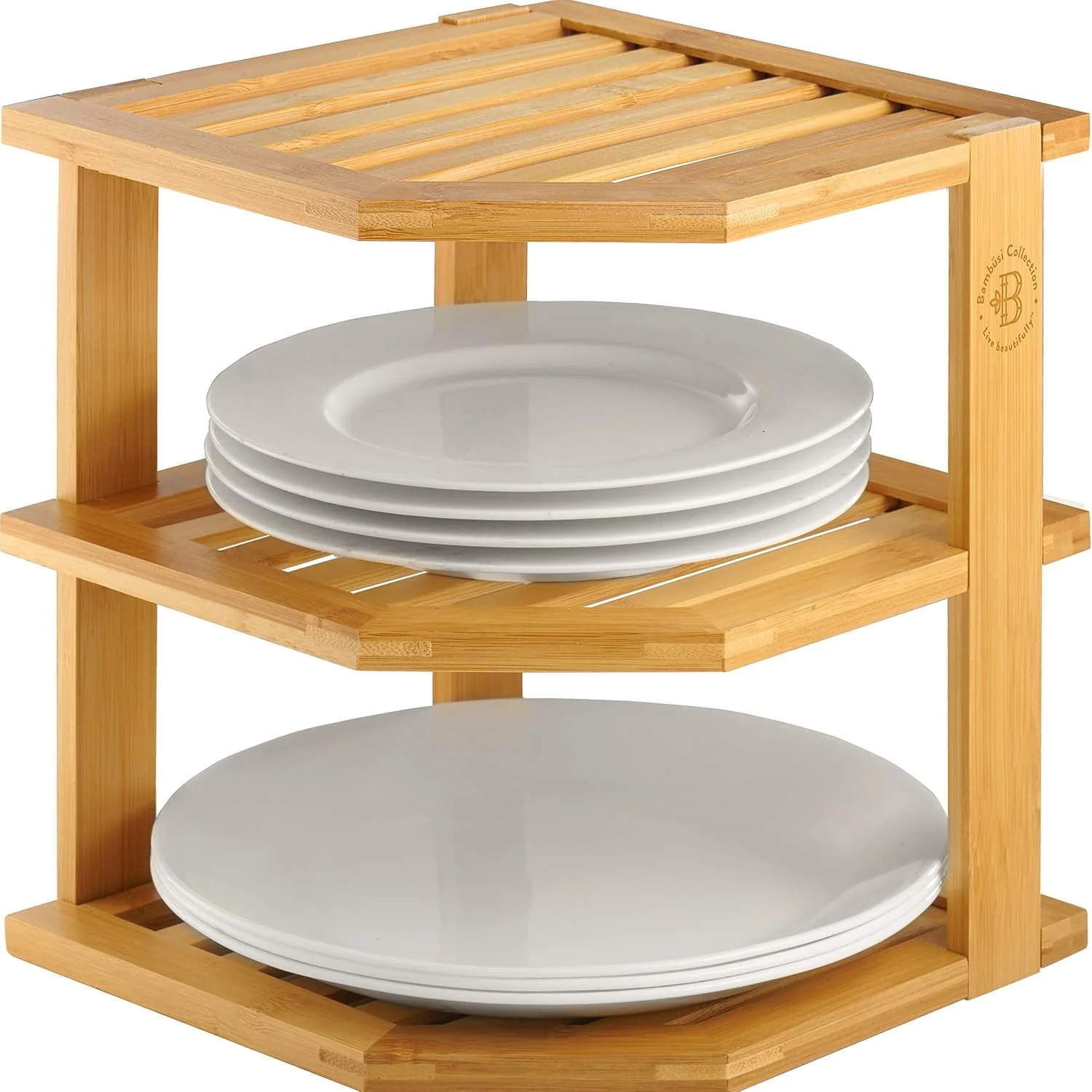
Stacking plates works fine when you're using the whole stack consistently and the plates are similar in size. It becomes awkward when you need the plate three from the bottom, when plate sizes vary, or when the stack grows tall enough to be difficult to lift safely.
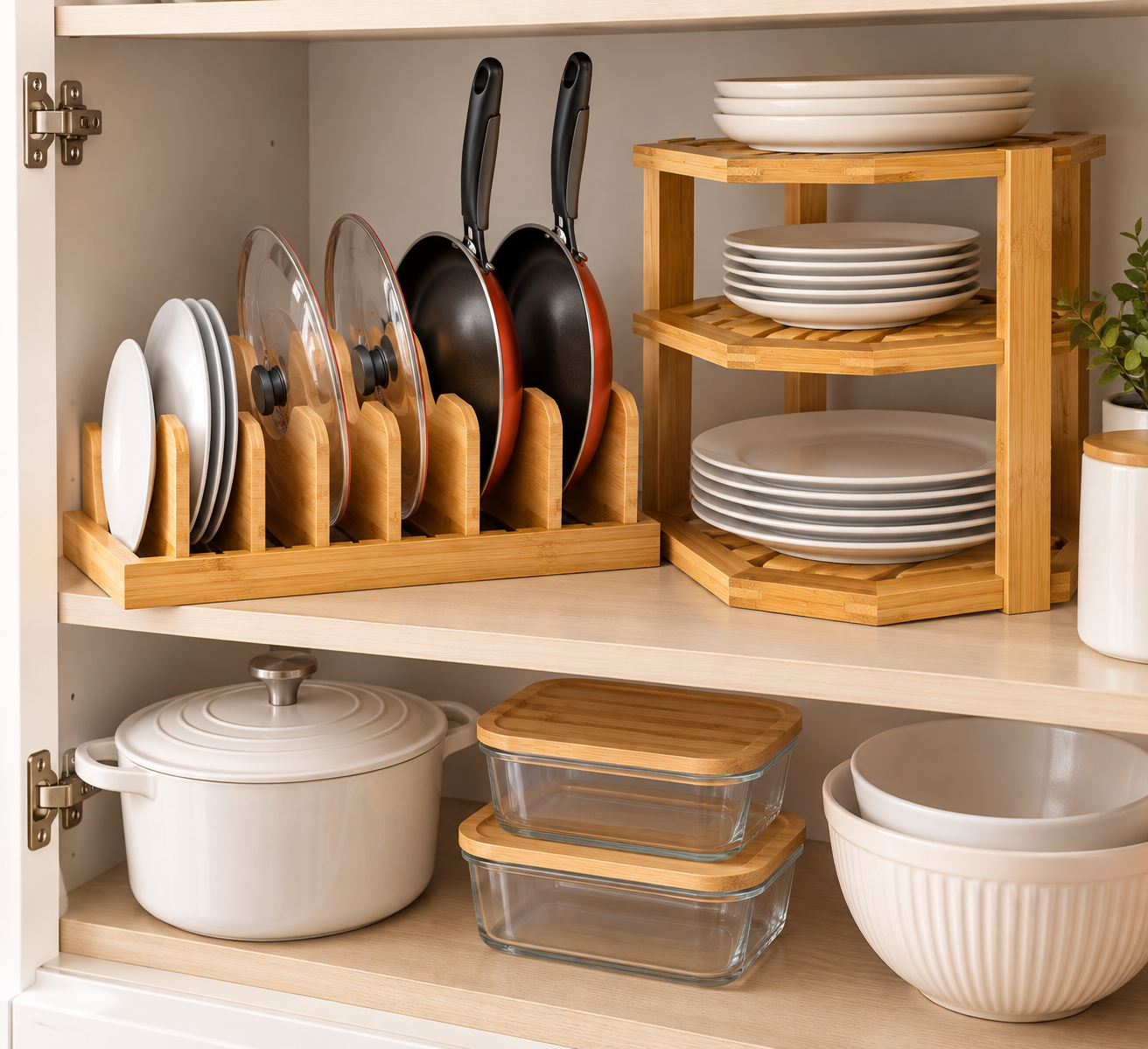
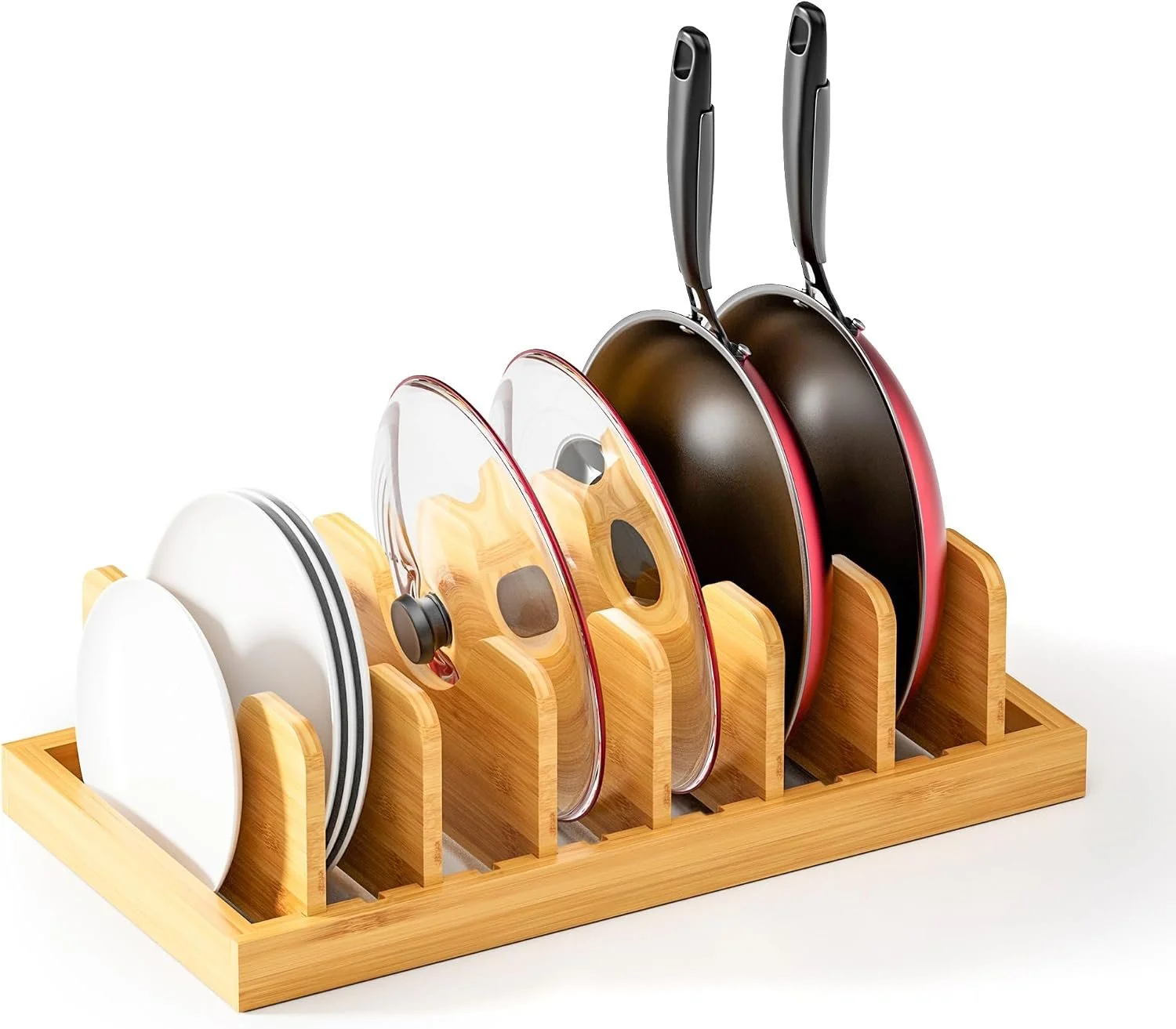
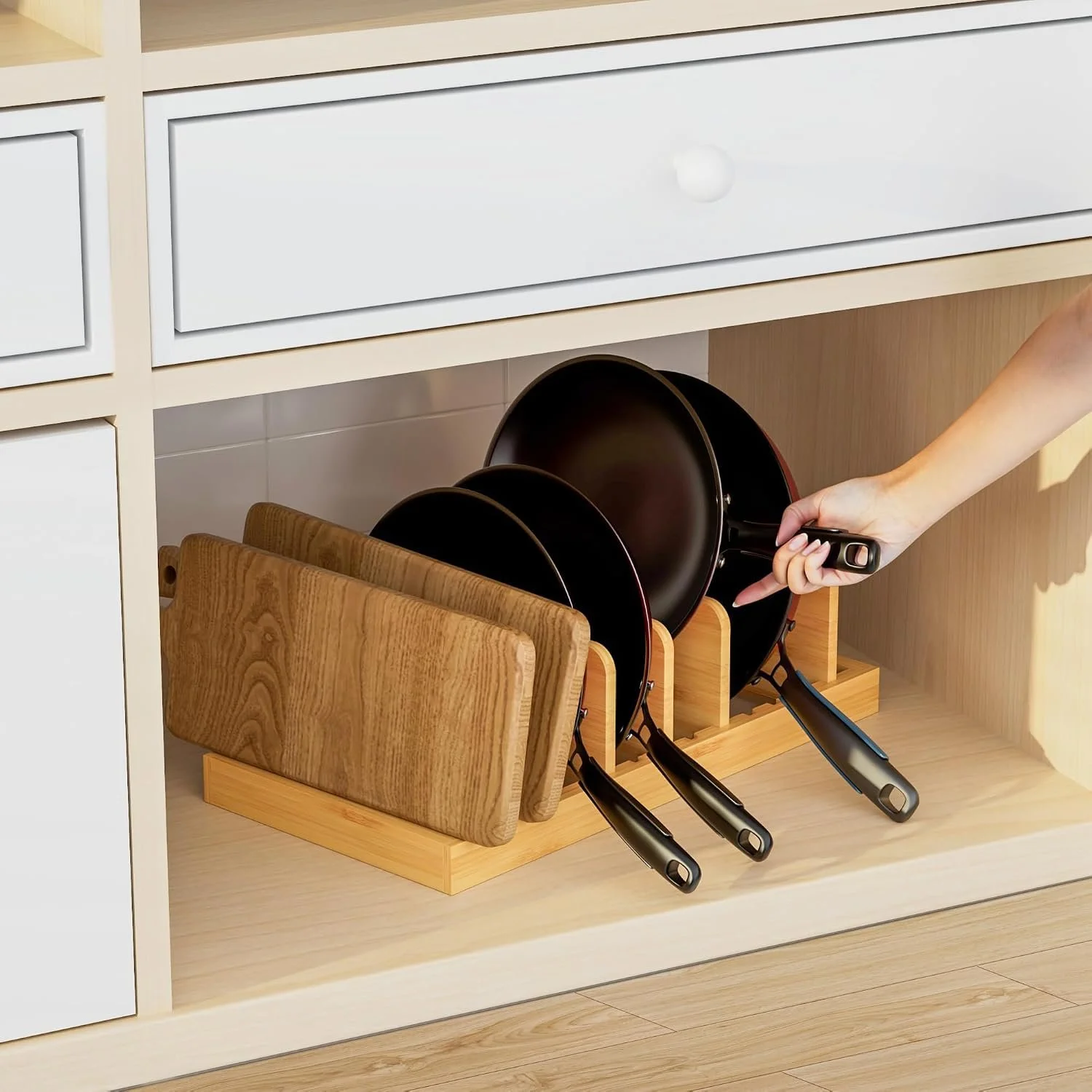
Vertical plate storage, storing plates upright in slots rather than stacked flat, makes individual plates easier to access without disturbing others. It also tends to work better for mixed sizes, since you can slide out whichever plate you need.
A bamboo vertical plate and a lid organizer holder can work for everyday plates, larger serving plates, cutting boards, and some pot lids. The slot design keeps items separated and upright.
Before buying, check:
Whether the slot spacing matches your plate thickness
Whether the overall dimensions fit the cabinet shelf where you plan to use it
Whether the items you want to store are close enough in height to sit stably
Vertical storage does not prevent all chips or scratches, plates can still shift and contact each other if there's significant movement. Handle with normal care.
A no-buy alternative: a clean, sturdy dish rack of the kind already in many kitchens can serve the same function inside a lower cabinet for everyday dishes.
6. Organize Pots, Pans, and Lids Separately
The main reason lower cabinets with cookware become difficult to use is lids. Lids don't stack cleanly with pots and pans, they slide off stacks, and finding the right lid often means lifting and moving several pieces of cookware first.
The simplest free fix is to store lids separately from the cookware itself. Options include:
Standing lids upright in a tall pot or Dutch oven stored in the same cabinet
Placing lids in a dedicated section of a drawer if drawer space allows
Standing lids against the back wall of a cabinet with cookware in front
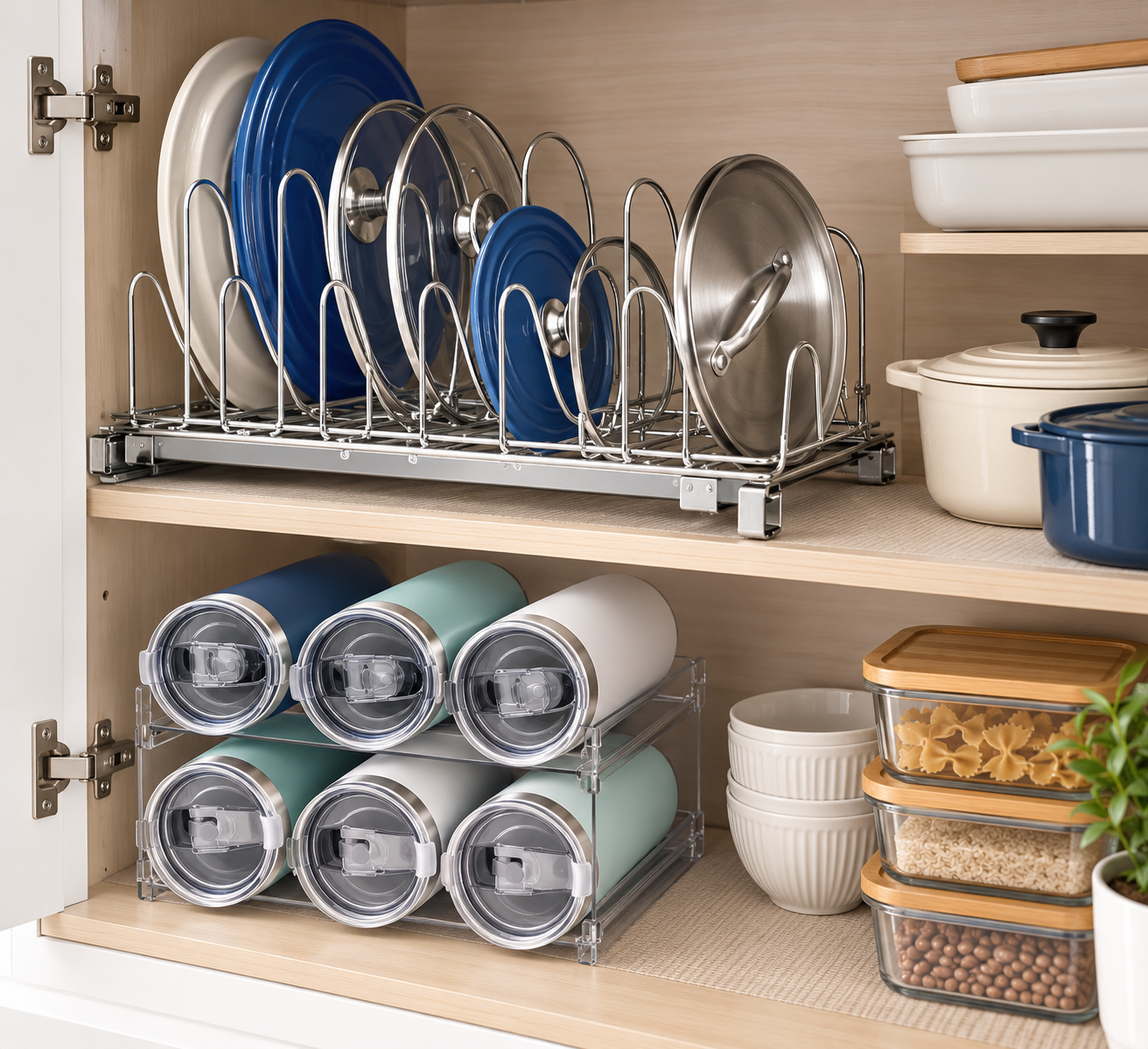
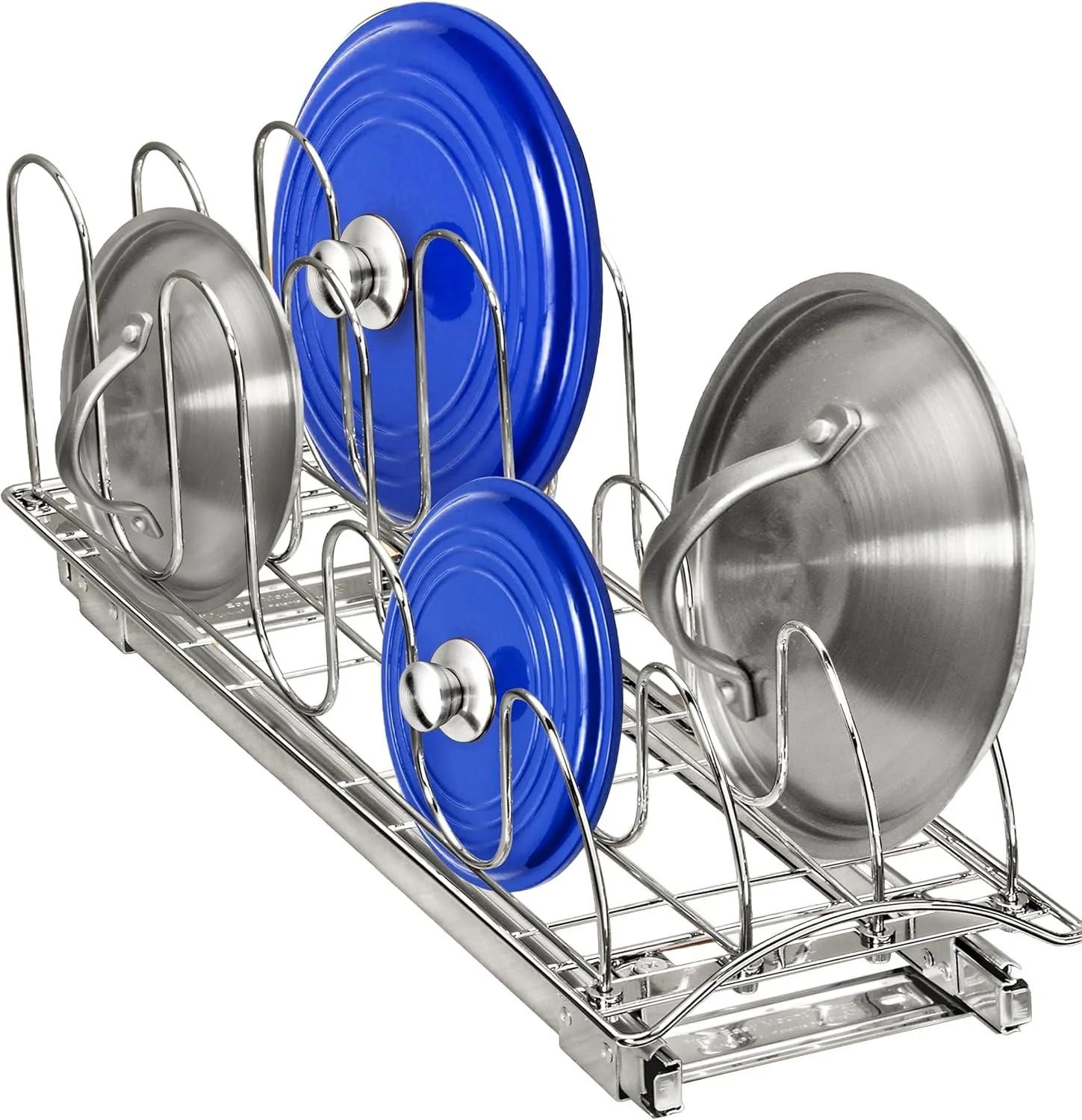
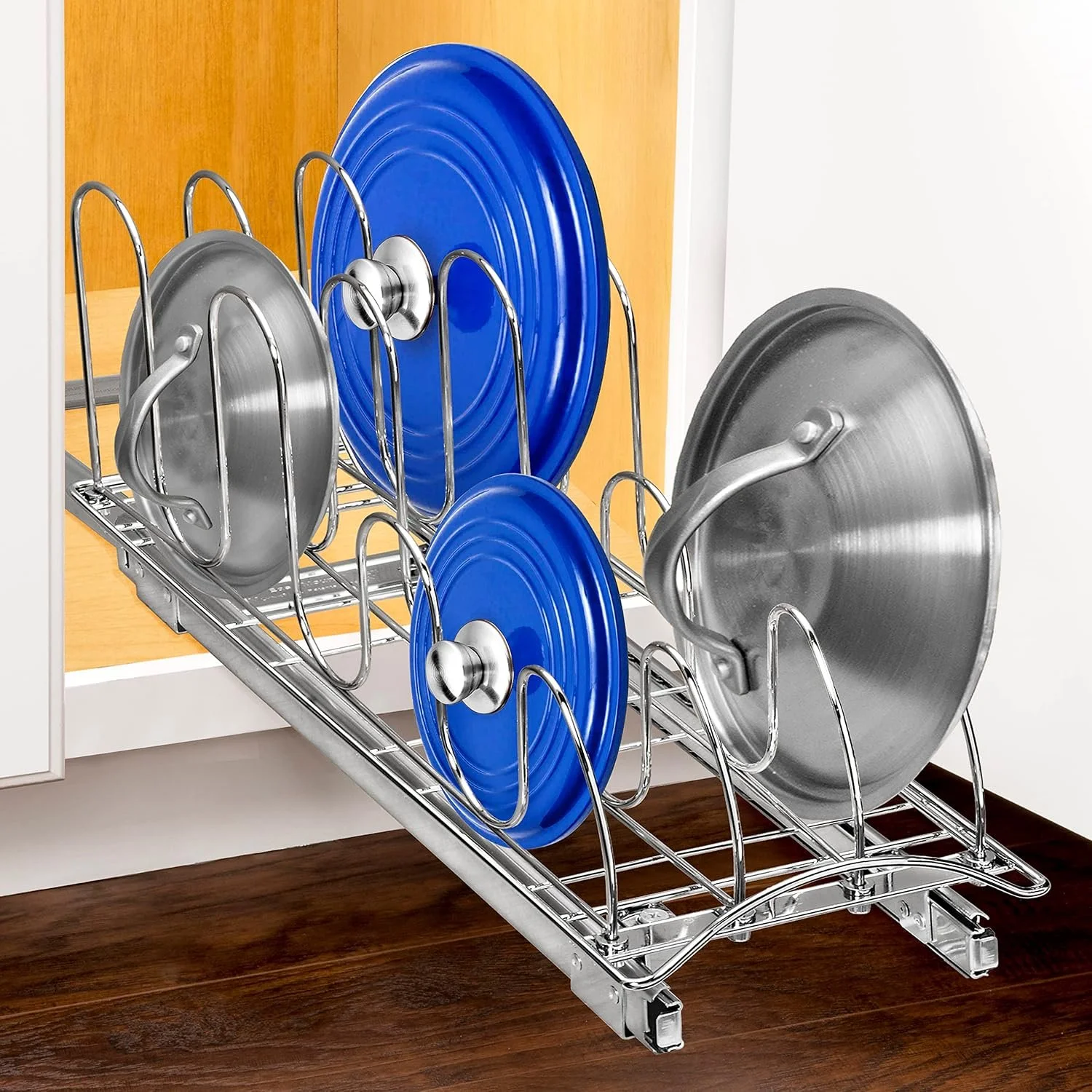
When lower cabinets are deep and items at the back are difficult to reach, a pull-out pot lid organizer can help. This style sits on the cabinet floor and holds lids upright in individual slots, with the ability to pull the organizer forward to access lids at the back.
Before buying:
Measure the cabinet width carefully, many lid organizers are sized for standard-width cabinets and may not fit narrower spaces
Check the cabinet depth to confirm the organizer fits without blocking the door
Consider how many lids you actually need to store, a large organizer filled with lids for pots you rarely use is not solving the real problem
7. Organize Water Bottles and Tumblers Simply
Water bottles and tumblers are awkward to store because they're tall, often cylindrical, and tend to roll or fall when stored upright without support.
Before adding an organizer, consider two questions: How many bottles and tumblers do you actually use regularly? And is the real problem a storage issue, or a collection that has grown larger than the space?
Reducing the collection, keeping the bottles you genuinely reach for and donating or removing the ones you don't, often solves the problem without buying anything.
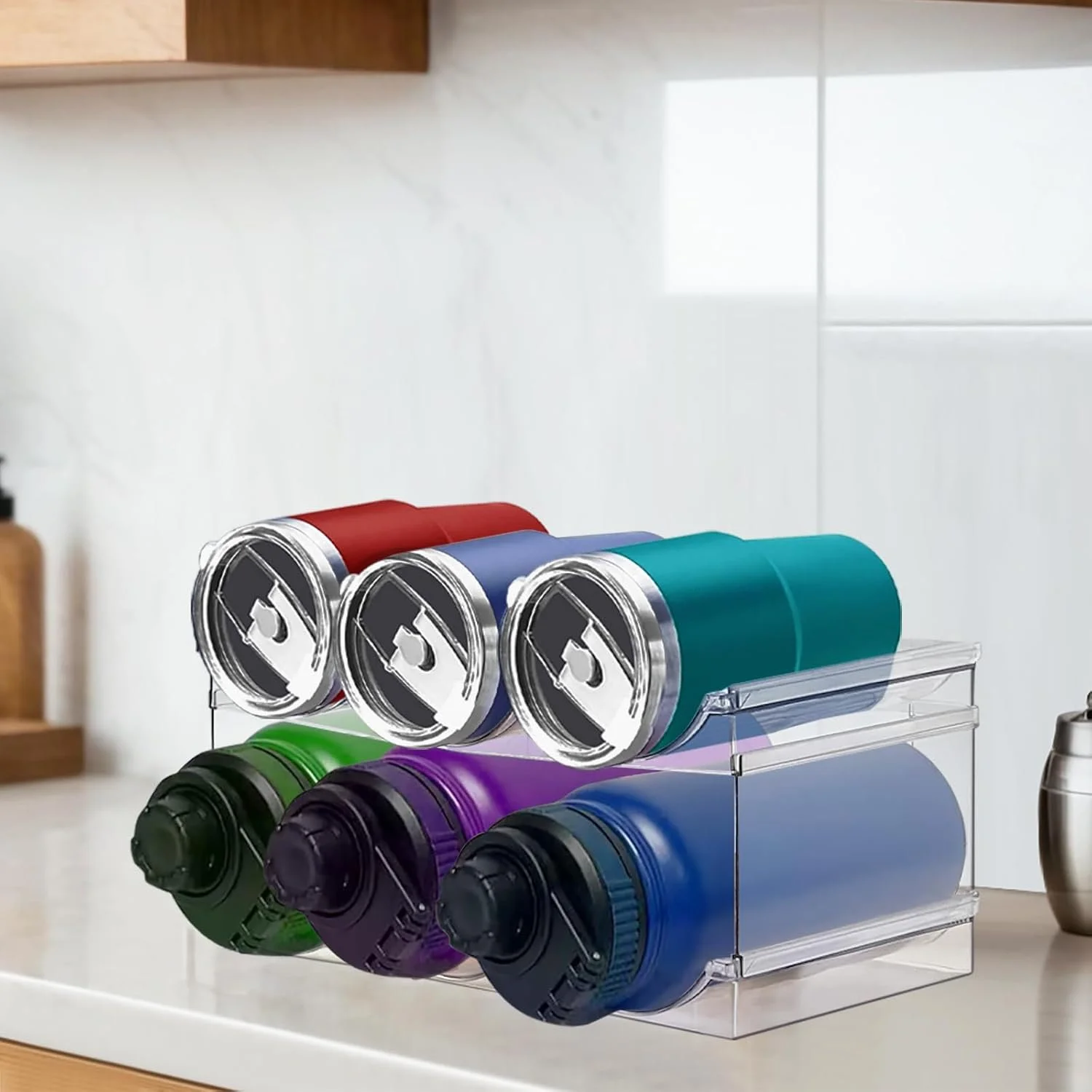
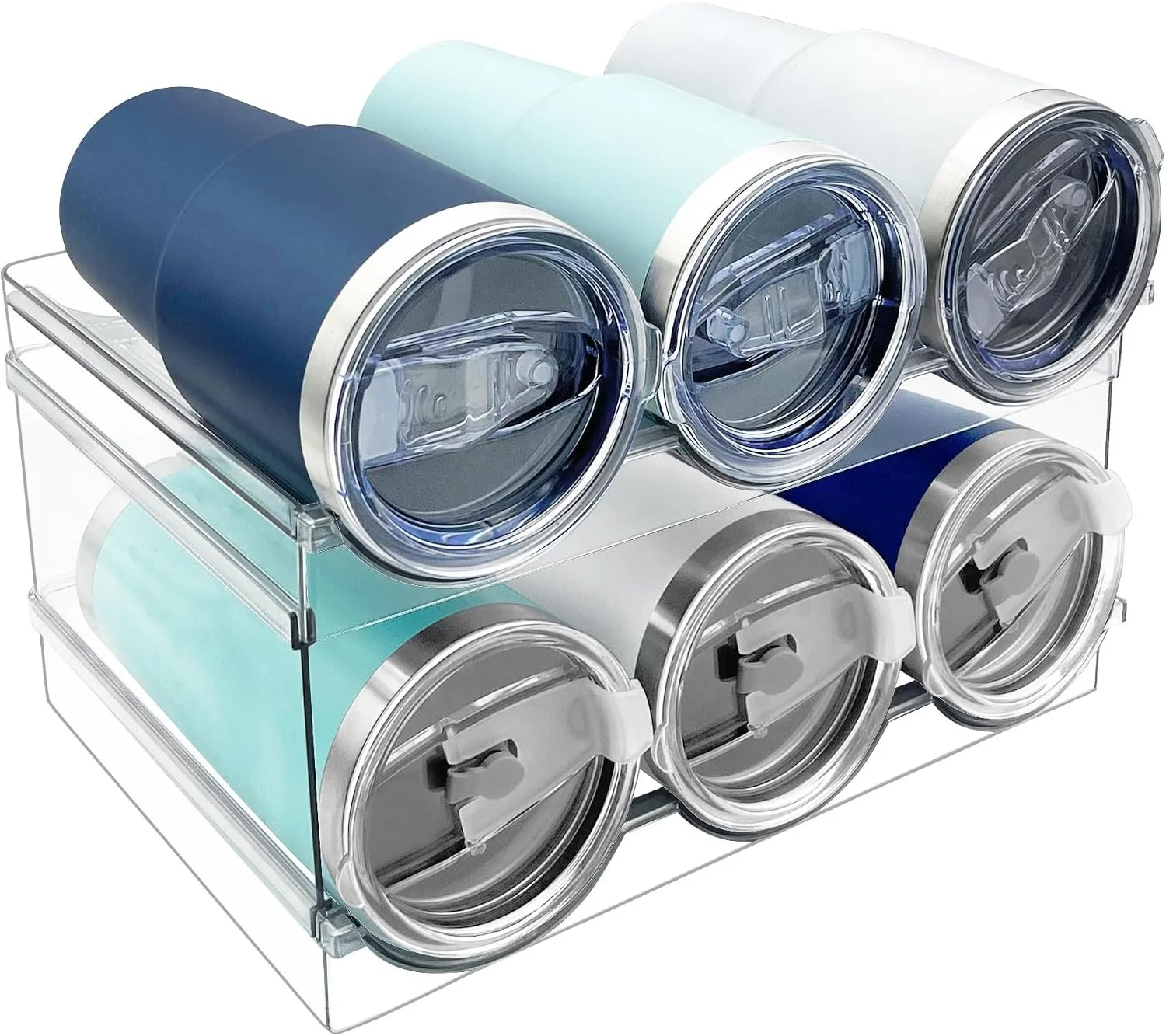
If you have a reasonable number of bottles and the primary issue is that they roll around or fall over, a clear horizontal tumbler organizer stores bottles on their sides in individual slots, which keeps them in place and makes it easier to see what's there.
Before buying, check the diameter of your bottles against the slot dimensions, organizers in this style are typically sized for standard bottle widths, and wide-mouth or oversized tumblers may not fit all slots.
8. Make Deep Cabinets Easier to Use
Items stored at the back of a deep cabinet tend to disappear. Out of sight and difficult to reach, they get pushed further back with each grocery run until the front of the cabinet is crowded and the back holds things that haven't been touched in months.
A useful first step is to think about what's actually living at the back of a deep cabinet and whether it belongs there at all. If it's rarely used, that's fine, but label it or group it so you know what's there. If it's something you use regularly, moving it to a more accessible spot is a better solution than adding a reach-extending organizer.
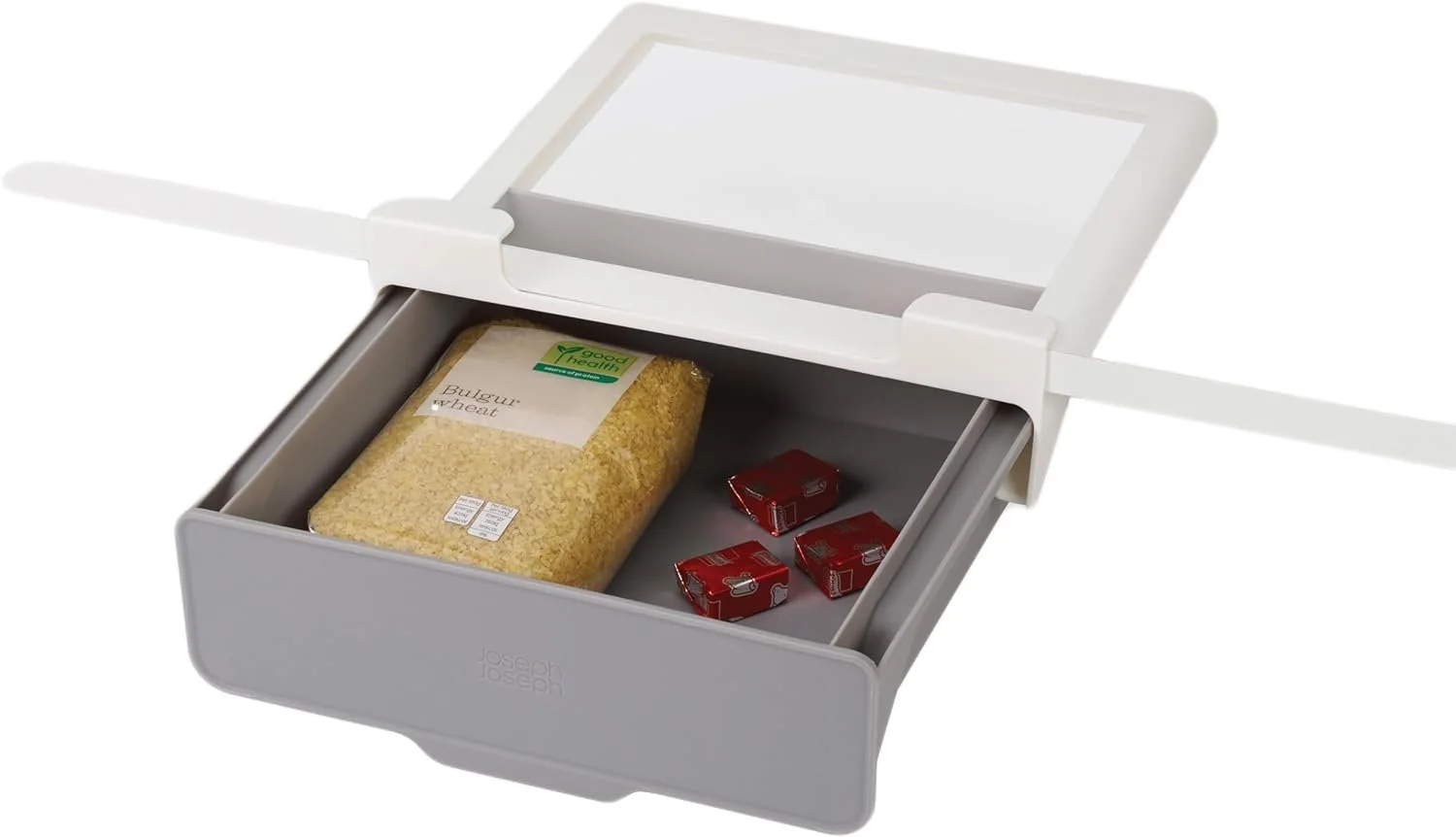
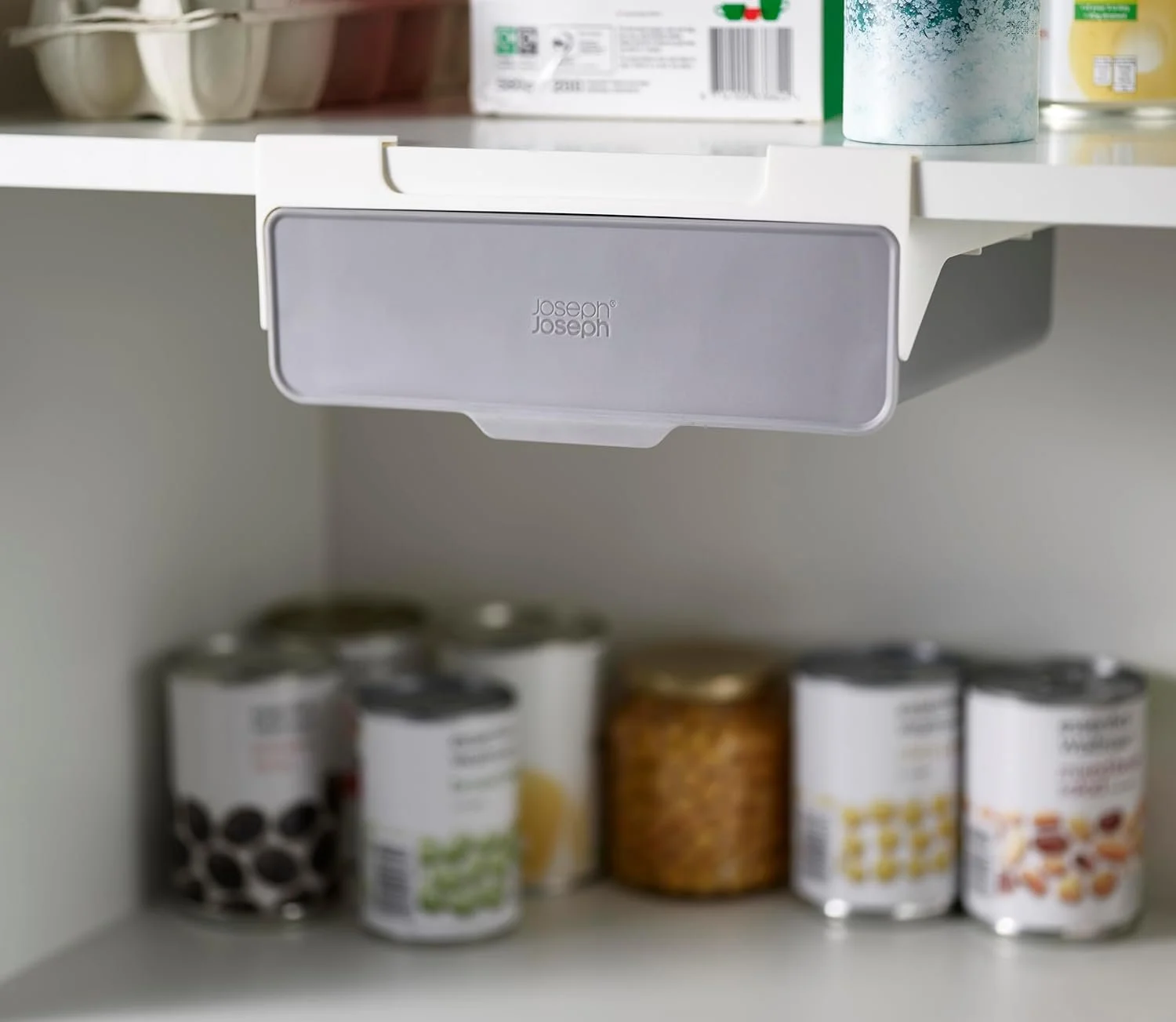
For a deep lower cabinet where you need items toward the back to remain accessible, an under-shelf pull-out drawer can create a second accessible tier by hanging from a shelf above and sliding out. This works well for items that are small enough to fit the drawer depth without blocking the shelf below.
Before buying:
Check the shelf thickness and confirm the hooks fit your shelving
Measure the clearance below the shelf to ensure the drawer doesn't rest on items underneath when extended
Consider whether a simple basket or bin you already own could serve the same function, grouped items in a container that pulls forward entirely can accomplish similar access without a new purchase
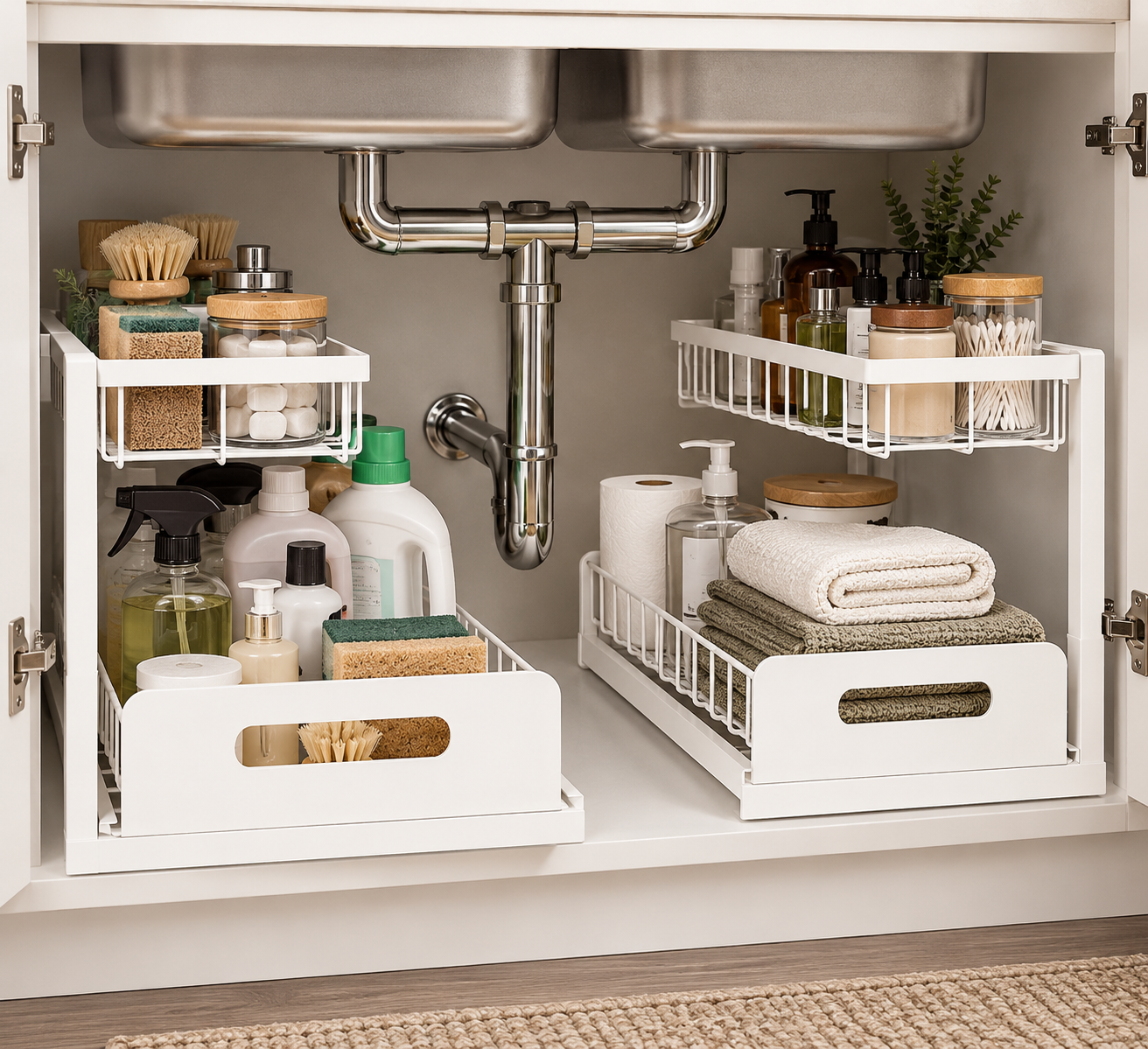
9. Organize the Under-Sink Cabinet Around the Plumbing
The cabinet under the kitchen sink has a different set of constraints than other cabinets, and it needs to be organized around them rather than despite them.
Before planning storage here, take stock of:
Where the pipes run and how much floor space they leave on either side
Whether there is a garbage disposal unit, and how much space it occupies
Whether shutoff valves are accessible and need to stay clear
How the door opens and whether it limits what can be stored near the front
Cleaning supplies, dish soap, sponges, and other under-sink essentials tend to be the right category for this space. Keep the items you reach for frequently within easy reach of the door, and store backup supplies or less-used items toward the sides or back.
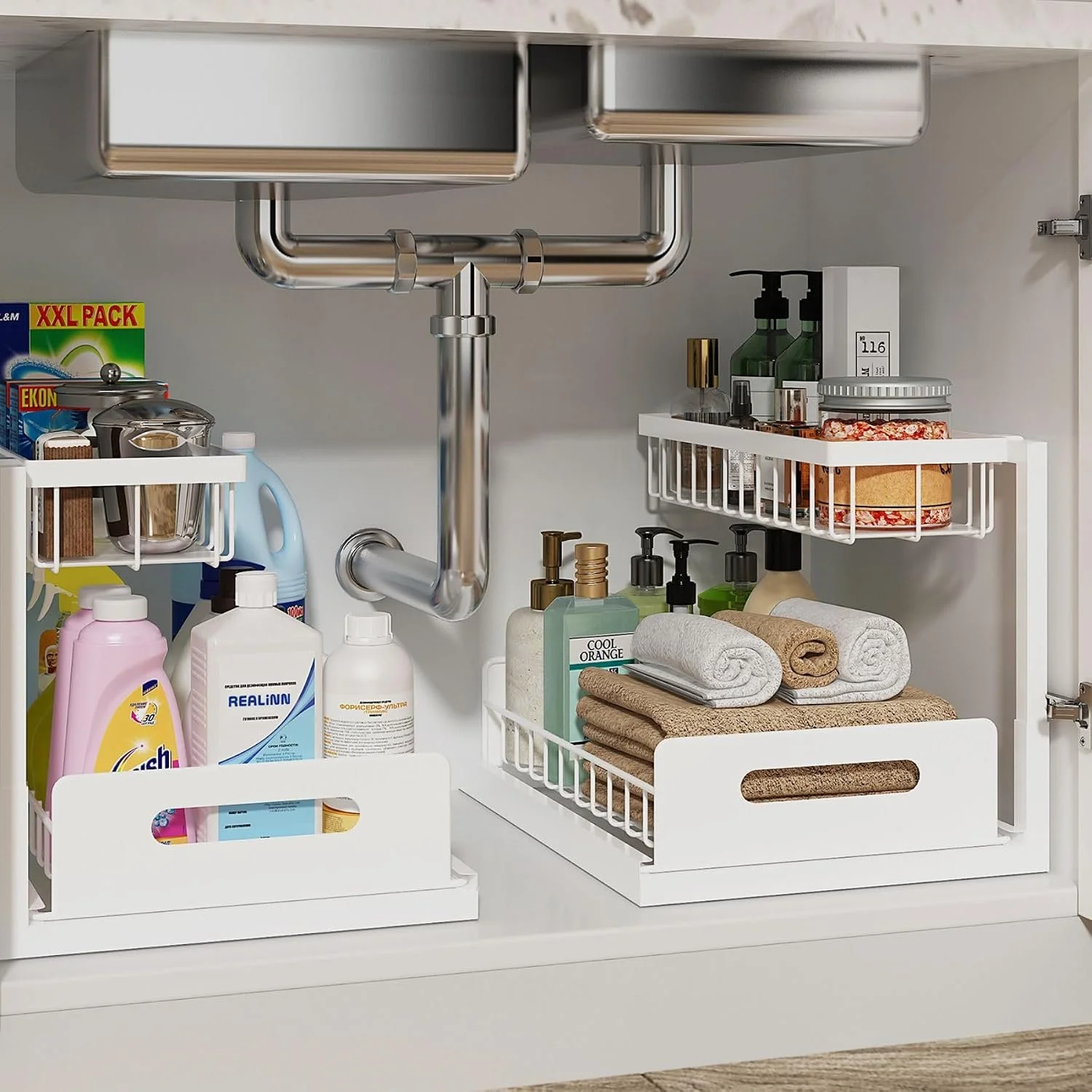
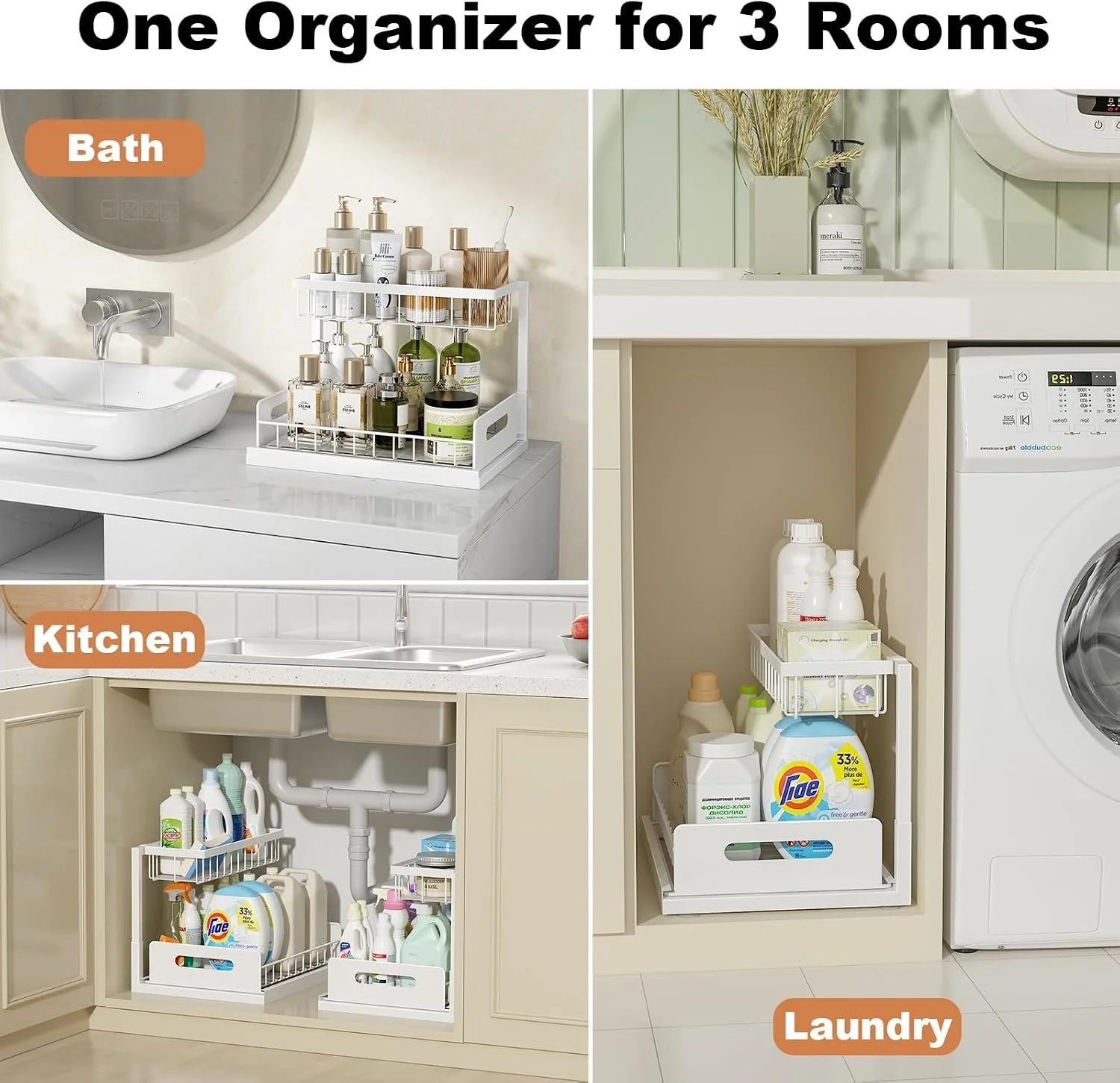
An under-sink organizer with an adjustable top shelf can help use the vertical space on either side of the pipes, which is often the most usable area in this cabinet. Most are designed to straddle pipes, but the fit depends heavily on pipe placement and height. Measure before purchasing, including the height from the cabinet floor to the pipes where they enter the wall.
A no-buy alternative: bins, small baskets, or containers you already own, sorted by category and placed on either side of the pipes, accomplish the same grouping and make items easier to retrieve without a dedicated organizer.
10. Common Kitchen Cabinet Organization Mistakes
Buying organizers before measuring. An organizer that doesn't fit the cabinet dimensions is useless regardless of how well-reviewed it is.
Buying storage before decluttering. Adding containers to an overfull cabinet doesn't create more space, it creates more complicated clutter.
Trying to fill every inch. Cabinets with no breathing room are difficult to maintain. Leaving some open space is what makes a system sustainable.
Storing daily items too high or too far back. If reaching something requires effort, it will be left out on the counter instead of put away.
Keeping too many duplicates. Twelve mugs for a one-person household, or four water bottles that all need separate storage, is a collection problem rather than an organization problem.
Organizing around how things look rather than how you cook. A cabinet that photographs well but doesn't match how you actually use the kitchen won't stay organized.
Creating categories that are too specific to maintain. If the system requires remembering which of three designated spots something belongs in, it won't last.
Stacking items so deeply that the back row is unreachable. Two items deep is often the practical limit for anything you use regularly.
Adding an organizer every time a category grows. Sometimes the right response to a growing category is to reduce it, not to store more of it.
11. Improve the Cabinets You Have Before Buying More
Several of the most effective cabinet organization improvements cost nothing:
Start with the one cabinet that causes the most daily frustration. Empty it, edit it, and reorganize it around how you actually use it. The improvement you'll see from this single cabinet often changes how you approach the rest.
Move rarely used items. Free up prime cabinet space by relocating seasonal or infrequently used pieces to higher shelves, a pantry, or another storage area.
Check whether existing shelves are adjustable. Many standard kitchen cabinets can be reconfigured with a few minutes and a shelf peg moved to a different hole.
Reuse containers and baskets you already have. A basket that pulls forward in a deep cabinet, or a bin that groups cleaning supplies under the sink, does the same job as a purchased organizer in many situations.
Group similar items. Even without any new storage, grouping items by category makes cabinets easier to navigate and easier to maintain.
Identify what actually belongs in a different cabinet. Sometimes the disorganization in one cabinet is partly caused by items that belong somewhere else.
12. Create a System That Is Easy to Maintain
An organization system that works for a week and then dissolves back into chaos isn't really a system. The test of a good setup is whether it makes putting something away slightly easier than leaving it out.
A few habits that help:
A quick weekly reset, five to ten minutes to return misplaced items to their correct spots, prevents gradual drift from becoming a full reorganization.
Reassess when you bring in new kitchenware. A new pot, a replacement set of glasses, or a new appliance all affect how cabinet space is used. Take a few minutes to find the right place rather than defaulting to wherever there's room.
A lighter declutter every few months. Mugs accumulate, water bottles multiply, and cabinets slowly fill with things that were added without removing anything. A periodic review keeps the system from slowly reversing.
Avoid adding a new organizer every time a category grows. If a category has expanded enough to feel crowded, the first question is whether it needs to be smaller, not whether it needs more storage.
The goal isn't cabinets that look organized in a photo. It's cabinets that make daily cooking tasks slightly easier and require minimal thought to maintain.
13. One Cabinet at a Time
Kitchen cabinet organization doesn't need to happen all at once, and it doesn't require a particular aesthetic or a set of matching containers.
Start with the cabinet that frustrates you most. Empty it, remove what doesn't belong, group what's left, and put things back in an order that reflects how you actually cook. See how that feels for a week before moving to the next one.
Small, finished improvements made gradually are more useful than a complete overhaul that takes a weekend and doesn't hold.
