
Bathroom Organization Ideas That Look Aesthetic and Actually Stay Organized
A small bathroom can go from tidy to cluttered surprisingly fast. Skincare, hair tools, backup toiletries, and cleaning supplies all compete for the same limited counter, drawer, and cabinet space, and in apartments or rentals there usually is not much room to work with in the first place.
Good bathroom organization is not really about buying more containers. It is about giving every category of item a specific, useful home, so daily essentials stay easy to reach and everything else has a place that does not spill onto the counter. This guide walks through that process zone by zone, starting with what to remove before you organize anything, and ending with a simple routine for keeping the system working once it is set up.
If the bigger challenge is the room’s footprint rather than the clutter itself, our guide to very small bathroom layouts with shower only focuses on making a limited space function better.
1. Start by Decluttering Before You Organize
Buying organizers before decluttering usually just means neatly storing things you do not need. It is worth going through the bathroom first and sorting items into a few simple categories:
Expired or clearly past-use products. Many skincare and personal care products have a shelf life once opened, so anything that has changed in smell, texture, or color is worth removing.
Duplicates. If you have several nearly empty or duplicate products, finish one before opening another and remove empty packaging as you go.
Items that do not belong in the bathroom at all. Unused gift sets, rarely used tools, or products that belong elsewhere can be relocated. Expired or unwanted medications should be handled according to local disposal guidance rather than treated like ordinary household waste.
Anything unused in the last six to twelve months. If a product has not been reached for in that time, it is reasonable to question if it needs a spot in a small space.
A simple decision framework: for each item, ask if it is used regularly, if it is a genuine backup for something used regularly, or if it is neither. Items in the third group are the ones to remove, donate, relocate, or discard before any organizing system is introduced.
2. Keep the Countertop for Daily Essentials
A countertop that holds everything tends to look cluttered no matter how it is arranged, simply because there is too much visual information in one place. A more realistic goal is to keep only what is used every single day within easy reach, and give everything else a home elsewhere.
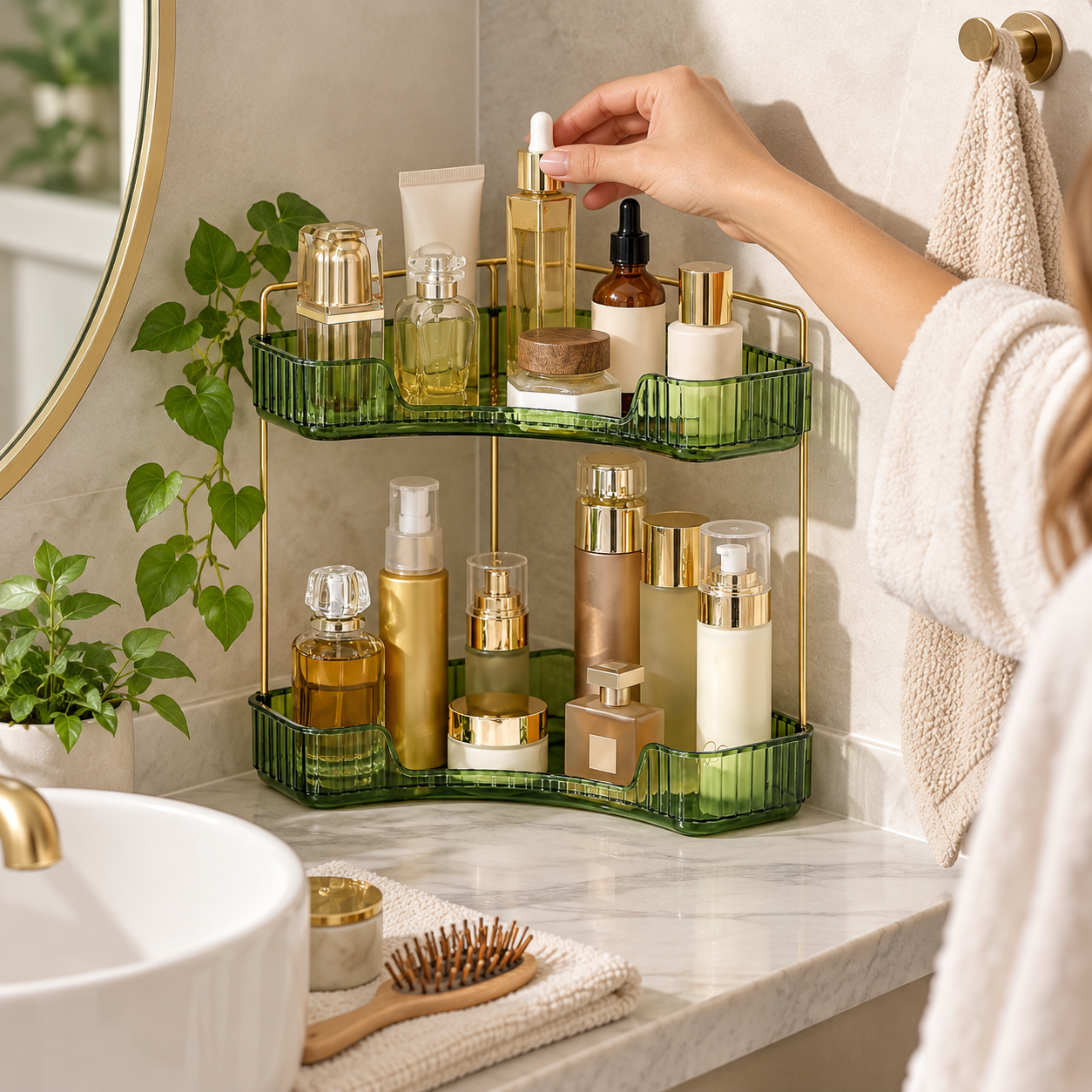
That usually means a toothbrush and toothpaste, one or two frequently used skincare products, hand soap, and perhaps a single tray or small organizer. A two-tier corner vanity organizer can be a useful option here if counter space is tight, since it uses vertical space in a corner that might otherwise sit empty, keeping items visible without spreading them across the whole counter.
If you would rather not buy anything new, a shallow bowl, tray, or even a small plate already in the house can group daily items into one visual zone. The goal is containment, not a specific product.
3. Use Drawers for Small Everyday Categories
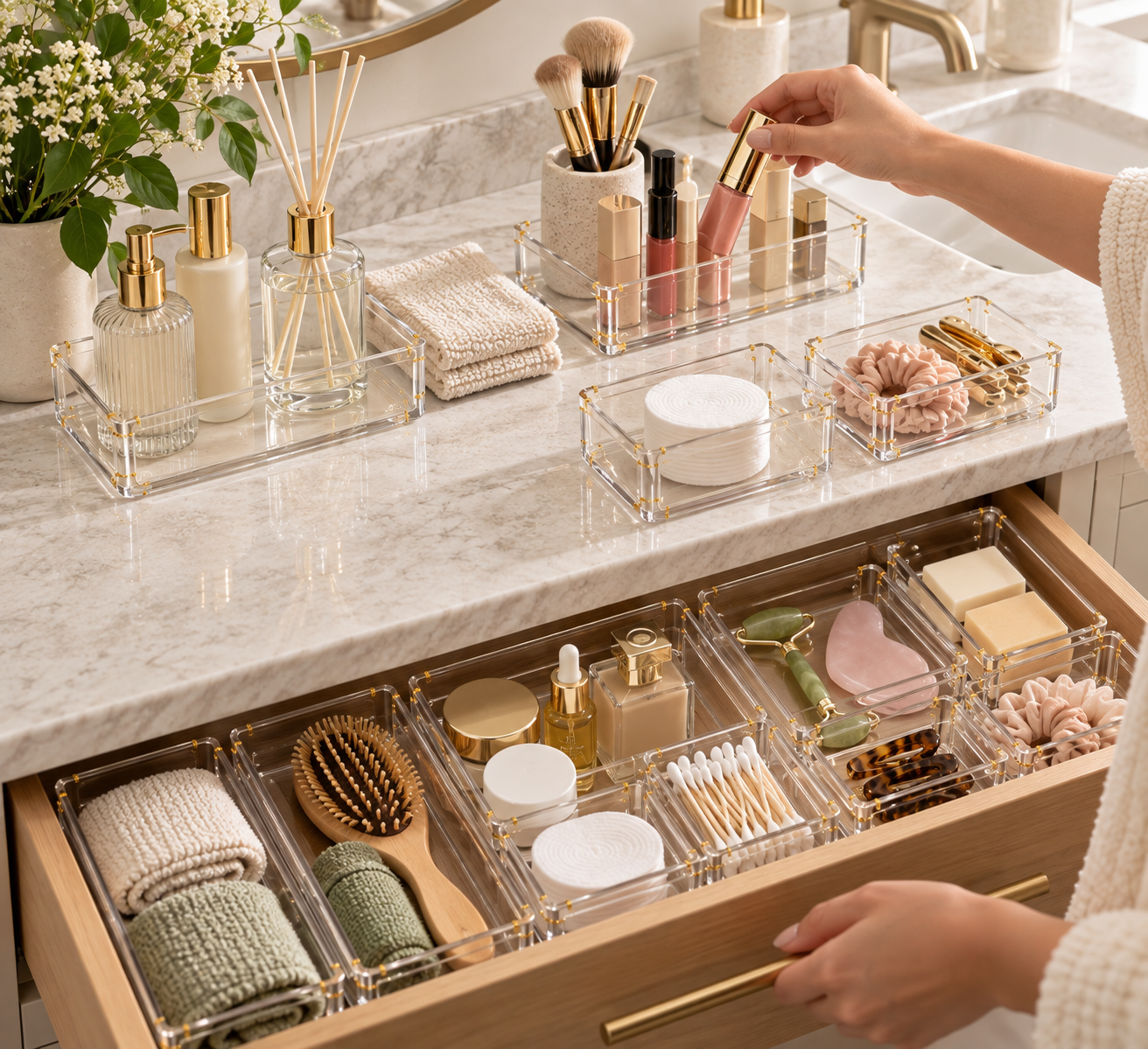
Drawers work well for grouping small items that do not need to be visible all the time, such as makeup, skincare, hair accessories, and dental care items. Rather than letting these mix together loosely, grouping by category, all hair accessories in one section, all dental items in another, makes it easier to find things and easier to see when something is running low.
Plastic drawer-organizer trays can help with this kind of grouping, particularly in a set that includes a few different tray sizes, since bathroom drawers often hold a mix of small and slightly larger items.
That said, it is worth being cautious about going too far in the other direction. A drawer broken into many very small compartments can become inconvenient if items do not fit cleanly into the divisions, so it generally works best to group items into a handful of broader categories rather than creating a separate slot for every individual object.
4. Use Clear Drawers When You Need Visibility
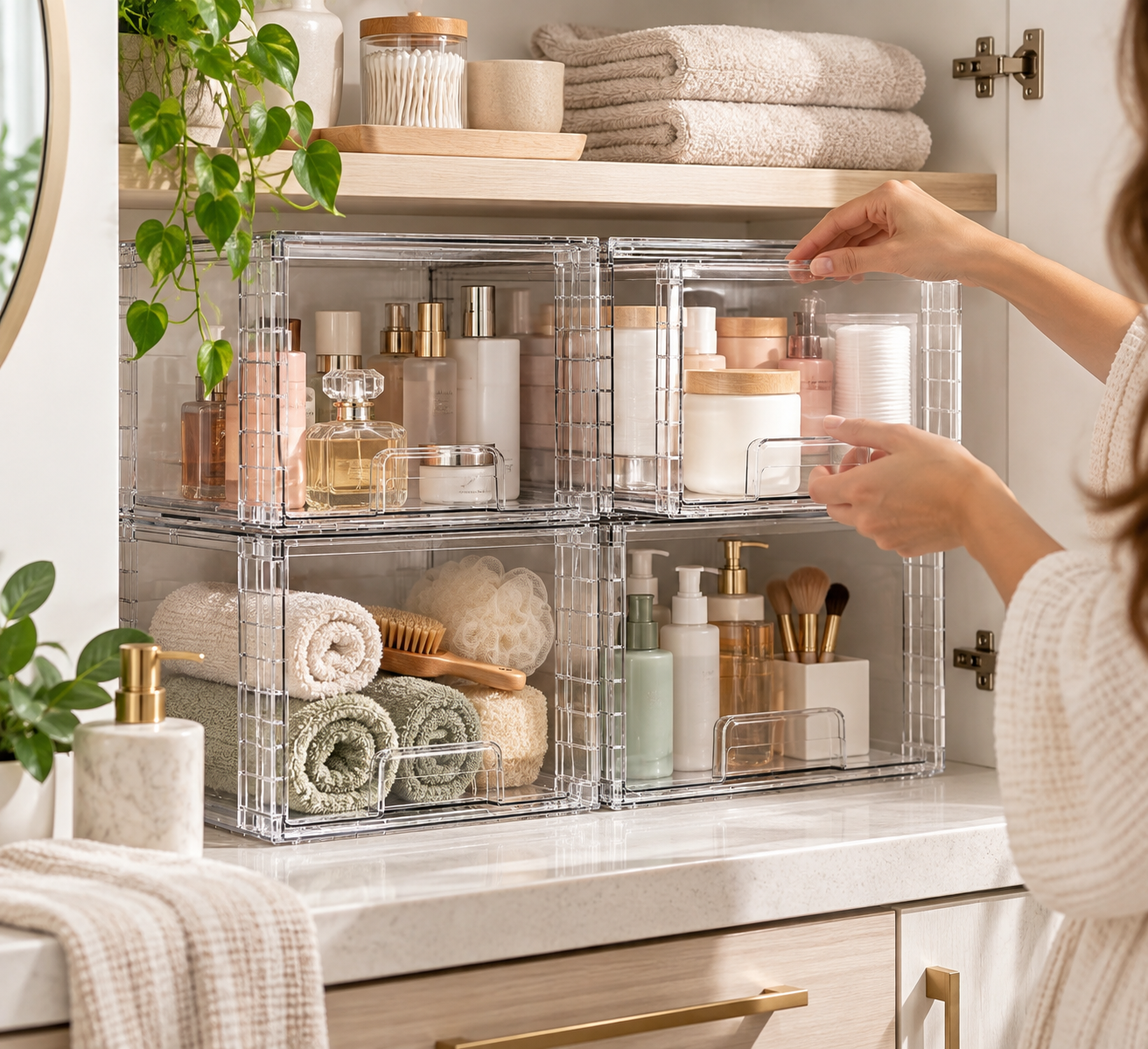
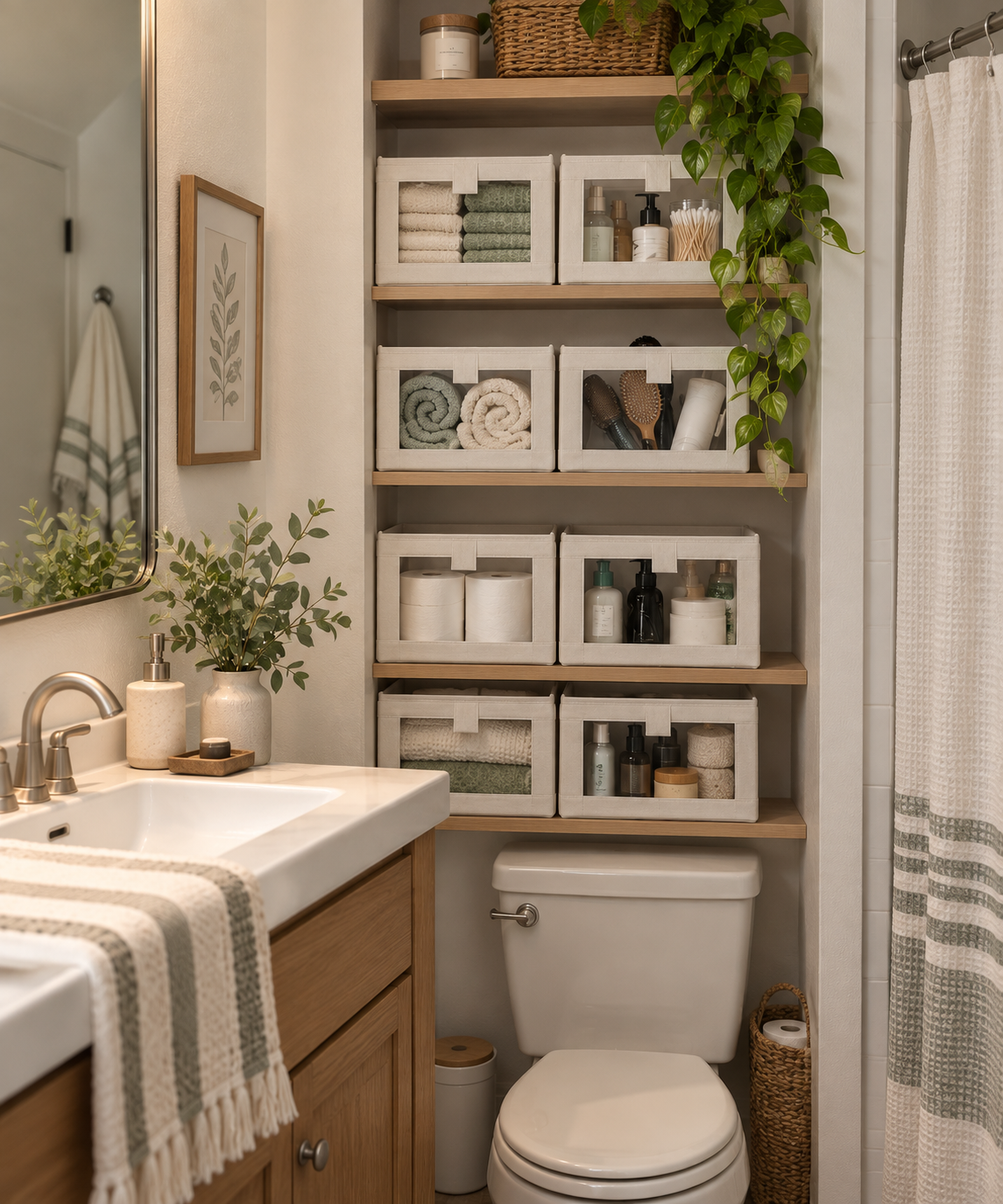
Clear stackable storage drawers work well when you want to see the contents at a glance, which matters most for items you reach for often or items you want to monitor, such as how much of a product is left. They tend to be a good fit for grouping categories such as skincare, hair tools, or first-aid basics on an open shelf or inside a cabinet.
Clear storage is less useful when the goal is a calmer visual look, since transparent containers still show whatever is inside them, including mismatched packaging.
It is also worth being careful about stacking them too high. Once a stack becomes tall enough that reaching the lower drawers is inconvenient, the system may stop being used the way it was intended, which defeats the purpose of easy access.
5. Make Under-Sink Storage Work Around the Plumbing
The area under the sink is often the most underused storage zone in a bathroom, mainly because pipes and uneven cabinet shapes make it awkward to fill with standard storage. This is worth treating as its own project rather than an afterthought.
Before buying anything for this space, it helps to measure:
The height, width, and depth available on each side of the pipes, since the usable space is rarely a single even rectangle.
Where the pipes sit, so you can choose an organizer that can be positioned around them rather than one solid unit that will not fit.
Cabinet door clearance, particularly if the doors are shallow or hinge in a way that limits how far a pull-out organizer can extend.
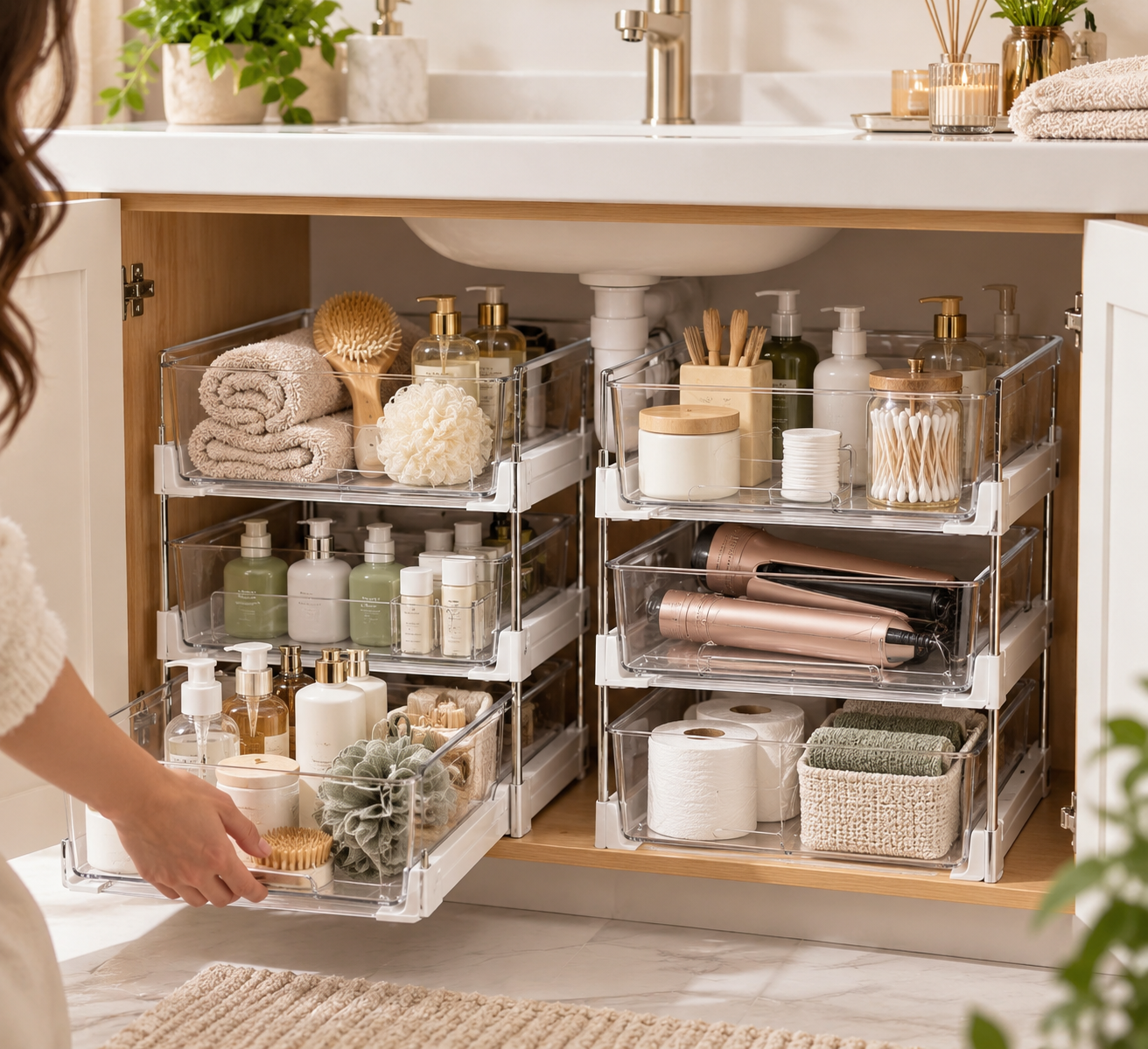
A three-tier under-sink organizer with pull-out storage and movable dividers may make it easier to separate categories and reach items stored farther back. Before purchasing, check the organizer’s total footprint against your own measurements rather than assuming a product designed for under-sink use will automatically fit your cabinet.
If you would rather not buy a dedicated organizer, repurposing bins, shoeboxes, or containers already in the house works as a no-cost alternative. The same principles apply: measure first, work around the pipes rather than against them, and keep the items used most often toward the front.
6. Use Turntables for Deep Cabinets or Awkward Corners
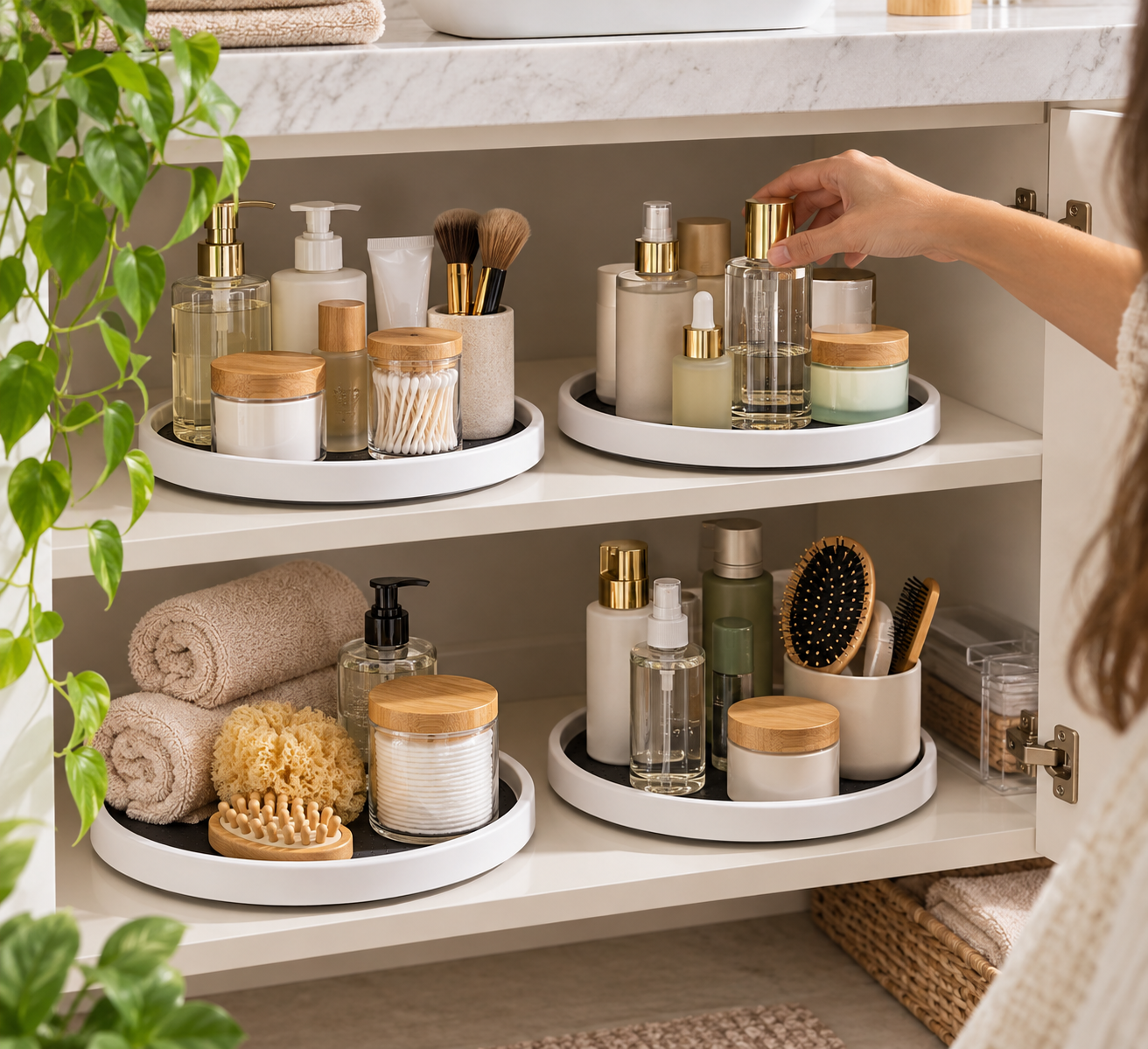
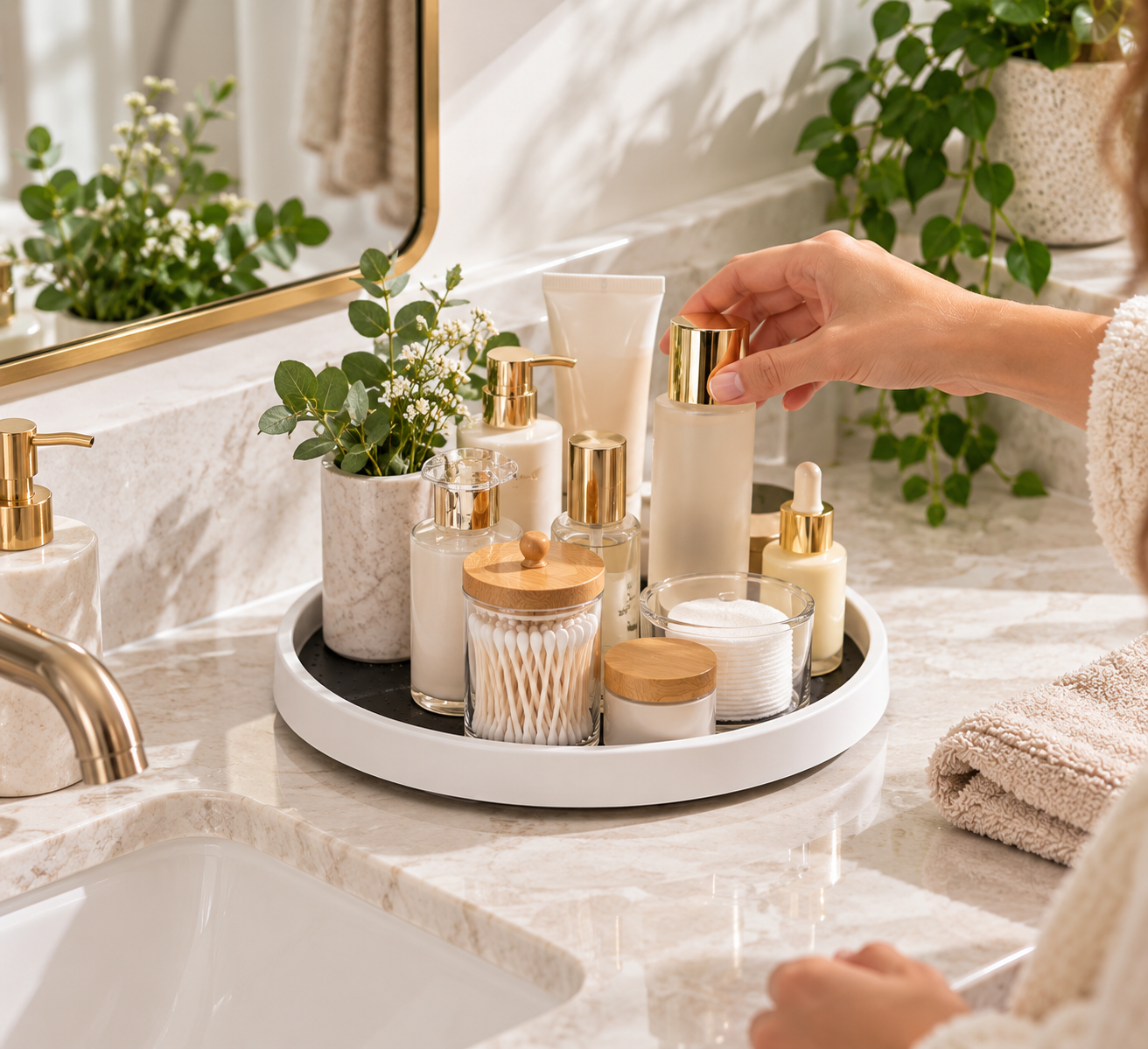
A Lazy Susan-style turntable is most useful in a deep cabinet or an awkward corner where items tend to get pushed to the back and forgotten. Instead of digging through a row of bottles, spinning the turntable brings everything into view.
Where this does not help as much is in a shallow drawer or a small, already-accessible shelf, since a round turntable in a rectangular space can waste more room than it saves.
A non-skid turntable set can be a reasonable option for deep cabinet storage of skincare, hair products, or similar upright items. Before choosing one, check the diameter against the usable shelf space so the turntable can rotate freely without hitting the cabinet walls or nearby items.
7. Contain Backups Instead of Mixing Them With Daily Products
Backup toiletries, extra rolls of toilet paper, and spare cleaning supplies tend to create clutter when they are stored in the same spot as daily-use items, since they compete for the same prime, easy-to-reach space.
Giving backups their own separate zone, even a small one, keeps daily storage areas from feeling overloaded.
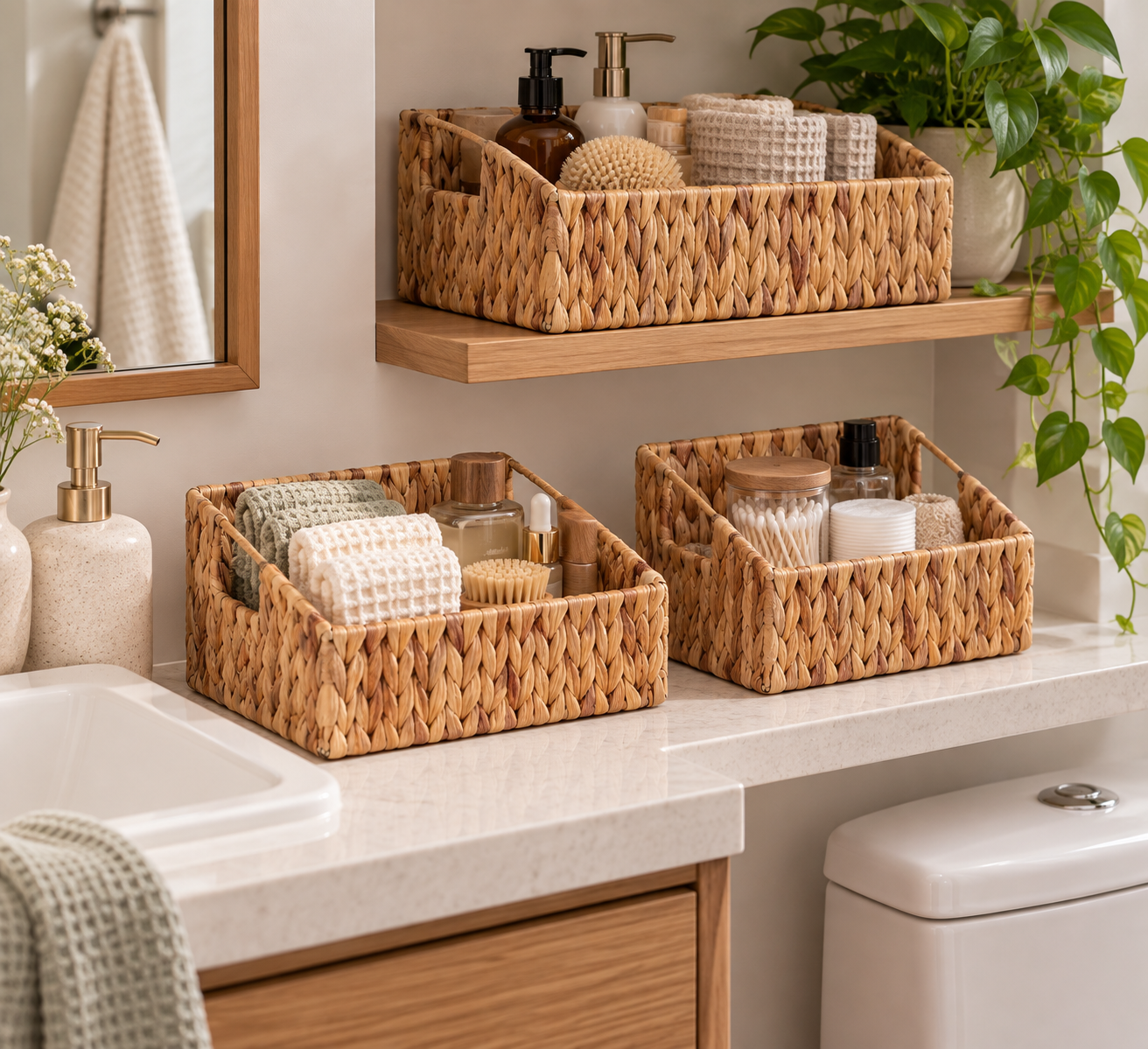
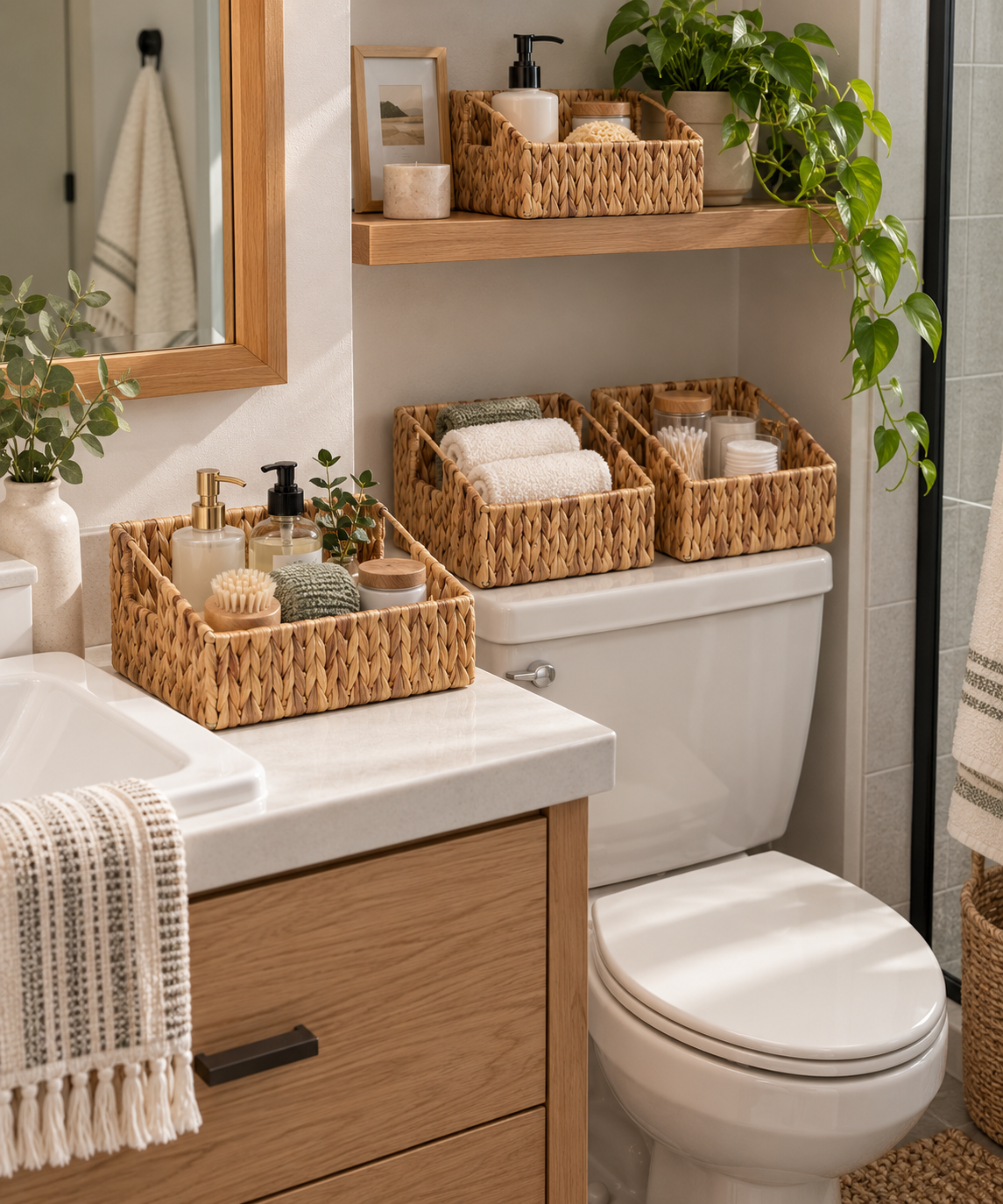
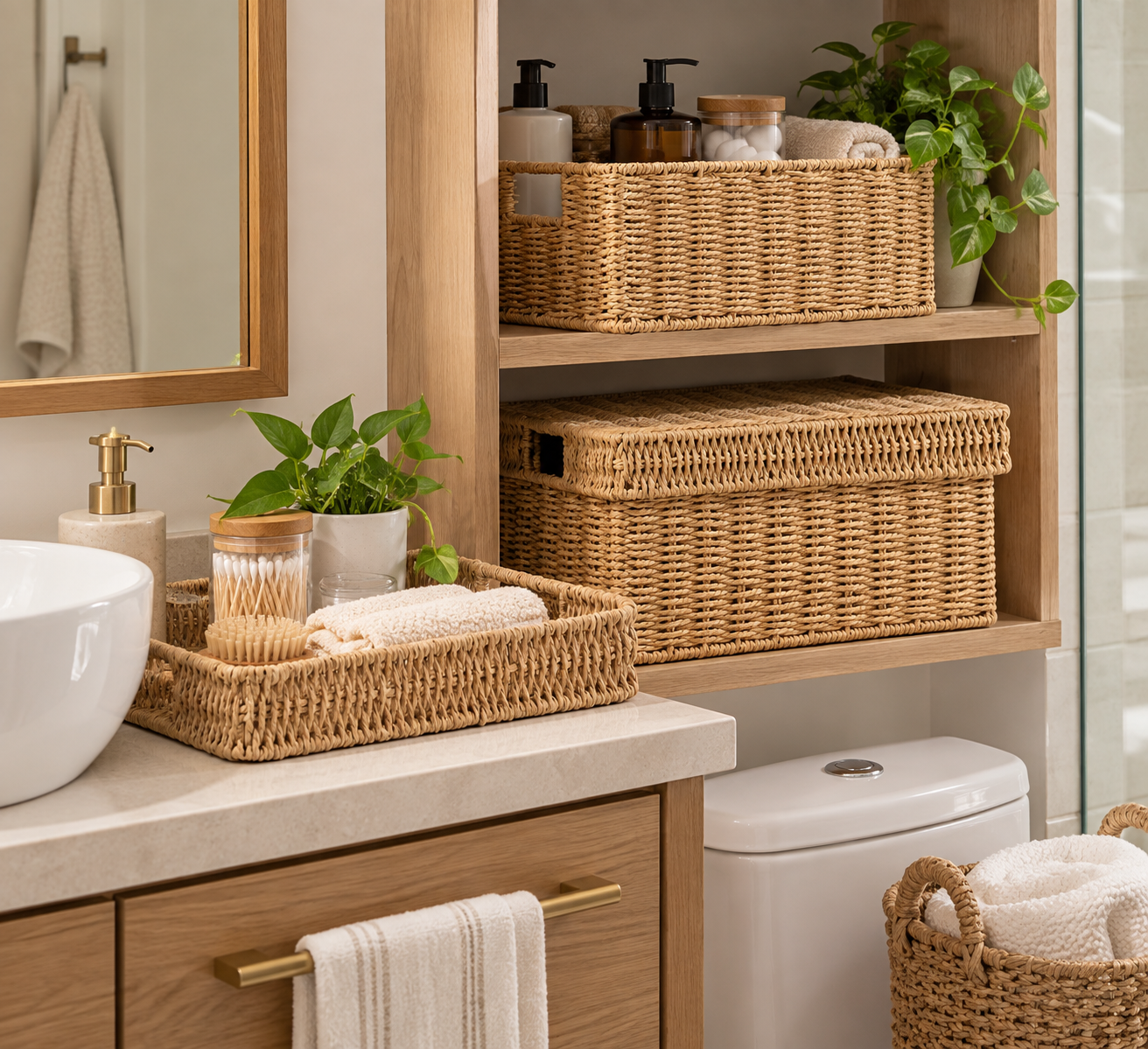
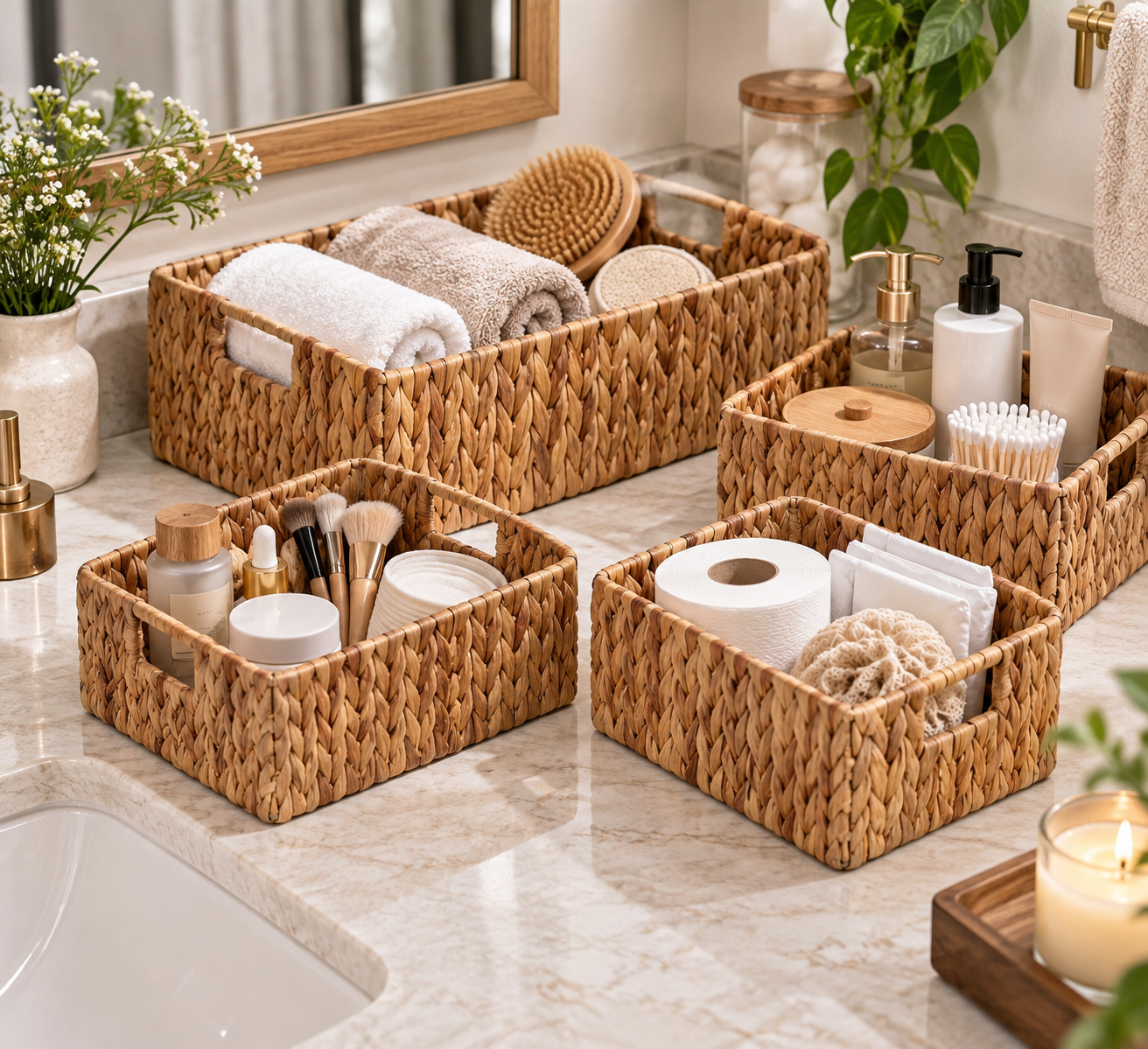
A storage basket set can work well for this when the goal is an open, visually softer storage style, such as extra towels or paper products on a shelf. Natural-fiber baskets are better suited to areas that stay reasonably dry rather than directly next to a shower, tub, or sink splash zone.
You also do not need matching baskets to create this system. A container you already own can work just as well if it fits the shelf and holds the category comfortably.
8. Organize Towels and Linens Without Overfilling Shelves
Bathroom linens can pile up quickly, especially in a household that has accumulated more towels than the available storage can hold.
Before adding a storage solution, it is worth being realistic about how many towels and linens the space can actually accommodate without shelves becoming overstuffed.
Linen closet storage bins can help keep this category contained and easier to browse, particularly when linens are grouped by size or type rather than stacked as one large pile.
If the shelf or closet does not comfortably fit both the everyday sets and the backups, that is a signal to reduce the total count rather than add another layer of storage on top of what is already there.
9. How to Make Bathroom Organization Look Aesthetic
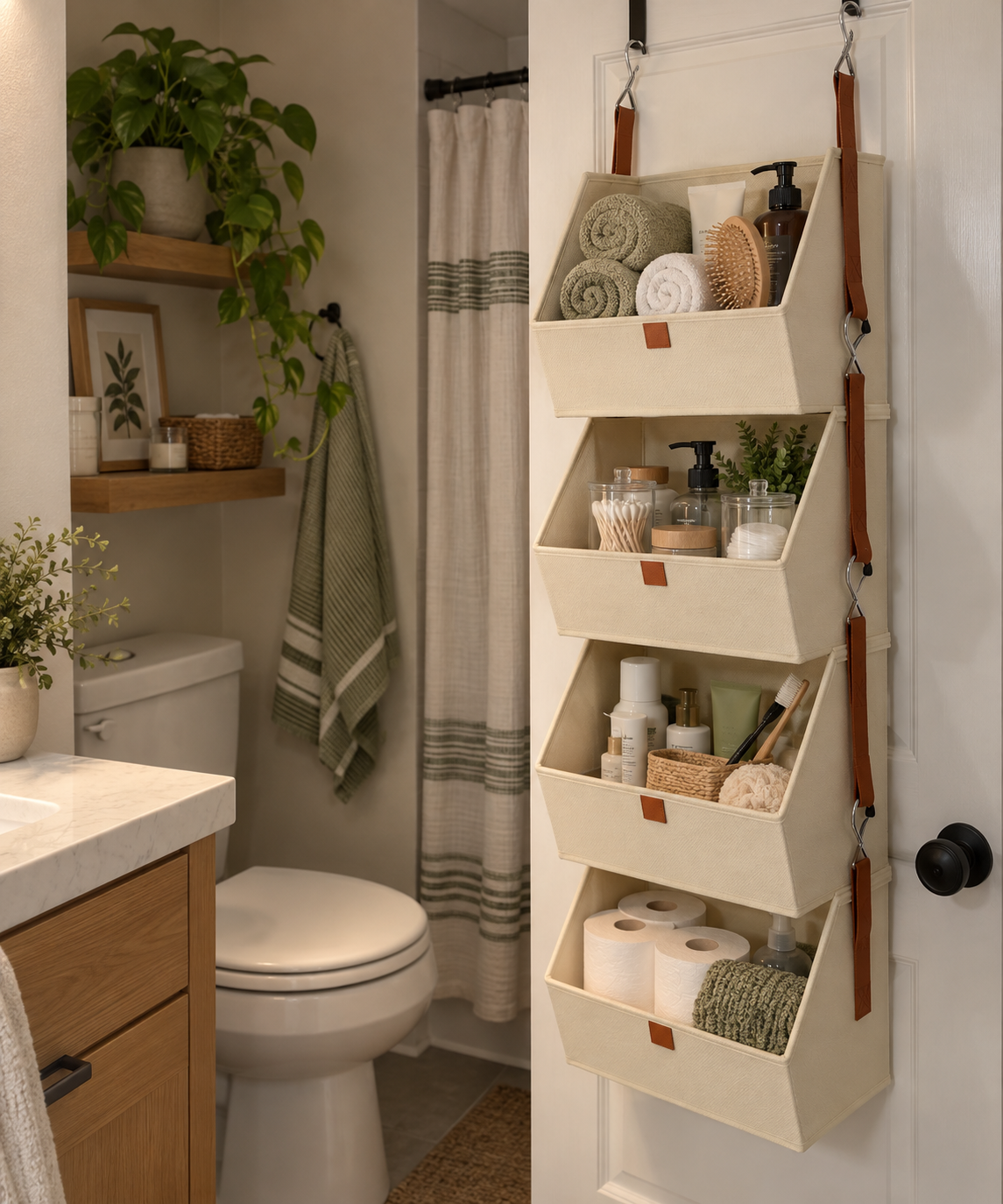
A bathroom can look calm and put together without any decorative purchases at all. Visual simplicity tends to come from a few habits rather than specific products:
Repeat materials or colors where possible, so storage does not look like a mismatched collection of unrelated pieces.
Reduce visual noise from packaging by placing less-attractive backups inside cabinets, drawers, or bins when practical.
Avoid too many containers. A handful of well-chosen storage pieces usually looks calmer than a large number of small ones.
Leave some empty space. A shelf or drawer that is completely full can feel busy even if everything is technically organized.
Keep frequently used items within easy reach, since a beautiful system that is inconvenient to use tends to fall apart quickly.
Let functional storage look intentional, rather than trying to hide every practical item out of sight.
None of this requires buying anything decorative. It is mostly about how existing and functional storage is arranged.
If you also want to improve the overall look of a compact bathroom, our small bathroom decor ideas guide focuses more specifically on styling and visual choices without requiring a major renovation.
10. Common Bathroom Organization Mistakes
A few patterns come up often and are worth watching for:
Buying organizers before measuring the space, which often results in something that does not fit.
Buying containers before decluttering, which just means organizing things that could have been removed.
Keeping too much on the countertop, since a fully loaded counter looks cluttered even when everything is technically inside a container.
Decanting every product unnecessarily. Decanting can help create a calmer look in some cases, but it is not required for every item and adds ongoing maintenance.
Storing backups in prime-access areas, which pushes daily-use items into less convenient spots.
Ignoring the plumbing under the sink, leading to organizers that do not actually fit.
Using moisture-sensitive materials in consistently wet areas, such as natural-fiber baskets placed right next to a shower.
Filling every available inch of a shelf or drawer, which leaves no room for the system to adjust as needs change.
Choosing an organizer because it looks appealing rather than because it fits the items you actually have.
11. A Simple Maintenance Routine
An organized bathroom tends to stay that way with a light, consistent routine rather than periodic major overhauls.
A realistic approach is to do a quick weekly reset by putting stray items back in their assigned spot, wiping down the counter, and checking for anything that has started to pile up.
Every few months, do a deeper declutter of drawers, under-sink storage, and linen storage to remove anything that has expired, gone unused, or become a duplicate again.
It also helps to do a quick check after buying something new. Before adding another product to the bathroom, consider if it already has an assigned spot or if something else should be finished, relocated, or removed first.
This kind of light, repeated maintenance tends to work better long-term than a single big organizing project that is never revisited.
Building a System That Works for Your Bathroom
An aesthetic, organized bathroom is less about specific products and more about giving every category of item a clear, realistic home, decluttering before adding storage, and keeping daily-use items easy to reach.
Some of the products above can support that process in specific zones, particularly under the sink, inside drawers, and in deep cabinets, but none of them are required to create a calmer, more functional bathroom.
Starting with one section, such as decluttering the counter or tackling the space under the sink, is a manageable way to begin without taking on the whole bathroom at once.
