
A couch quietly collects dust, crumbs, pet hair, lint, everyday spills and the residue that settles into seams and under cushions. It's tempting to grab a cleaner and start scrubbing, but that's the fastest way to leave a water ring or a rough patch on the fabric. Upholstery materials vary a lot, and so do the cleaning instructions that go with them.
This guide explains how to clean a couch safely: how to read the care code, what to do for fabric upholstery and microfiber, how to handle couch cushions and spills, and when it's smarter to call a professional. The safest first step is always the same: find out what the manufacturer allows.
Before Cleaning Your Couch, Find the Care Tag
Most upholstered furniture carries a care tag with a cleaning code. Common places to look:

Under a seat cushion
Underneath the furniture
Attached to the frame
In the manufacturer's paperwork or the online product page
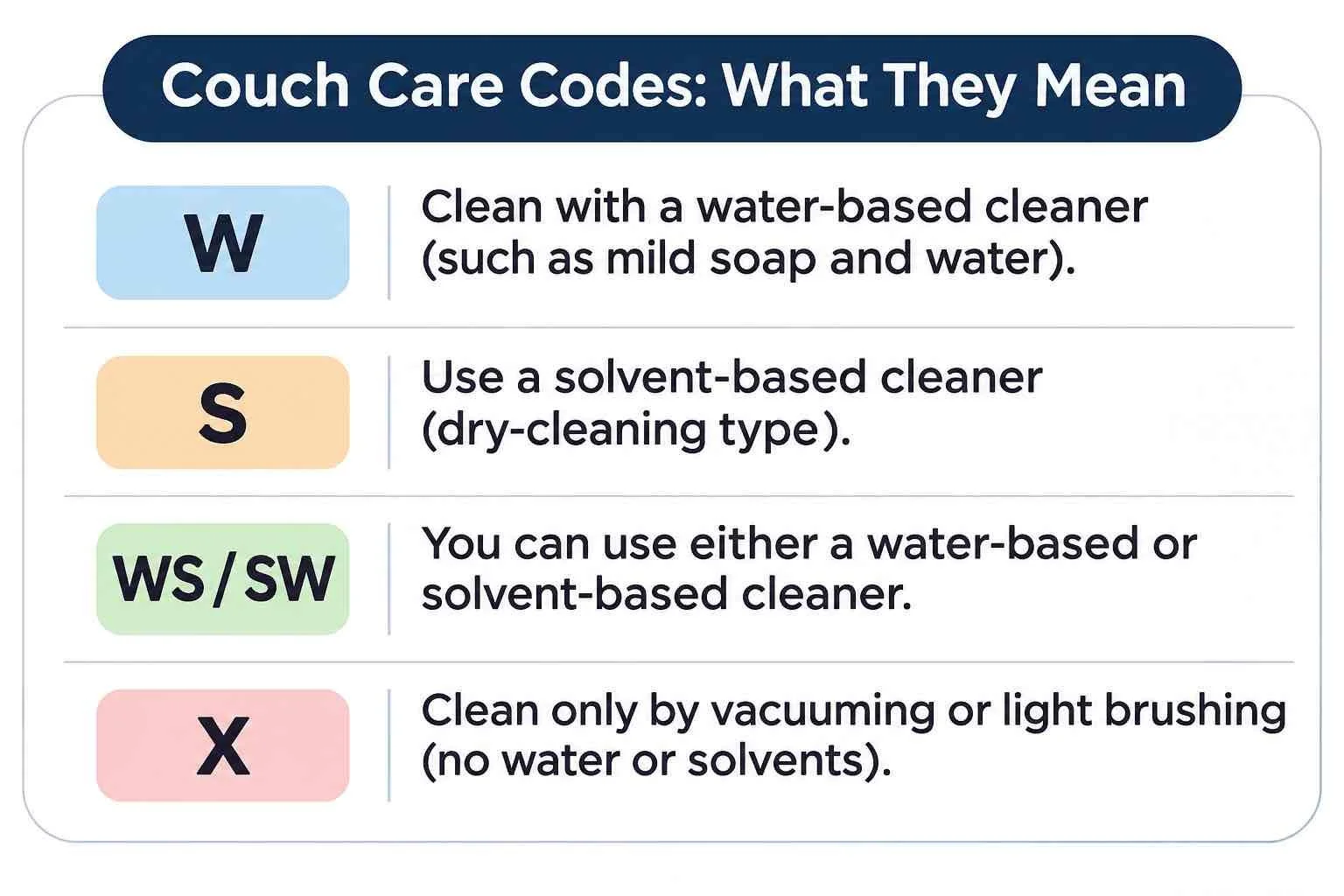
The code tells you what kind of cleaning the upholstery can tolerate. This matters because some fabrics are affected by water, some by solvents, and some by neither. Four codes are widely used, though manufacturers don't all use exactly the same system and some add their own codes or material-specific instructions. If your tag says something different, the tag wins.
What Does W Mean?
A W code generally means a water-based upholstery cleaning product or method is permitted. It does not mean any water-based product is fair game. Ordinary household soap, for example, isn't automatically safe, so follow the manufacturer's guidance on which products and methods to use.
What Does S Mean?
An S code generally means a water-free, solvent-based cleaning method. Please don't improvise with household solvents: they can be flammable, strong-smelling and hard on dyes. Follow the product's warnings and ventilation instructions. If solvent cleaning is unfamiliar to you, a professional upholstery cleaner is a reasonable choice.
What Does WS or SW Mean?
WS or SW generally means both water-based and approved solvent-based methods may be permitted. That's the most flexible code, but you should still follow the couch manufacturer's instructions about which products and methods to use.
What Does X Mean?
X means do not apply water-based or solvent-based cleaners. Stick to vacuuming or light brushing unless the manufacturer gives different instructions. For stains or a deeper clean on an X-code couch, contact a professional who is familiar with the material rather than experimenting.
What If You Cannot Find the Cleaning Code?
Don't guess. A wrong guess can leave a mark that's permanent. Instead:
Search the model or fabric name on the manufacturer's website
Contact the manufacturer or customer support
Ask a professional upholstery cleaner
Testing water on an unknown fabric isn't a safe first step, because the test itself can leave a ring or change the texture.
How to Clean a Couch Step by Step
Some steps below apply to every couch, such as vacuuming. Others, like spot cleaning, depend entirely on the care code.
1. Remove Loose Items
Take off throws, removable pillows, toys and anything else sitting on the couch. This gives you access to the seams and keeps small objects from getting caught in the vacuum. Don't remove upholstery covers unless the manufacturer says they're removable for cleaning.
2. Vacuum the Couch Thoroughly
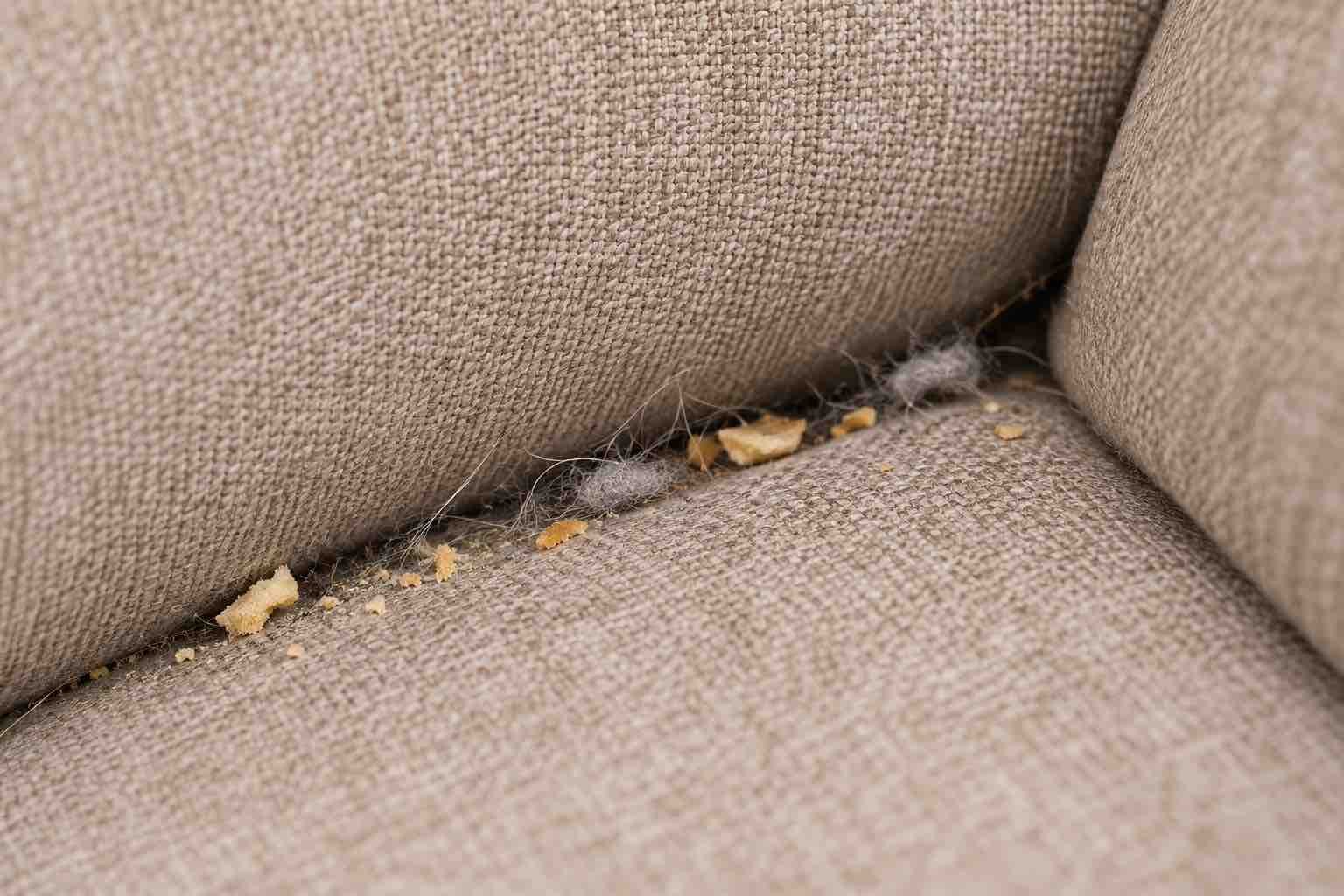
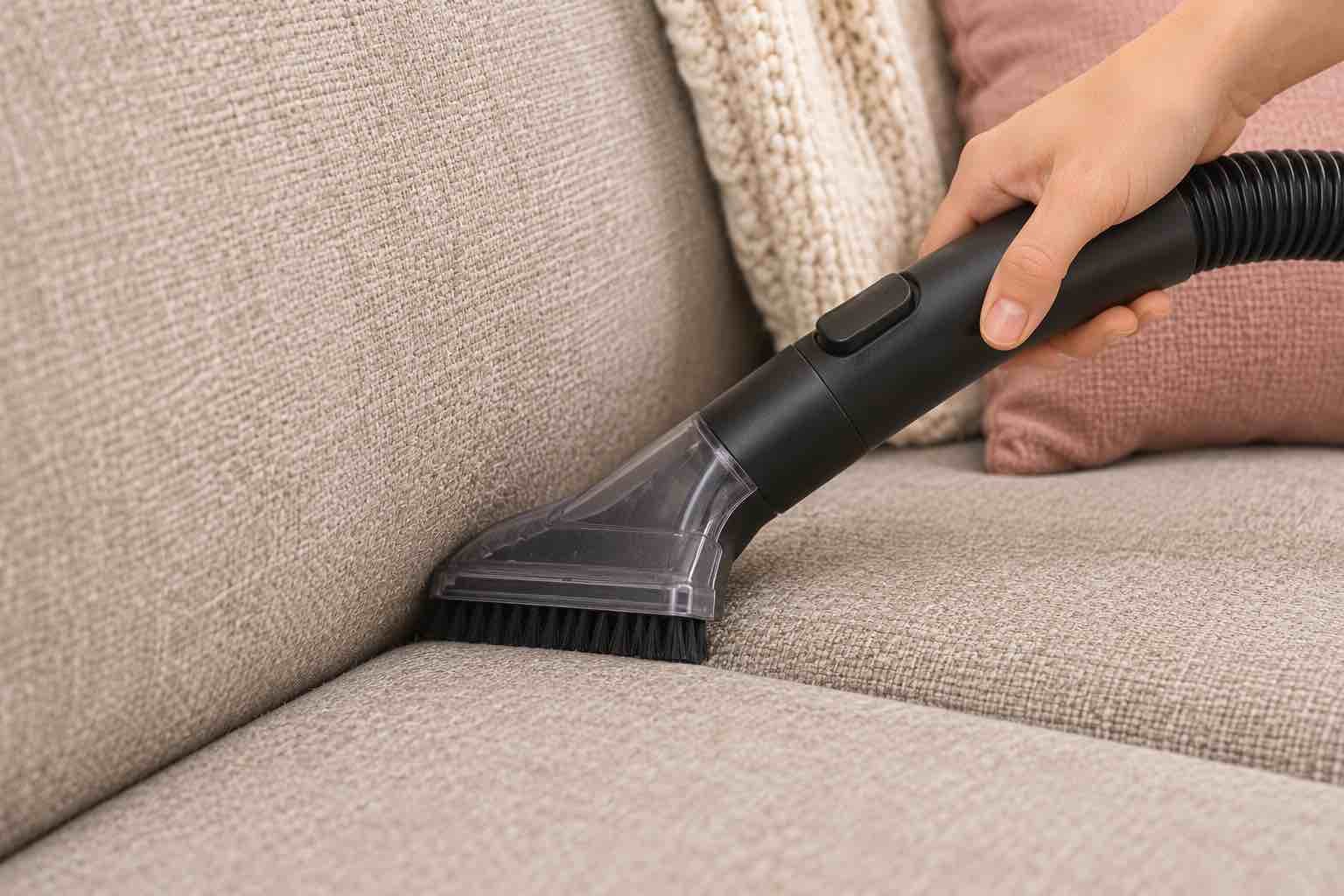
Use the upholstery attachment where appropriate and work over the seat, back cushions, arms, seams, crevices, the spaces under removable cushions and along the frame edges. Dry debris should come out before any spot cleaning, because gritty soil mixed with moisture can turn into a stain or grind into the fibers. On delicate fabrics, skip aggressive brushing.
3. Check the Care Code Again Before Using Liquid
Vacuuming is broadly useful. Wet cleaning isn't. Before any liquid touches the couch, confirm the code once more.
4. Blot Fresh Spills
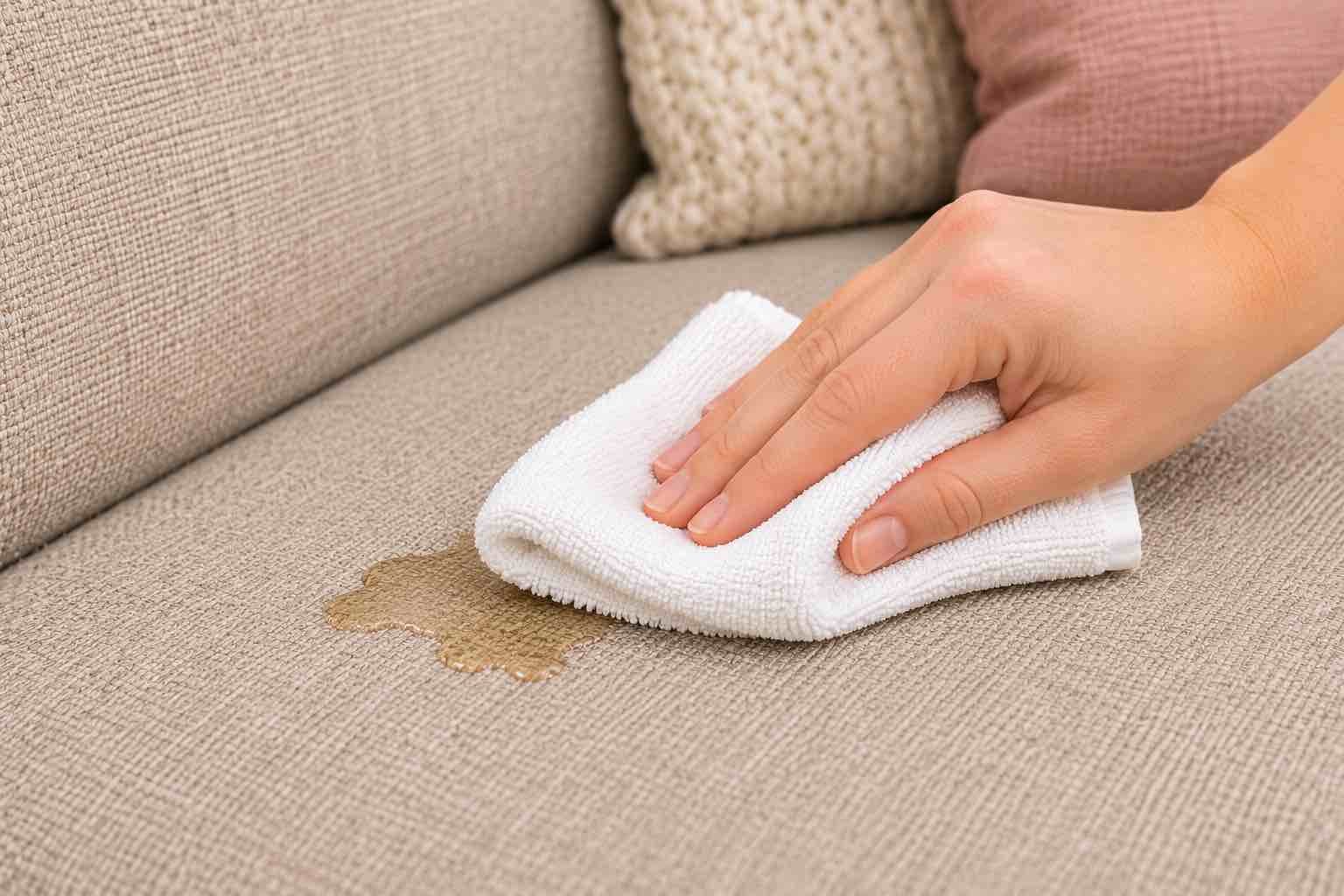
Use a clean, dry cloth, preferably white so you can see if any dye transfers. Blot rather than rub. Rubbing can spread residue or push it deeper into some fabrics. Blotting doesn't guarantee a stain will come out, but it gives you the best starting point.
5. Test the Approved Cleaner in a Hidden Area
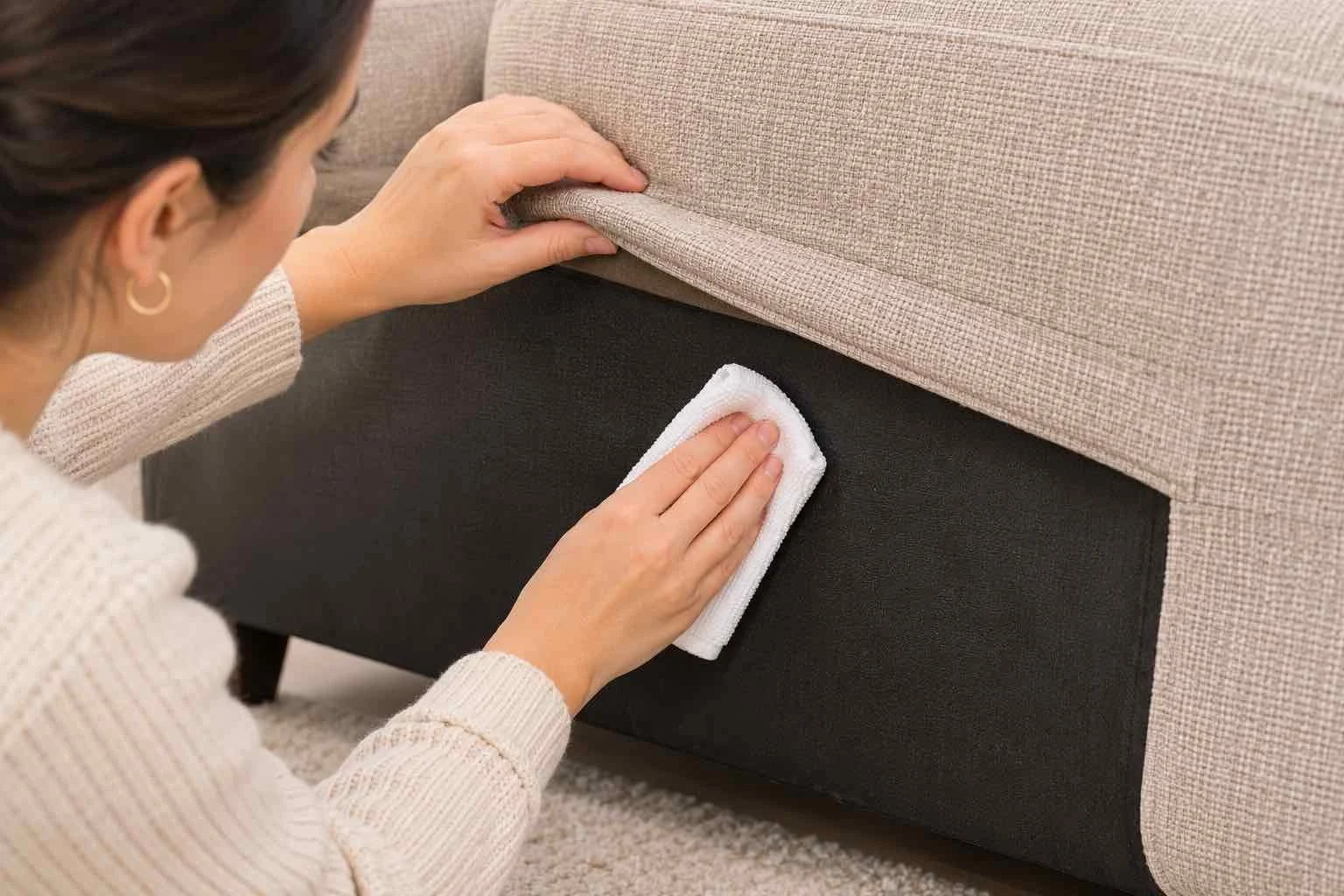
If the code and manufacturer allow a cleaning product, test it on an inconspicuous spot first, such as the back or underside. Check for:
Color change
Texture change
Visible rings
Any other damage
Let the test area dry fully before judging, since some problems only show up once the fabric is dry.
6. Spot Clean According to the Care Code
W: Use only a manufacturer-approved water-based upholstery method or product.
S: Use a water-free solvent method only if the manufacturer allows it. If you're unsure, consider professional cleaning.
WS or SW: Use an approved water-based or solvent-based method, following the manufacturer's instructions.
X: Don't spot clean with liquids.
There's no single soap, vinegar or baking soda recipe that suits every couch, which is exactly why the code comes first.
7. Avoid Over-Wetting the Fabric
Saturation is a common way to cause damage. Moisture can soak into the padding, drying takes much longer, and water marks or texture changes may appear. Manufacturer instructions commonly warn against saturating upholstery. Work with as little moisture as the approved method requires.
8. Let the Couch Dry Completely
Let cleaned areas dry before normal use, and keep air moving in the room where practical. Don't use high heat unless the manufacturer specifically allows it, and don't sit on damp upholstery, which can leave impressions or push moisture deeper.
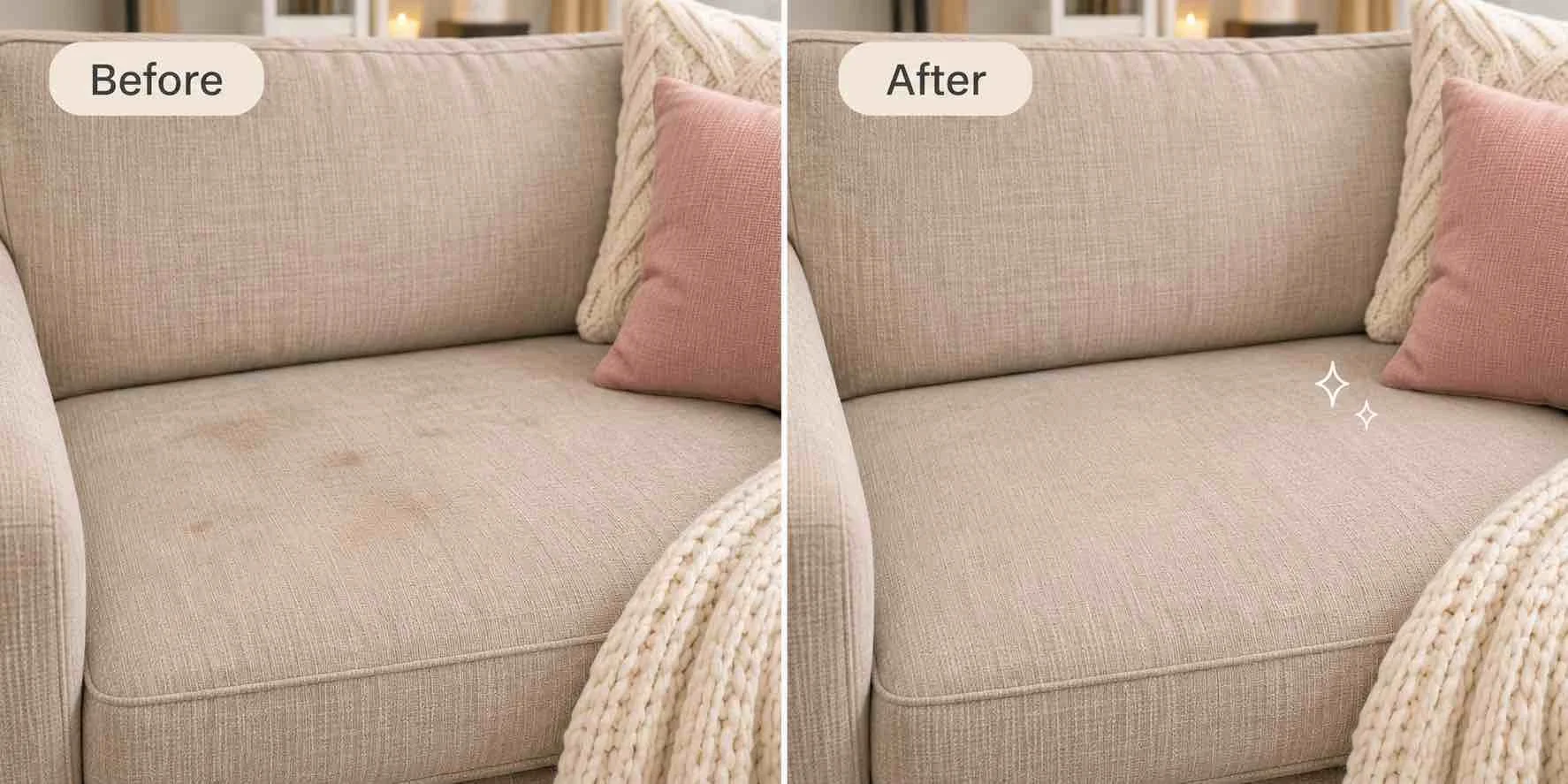
How to Clean a Fabric Couch
"Fabric couch" isn't one material. It can mean polyester, cotton blends, linen blends, rayon, wool blends, performance fabrics and other textiles, and each can behave differently with moisture and cleaners. You can't choose a method by how the couch looks, so rely on the care code and the manufacturer's guidance.
If you want to know how to clean a fabric couch in the simplest terms, the routine is:
Vacuum
Identify the code
Blot spills
Test an approved cleaner
Spot clean carefully
Avoid saturation
Let it dry fully
The order matters. Dry soil comes out first, the code decides what's allowed, and the hidden-area test catches problems before they show on the seat.
How to Clean a Microfiber Couch
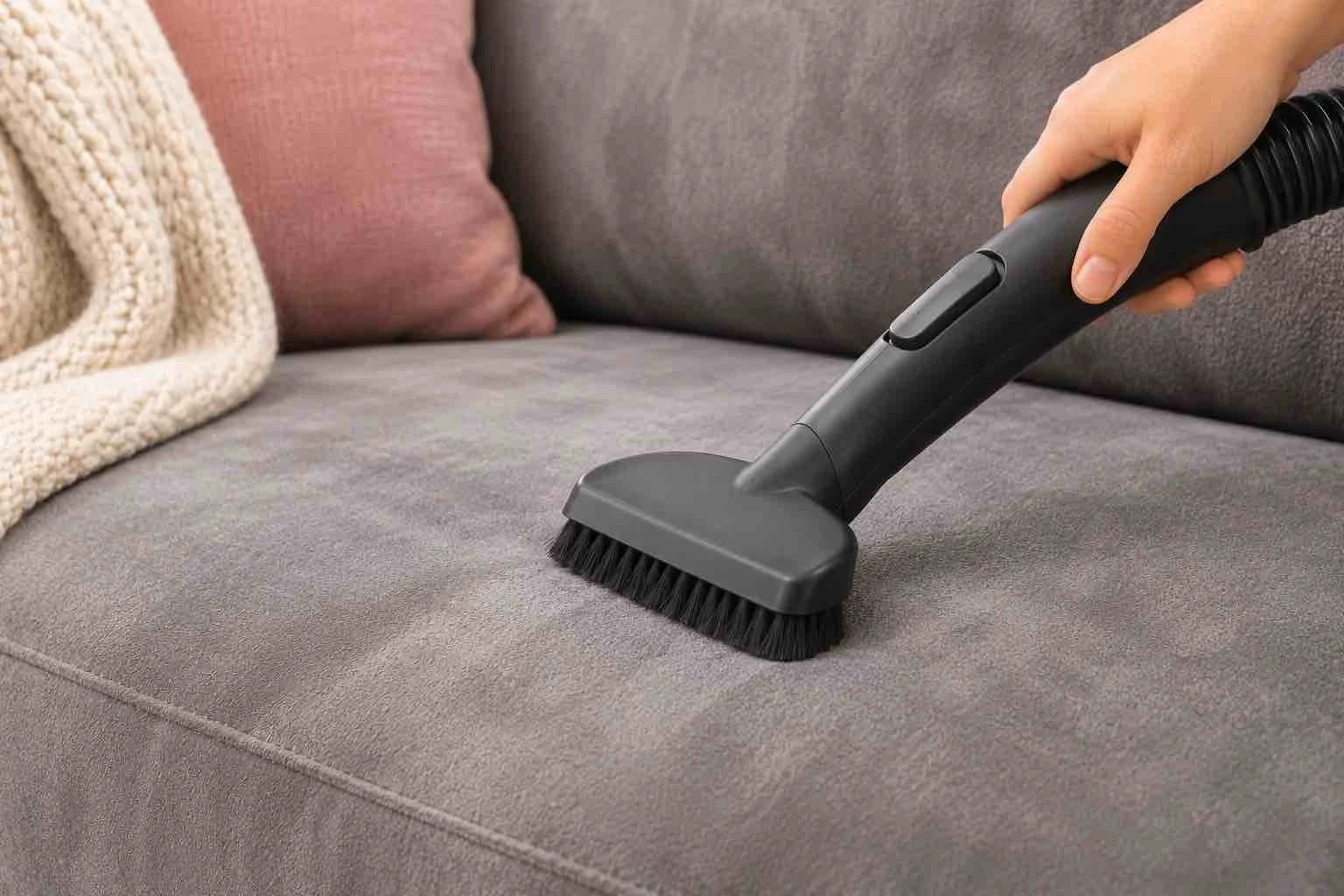
Microfiber doesn't automatically mean one cleaning method. Some microfiber couches carry a W code, others S, and others WS or SW. So the question of how to clean a microfiber couch has the same first answer as any other couch: check the tag.
For routine care:
Vacuum with a soft upholstery attachment
Brush lightly only where the manufacturer's guidance suggests it
Follow the cleaning code for anything beyond dry care
Test any approved method in a hidden spot first
Rubbing alcohol is often suggested for microfiber online, but it isn't safe for every microfiber couch, and there isn't one microfiber recipe that suits all of them. Many microfiber fabrics have a brushed or suede-like surface, and moisture or rubbing can leave it flattened or patchy. Once the area is fully dry, the texture may need gentle restoration, such as light brushing, but only in the way the manufacturer's instructions describe.
How to Clean Couch Cushions
Before you clean couch cushions, it helps to separate three things that sound alike but aren't:
A removable cushion: the whole cushion lifts out of the couch.
A removable cushion cover: the fabric can be taken off the cushion.
A washable cover: the manufacturer says the cover can be laundered.
A zipper doesn't prove the cover is washable. Some manufacturers explicitly warn against removing and laundering cushion covers, and washing can cause shrinkage, color changes or damage to the backing. Check the sewn-in label, the care code and the manufacturer's instructions. Don't machine wash unless the label explicitly allows it.
Attached cushions: vacuum them and spot clean according to the upholstery code.
Removable cushions: vacuum all sides, including the bottom and the crevice around the cushion, then clean according to the same care guidance.
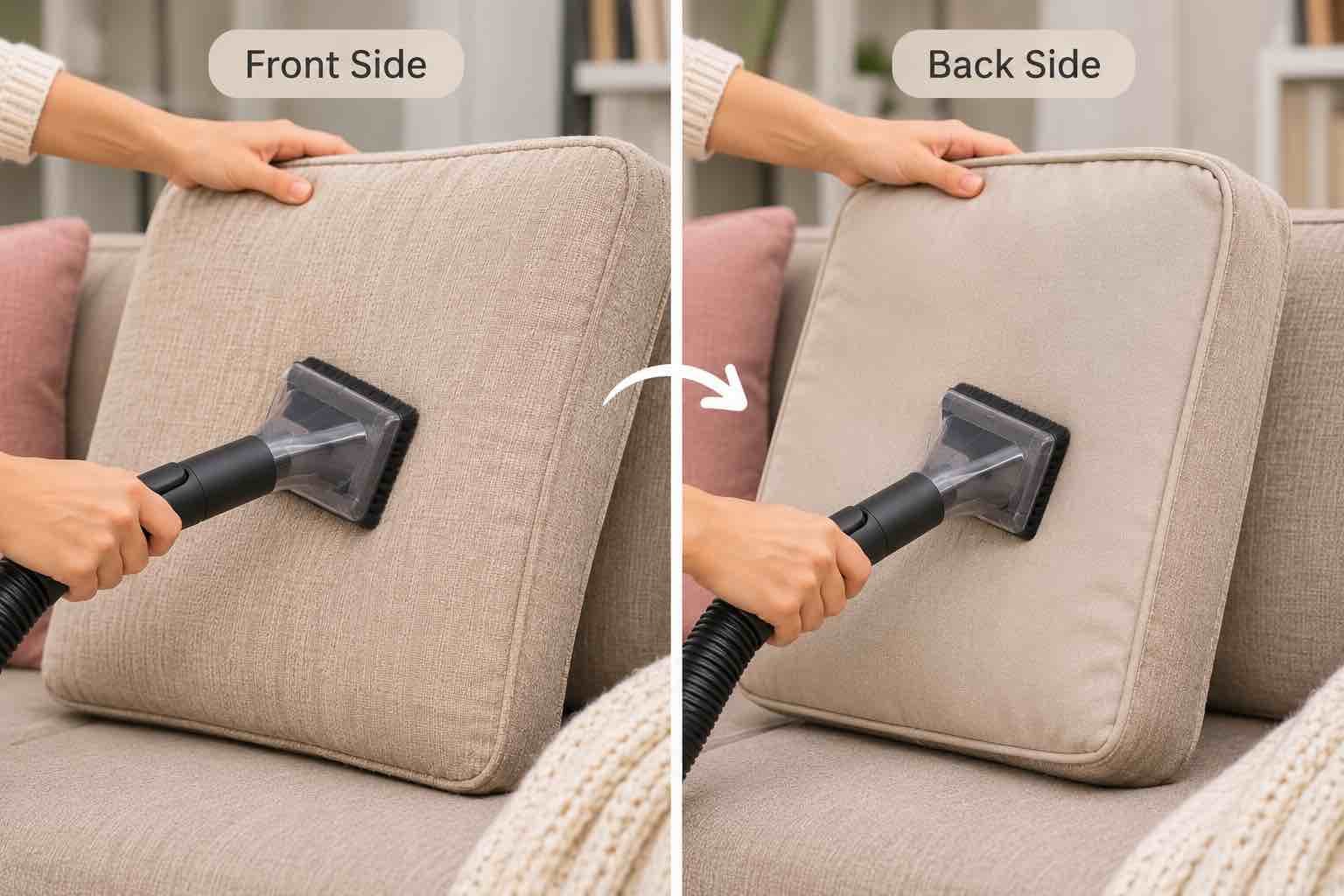
Can You Steam Clean a Couch?
Not automatically. Some manufacturers specifically advise against steam cleaning or hot-water extraction for certain fabrics, because the heat and moisture can cause shrinkage, staining or damage to the padding. Only use a steam or extraction method when the manufacturer explicitly says it's appropriate for that upholstery. A W code means water-based cleaning is permitted. It doesn't automatically mean a steam cleaner is safe.
Can You Use Baking Soda on a Couch?
Baking soda is commonly suggested online for odors, but it shouldn't be used on every upholstery. Fine powder can settle into fabric or padding and be hard to remove, and it may leave a residue or dull some fabrics. If the manufacturer doesn't recommend it, you don't need it. Start with vacuuming and manufacturer-approved care. We're not giving a baking soda recipe here, because it isn't a universal fix.
Can You Use Vinegar to Clean a Couch?
Don't use vinegar as a universal upholstery cleaner. Acidic solutions can affect dyes, finishes and fibers differently, and a spot that looks fine wet may change as it dries. If a manufacturer specifically approves a vinegar-based procedure for your upholstery, follow its instructions. Otherwise, use the approved method for your care code. There's no general vinegar-and-water ratio that suits all couches.
How to Clean a Couch After a Spill
Speed helps, but caution matters more. A simple process:
Remove solids carefully, lifting rather than pressing them in.
Blot liquid with a clean, dry cloth.
Check the care code.
Use only an approved cleaning method.
Work gently.
Avoid saturating the fabric.
Let the area dry.
If a stain remains, stop rather than applying stronger mixtures.
That last step is the one people skip. Repeated DIY treatment, especially with stronger products, can set a stain or alter the fabric, and that can make it harder for a professional to fix later. No method guarantees a stain will come out.
What About Pet Hair?
Dry methods are the safest starting point: an upholstery vacuum attachment, a manufacturer-approved upholstery brush, or another dry method that won't damage the surface. Sticky adhesives and lint tools can pull at some fabrics or leave residue, so skip them unless the manufacturer permits them.
How Often Should You Clean a Couch?
There's no single schedule that fits every home. It depends on how much the couch is used, whether you have children or pets, how dusty the space is, how often spills happen and what the upholstery is made of. A practical approach is to vacuum when debris builds up and deal with spills promptly according to the care instructions. For overall deep cleaning, follow the manufacturer's recommendations. Some manufacturers suggest professional overall upholstery cleaning, and that's worth checking for your piece.
When to Call a Professional Upholstery Cleaner
Professional help is the better choice when:
A code X couch has significant staining
The fabric is delicate or a specialty material
The furniture is vintage
You can't determine the cleaning code
The stain is large or the soiling is widespread
An odor persists
Dye has transferred
A previous DIY treatment changed the fabric
The furniture is expensive and you're uncertain
If in doubt, a professional is cheaper than replacing the couch. Escalating to stronger chemicals yourself usually makes things worse. It also helps to tell the cleaner about anything you've already used on the fabric.
Common Couch Cleaning Mistakes
Using water before checking the care code. Water can leave rings or shrink some fabrics, and it's off-limits for S and X codes unless the manufacturer says otherwise.
Assuming every fabric couch is washable. Fabric type alone doesn't tell you what's safe.
Machine washing zippered covers automatically. Covers may shrink or lose their shape, and some manufacturers warn against removal and laundering.
Soaking the upholstery. Moisture can reach the padding and take a long time to dry.
Scrubbing aggressively. It can push soil deeper, roughen the surface or distort the pile.
Using vinegar as a universal cleaner. Acid can affect dyes and fibers differently.
Using steam on any W-code couch. W means water-based cleaning, not steam-safe.
Mixing cleaning products. Combined products can react or leave residue that's hard to rinse out.
Skipping the hidden-area test. It's the cheapest way to spot a problem before it's visible.
Using instructions meant for a different material. What works for one upholstery can ruin another.
Treating leather like fabric upholstery. Leather needs its own care approach.
What About Leather Couches?
Leather requires different cleaning and conditioning guidance from fabric upholstery. Don't apply W, S, WS or X fabric-cleaning instructions to leather unless the manufacturer specifically uses those instructions for that product. Follow the care information from the leather furniture manufacturer.
Simple Couch Cleaning Checklist
Locate the care tag
Identify the cleaning code
Remove loose items
Vacuum thoroughly
Blot spills
Test the approved cleaner in a hidden area
Spot clean according to the code
Avoid saturation
Let the upholstery dry fully
Seek professional help when appropriate
Keeping a Couch Easier to Maintain in a Small Living Room
Routine cleaning is much easier when you can reach the couch. In a compact space, keeping a clear path around the sofa and limiting how much sits on the seating means vacuuming takes minutes instead of a big rearranging job. If you're working with limited space, these small living room ideas can help you plan a layout that leaves room to clean, and our decluttering tips cover keeping surfaces and seating clear day to day.

Frequently Asked Questions
What is the safest way to clean a couch?
Start by vacuuming and checking the manufacturer's care code before applying any cleaner.
Can I use water to clean my couch?
Only if the care instructions permit a water-based method. Don't use water on S or X fabric unless the manufacturer's instructions say otherwise.
What does W mean on a couch?
A water-based upholstery cleaning method or product is permitted.
What does S mean?
It means a water-free solvent method.
What does X mean?
Vacuum or light brushing only. No liquid cleaners unless the manufacturer says otherwise.
Can couch cushion covers go in the washing machine?
Only if the label or manufacturer explicitly says they're machine washable. A zipper isn't enough evidence.
Can I steam clean a couch?
Only when the manufacturer says the upholstery is suitable for steam or extraction cleaning.
How do I clean a microfiber couch?
Check its care code first, because microfiber can have different cleaning requirements.
Can I use vinegar and baking soda?
Not as universal upholstery cleaners. Follow the approved care method for your couch instead.
The Care Code Should Decide How You Clean Your Couch
A couch can look the same as its neighbor on the showroom floor and still need completely different care. Vacuum first, since that step helps nearly every couch. Identify the upholstery material and its care code, blot spills rather than scrubbing, and test any approved cleaner in a hidden spot. Keep moisture to a minimum, and don't assume that removable covers are washable. When the code is X, the tag is missing, or a stain has already resisted a first attempt, a professional upholstery cleaner is the safest next step.
