
If you are looking for activities for 2 year olds, you do not need to turn your day into a preschool lesson plan. At this age, ordinary things like looking at books, stacking blocks, pretending, scribbling, moving to music and helping with small household tasks can be engaging and easy to repeat.
This guide includes indoor, outdoor, movement, sensory, creative and Montessori-inspired ideas, most of which use things you may already have at home. Every activity can be simplified or expanded depending on your child's current abilities and interests, and every one of them should be supervised appropriately.
What Makes a Good Activity for a 2-Year-Old?
Useful activities at this age tend to be:
Simple: one clear thing to do, with little setup
Repeatable: many toddlers happily do the same thing again and again
Short: there is no need to fill a long stretch of time
Hands-on: touching, carrying, pouring, pushing and moving
Open-ended: there is no single "right" way to play
Easy to stop and restart: you can leave it and come back later
Connected to everyday routines: helping, tidying and mealtimes count
Attention span varies a lot from child to child, and even from day to day for the same child. There is no minimum amount of time an activity needs to last. If your child loses interest, it is perfectly fine to move on.
20 Activities for 2 Year Olds
1. Look-and-Find in a Picture Book
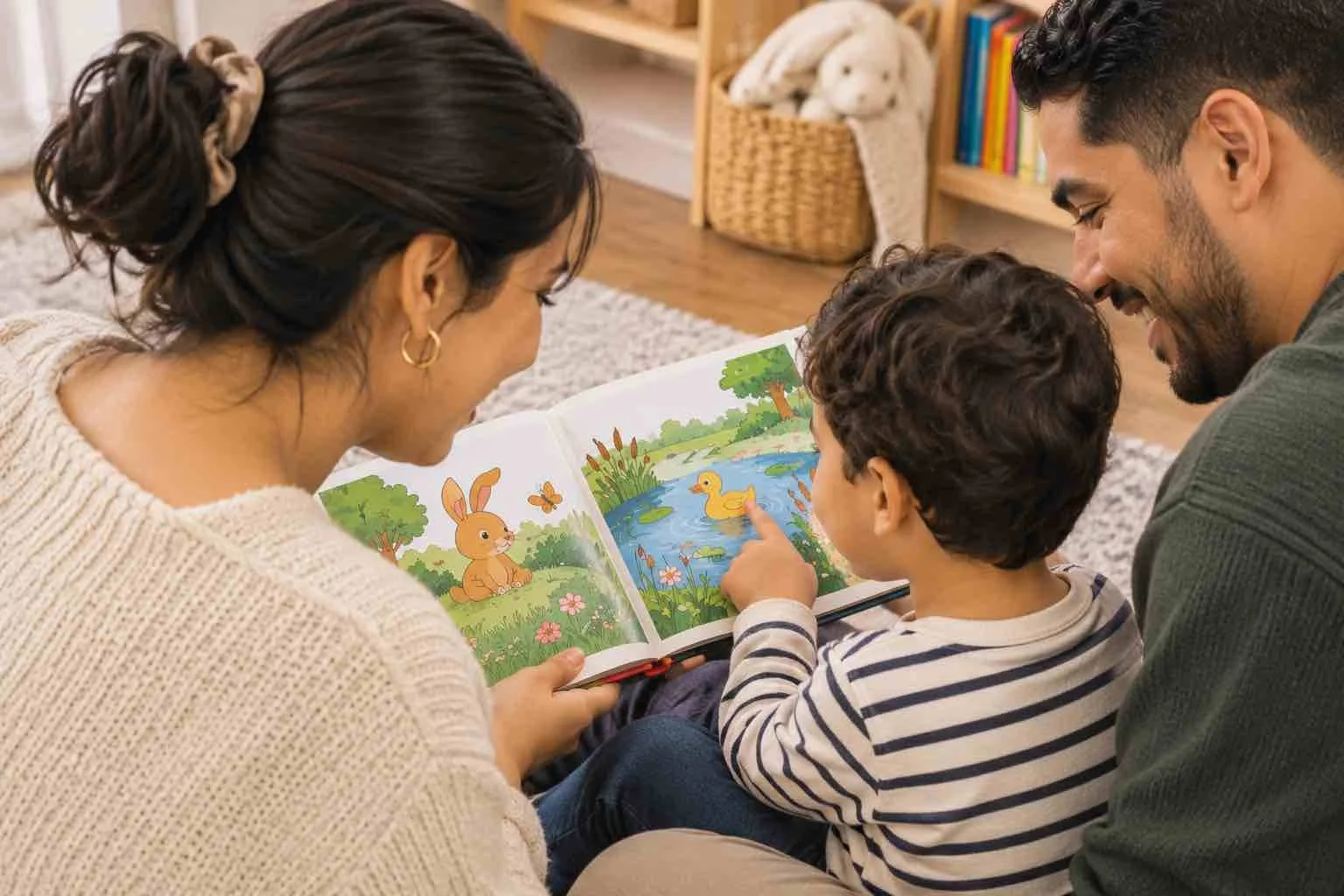
What to do: Sit together with a familiar picture book and ask simple questions like "Where is the dog?", "Can you find the red car?" or "What is the baby doing?" Let your child point, name things or simply look.
What you need: A picture book you already have.
Easy variation: Let your child choose what to find, and you do the pointing.
Pointing and talking about pictures can be part of ordinary shared reading. It does not need to become a quiz, so if your child just wants to turn pages, that works too.
2. Build and Knock Down Block Towers

What to do: Build a small tower together, then let your child knock it over and rebuild. Knocking it down is usually half the fun.
What you need: Large, age-appropriate blocks.
Easy variation: If your child is interested, loosely sort blocks by color or size. If not, just stack and topple.
Safety note: Stick with large blocks made for toddlers. Skip tiny building bricks and small pieces intended for older children.
3. Roll and Kick a Ball

What to do: Roll a ball back and forth, kick it toward a simple target, roll it through a doorway or chase it outside. There are no scores or goals here, just movement.
What you need: An age-appropriate ball that is not a choking hazard.
Easy variation: Sit on the floor facing each other with your legs apart and roll the ball slowly between you.
Safety note: Check that the ball is too large to fit in your child's mouth.
4. Scribble With Large Crayons
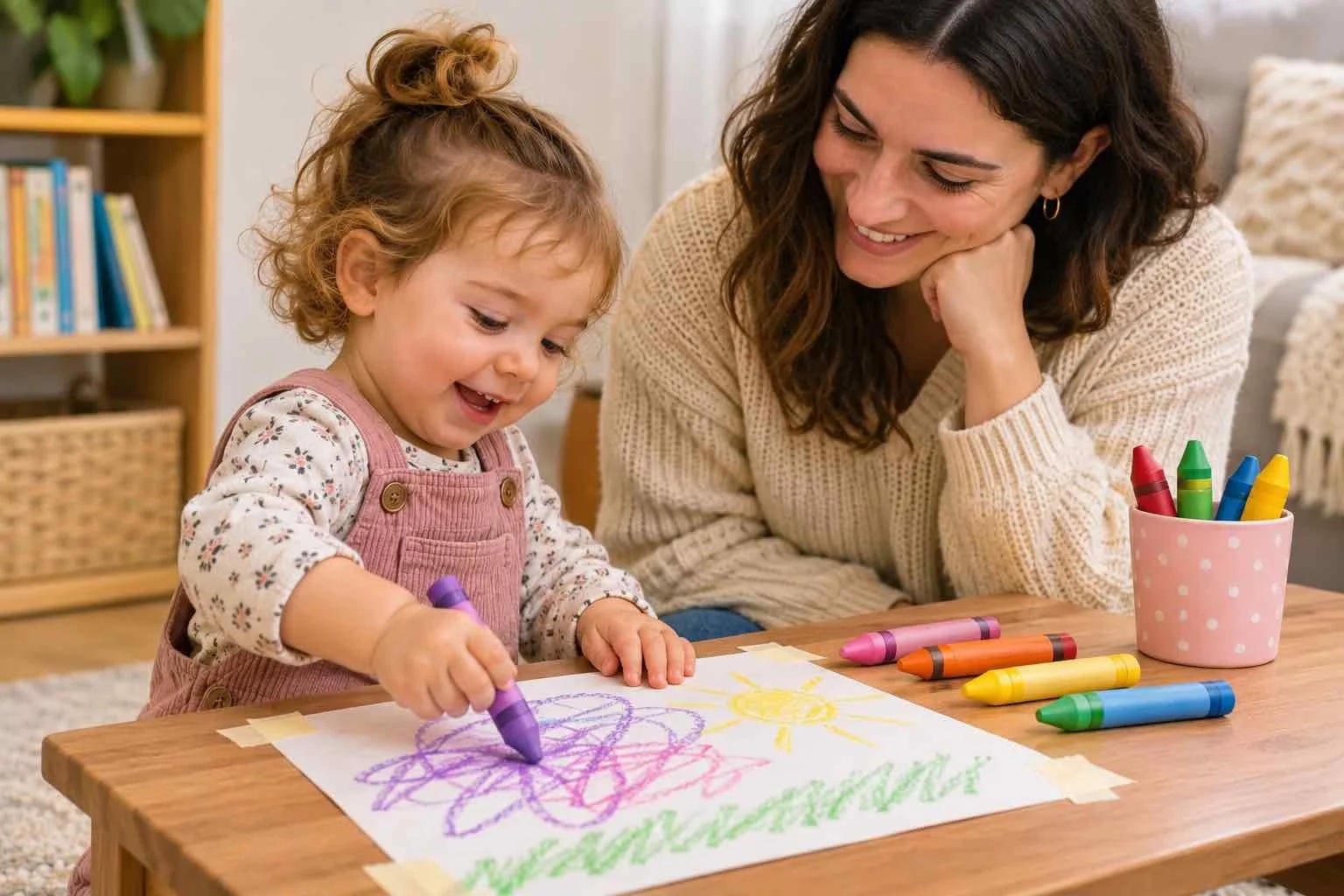
What to do: Offer crayons and paper and let your child make lines, dots, circles or whatever marks they like. Coloring inside the lines is not the point.
What you need: Large, age-appropriate crayons and plain paper.
Easy variation: Tape the paper to the table or floor so it stays still, or try a big sheet of paper instead of a small one.
Safety note: Stay close so crayons are not mouthed or used on walls, furniture or other surfaces. Choose art supplies labeled non-toxic and suitable for your child's age.
5. Sing Action Songs
What to do: Use familiar traditional action songs or make up your own. Ideas include body-part songs, clapping songs, stop-and-go movement songs and simple dancing. You can invent the words as you go, and your child can join in with sounds, gestures or movements.
What you need: Just your voice and some space.
Easy variation: Repeat one favorite action over and over, or slow it down.
6. Pretend to Cook or Serve Food
What to do: Pretend to stir a pot, put pretend food on a plate, serve a stuffed animal or sip from an empty cup.
What you need: A pot, a large spoon, a plate or a cup. A safe toy kitchen works too, but ordinary child-safe items are enough.
Easy variation: Narrate what you are doing, such as "Stirring, stirring, now it is ready," and let your child copy or change the story.
Safety note: Avoid small pretend-food pieces that could be a choking hazard.
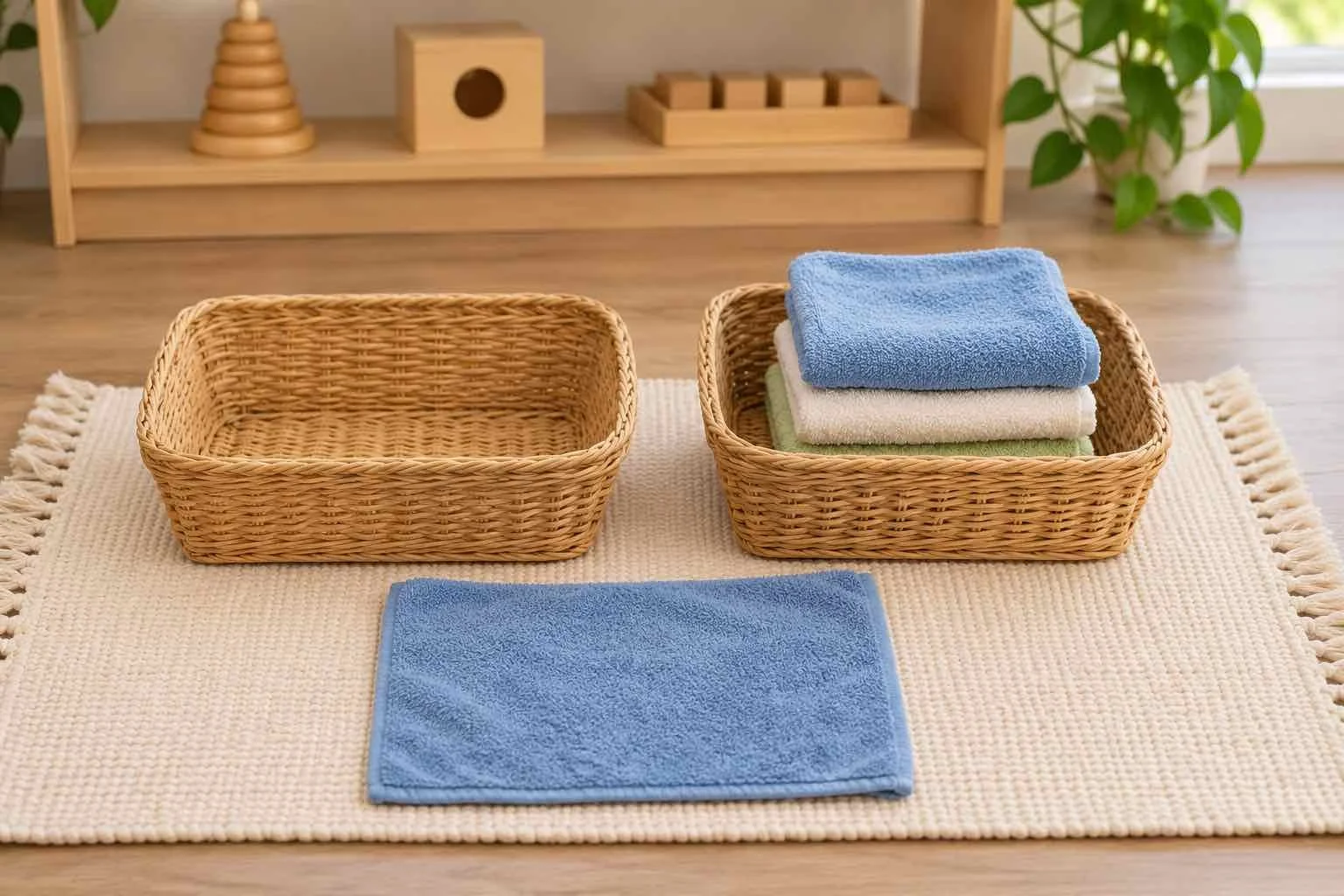
7. Put Laundry in a Basket
What to do: Give your child a simple real-life task, like placing socks in a basket, carrying a lightweight towel or moving clean washcloths from one basket to another.
What you need: A basket or two and some clean, soft laundry.
Easy variation: Put just two or three items in the basket so the task feels manageable.
This is participation rather than a chore expectation. Being included in real household tasks is also a gentle way to bring a Montessori-inspired approach into your day.
Safety note: Keep detergent, pods, bleach and any laundry chemicals completely out of reach.
8. Match Socks
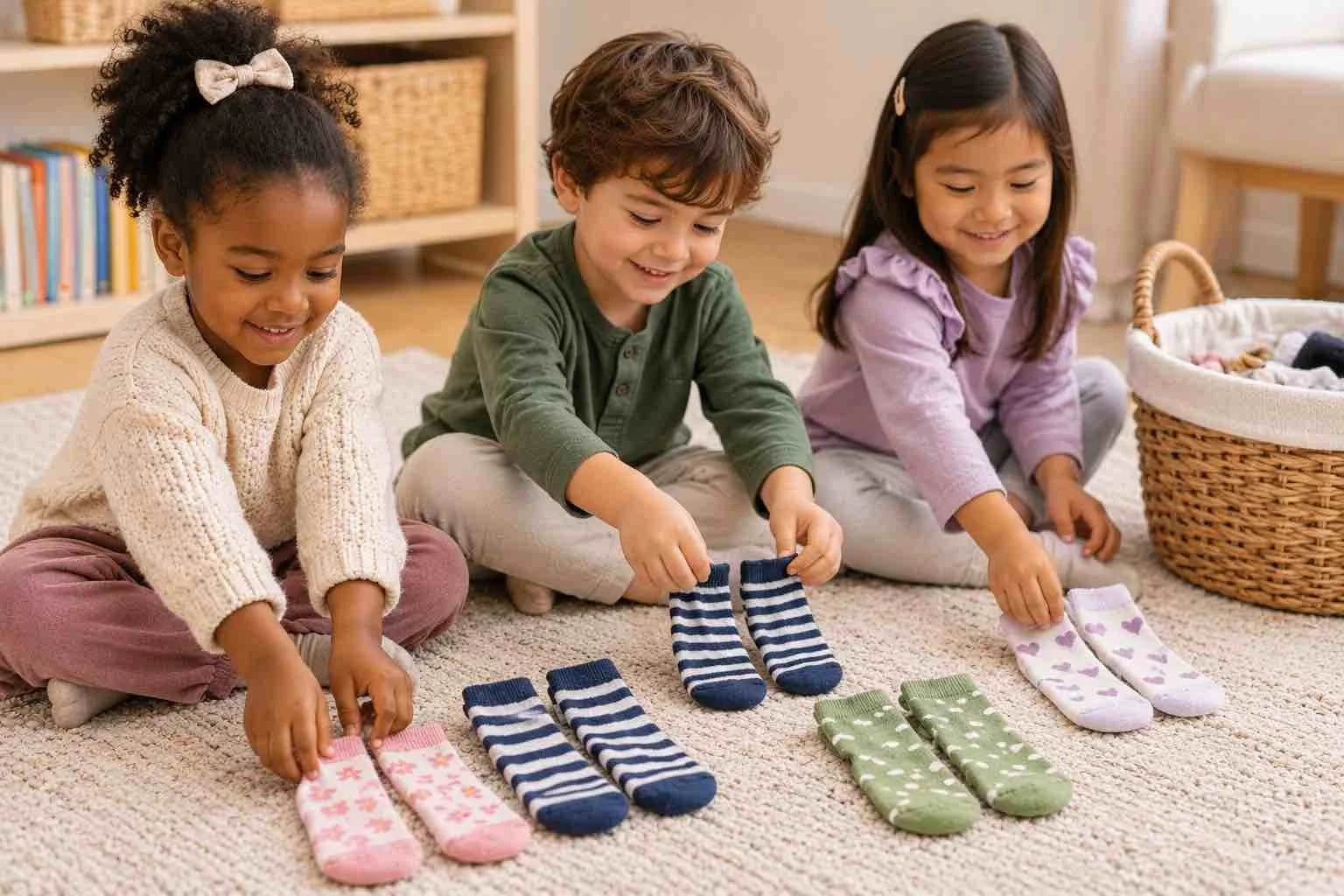
What to do: Lay several clearly different pairs of clean socks on the floor and casually match them up. Your child can find two that look alike, hand you a matching sock or just sort by rough color.
What you need: A handful of clean socks.
Easy variation: Start with only two or three pairs that look very different from each other.
Correctness is not the goal. If your child wants to wear a sock on their hand, that is a perfectly good way to play.
9. Make a Safe Texture Basket
What to do: Gather a few large household objects with different textures and let your child touch and compare them. Name the textures as you go if it feels natural, such as soft, bumpy or smooth.
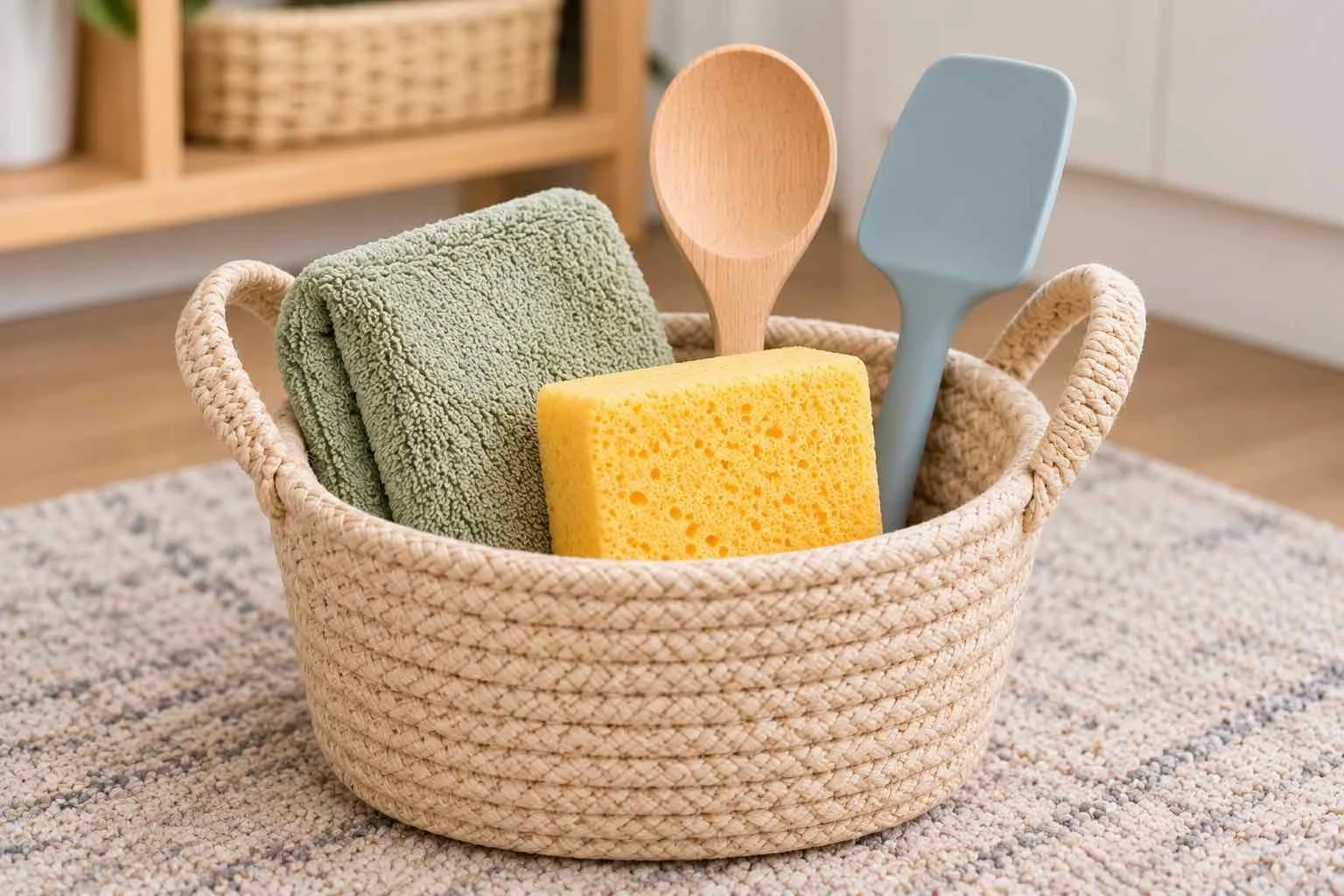
What you need: A basket and several large items, such as a soft washcloth, a silicone kitchen utensil, a wooden spoon, a large sponge, a piece of textured fabric or a soft brush designed for safe household use.
Easy variation: Start with just two or three items.
Safety note: Every item should be too large to present a choking hazard, clean, intact and appropriate for supervised handling. If your child still mouths objects frequently, choose materials specifically appropriate for that use. This is a safer alternative to small-parts sensory bins, so skip rice, beans, water beads and tiny sensory fillers.
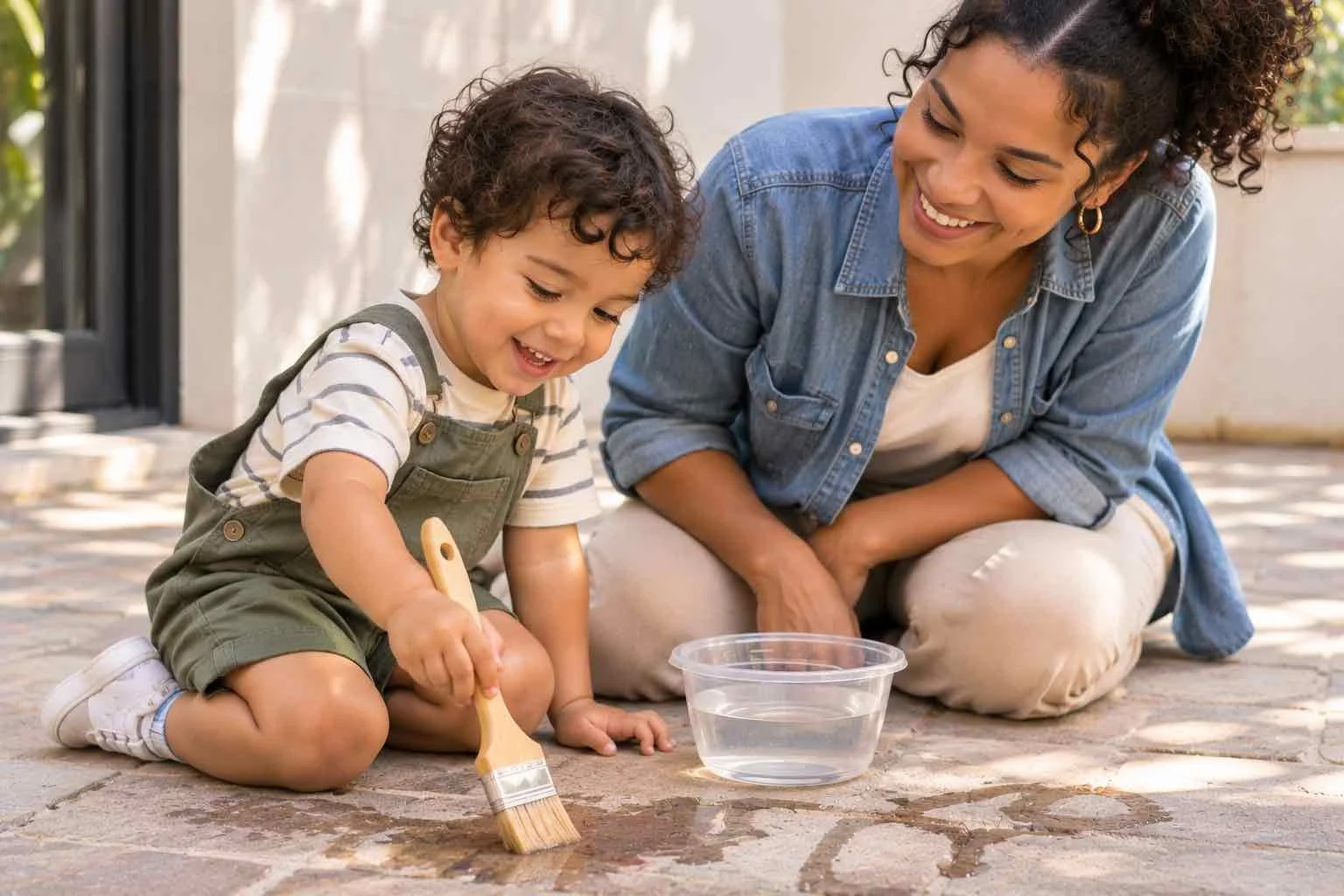
10. Water Painting Outdoors
What to do: Let your child "paint" with plain water on a patio, concrete surface or fence where that is allowed, then watch the water disappear as it dries.
What you need: A small container with a little plain water and a large paintbrush.
Easy variation: Use a damp sponge or a large paintbrush with a thick handle instead.
Safety note: Direct adult supervision is required around any water. Use only a small amount, and avoid slippery floors, including indoor ones.
11. Simple Shape Puzzle
What to do: Sit together with a puzzle and talk about what you see, such as the shape, the animal, the object or the color. Offer help freely.
What you need: An age-appropriate puzzle with large pieces.
Easy variation: Take out some pieces and leave just one or two to place.
Your child does not need to finish the puzzle independently. If it becomes frustrating, help out or put it away for another day.
12. Toy Animal Pretend Play
What to do: Make an animal sleep, feed it pretend food, move the animals into a box "house" or make simple animal sounds together.
What you need: Large toy animals or other large pretend-play figures, and a box.
Easy variation: Use just one or two animals and one simple idea, like bedtime.
Safety note: Avoid tiny figurines and loose accessories.
13. Follow-the-Leader Movement
What to do: Start with simple actions like clapping, stomping, raising your arms, walking slowly, turning around or sitting down. Then let your child lead if they are interested.
What you need: Open floor space.
Easy variation: Repeat one action several times before adding another.
Safety note: Keep it low-risk. Do not include jumping from furniture or climbing challenges.
14. Make a Simple Indoor Obstacle Path
What to do: Create a gentle path to walk along using a tape line on the floor, a flat cushion to step around, an open doorway to walk through or a soft object to walk around.
What you need: Painter's tape and a few soft household items.
Easy variation: Use only the tape line.
Safety note: Keep this extremely low-risk. Never use chairs, tables, couches or stacked objects as climbing equipment. Keep the pathway clear and stay close.
15. Sort Large Household Objects
What to do: Sort items loosely into simple groups, like same and different, light and dark or big and small where the difference is obvious. Talk about what you notice.
What you need: Large, safe items such as washcloths, large plastic cups, large blocks or large kitchen utensils.
Easy variation: Offer only two very different groups.
Safety note: Avoid tiny sorting objects.
16. Make Large Sponge Prints
What to do: Dip a large sponge into a small amount of washable, age-appropriate finger paint and press it onto a large sheet of paper. Let your child experiment with pressing, lifting and making overlapping shapes.
What you need: A large sponge, paper and washable non-toxic paint labeled for your child’s age.
Easy variation: Skip the paint and use a slightly damp sponge on a chalkboard or another surface that is appropriate for water play.
Safety note: Stay directly involved, use only art materials labeled for your child’s age, and stop if your child begins mouthing the sponge or paint.
17. Go on a Simple Outdoor Nature Walk
What to do: Take a slow walk and notice things together, such as a tree, a bird, a flower, a big leaf, a truck or clouds. The activity is observing, not gathering.
What you need: Comfortable shoes and a bit of time.
Easy variation: Stop and look at just one thing, like a puddle or a bug, and see how long your child stays interested.
Safety note: Do not ask your child to collect unknown plants, berries, mushrooms or small objects.
18. Help Set the Table
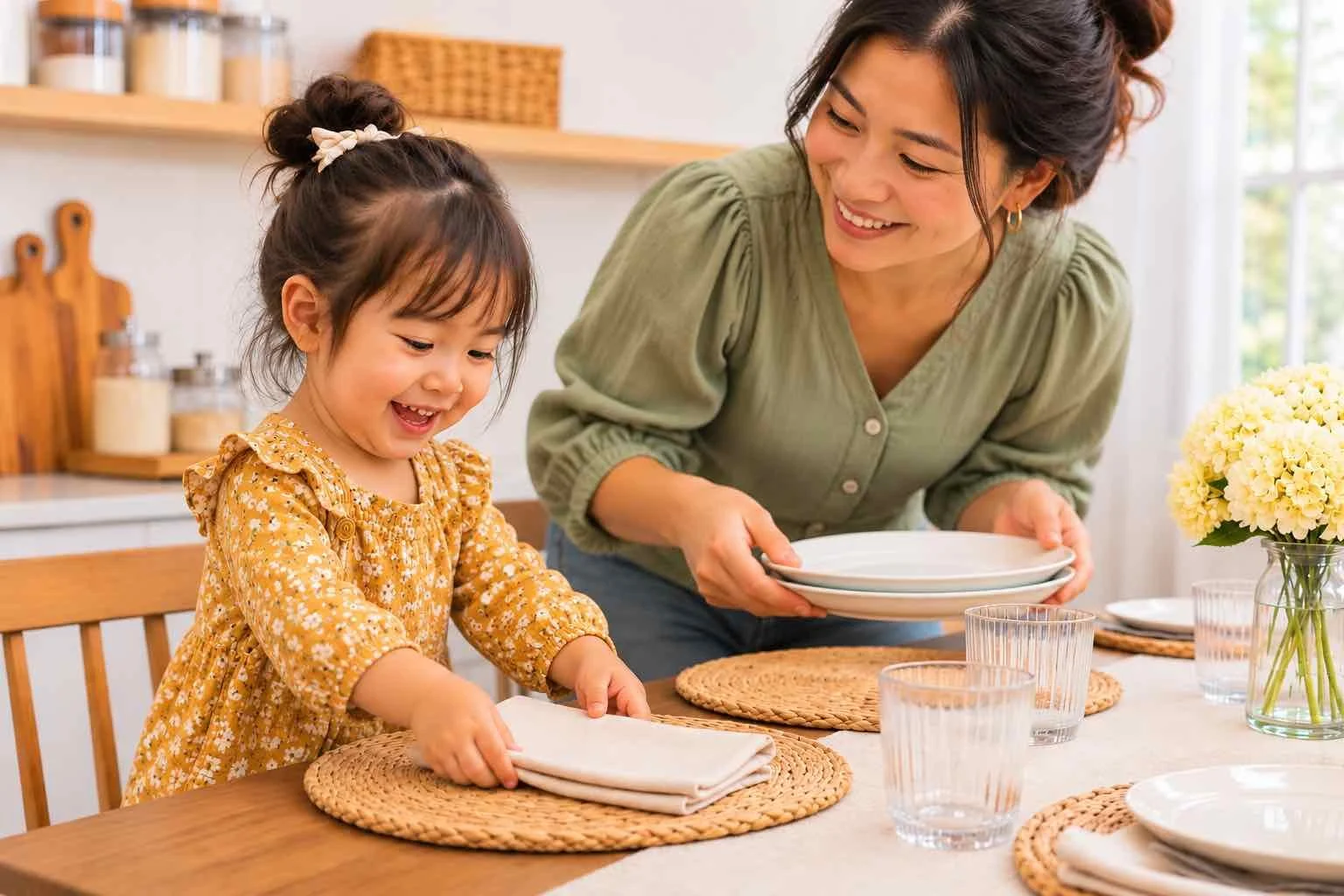
What to do: Let your child carry safe, lightweight items to the table, such as napkins, plastic cups or placemats. Everyday participation like this is a nice way to feel included in family routines.
What you need: Napkins, plastic cups or placemats.
Easy variation: Give your child just one item to carry at a time.
Safety note: Keep knives, hot food, glass and breakable dishes adult-controlled.
19. Dance and Freeze
What to do: Play music at a comfortable volume and dance together. Pause the music occasionally and freeze. Do not worry about complicated rules, since simply moving freely is enough.
What you need: Music and a clear floor.
Easy variation: Skip the freezing and just dance.
20. Montessori-Inspired Transfer Activity With Large Safe Objects
What to do: Set out two containers and let your child move large items from one container to the other. The Montessori-inspired element is the simple, purposeful setup rather than special materials.
What you need: Two containers and large items such as large washcloths, large soft balls specifically appropriate for children under 3 or large blocks.
Easy variation: Use a single item and one container, or hold the second container steady for your child.
Safety note: Do not use beans, rice, beads, pom-poms or coins. Everything should be too large to be a choking hazard.

Indoor Activities for 2 Year Olds
Many of the ideas above work well as indoor activities for 2 year olds. Books, blocks and scribbling work well at a table or on the floor, and pretend play with a pot, a plate and a stuffed animal can happen almost anywhere. Simple household participation, like putting laundry in a basket or setting napkins on the table, fits right into the day. Sorting washcloths or matching socks needs almost no setup.
Indoor activities do not have to be quiet or table-based. Action songs, dance and freeze and a tape line to walk along can give your child plenty of movement on days when going outside is not practical.
Outdoor Activities for 2 Year Olds
Outdoor activities for 2 year olds can be as simple as a short walk. Ball play, observing nature, water painting and follow-the-leader movement all work well outside. Bubbles can be fun too, as long as an adult handles the bubble solution and your child uses it appropriately.
If you visit a playground, follow the posted age recommendations on the equipment and stay close. Choose equipment that suits your child's current abilities and supervise them appropriately.
Sensory Activities for 2 Year Olds Without Small-Part Bins
Many popular sensory bin ideas online are not suitable for toddlers. Sensory activities for 2 year olds do not require rice, beans, water beads, beads, tiny pasta or small craft materials, and those materials can be a choking hazard for children under 3.
Safer ideas include:
Water painting with plain water, outdoors and supervised
Large textured fabrics, like a soft washcloth or a piece of corduroy
Large sponges
Finger paint specifically labeled for your child's age, with close supervision
Play dough only if it is age-appropriate according to the product labeling, with close supervision
Sand in an age-appropriate sandbox, under supervision
It is best to avoid homemade sensory substances that could pose ingestion or allergy risks. Because many toddlers still put things in their mouths, choose materials with that in mind.
Learning Activities for 2 Year Olds
Learning activities for 2 year olds do not have to look like lessons. At this age, learning often happens through ordinary interaction. Naming objects in books, matching socks, pretend play, simple puzzles, songs, sorting large items, talking during walks and helping with routines all offer chances to explore and practice.
There is no need for worksheets or flashcard drills, and there is no expectation that a 2-year-old know letters, numbers or colors on demand. Playing together and talking along the way is plenty.
Montessori Activities for 2 Year Olds
Montessori activities for 2 year olds at home often center on real-life participation, simple purposeful movement, accessible materials and one clear activity at a time. From this list, the laundry basket task, table setting, matching socks and the large-object transfer activity are all Montessori-inspired.
These are simple ways to bring that spirit into everyday life and they do not represent a complete Montessori education. If you are interested in making your child's space more accessible, you may also like our guide to a Montessori bedroom.
How to Adapt an Activity When Your Child Is Not Interested
Not every activity will appeal on every day, and that is normal. Lack of interest in one activity is not, by itself, a developmental concern. If your child is not interested, you can:
Stop rather than forcing completion
Simplify the setup
Try again another day
Follow your child's interest
Shorten the activity
Join in alongside them
Let them use the materials differently, as long as it remains safe
Activities You Do Not Need to Buy Special Supplies For
Many of the best activities for this age use things you already have. Reading, matching socks, carrying a laundry basket, setting out napkins, taking an outdoor walk, dancing, sorting washcloths, pretend play with safe household objects and water painting do not require special equipment.
Special activity kits are optional. Your child does not need them to have a full, playful day.
Safety Tips for Activities With 2-Year-Olds
Supervise directly where appropriate, especially around water, art materials and food.
Avoid small parts and choking hazards. The U.S. Consumer Product Safety Commission advises keeping small balls and toys with small parts away from children younger than 3.
Follow toy age labels.
Keep batteries and magnets inaccessible.
Skip water beads entirely.
Lock up or keep out of reach cleaning products and medications.
Be cautious with water, and never leave a child unsupervised around it.
Avoid improvised climbing setups made from furniture or stacked objects.
Use washable, non-toxic art materials labeled for your child's age.
Consider allergies and mouthing behavior when choosing materials.
For more child-safety guidance, HealthyChildren.org from the American Academy of Pediatrics is a helpful resource.
A Note About Developmental Milestones
Development varies from child to child. The CDC's milestone checklists describe skills that most children, about 75% or more, can do by a given age. They are not diagnostic tests.
At around age 2, many children point to things in books when asked, combine at least two words, use gestures, hold something in one hand while using the other, try switches, knobs or buttons on toys, use more than one toy together in pretend play, kick a ball, run, walk up some stairs with or without help and eat with a spoon. This article is not a developmental checklist, and children do not all reach skills at exactly the same time. If you have concerns about your child’s development, discuss them with their doctor or another appropriate professional.
If you are concerned that your child has lost skills, is not meeting milestones or you have other developmental concerns, talk with your child's doctor or an appropriate professional. The CDC's "Learn the Signs. Act Early." program is a good place to find more information.
Frequently Asked Questions
What activities are good for a 2-year-old?
Good activities include books, movement, pretend play, art, blocks, simple puzzles, safe sensory exploration and everyday family tasks. Choose what fits your child's interests and current abilities.
How long should an activity last for a 2-year-old?
There is no set number. Interest varies, so some activities may last only briefly while others hold attention longer. Follow your child's engagement.
What can I teach my 2-year-old at home?
You do not need to approach it as teaching. Talk with your child during conversation, name everyday objects, follow simple routines, pretend together, invite them to help, move, read books and explore. These ordinary moments offer plenty of chances to practice.
Are sensory bins safe for 2-year-olds?
Many popular sensory bins contain small items that are unsuitable for children under 3. Large-item sensory experiences, like a texture basket of oversized household objects or water painting outdoors, are safer alternatives.
What Montessori activities can a 2-year-old do?
Simple household participation, such as putting laundry in a basket or setting out napkins, and large-object transfer activities are good starting points. Keep safety and age appropriateness central.
What if my 2-year-old does not want to do an activity?
That is fine. You can stop and try something else, simplify it or come back another day.
Simple Activities Are Often Enough at Age Two
Two-year-olds do not need elaborate lessons or expensive activity setups. Everyday play, conversation, movement, books and simple participation in family routines can provide plenty of opportunities to explore and practice new skills.
Follow your child's interest, repeat the favorites and keep materials safe and age-appropriate. Development varies, and play should never feel like a test.
If you would like more practical family ideas, explore the rest of our Kids & Family guides here on Lulonta.
