

A Montessori bedroom does not need to be filled with expensive wooden furniture or styled like a Montessori classroom. At home, the idea is usually much simpler: an orderly room where the belongings a child uses every day are easy to see, reach and put away.
This guide walks through practical ways to build a Montessori-inspired bedroom with accessible storage, simple room zones and child-height organization, with safety coming first throughout. You can adapt most of these ideas with furniture you already own.
What Is a Montessori Bedroom?
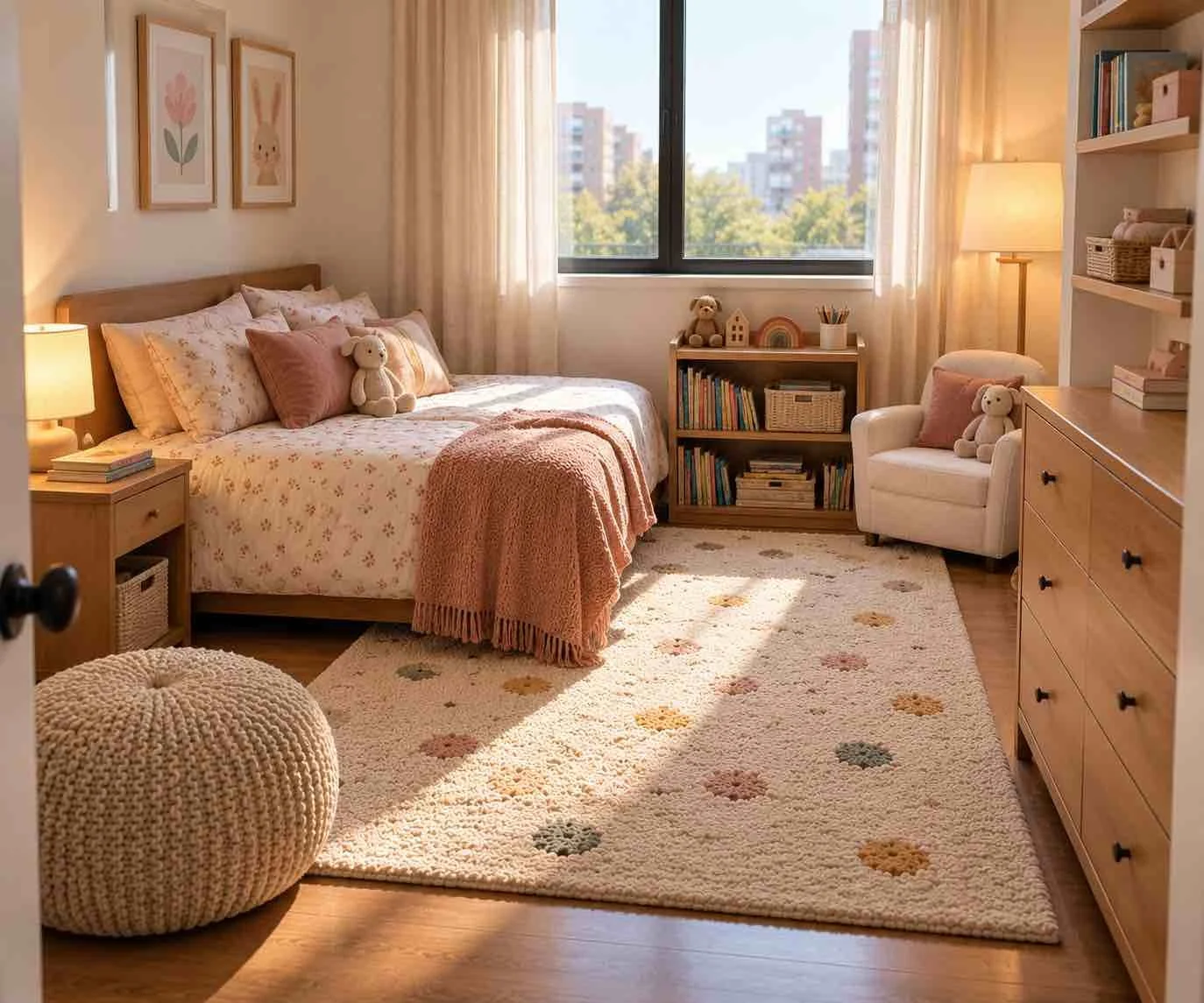
A Montessori-inspired bedroom is a child’s room arranged so that appropriate everyday parts of it are easier for the child to see, reach and use safely. The American Montessori Society describes Montessori environments as simplified and uncluttered, with accessible shelves, child-sized or child-accessible furniture, and materials placed where children can see and reach them.
In a bedroom, that might include:
Simple, defined areas for sleeping, dressing, reading and play
A few reachable clothing options
Low book or toy storage
Self-care items a child can reach, where age-appropriate
A limited number of choices visible at once, rather than everything displayed
A layout that can change as the child grows
There is no official bedroom template every family must copy. What works depends on your child’s age, the size of the room, your family routine, rental restrictions, the furniture you already have and your safety needs. A room that works for a two-year-old in a small apartment will look different from one for a five-year-old with their own large room, and both can be Montessori-inspired.
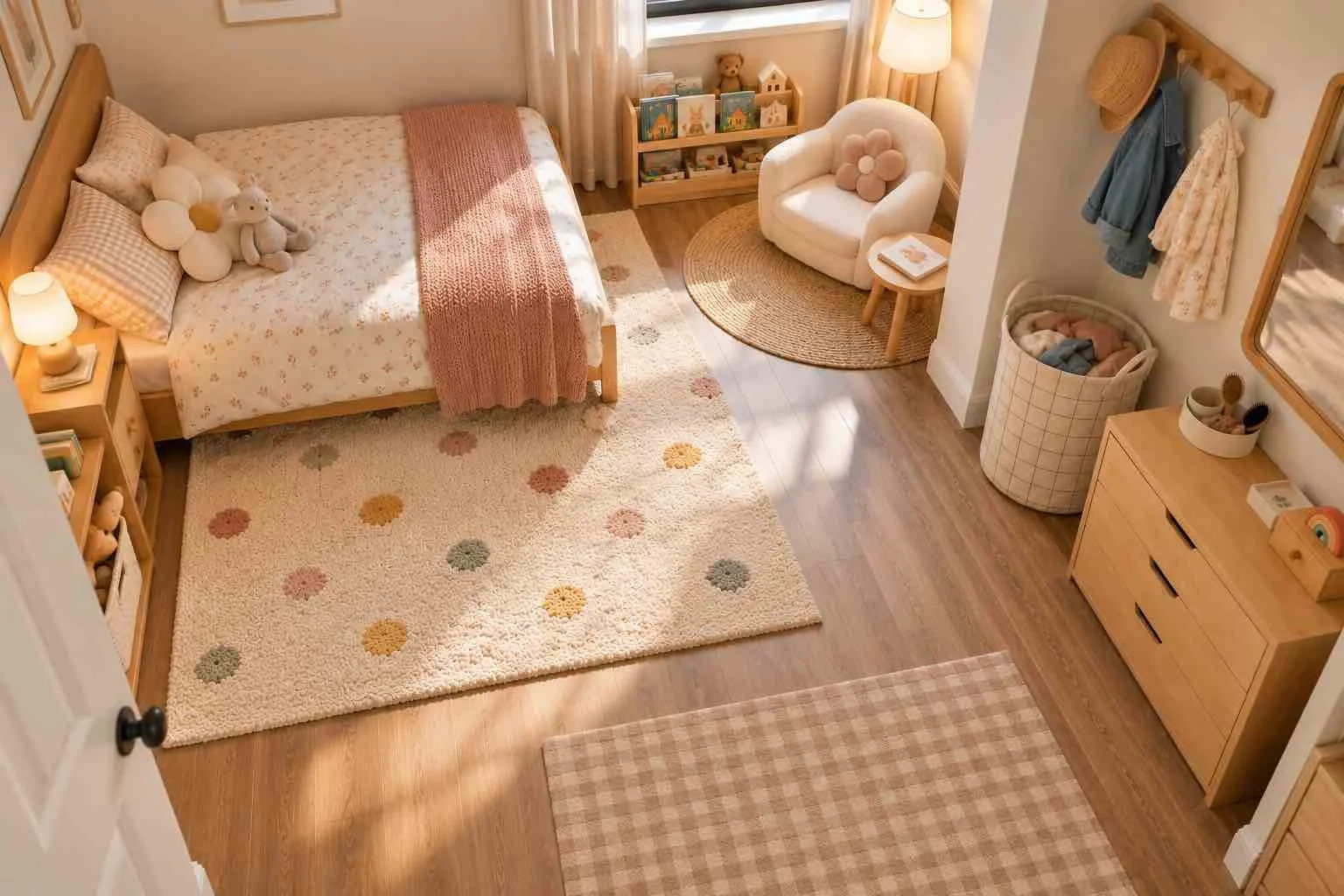
12 Montessori Bedroom Ideas You Can Adapt at Home
1. Start With the Child’s Daily Routine
Before moving any furniture, think through the child’s day in the room:
What do they do after waking up?
Where do pajamas go?
Where do they choose clothes?
Where do they read?
Which items do they use every day?
What currently requires an adult only because it is out of reach?
Accessibility works best when it solves a real everyday need. If a child asks for the same book or the same shirt every morning, that is a good candidate for a reachable spot. Not everything should be lowered, though. Some items, such as medications, cleaning products, scissors and anything fragile or hazardous, should stay adult-controlled.
2. Keep the Room Visually Simple
Fewer items on display can make a room easier to understand and easier to tidy. Aim for clear surfaces, defined zones and a modest amount of decorative clutter.
Simple does not mean empty. A child’s bedroom can still be colorful, personal, cozy and playful. Minimalism is a style choice, not a parenting rule, and you do not need to strip the room down to look the part. The goal is a space where the things your child uses are not buried under things they do not.
3. Create a Reachable Clothing Area
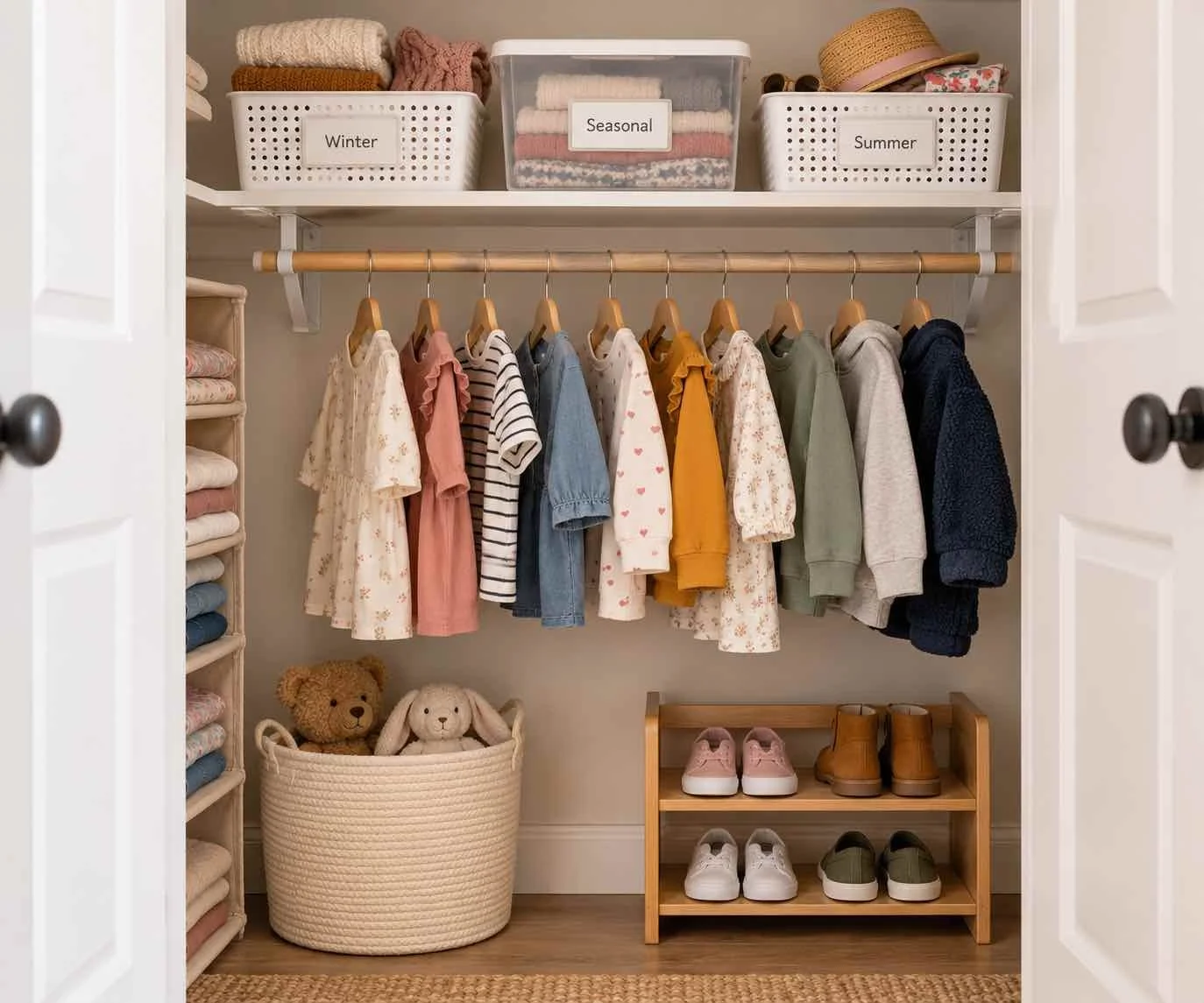
Making clothing reachable can make everyday choices more accessible. A few approaches:
Use the lower section of an existing closet
Keep a few everyday outfits within reach
Assign one low drawer to current favorites
Install hooks at a suitable height for a jacket or bag
Offering a small selection usually works better than the entire wardrobe. Seasonal clothing, special-occasion outfits and backups can live elsewhere or higher up. Overloaded racks and stuffed drawers are hard for anyone to use, so less is practical here too.
Any dresser, wardrobe or shelving a child may open, lean on or climb must be properly secured. See the safety section below.
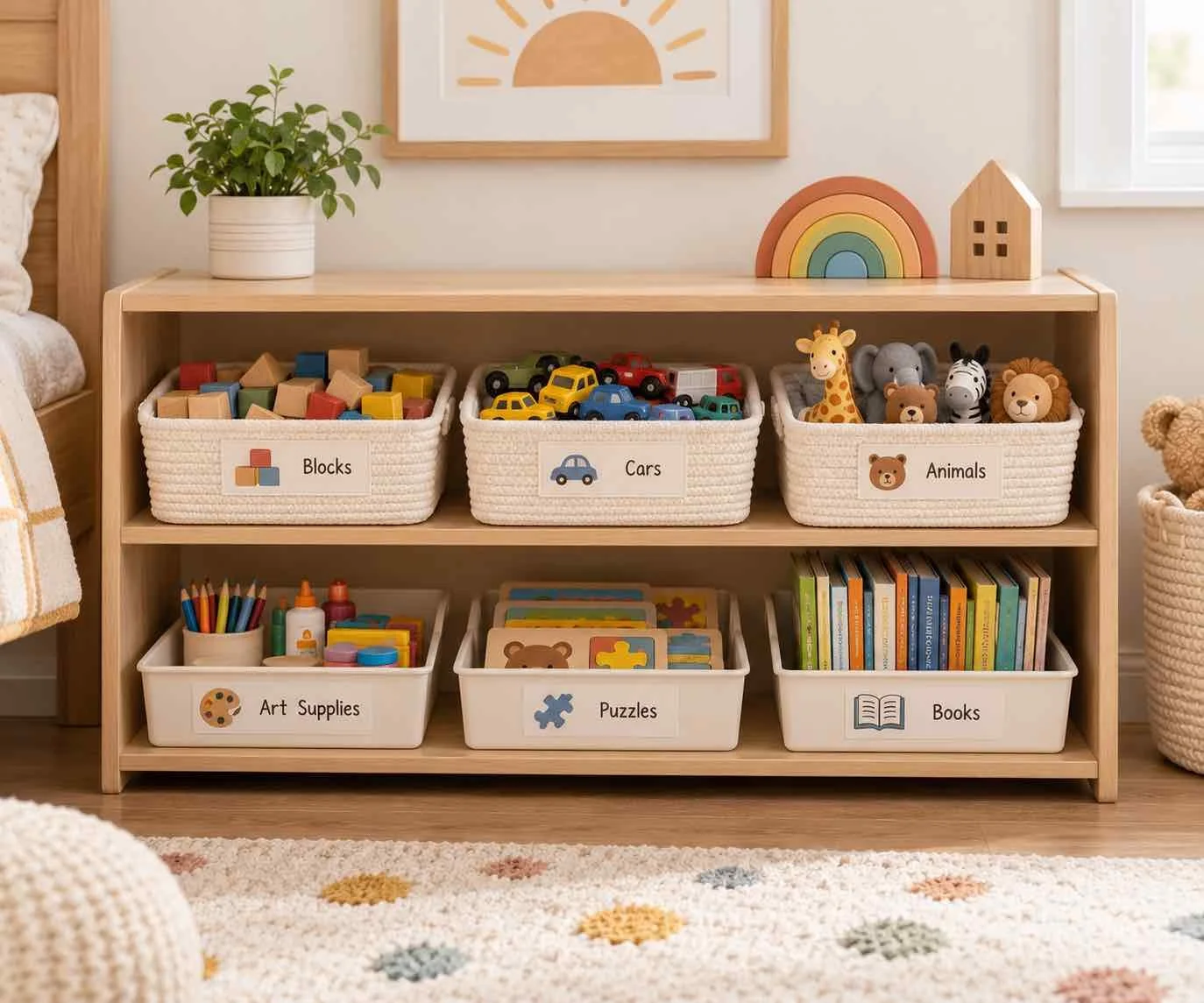
4. Use Low, Accessible Storage for Selected Items
Low shelves can hold books, toys, simple activities and soft items. In Montessori-style organization, a limited number of choices is usually kept visible, rather than every toy the child owns.
You do not need to display all the toys. Extras can be stored elsewhere and swapped in from time to time if that suits your family. A shelf with a handful of options is easier for a child to browse and easier to restore than one that is crammed full. Low shelving, like all furniture, needs to be stable and secured appropriately.
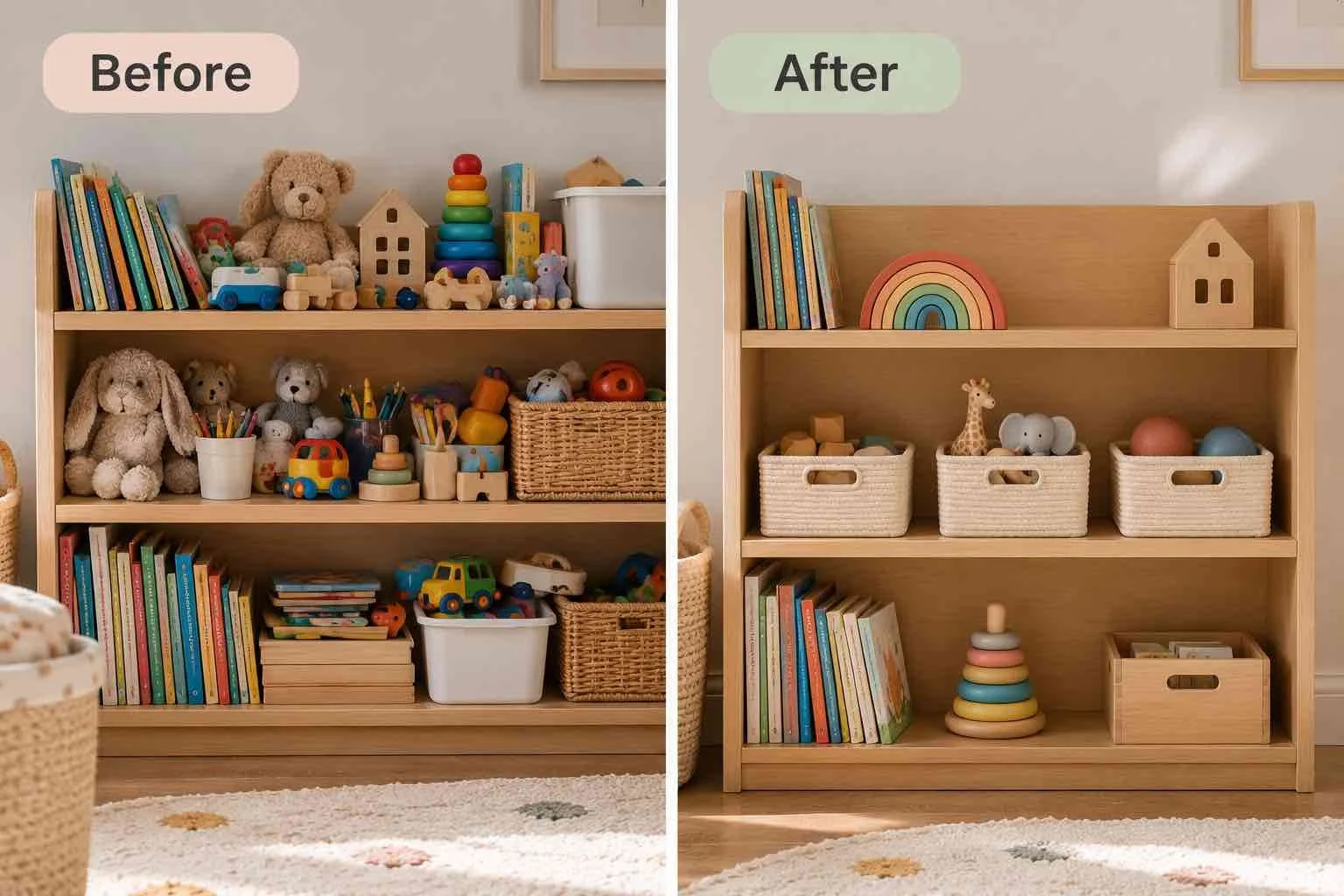
5. Give Books Their Own Reachable Zone
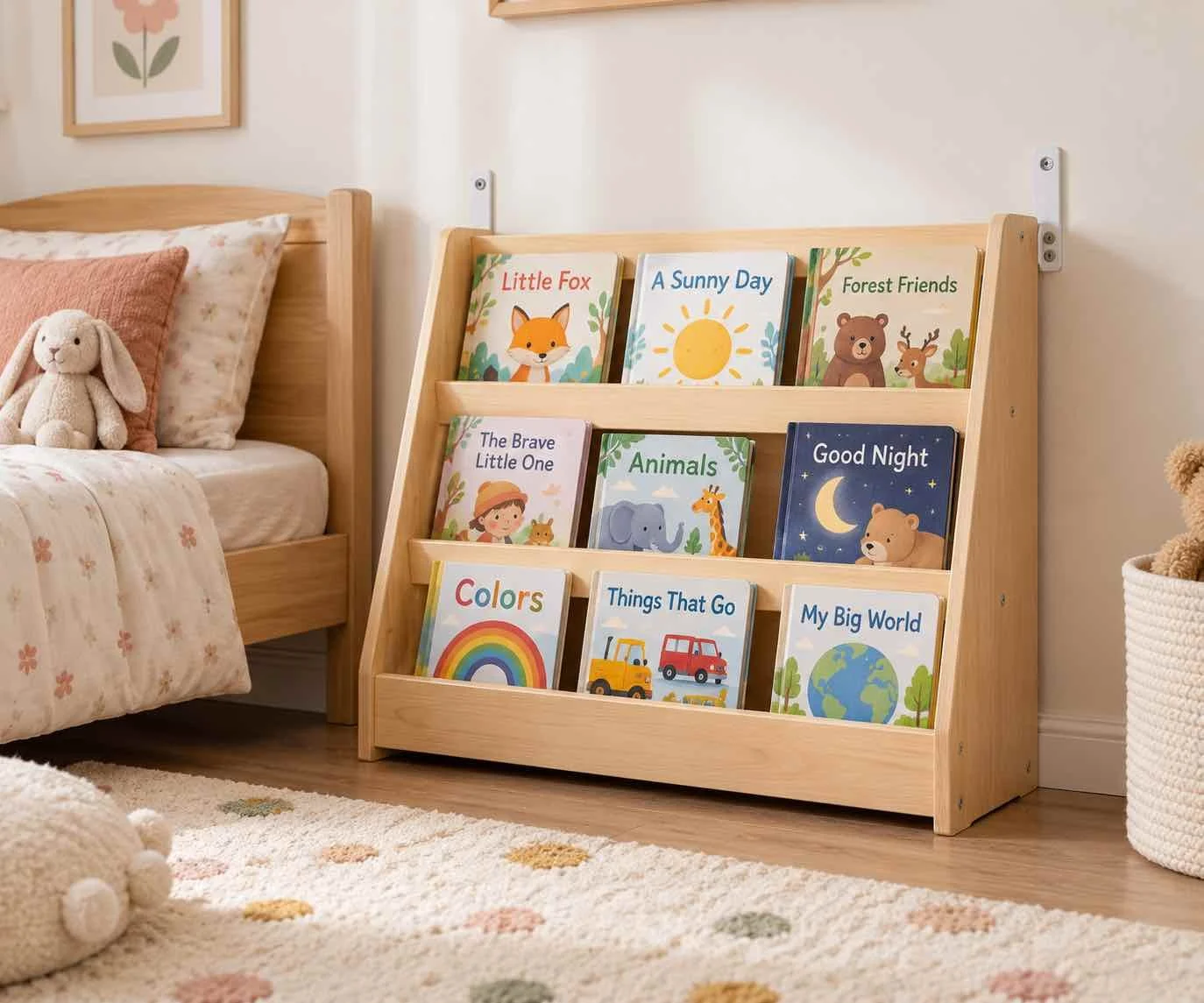
A dedicated spot for books helps them stay findable. Options include:
A low bookshelf
A small basket
A face-out display, where covers are visible
An existing low shelf
A manageable selection can make books easier to browse and easier to return. Rotate them occasionally if you like, and keep the rest in a closet or higher shelf.
6. Create a Defined Dressing Area
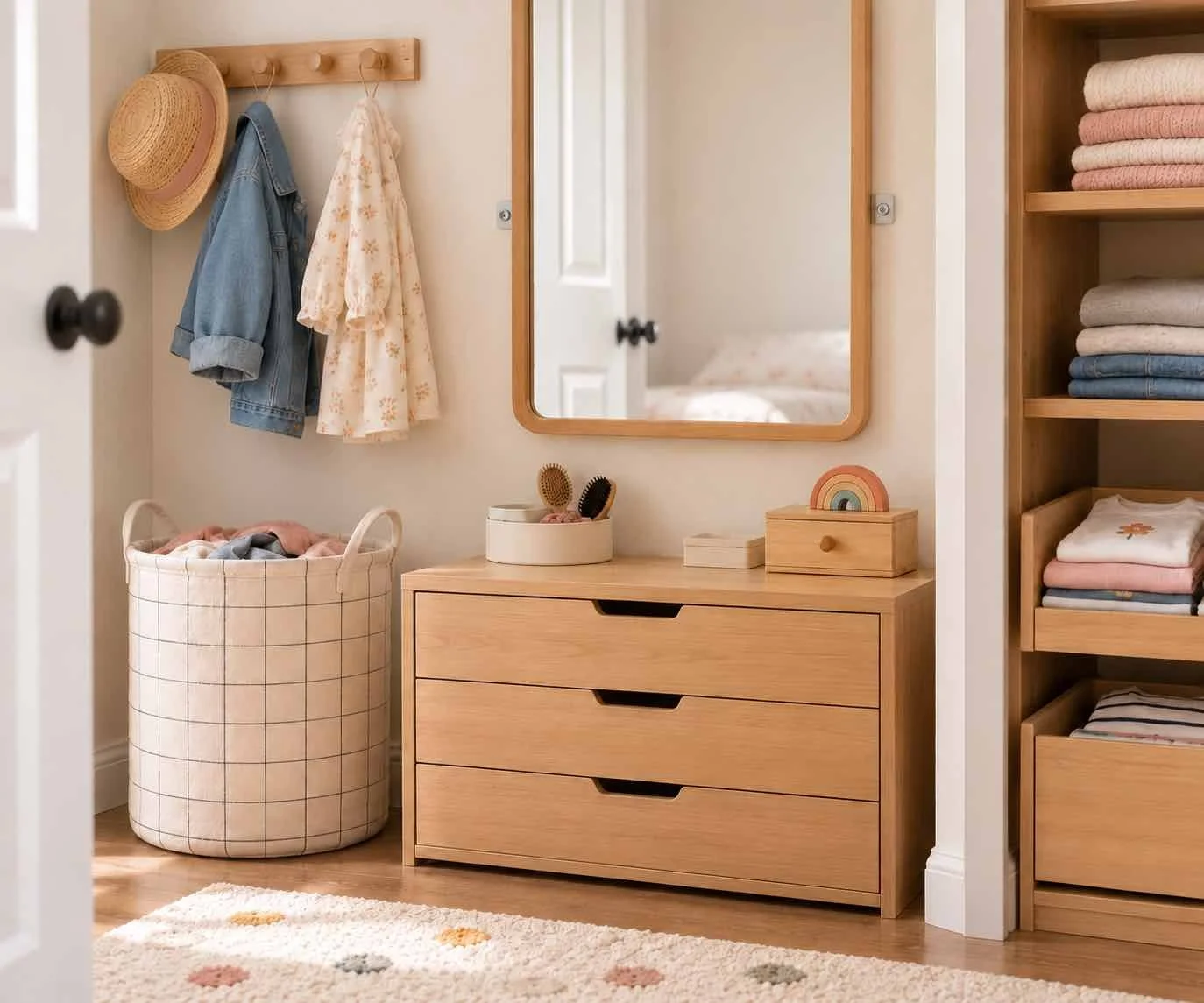
A dressing area can be very simple: the clothing area, a laundry basket and perhaps a mirror. A small stool may help for an age-appropriate child, but only if it is stable and suits how your child moves.
The point is to make the routine understandable: clothes here, dirty clothes there. If you add a mirror, make sure it is securely installed and appropriate for the space. Avoid freestanding mirrors that could tip over.
7. Give Toys and Activities Clear Homes
Where practical, give each category its own basket or tray, such as blocks in one, puzzles in another, and cars in a third. Deep mixed toy bins can make it harder to see what is inside, so broader categories or shallower storage may be easier for a child to browse and put back.
Aim for returning items to the same general location, not perfect sorting. A workable system you will actually maintain beats a complicated one.
8. Create a Comfortable Reading Area
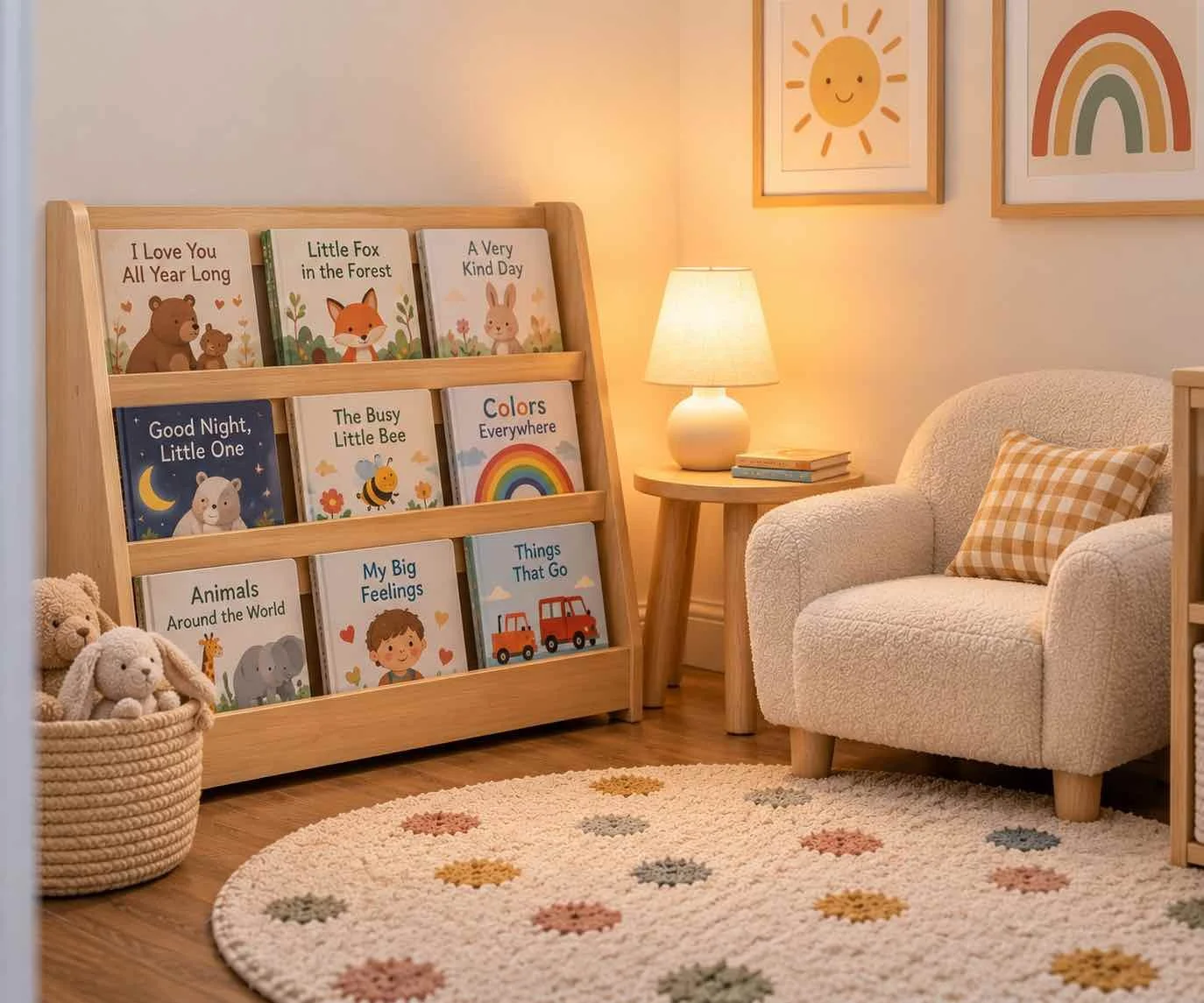
A reading spot can be as simple as a small rug, a chair or an age-appropriate floor cushion, with books nearby and soft lighting. It can double as a quiet-play corner.
Keep this age distinction in mind: loose cushions, pillows and soft bedding do not belong in an infant sleep area. A cozy reading corner is for a child who is awake and supervised as appropriate, and it should be kept separate from where an infant sleeps.
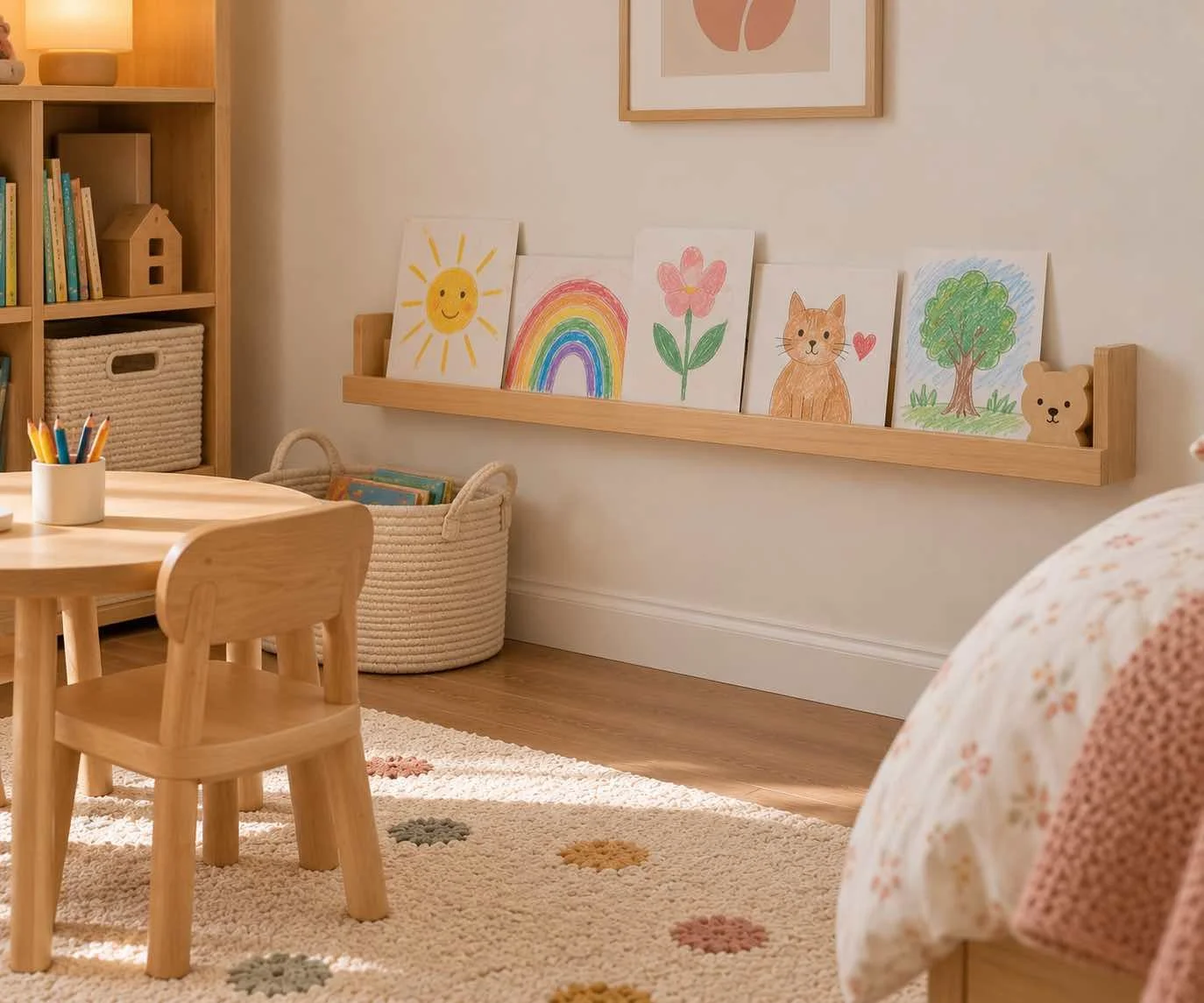
9. Use Child-Height Artwork Carefully
Artwork at a child’s eye level can make the room feel like theirs. Ideas include family photos, simple illustrations and the child’s own drawings.
Choose lightweight, secure options. Avoid heavy frames, especially above a bed, and avoid glass or heavy unsecured items within reach of young children. Use appropriate hanging methods and follow the product’s installation guidance. Simple paper art in lightweight frames or on a display strip is often the most practical choice.
10. Keep the Sleep Area Simple
For toddlers and older children, a simple sleep area usually means clear pathways, limited items around the bed and uncomplicated furniture placement. The easier it is to move around the room safely, the better, including in the dark.
Infant safe-sleep note: For infants, follow current American Academy of Pediatrics (AAP) safe-sleep recommendations rather than Montessori bedroom trends. Do not use a floor bed for an infant. See the floor bed section below.
11. Make Cleanup Possible Without Making It Complicated
Storage should be understandable at a glance. A few simple examples:
Books return to one shelf
Dirty clothes go in one basket
Toys return to broad categories
Shoes have one place
Very young children are not expected to maintain adult-level organization, and that is fine. Think of it as giving them opportunities to participate in caring for their belongings, with help from you as needed.
12. Let the Room Change as the Child Grows
What works at 18 months will not necessarily work at 3 years, 5 years or school age. Development, mobility and family routines vary, so reassess what is reachable and appropriate as the child grows. Shelves may be adjusted, toys rotated out, a reading corner turned into a homework spot. A flexible setup can be easier to adapt than one designed around a single age or stage.
Do You Need a Montessori Floor Bed?
No. A floor bed is strongly associated with Montessori-inspired bedrooms online, but it is not required for a room to use Montessori principles. Plenty of Montessori-inspired rooms use a standard bed.
For an age-appropriate older child, a low sleeping surface may give the child easier physical access to the bed. It is one possible arrangement, not the goal.
For infants, do not use a floor mattress. Current AAP safe-sleep guidance for infants calls for a firm, flat sleep surface in a CPSC-compliant crib, bassinet, portable crib or play yard. A floor mattress should not be used as a substitute for an approved infant sleep surface. Keep pillows, blankets, stuffed toys, bumpers and loungers out of the infant sleep space.
If your toddler or older child is transitioning out of a crib, talk with your pediatrician and follow product-safety guidance appropriate to your situation. Things to consider include:
Your child’s age and readiness
Overall room safety
Whether the child can leave the bed on their own, and what they can reach if they do
Stairs
Windows
Cords
Furniture
Doors and room exits
Manufacturer guidance
This is not a floor-bed tutorial, and no single setup is right for every child.
Montessori Bedroom Safety Checklist
Giving a child more access is only worthwhile if the room is safe first. Use this as a starting point and follow applicable manufacturer, CPSC and pediatric guidance for your situation. It is not exhaustive childproofing advice.
Furniture is secured appropriately. Dressers, bookcases, shelving, wardrobes and TVs can tip over. Follow the manufacturer’s installation instructions and CPSC guidance for anchoring.
Heavy furniture is stable. Avoid placing items on top that might tempt a child to climb.
Window-covering cords are inaccessible.
Windows are addressed for fall risk. Keep climbable furniture away from windows and follow CPSC guidance for appropriate window guards or opening-limiting devices, while preserving an emergency escape route where required.
Outlets are considered.
Breakables are out of reach.
Nothing heavy hangs above the bed.
Pathways are clear.
The sleep setup is age-appropriate.
Cleaning products and medications are inaccessible.
Choking hazards are considered for your child’s age.
The room exit remains usable.
Smoke and carbon monoxide alarms are maintained according to applicable guidance.
Remember that independence-focused design should never mean placing unsafe objects within reach.
Montessori Bedroom Ideas for Small Rooms
A Montessori-inspired room does not require a large bedroom, a separate playroom or custom furniture. A Montessori-inspired setup can work in a small bedroom too, especially when the room focuses on a limited selection of accessible items and clear, usable zones.
Try:
One low shelf instead of several.
Existing closet space for the clothing area.
Only current-use items visible, with extras stored elsewhere.
A combined reading and quiet-play zone.
Avoiding oversized specialty furniture.
Protecting open floor space, which is useful for play and for moving around safely.
Using wall space carefully, without creating climbing hazards. Lightweight, securely hung items work better than shelves a child can scale.
Montessori Bedroom Ideas for Renters
Many Montessori-inspired changes are non-structural, which makes them well-suited to rentals:
Use the furniture you already have
Move everyday items to lower drawers
Use baskets for toys and books
Rearrange the room into clear zones without permanent alterations
Use removable decor only where the lease and product guidance allow
Furniture anchoring still matters in a rental. Do not skip anti-tip anchoring because you cannot make holes, and do not assume adhesive alternatives are a sufficient substitute. If anchoring requires wall fasteners, talk to your landlord or property manager about it. Safety comes first.
For more ideas on making a rental work, see our guide to renter-friendly apartment ideas.
Montessori Bedroom Without Buying New Furniture
Many Montessori-inspired changes are about placement rather than products. You can make a meaningful difference with what you have:
Move everyday clothes into lower existing drawers
Assign one drawer to accessible clothing
Place a few books on an existing low shelf
Reduce how many toys are visible at one time
Use baskets you already own
Move unsafe or adult-managed items higher up
Rearrange the room into clear zones
Display your child’s own artwork
Remove unnecessary furniture instead of adding more
What to Avoid in a Montessori-Inspired Bedroom
A few common pitfalls can undermine either usability or safety:
Buying everything labeled “Montessori.” The label does not make an item safer or more useful, and you may not need it.
Overcrowding low shelves. Too much on a shelf makes it hard to browse and hard to tidy.
Placing unsafe objects within reach in the name of independence. Accessibility should be age-appropriate and safe.
Unsecured furniture. Tip-over is a serious hazard.
Heavy wall decor above sleep areas.
Too many choices. A long list of options can be overwhelming and makes cleanup harder.
Copying infant floor-bed trends without considering safe-sleep guidance.
Complicated organization systems. If the system is hard for you to keep up, it will be hard for a child too.
A room that looks perfect but is hard to use. A usable room matters more than a photogenic one.
Montessori-Inspired Bedroom vs. Montessori Classroom
A home bedroom is not a classroom. You do not need to reproduce full sets of classroom materials, shelves of Montessori works or classroom routines. Instead, borrow practical principles such as accessibility, simplicity, order and age-appropriate participation. A Montessori-inspired bedroom is a way of arranging a family space, and it does not replace Montessori education.
Frequently Asked Questions
What should be in a Montessori bedroom?
Think in principles rather than products: a safe, age-appropriate sleep area, reachable everyday clothing, a small selection of books and toys on low storage, a simple reading or play spot, and clear places for belongings to return to. Your existing furniture can often do the job.
Does a Montessori bedroom need a floor bed?
No. A floor bed is one possible arrangement for an age-appropriate older child, but it is not required. Many Montessori-inspired bedrooms use a standard bed or a low bed, and the room’s principles of accessibility, order and simplicity matter more.
Are Montessori floor beds safe for babies?
For infants, follow AAP safe-sleep guidance, which recommends a firm, flat sleep surface in an approved crib, bassinet, portable crib or play yard. A floor mattress should not be presented as a substitute for an approved infant sleep surface. Talk to your pediatrician with any questions about your child’s sleep setup.
How do I make a small bedroom Montessori-inspired?
Focus on a limited, accessible selection of items, simple zones, low storage and less visible clutter, using the furniture you already have. One low shelf and a reachable clothing drawer can go a long way.
Can I make a Montessori bedroom in a rental?
Yes. Many organizational changes are non-structural, such as rearranging drawers, using baskets and creating zones. Safety requirements like securing furniture still need to be addressed appropriately, so speak with your landlord or property manager if anchoring requires wall fasteners.
What age is a Montessori bedroom for?
There is no single universal age. Adapt the environment to your child’s current mobility, abilities, safety needs and routine, and reassess as they grow.
A Montessori Bedroom Should Work for the Child Who Uses It
The best Montessori-inspired bedroom is one that works for your child and your home, not one that matches a photo online. Put accessibility ahead of aesthetics and simplicity ahead of extra products. Put safety before independence, offer age-appropriate choices, create clear zones and use what you already own. Then adjust the room as your child grows.
Looking for more ideas? Explore more Lulonta Kids & Family guides for practical, everyday approaches to family life at home.
Sources to verify and cite as you see fit: American Montessori Society (Montessori environment principles); American Academy of Pediatrics / HealthyChildren.org (safe sleep); U.S. Consumer Product Safety Commission (furniture tip-over, window-covering cords, safe sleep products).
