
Preschoolers are already doing math, even if it doesn’t look like it. They count stairs, notice who got the bigger cookie, and line up toys in their own special order. Early math is mostly about noticing, comparing, and talking about the world around them.
This list of preschool math activities uses ordinary household items and moments you already have. There are no worksheets, no flashcards, and no need to set aside a “math hour.” Try what fits your child’s interests, skip what doesn’t, and keep it light. Some preschoolers will enjoy repeating one activity for weeks, while others will want something new each day. Both are fine.
If you're looking for simpler play ideas for a younger child, you can also explore our activities for 2 year olds.
Before You Start: A Few Simple Ground Rules
Keep it playful. If your child loses interest, change the game or stop. Early math ideas grow best when children feel relaxed and curious.
Adjust the level. Depending on your child’s interest and ability, you can count to three or to twenty, sort by one feature or two, and make patterns simple or more complex. There is no single right pace.
Talk as you go. Words like more, fewer, bigger, next to, and first, then give children language to describe what they notice.
Choose larger objects. Preschoolers often explore things with their mouths, so these activities use use larger items such as socks, cups, shoes, stuffed toys, large blocks and other objects that are not small enough to fit in a child's mouth. For these activities, skip small items such as coins, beads, buttons and similar objects that may pose a choking risk. For most families, it’s easier to skip small items altogether.
Supervise water and scissors. Any activity with water needs an adult within arm’s reach. If you add cutting, use child-safe scissors and stay nearby.
Counting and Number Recognition
1. Count the Steps
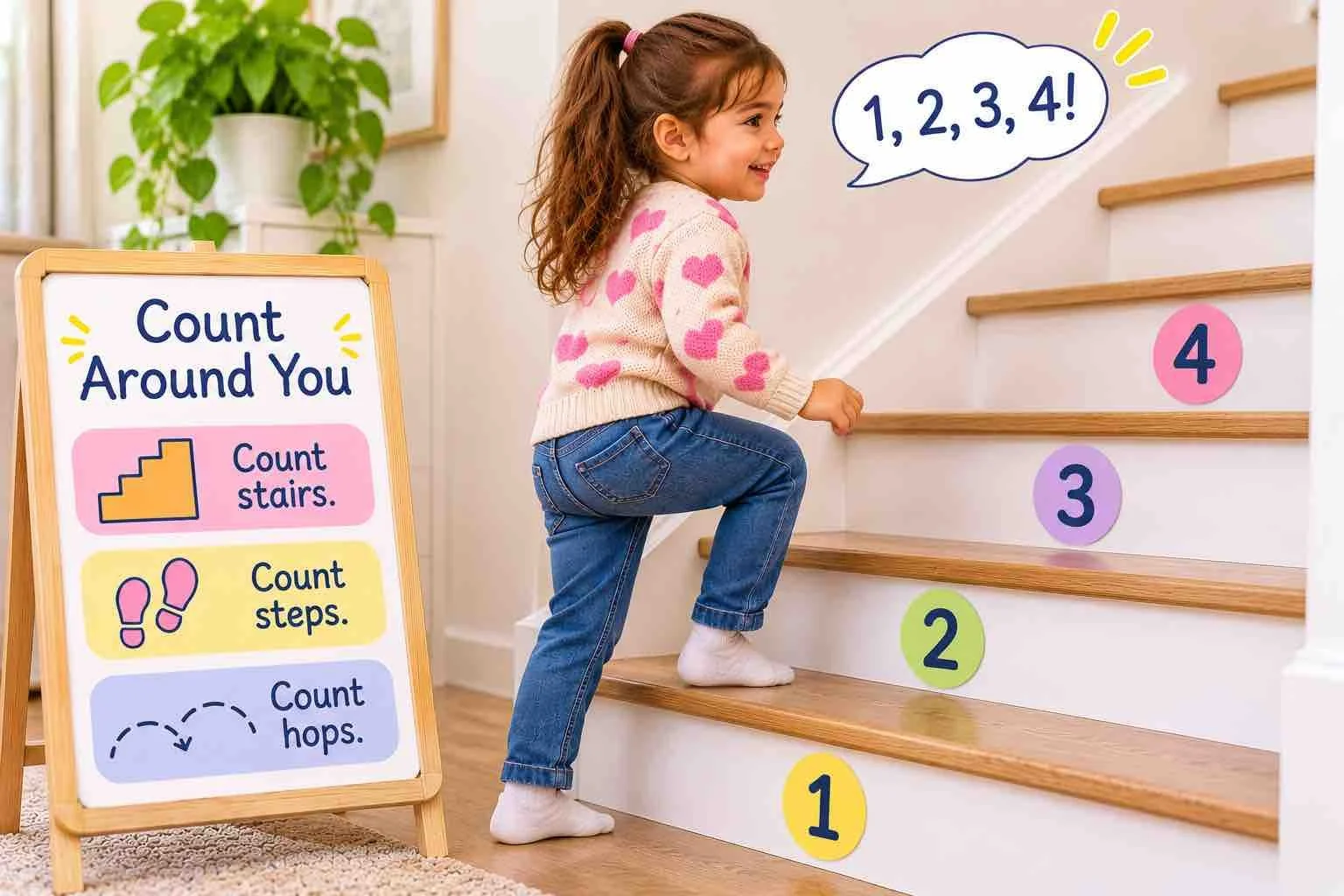
Counting what you’re already doing is one of the easiest ways to practice. Count stairs as you climb, steps to the mailbox, or hops across the hallway. Counting out loud together lets your child hear the number sequence and match one number to each step.
You can adjust it: Let your child lead the counting, or count backward as you go down. Some children enjoy guessing how many steps it will take before you start.
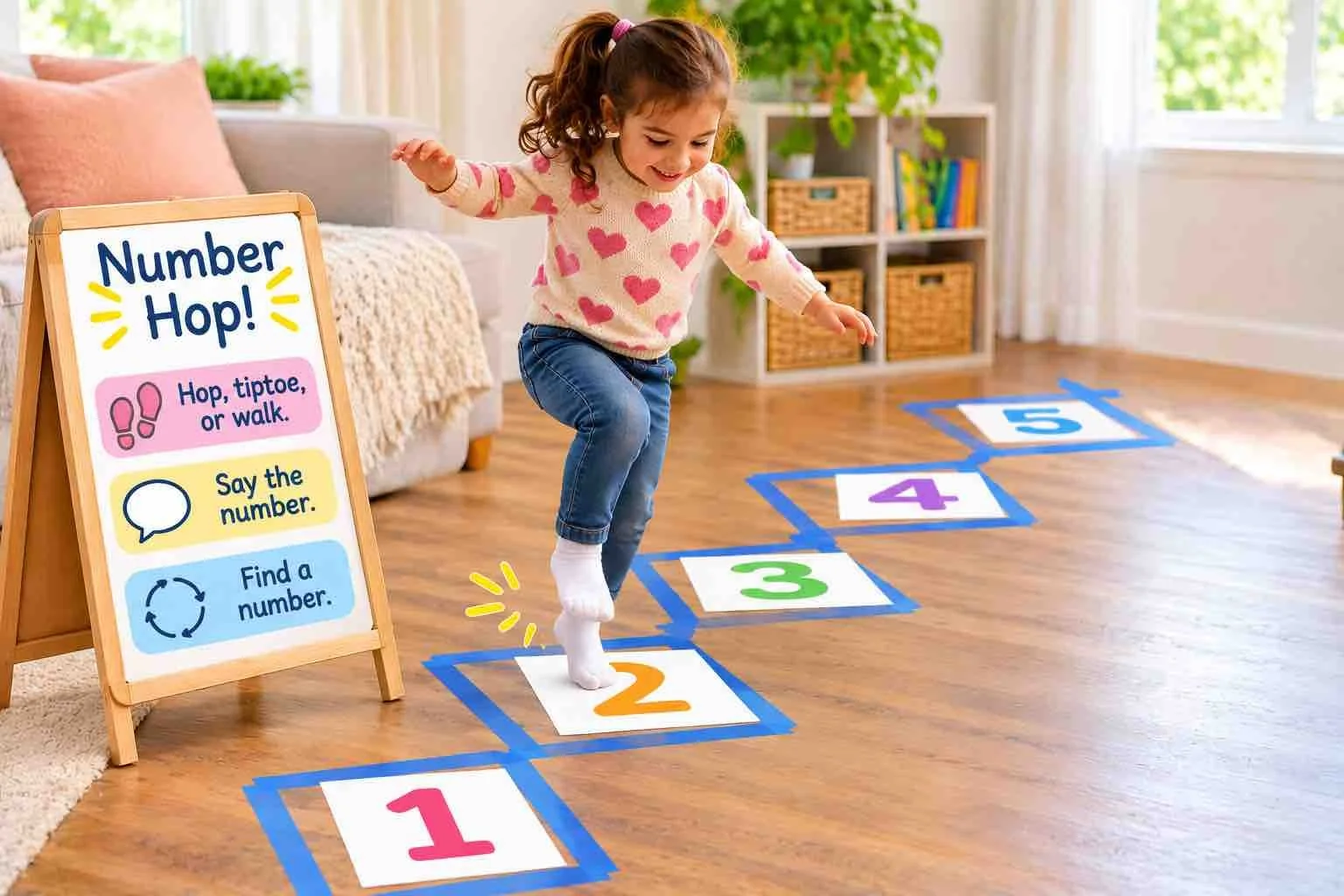
2. Tape Number Path
Use painter’s tape to make a path on the floor and write a large number on a piece of paper at each stop, from 1 to 5 or 1 to 10. Your child can hop, tiptoe, or walk from number to number, saying each one aloud.
This offers an opportunity to explore number recognition while moving. If your child is not interested in numerals yet, simply count the hops between spots.
You can adjust it: Call out a number and let your child find it, or mix up the order of the numbers once the first path feels familiar.
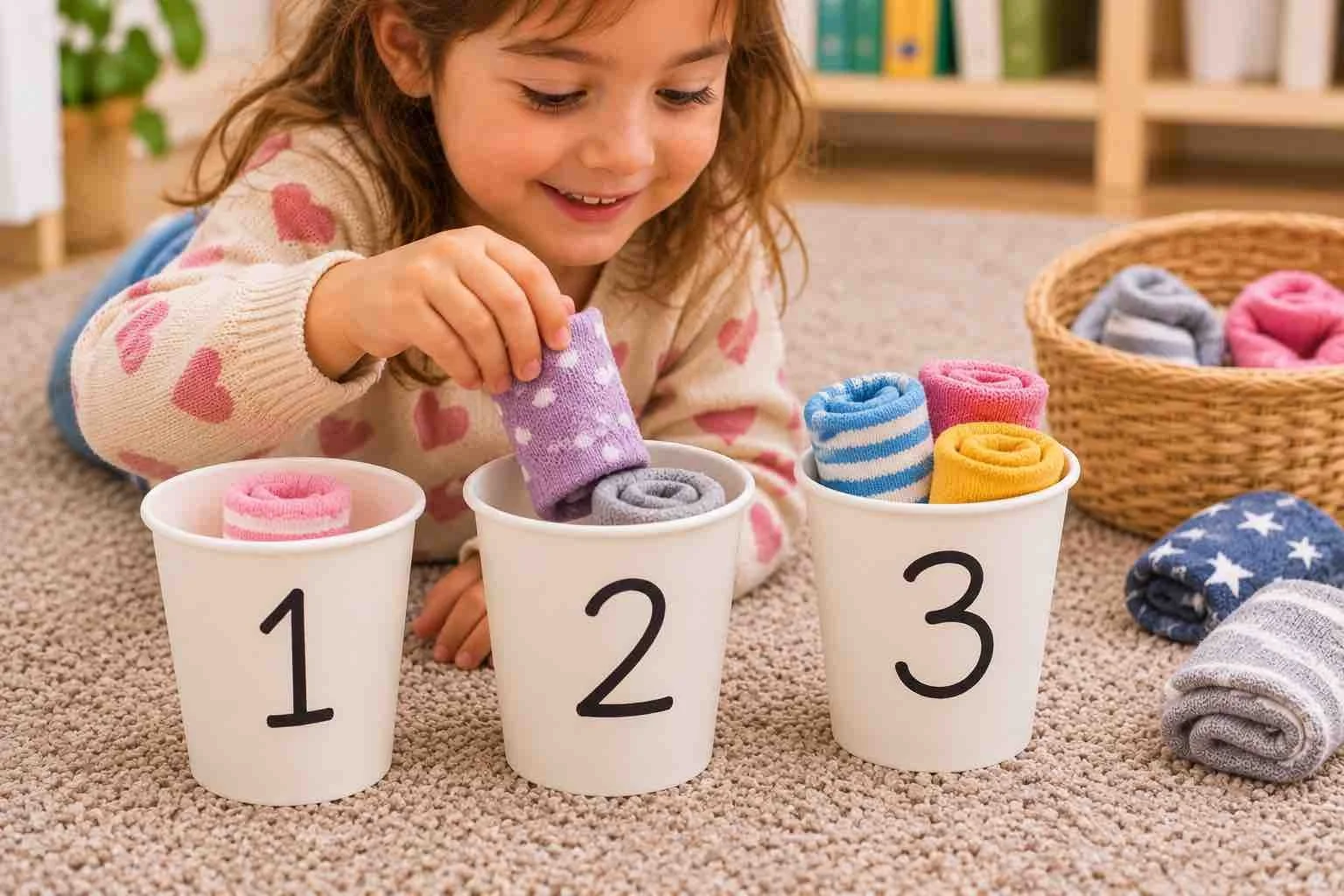
3. Number Cups
Write a numeral on each of several paper or plastic cups. Then invite your child to place the matching number of larger items in each cup, such as rolled-up socks, soft toys, or plastic lids that are clearly larger than a small child’s mouth.
This can help children practice linking a written number to a quantity. Start with just two or three cups so it doesn’t feel like a test.
You can adjust it: Put dots on the cups instead of numbers, or leave one cup empty to introduce the idea of zero.
Matching and Sorting
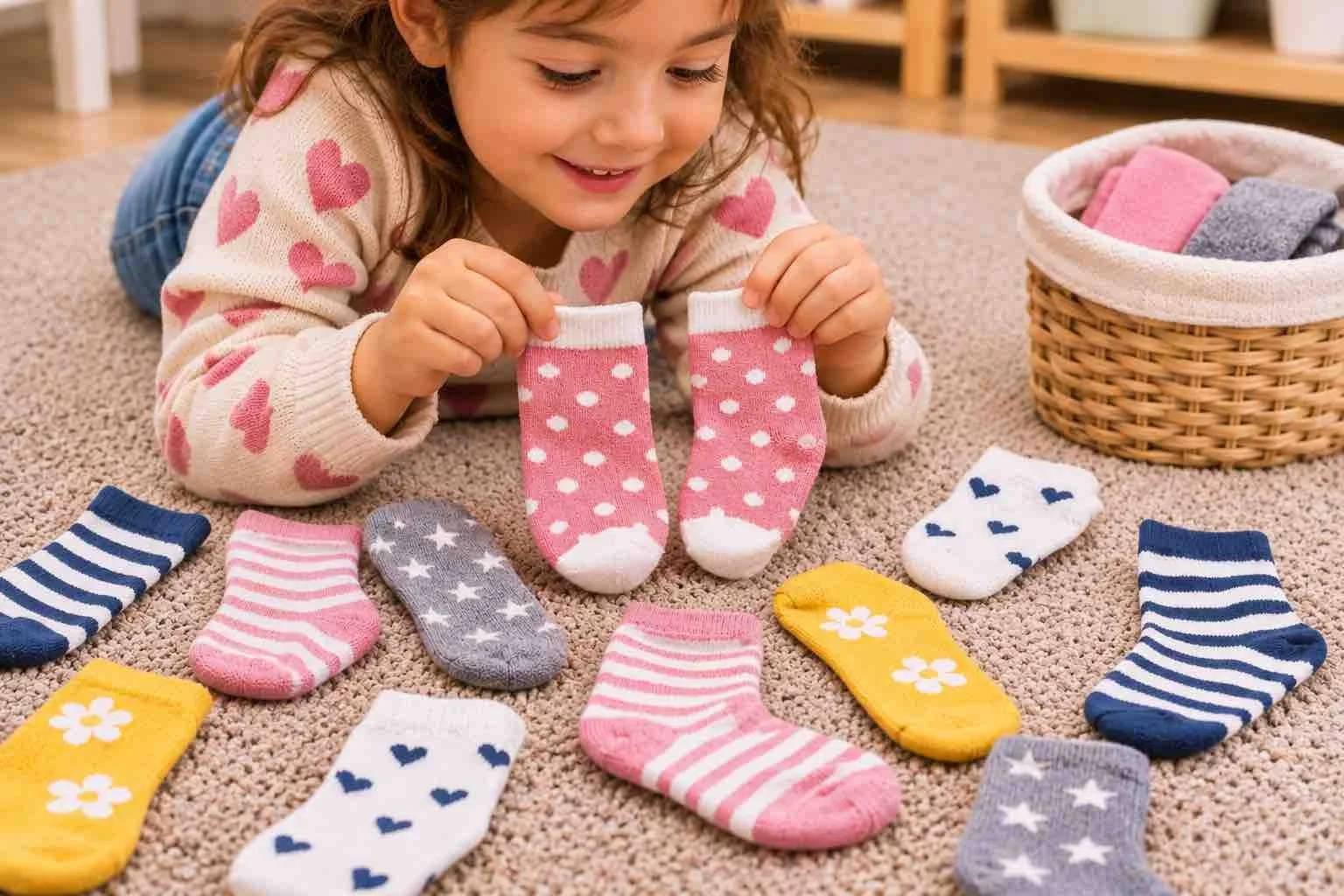
4. Sock Matching
A pile of clean, mismatched socks is a ready-made matching game. Spread them out and invite your child to find the pairs. You can talk about colors, stripes, and sizes as you go.
You can adjust it: With fewer socks, matching is simpler. With more, it becomes a bit of a puzzle. Some children enjoy matching their own socks to yours and noticing which are bigger.
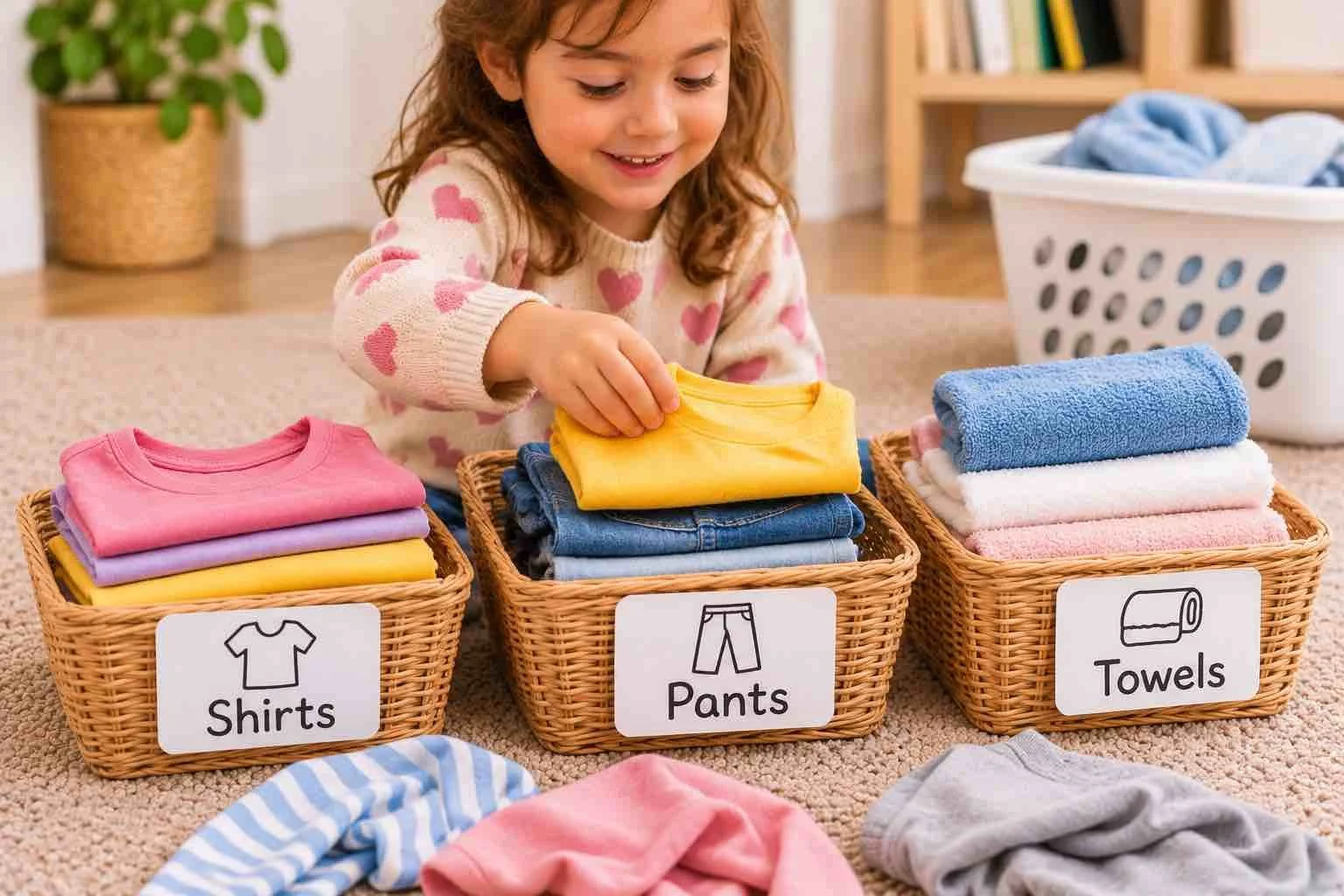
5. Laundry Sorting
Laundry day can double as a sorting activity. Ask your child to sort clean clothes into groups: whose they are, what kind of clothing they are (shirts, pants, towels), or what color they are.
Sorting gives children a chance to notice what makes things alike or different. You can ask, “How did you decide which pile this goes in?” and enjoy hearing the answer, even when it’s unexpected.
You can adjust it: Try sorting by a second feature once the first feels easy, such as small versus large within the pile of shirts.
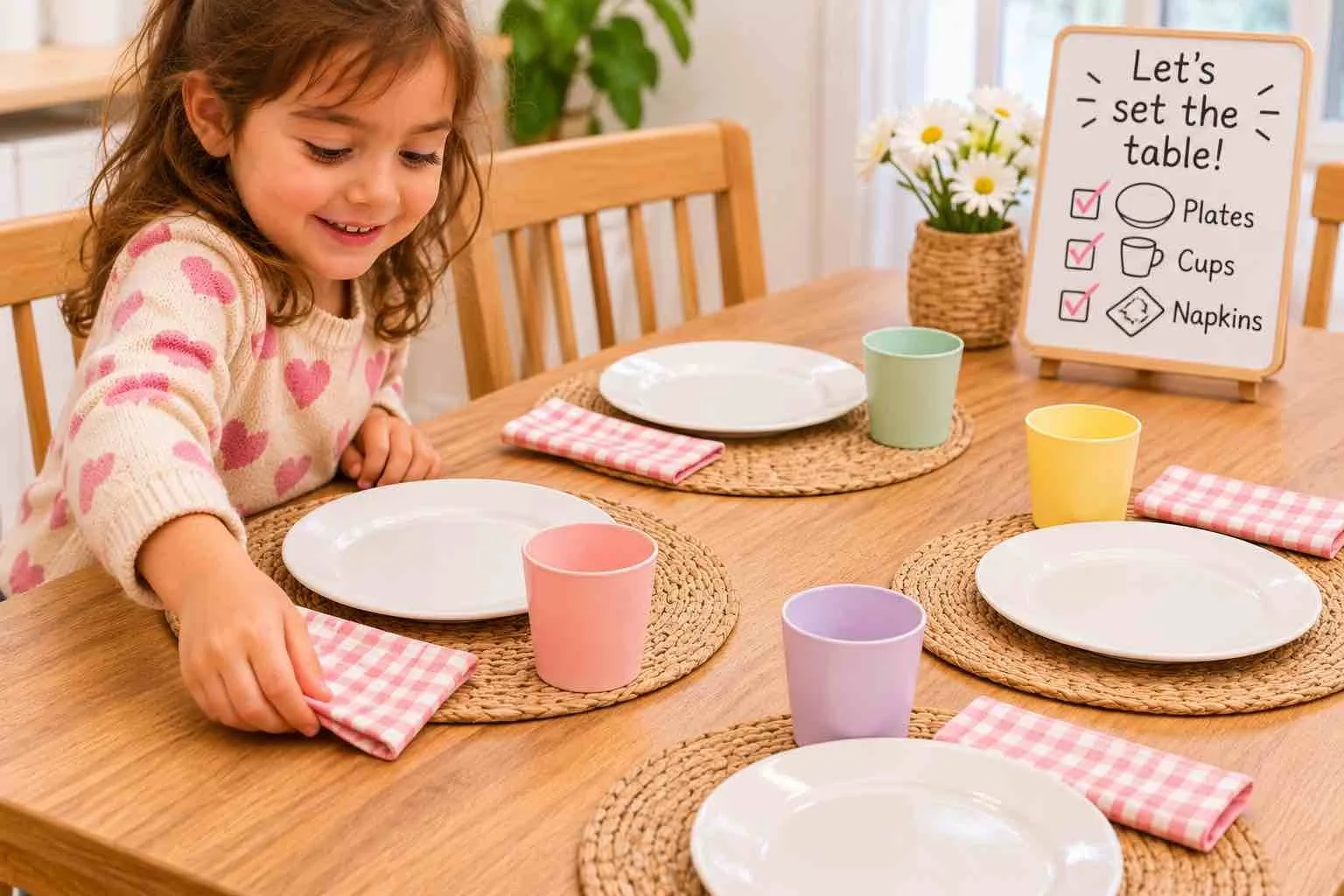
6. Set the Table Together
Setting the table is a simple way to practice one-to-one correspondence, which means matching one item to one person. Ask your child to put one napkin at each seat, then one cup at each seat. You can count the people first, then count the plates to check whether they match.
You can adjust it: Ask, “Do we have enough forks for everyone?” or “How many more do we need?” Some preschoolers like to do this with stuffed animals for a pretend tea party.
Patterns and Shapes
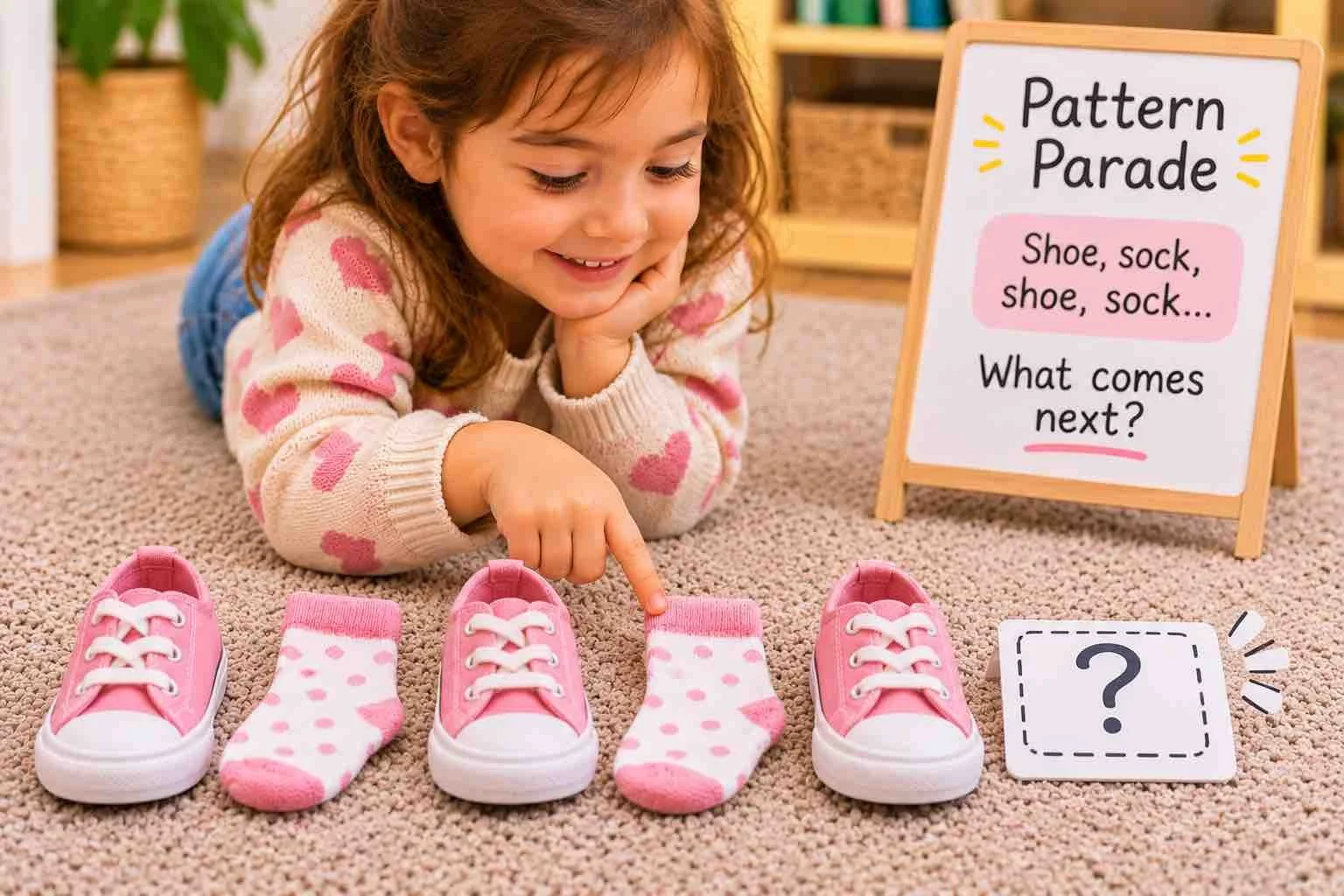
7. Pattern Parade
Patterns are things that repeat in a predictable way. Use larger household objects to build one: shoe, sock, shoe, sock, or a spoon, a cup, a spoon, a cup. Start the pattern and ask your child what might come next.
You can adjust it: Begin with a two-part pattern, such as red towel, blue towel, red towel. Some children will enjoy making their own patterns and asking you to guess. You can also make patterns with sounds and movements, like clap, stomp, clap, stomp.
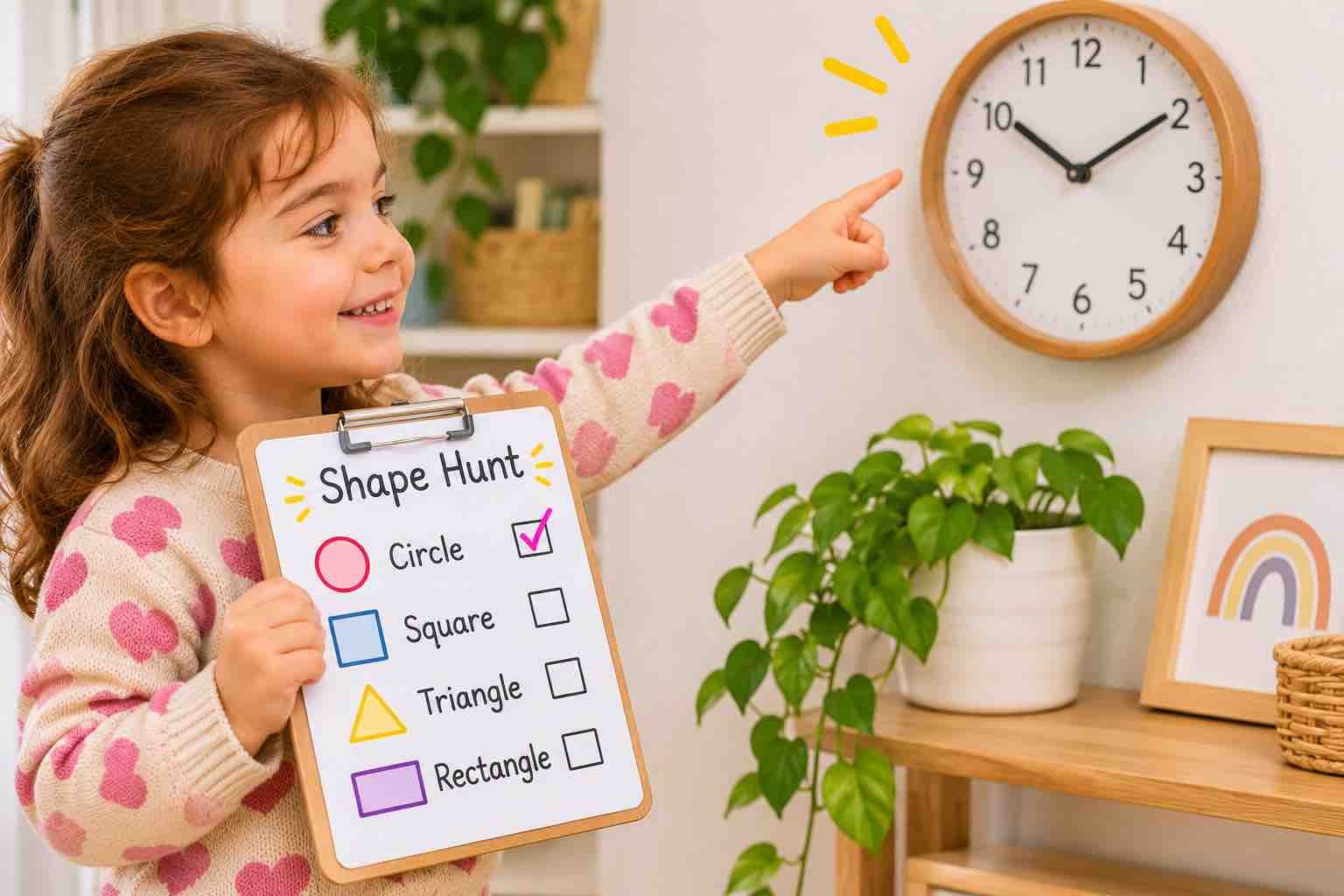
8. Shape Hunt
Choose a shape, such as a circle, and go on a walk around the house looking for it. A plate, a clock, a mirror, or the lid of a pot might all count. Then try squares, rectangles, and triangles.
This is a relaxed way to explore shapes in a real setting. You may notice your child finding shapes you hadn’t thought of, which can lead to fun conversations about what makes a shape a circle or a square.
You can adjust it: Draw the shapes on paper first so your child has something to look for, or go on a shape hunt outdoors.
Size, Comparing, and Measuring
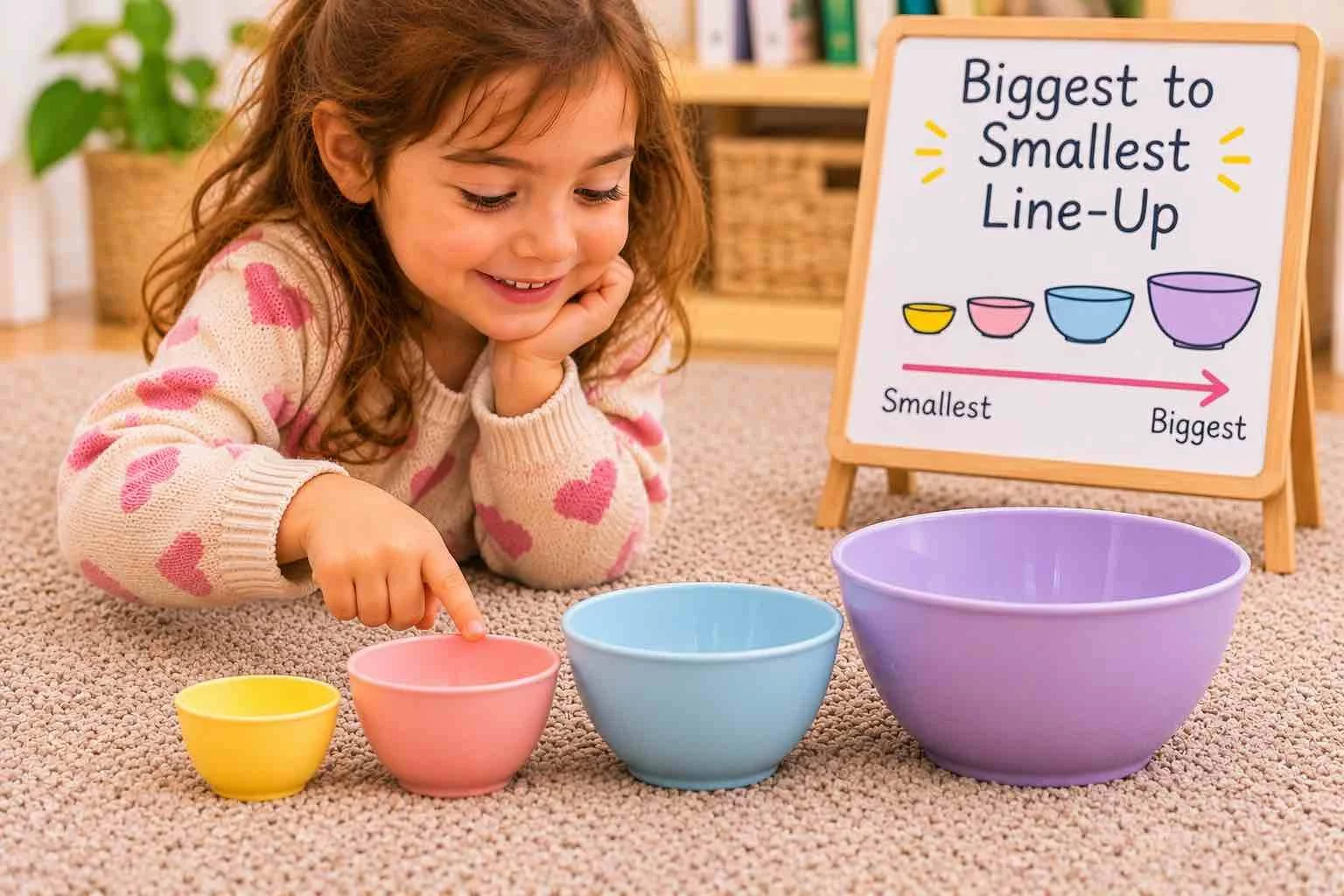
9. Biggest to Smallest Line-Up
Gather a few items that are clearly different in size: plastic cups, mixing bowls, spoons, or stuffed animals. Invite your child to arrange them from smallest to biggest, or the other way around.
This offers a chance to use comparison words like bigger, smaller, taller, and shorter. If your child finds it tricky, start with just two items and ask, “Which one is bigger?”
You can adjust it: Add more items as it becomes easier, or ask your child to find something in the house that is bigger than a shoe or smaller than a pillow.
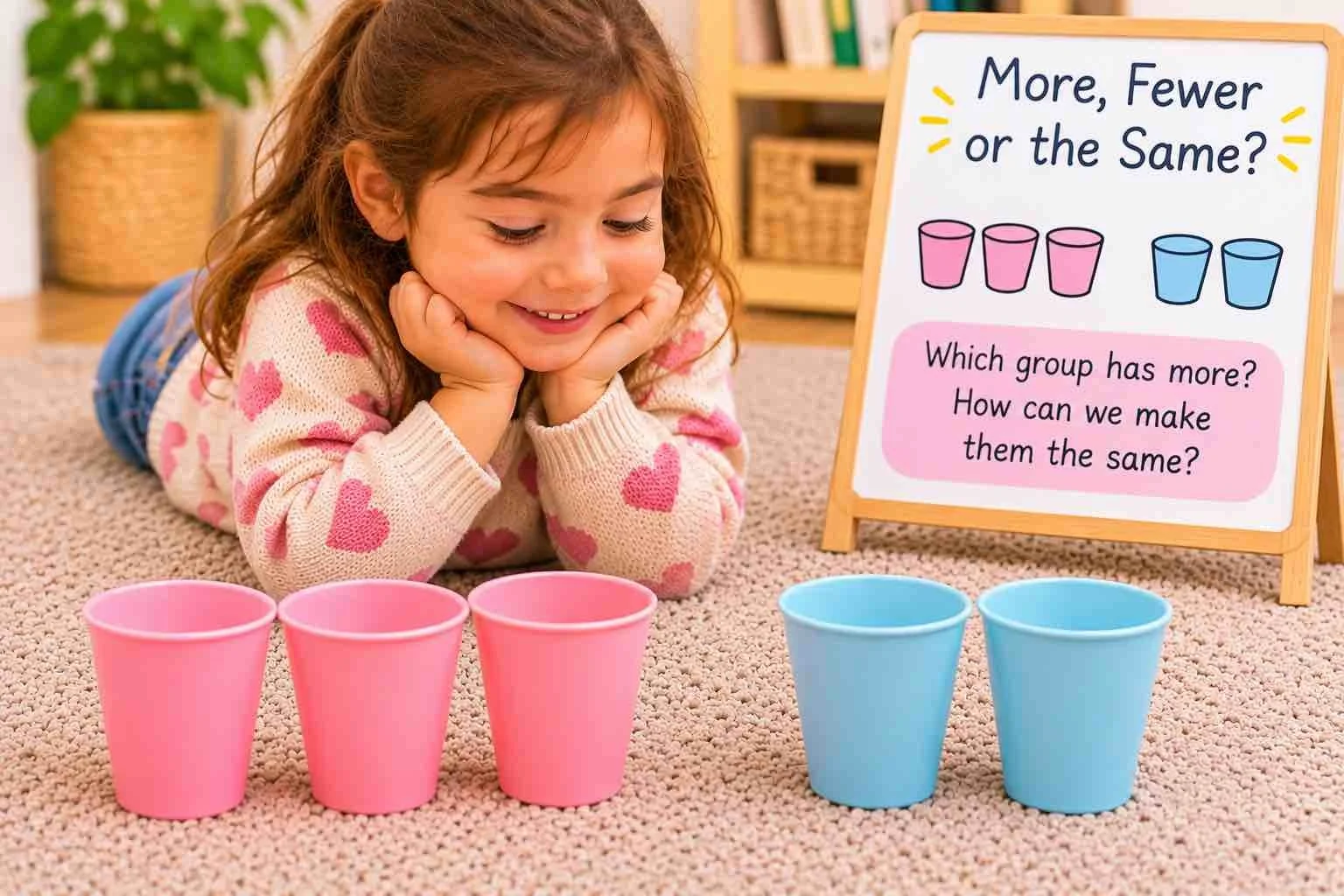
10. More, Fewer, or the Same?
Make two small groups of larger objects, like stuffed toys or plastic cups, and ask which group has more. Then ask what you could do to make them the same. Your child might add one to one group or take one away.
Comparing quantities this way helps children practice the language of more, fewer, and the same without needing to count high.
You can adjust it: For younger children, make the difference obvious, such as one toy versus five. Later, try groups that are closer in size and count them together to check.
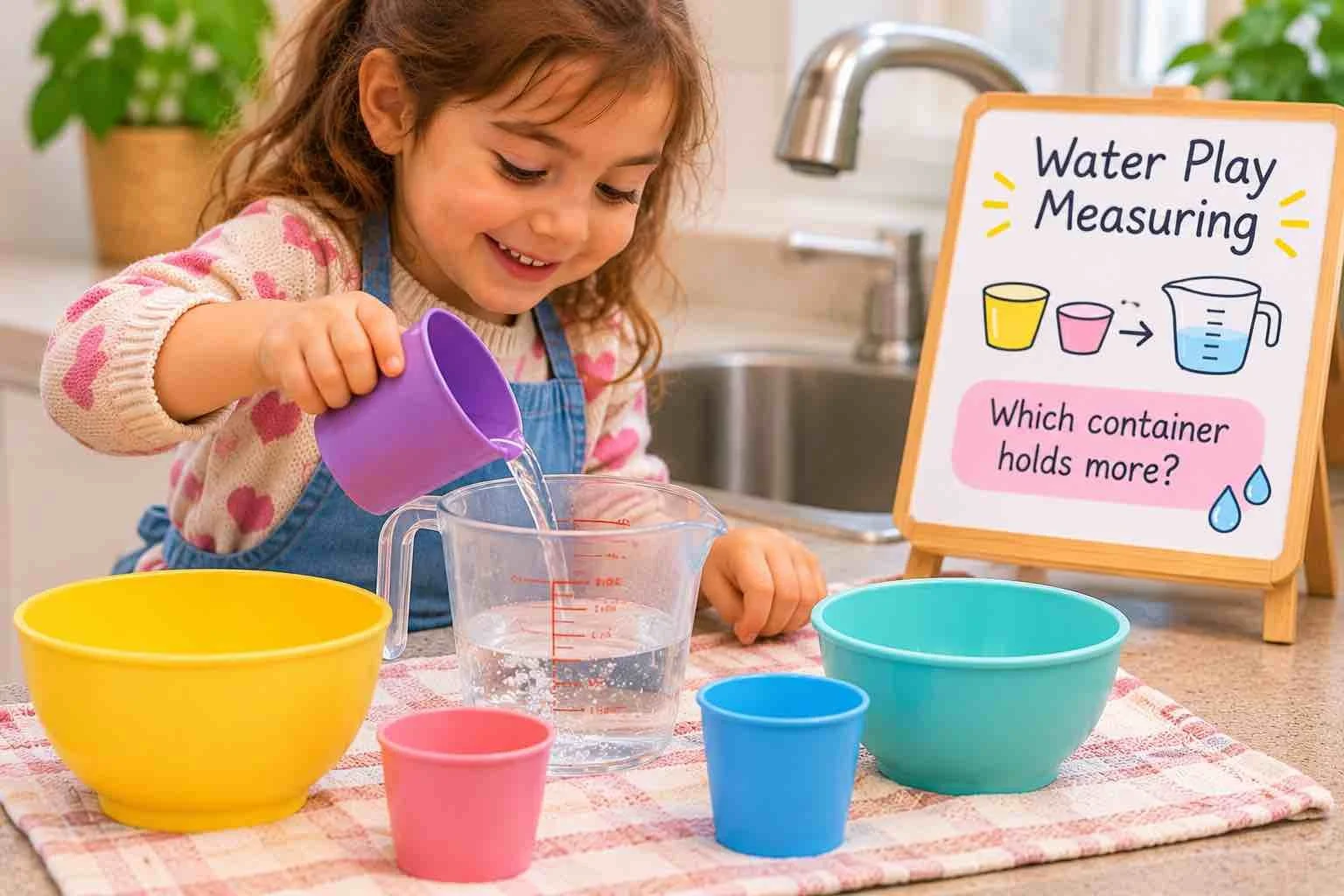
11. Water Play Measuring (With Supervision)
During bath time or at the kitchen sink, give your child a few plastic cups and containers of different sizes. Let them fill, pour, and notice which container holds more. You might ask, “Do you think this cup will fill that bowl?”
This kind of play offers a way to explore measurement through the senses. Stay within arm’s reach whenever water is involved, and use a towel underneath to keep the floor safe from slips.
You can adjust it: Count how many small cups it takes to fill one big container. Let your child make a guess first, and don’t worry about being right.
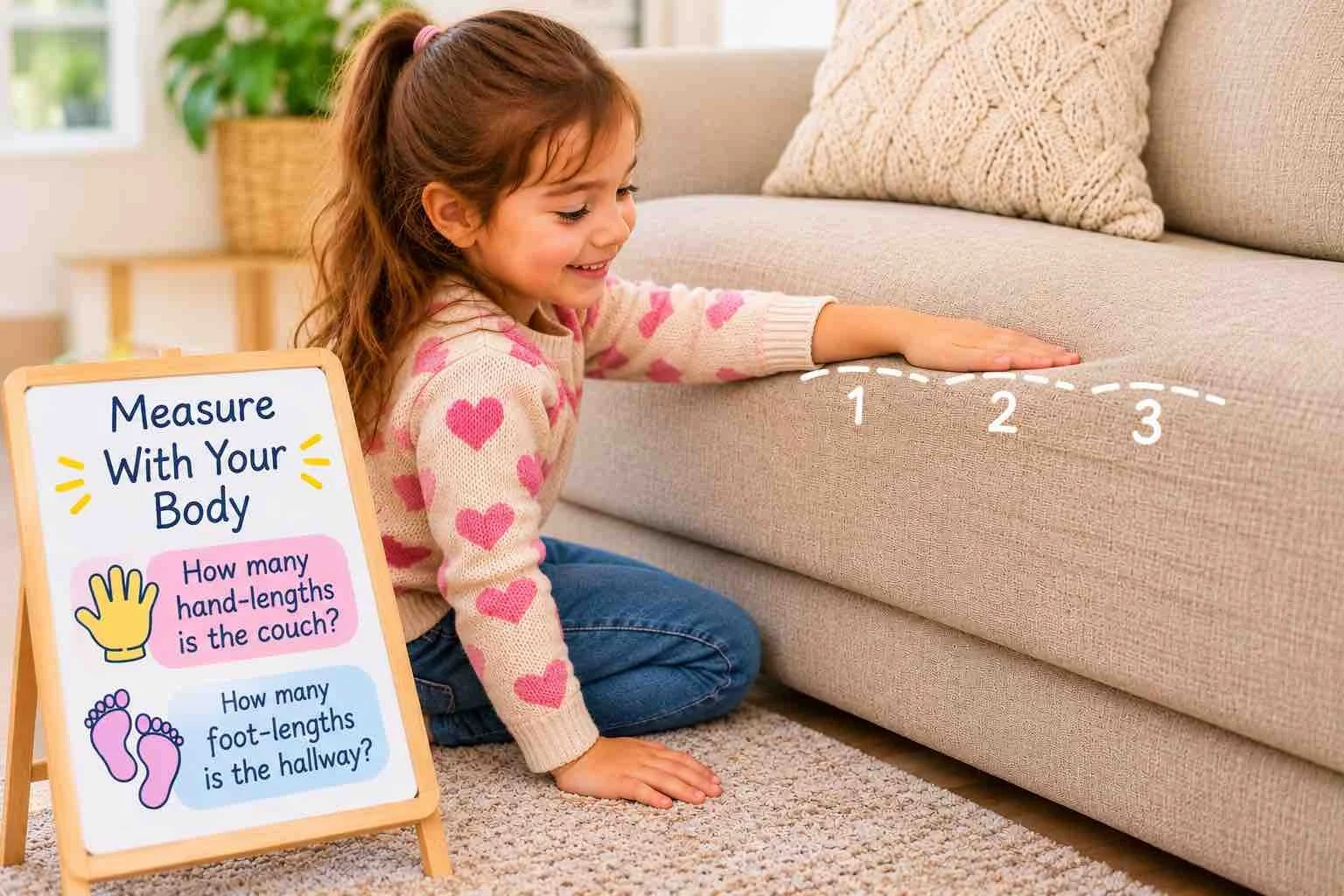
12. Measure Things With Your Body
Before introducing rulers, try using non-standard units. How many of your child’s feet long is the hallway? How many hand-lengths wide is the couch? Walk heel-to-toe or stretch out a hand and count together.
This is a gentle way to introduce the idea that we can measure things by comparing them to something else. It’s also a nice moment to notice that your feet are bigger than your child’s, so you’ll get a different answer.
You can adjust it: Try measuring with a scarf, a shoe, or a paper strip instead. Ask which unit gives a bigger number and see if your child has ideas about why.
Sequencing and Spatial Awareness
13. Daily Routine Cards
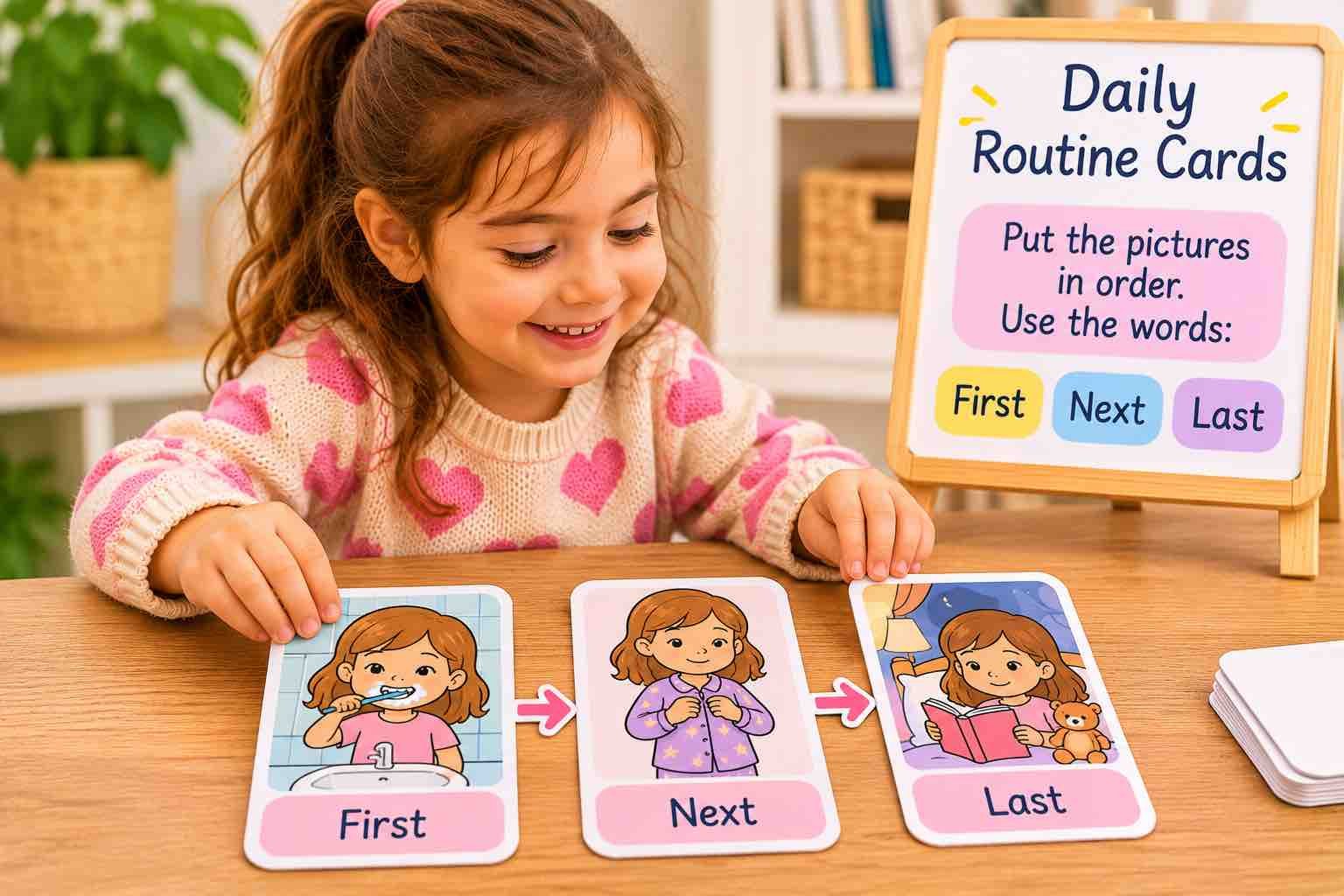
Sequencing means putting things in order. Draw or print simple pictures of a routine, such as brushing teeth, putting on pajamas, and reading a story, and ask your child to arrange them in the order they happen. Using words like first, next, and last can help children talk about what happens when.
You can adjust it: Start with only three steps. Some children like to make the cards themselves or act the routine out in order.
14. Obstacle Course Adventures
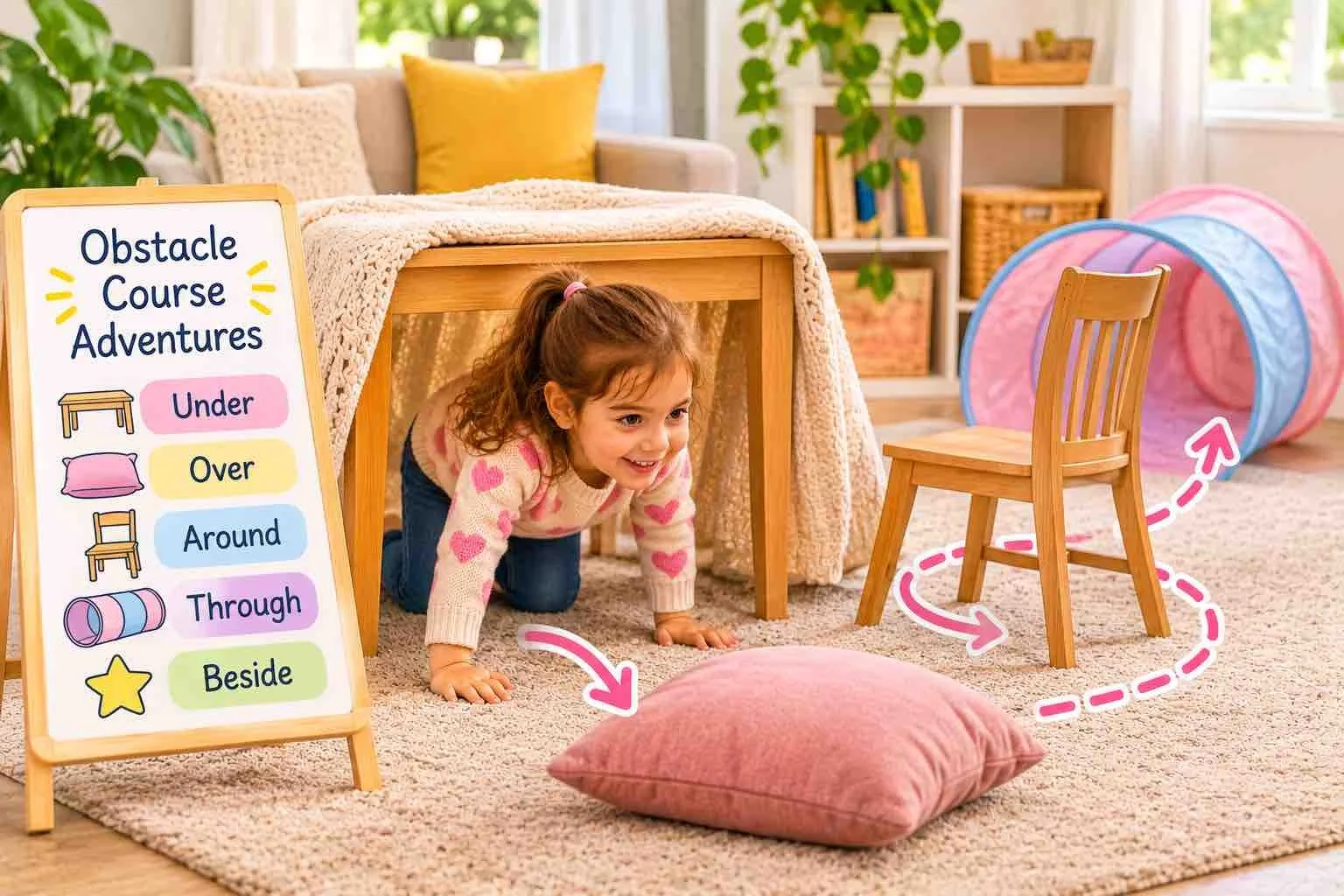
Use furniture, cushions, and blankets to create a simple obstacle course: crawl under the table, step over a pillow, walk around a chair, and go through a tunnel made from a sheet. Narrate the position words as your child moves: under, over, around, through, beside.
Movement-based play is a good way to practice spatial words in context. Keep the course low and clear of sharp edges, and supervise as your child moves through it.
You can adjust it: Ask your child to give you directions through the course, or take turns being the “boss” who says where to go.
15. Build With Boxes and Blocks
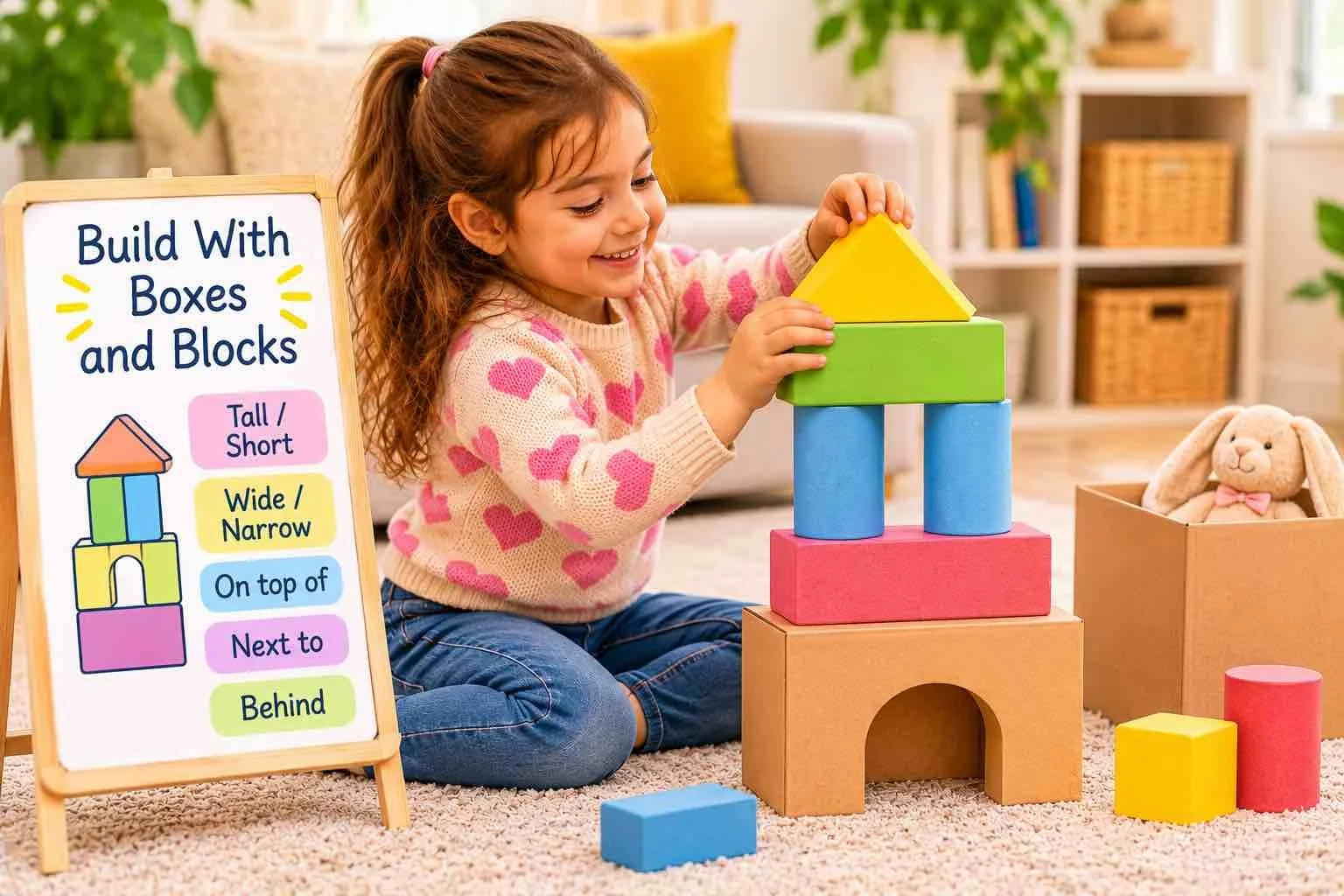
Cardboard boxes, large blocks, and plastic containers are all good building materials. As your child builds, you can talk about what they notice: tall and short, wide and narrow, on top of, next to, behind. You might ask, “What do you think will happen if we put the big box on top?”
Building offers an opportunity to explore balance, shape, and space, and it often leads to experimenting and trying again.
You can adjust it: Challenge your child to build a tower as tall as they are, or a house big enough for a favorite toy.
Making Math Part of Everyday Life
You don’t need to turn these ideas into a daily routine. Math shows up naturally when you ask, “Can you hand me two spoons?” or “Which bag is heavier?” or “How many apples are in the basket?” (counted by looking, not played with, if your child is young). A few relaxed minutes here and there can be enough.
If your child seems frustrated or uninterested, it’s fine to put an activity away and try again another day. Children develop at different paces, and there’s no need to compare. What matters most is that your child feels comfortable exploring numbers and shapes, and that these moments feel like time spent together.
If you're also thinking about how a child's environment supports independent play, our Montessori bedroom guide shares practical ideas for creating a more child-accessible space.
Frequently Asked Questions
How long should a preschool math activity last?
There’s no set time. Some children stay with an activity for a few minutes, others for much longer. Follow your child’s interest and stop when they seem done.
What if my child doesn’t want to participate?
That’s okay. You can try again later, change the activity, or simply model it yourself while they watch. Many children join in once they feel no pressure.
Do I need to buy special materials?
No. Everything above can be done with items you likely already have, such as socks, cups, boxes, painter’s tape, and paper.
Is it normal if my child counts in a different order or skips numbers?
Many young children are still learning the number sequence and may skip or repeat numbers while practicing. You can gently model the correct order without correcting too much, and keep the focus on enjoying the activity.
Can preschoolers learn math without worksheets?
Yes. Everyday activities such as counting steps, sorting laundry, comparing sizes, spotting shapes and measuring with household objects can introduce early math concepts through play and routine activities.
What math skills can preschoolers practice through play?
Preschoolers can explore concepts such as counting, sorting, matching, shapes, patterns, comparing quantities, measurement, sequencing and spatial words. Children develop at different rates, so these ideas can be adjusted to match their interests and current abilities.
