
18 Small Desk Organization Ideas That Actually Work in Tight Spaces
You sit down to work and within minutes the surface is gone. Your coffee is somewhere under a pile of papers, your headphones are taking up half the desk, and the cables are a small disaster you haven't dealt with in weeks.
Working from a small desk, whether it's a bedroom corner, an apartment nook, or a shared table, isn't just a space problem. It's a focus problem. Clutter on a small surface builds up faster than it does on a large one, and by the time you've cleared enough room to actually work, you've lost momentum you can't easily get back.
A small desk doesn't need fewer things on it. It needs the right things, chosen specifically for tight spaces: vertical instead of horizontal, slim instead of bulky, and genuinely useful rather than decorative. These small desk organization ideas are built around one principle, get things off the surface and give them a purpose-built home, so you can sit down and actually start working.
This post contains affiliate links. If you purchase through our links, we may earn a small commission at no extra cost to you.
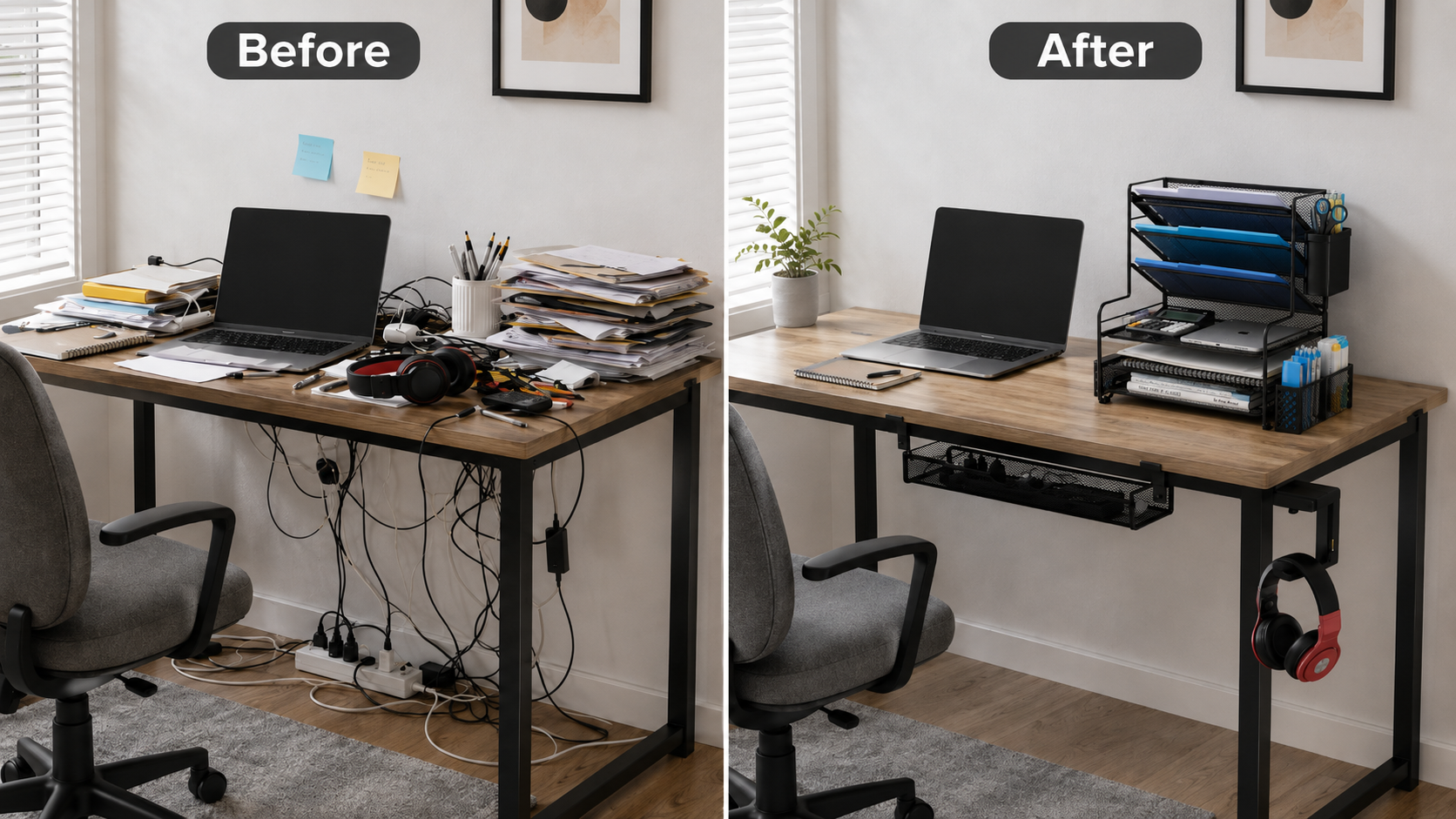
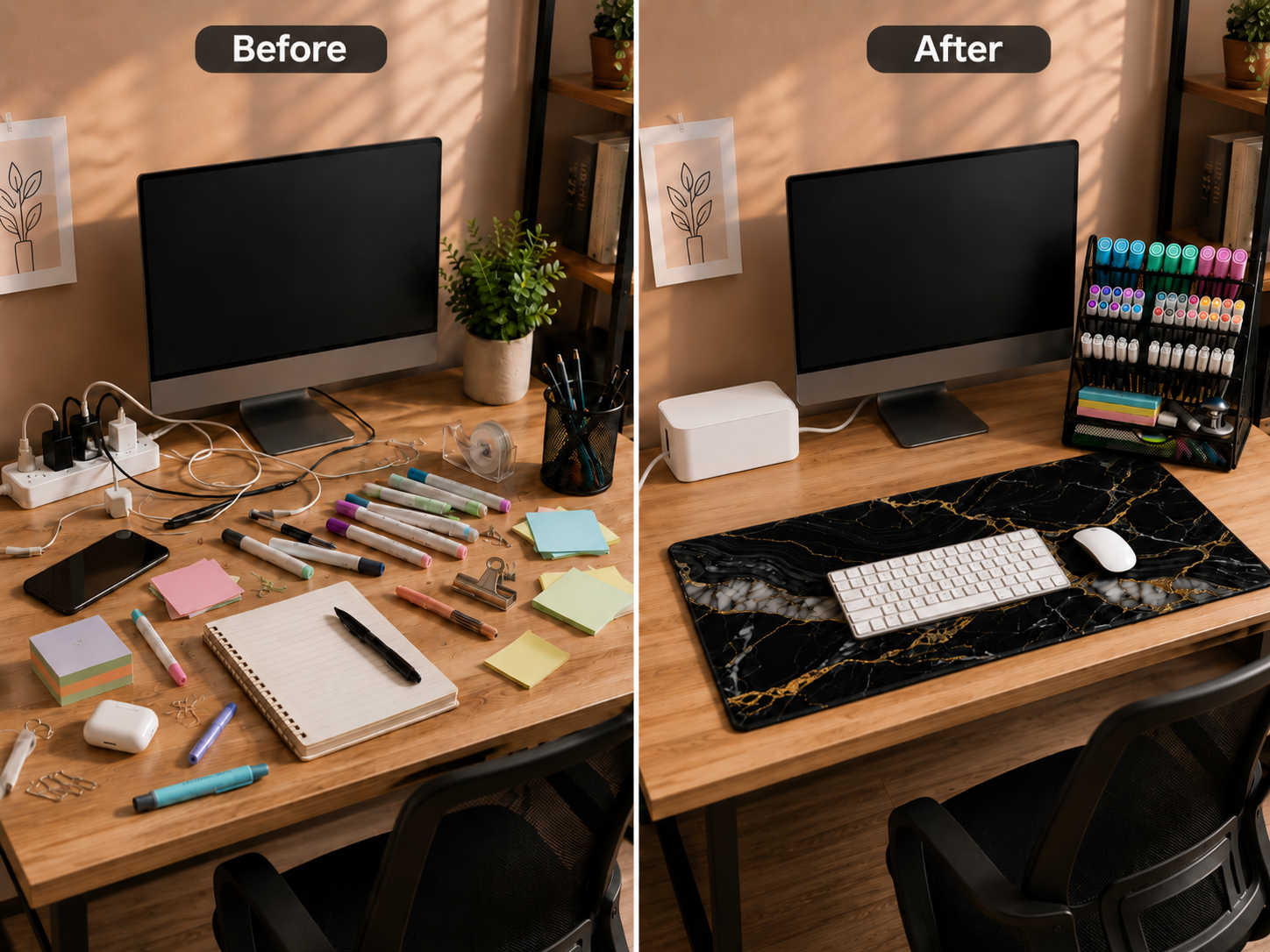
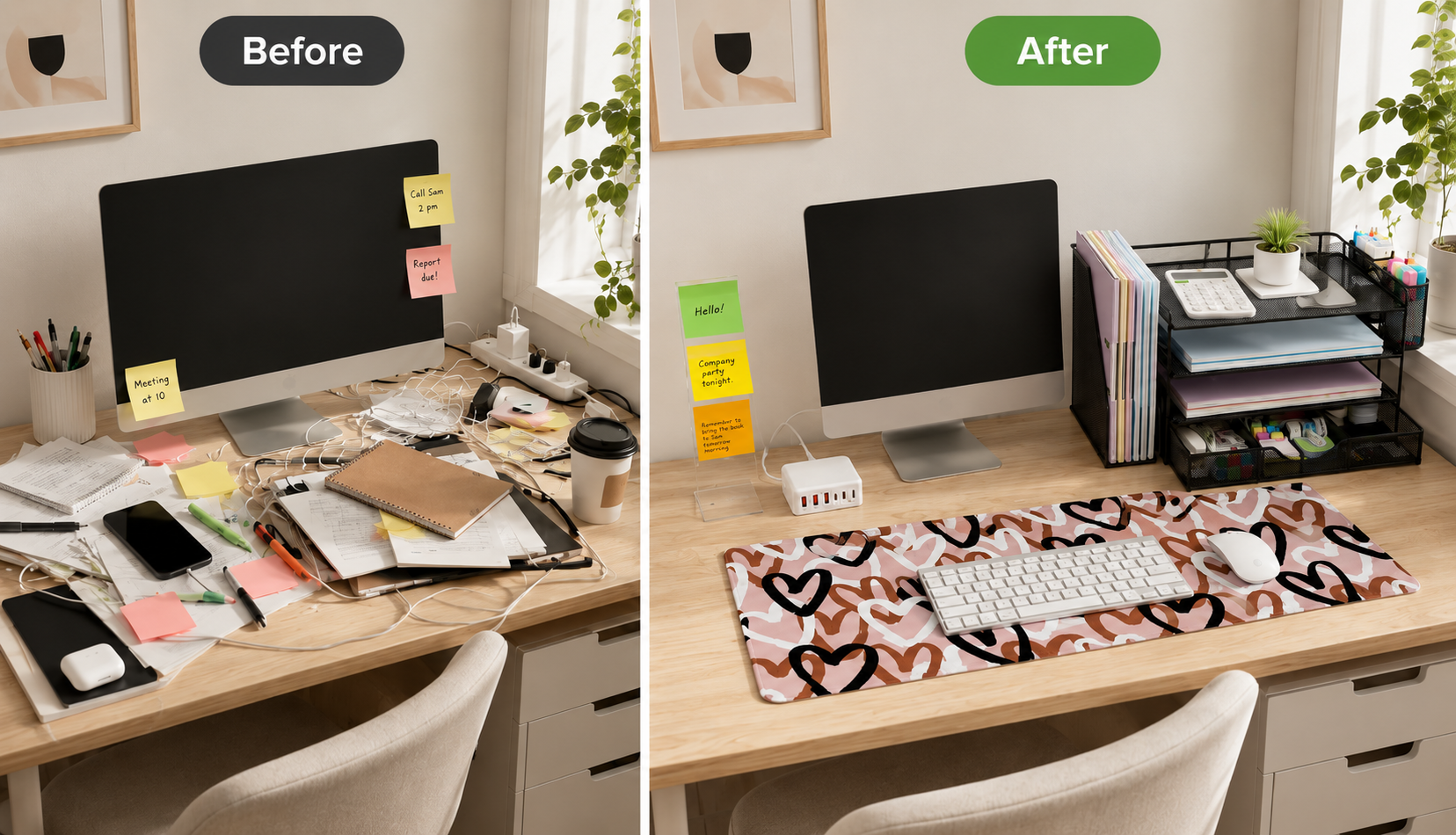
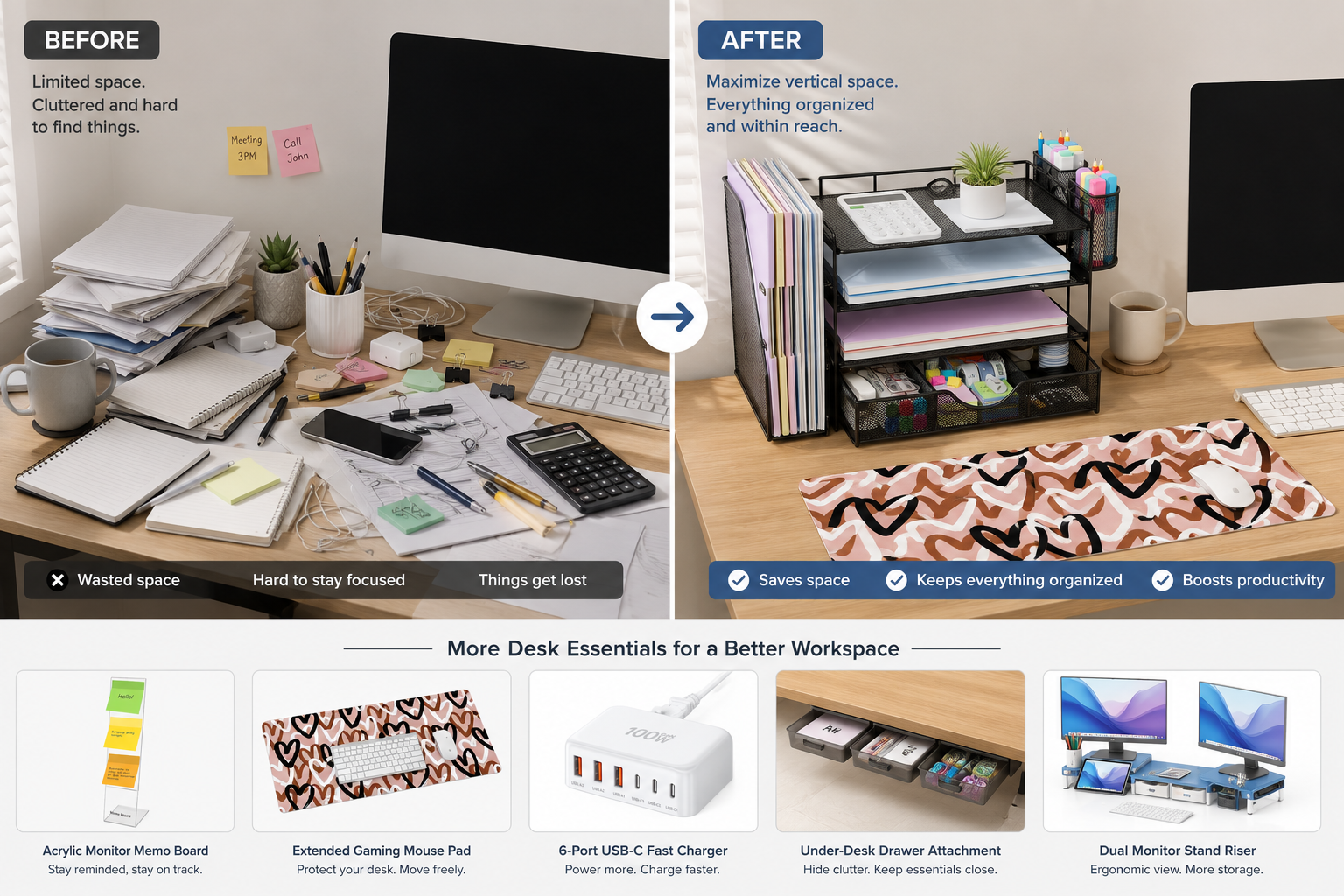
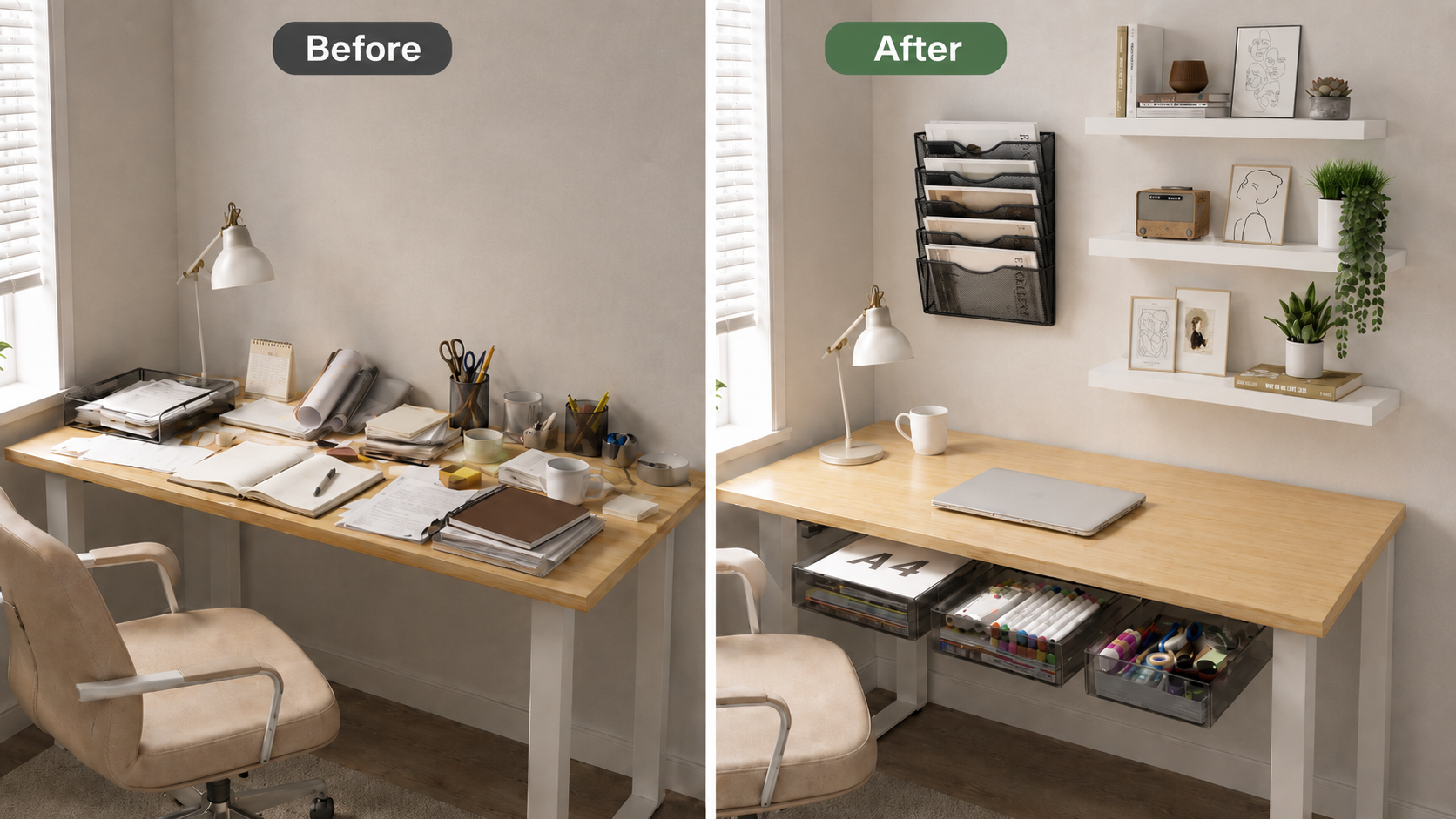
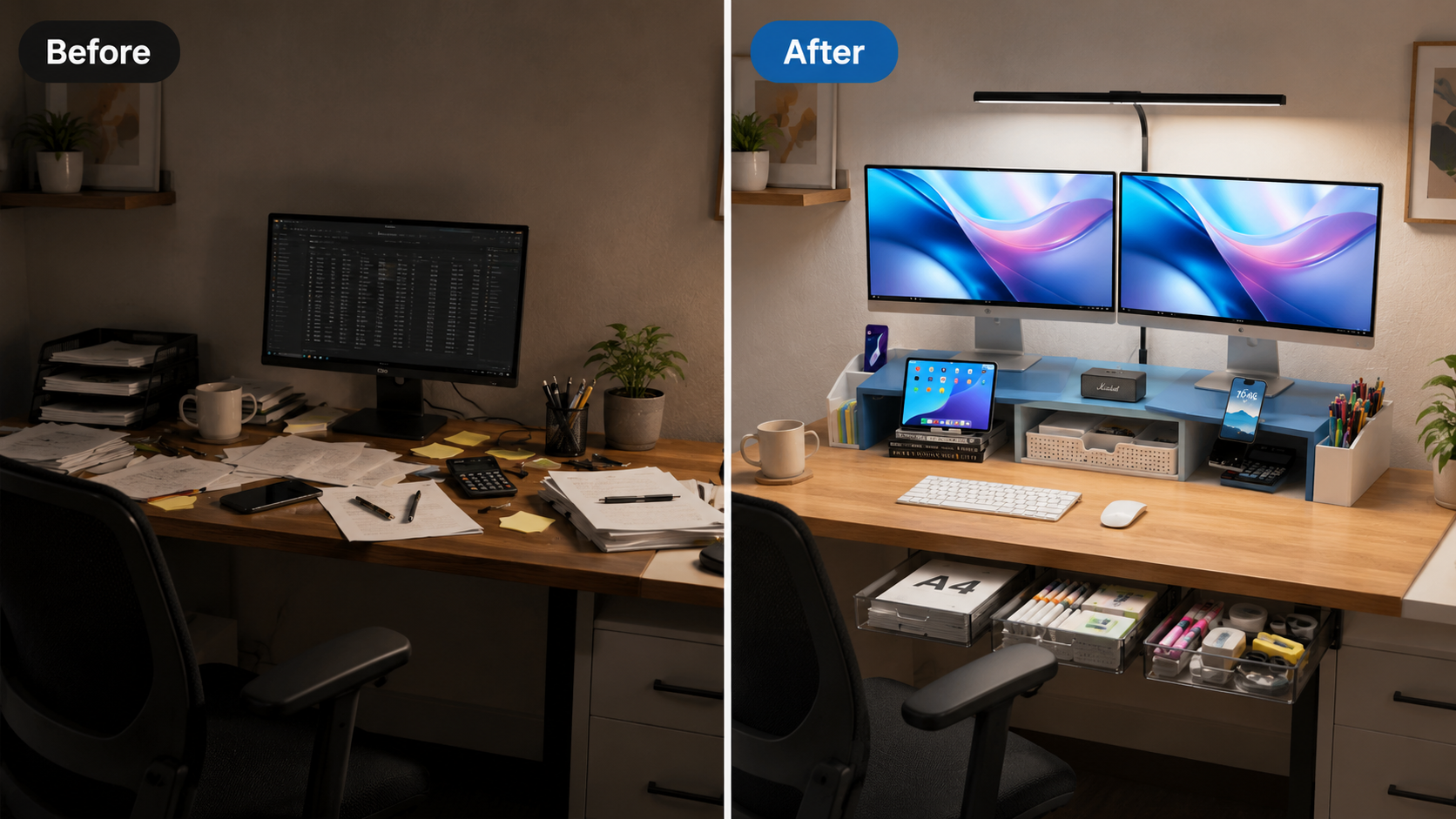
What Desk Organizers Work Best for Small Spaces?
Before getting into specific products, it helps to know what to actually look for. On a small desk, the best organizers tend to share a few traits:
They go vertical, not outward. Anything that stacks upward (file towers, wall organizers, monitor risers) frees up surface area that a flat tray or basket never will.
They do more than one job. A monitor stand that also stores your keyboard, or a wall organizer that holds both mail and small accessories, earns its space twice.
They're slim or foldable. A laptop stand that folds flat, or a keyboard with a smaller footprint, matters more on a desk with limited depth than on a full-size office desk.
They match how you actually work. An elaborate file system is wasted on someone who mostly needs a spot for a coffee mug and a notebook. Match the organizer to your actual habits, not an idealized version of them.
Keep these in mind as you go through the list below, and think about which ones solve a problem you actually have rather than one that just looks tidy in a photo.
Measure Before You Buy
It's easy to order an organizer that looks compact online and turns out to eat more desk space than it saves. Before buying anything on this list, it's worth taking a few minutes to check:
The usable depth and width of your desk surface, not just the total dimensions
How much clearance you have under the desk if you're considering an under-desk drawer or tray
Your monitor or laptop's base width, if you're looking at a monitor stand or riser
Whether your desk has a lip or edge that a clamp-on lamp or organizer needs to grip
A few minutes with a tape measure can save a return shipment and a lot of frustration.
Common Small Desk Organization Mistakes
A few patterns show up again and again on small desks that make the space feel more cluttered than it needs to be:
Buying storage before decluttering. An organizer for things you don't actually need just relocates the clutter instead of removing it.
Choosing horizontal trays over vertical storage. A flat tray or basket still eats surface area; a vertical organizer usually solves the same problem in less space.
Ignoring the wall. The space directly above and beside a desk is often the most underused storage option in a small room.
Overloading a single power strip. It's common on small desks with lots of devices, but it's worth checking your strip's rated capacity rather than plugging in more than it's designed to handle.
Keeping these in mind while shopping can help you avoid buying something that looks organized but doesn't actually solve the problem.
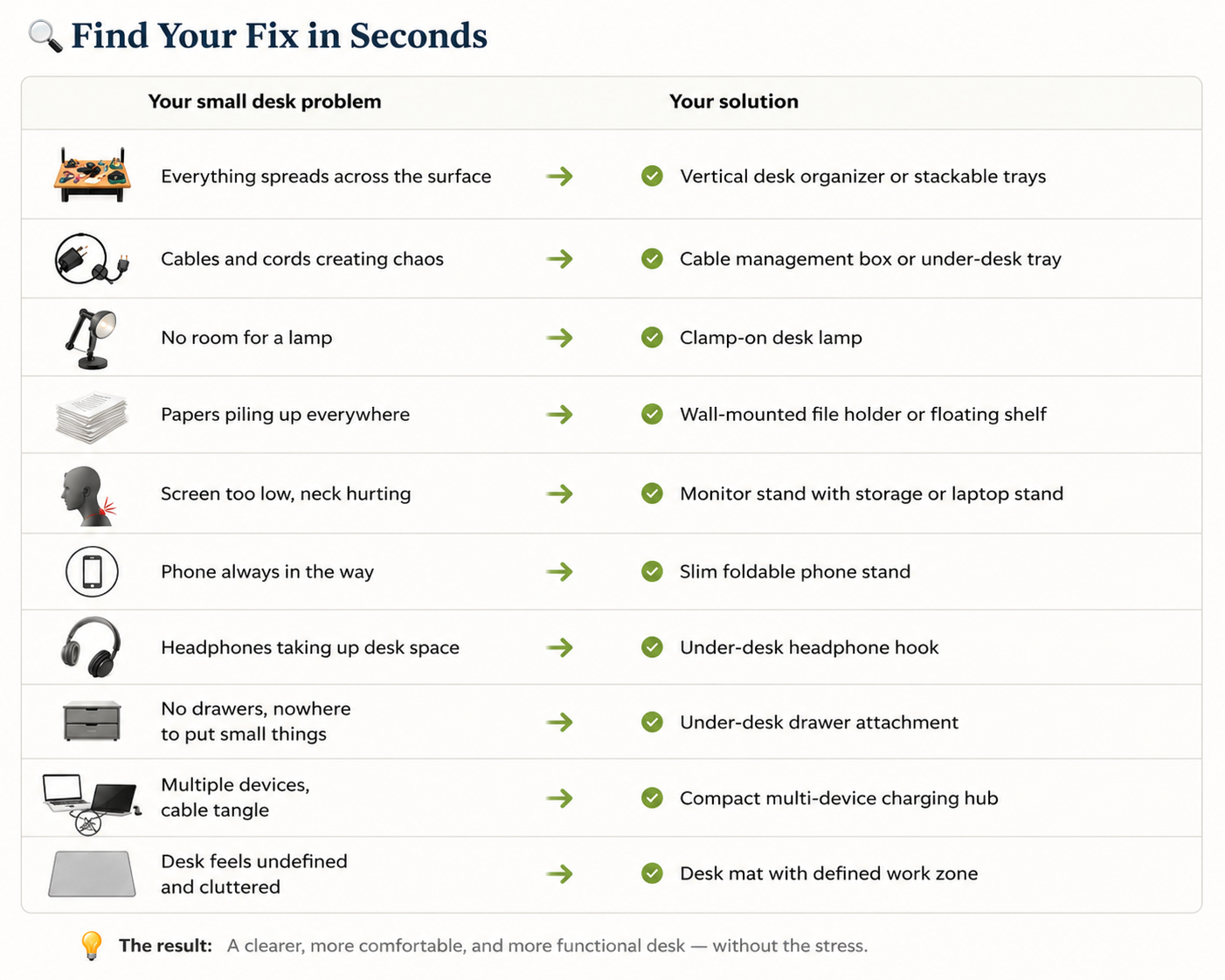
Tell me about your desk situation and I'll show you exactly where to start.
I have a very small desk
Apartment nook, bedroom corner, or a narrow surface where space runs out before you've even opened your laptop. Every inch is precious.
My desk is medium but still cluttered
You have a decent amount of space but it somehow still feels chaotic. Cables everywhere, no clear zones, things piling up despite the room to organize.
Your starting point
Very Small Desk — Maximum Impact, Minimum Footprint
Every pick below was chosen because it takes up zero or near-zero surface space. The goal is simple: get things off your desk, go vertical wherever possible, and make every inch count.
Do this first
Clamp-On LED Desk Lamp
Full lighting, zero surface space used
Biggest win
Monitor Stand with Storage
Hidden storage created without adding furniture
Off the desk
Under-Desk Drawer Attachment
Instant hidden storage under any desktop
Off the desk
Under-Desk Headphone Hanger
Bulky headphones gone from your surface
Go vertical
Wall-Mounted File Holder
Paperwork moved to the wall entirely
Finish it
Floating Shelves Set of 3
Books and bins moved completely off the desk
Your starting point
Medium Cluttered Desk — Add Structure and Watch It Transform
You have the space — you just need a system. These picks create clear zones, contain the chaos, and give everything a defined home so your desk stops resetting to cluttered by noon.
Do this first
Cable Management Box + Tray
Cables hidden, desk looks instantly cleaner
Define zones
XXL Desk Mat
Creates a clear visual boundary for your workspace
Organize papers
Desk Organizer with File Holder
Stacks documents upward instead of outward
Charge smarter
Multi-Device Charging Hub
One spot for all devices, zero cable sprawl
Keep notes visible
Monitor Memo Board
Reminders on screen, not scattered on desk
Finish it
Metal Pen Holder with Drawer
Writing tools contained in one vertical spot
Section 1: Get Things Off the Surface
The core idea behind small desk organization is simple: if something can go vertical, it should.
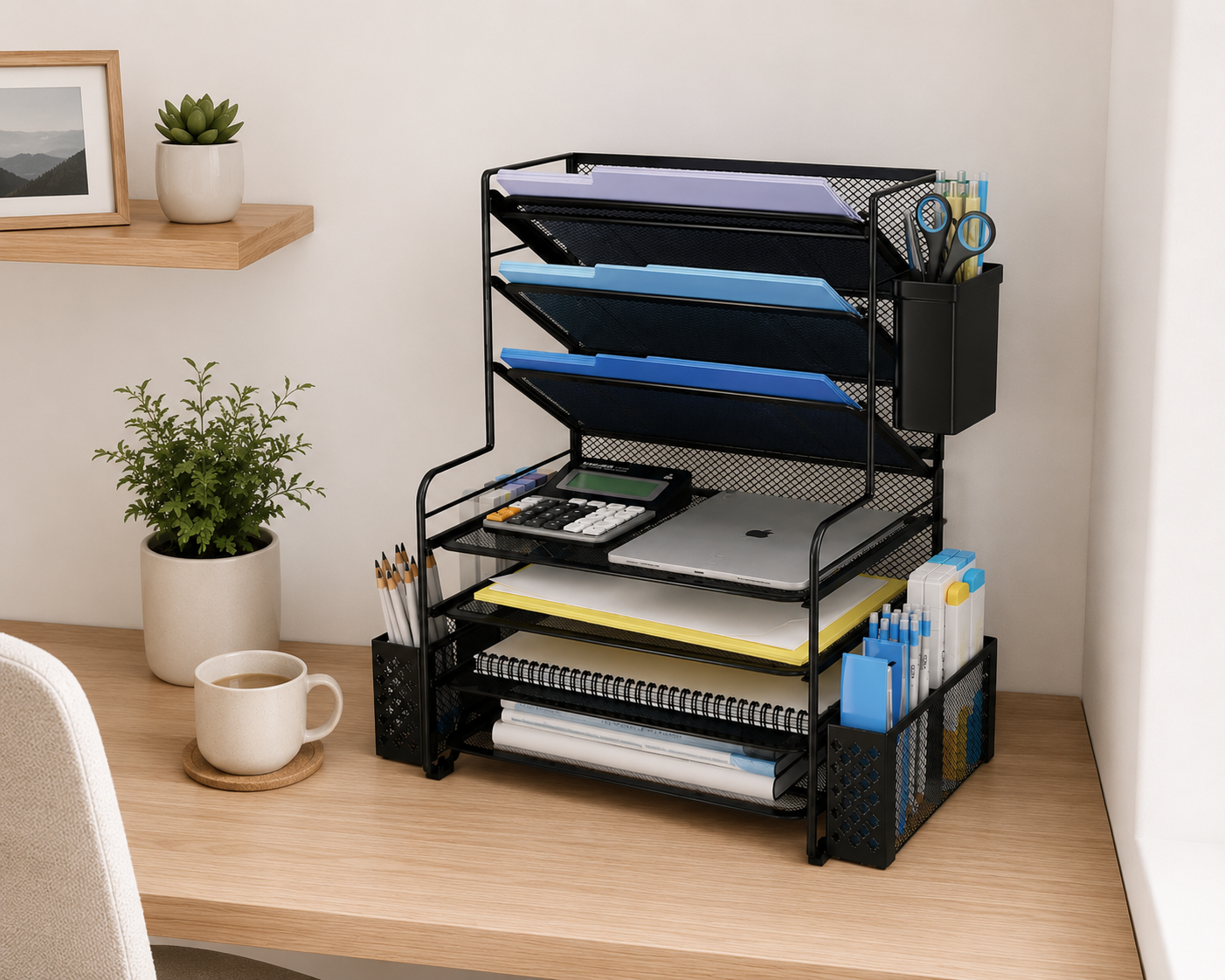
1. Vertical File Organizer for Papers and Supplies
A multi-tier file organizer stacks papers, folders, and small supplies upward instead of spreading them across the desk. Many versions include a pen holder or hanging basket built in, so several loose items can be consolidated into one compact tower.
Consider putting your most-used folders in the top tiers and archived material lower down, so the things you reach for most often stay closest to hand.
Best for: desks where paper clutter tends to build up quickly.
This 7-tier desk organizer is perfect for small office spaces, helping keep papers, pens, and office essentials neatly organized while maximizing valuable desk space and reducing clutter.
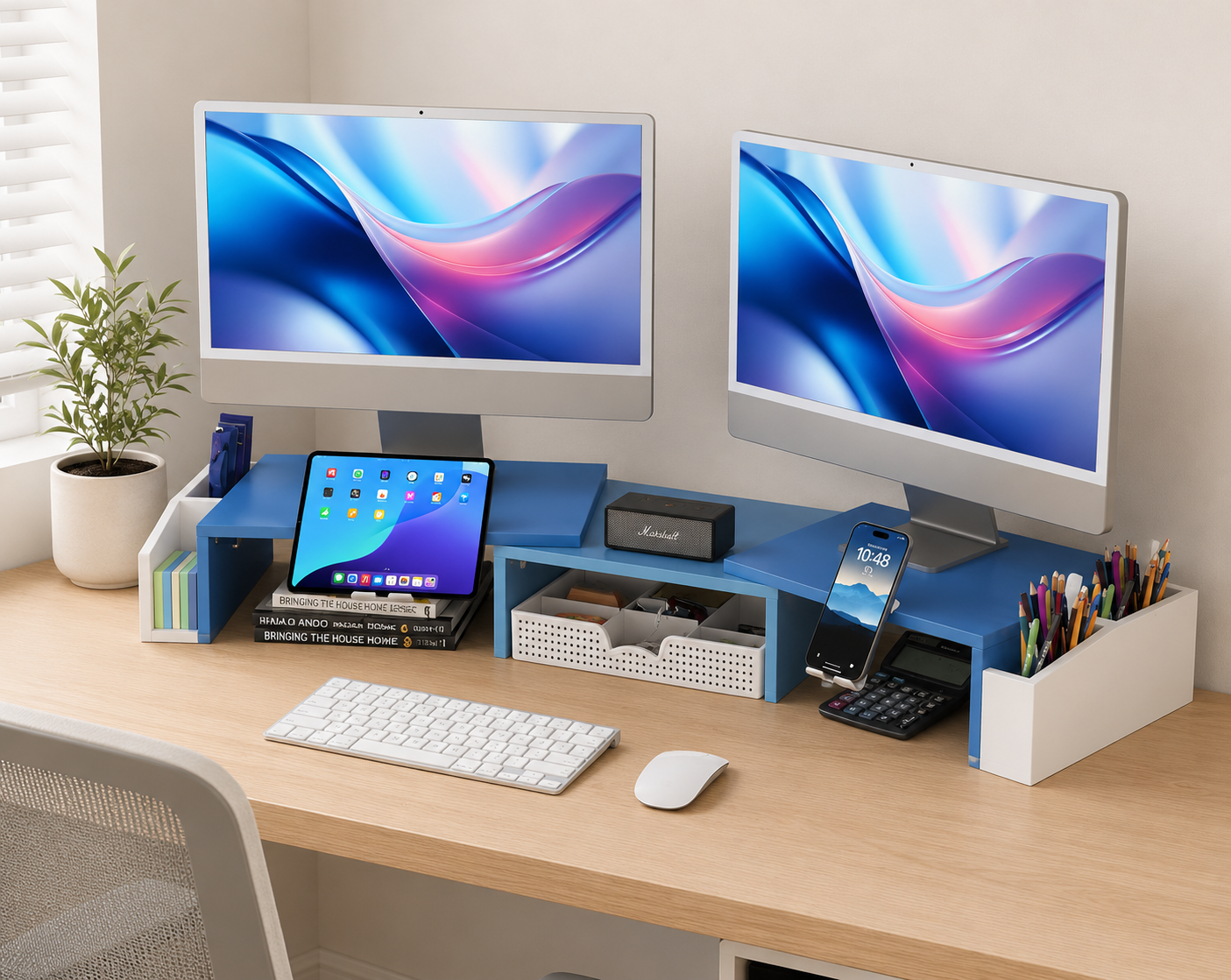
2. Monitor Stand with Storage Underneath
A monitor stand riser raises your screen closer to eye level, which can help with neck and shoulder strain during long work sessions, and creates a shelf underneath for a keyboard, notebook, or small containers. It's one of the more space-efficient upgrades available since it adds storage without adding furniture.
Before buying, check the stand's weight rating against your monitor or laptop, and measure your current eye-to-screen height to see how much of a lift you actually need.
Best for: anyone using a monitor or laptop who wants both better ergonomics and hidden storage.
This dual monitor stand is a smart office desk essential for small spaces, helping elevate screens for better posture while adding extra storage for office supplies, tablets, and everyday desk accessories.
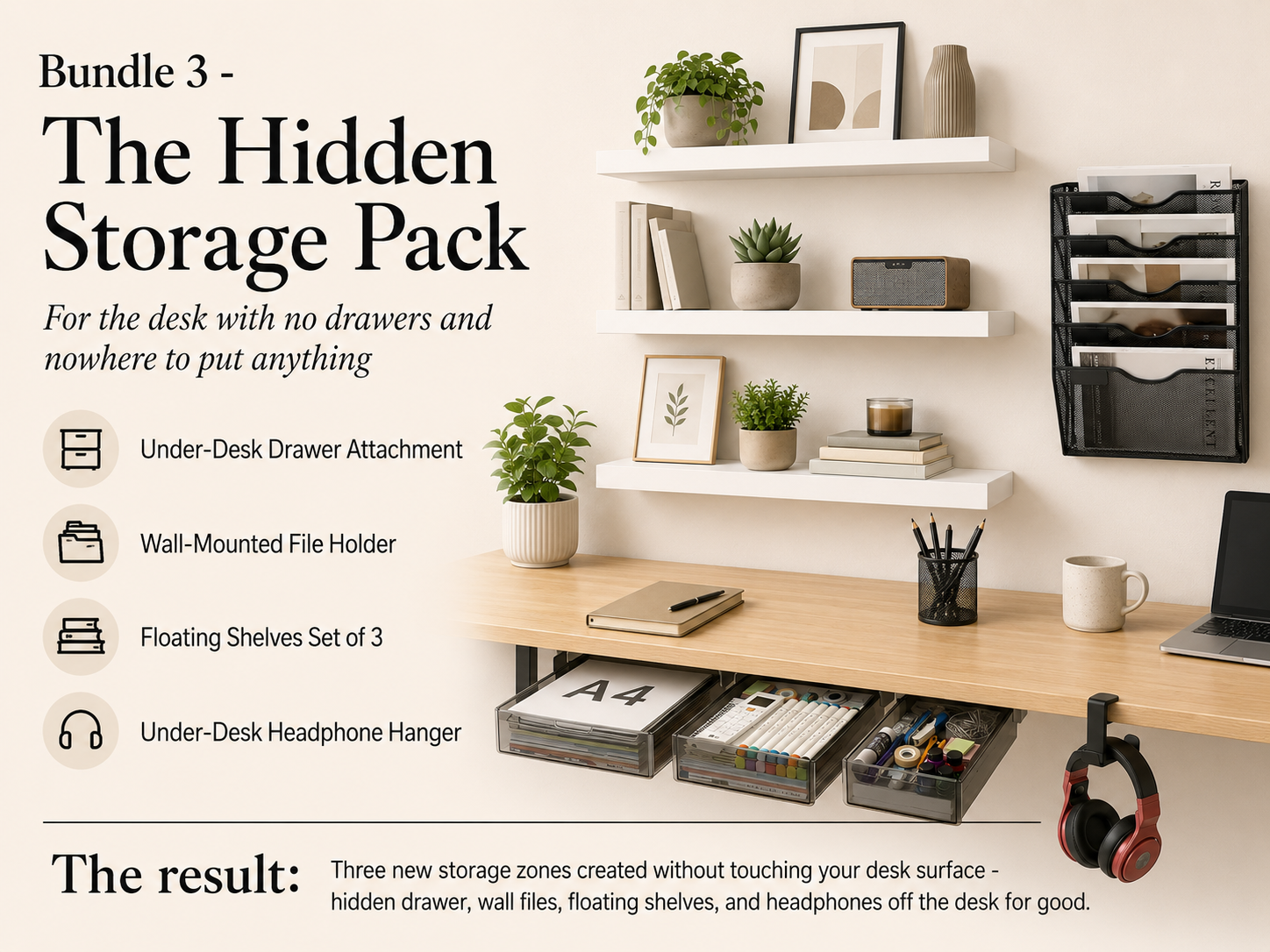
3. Wall-Mounted File Organizer
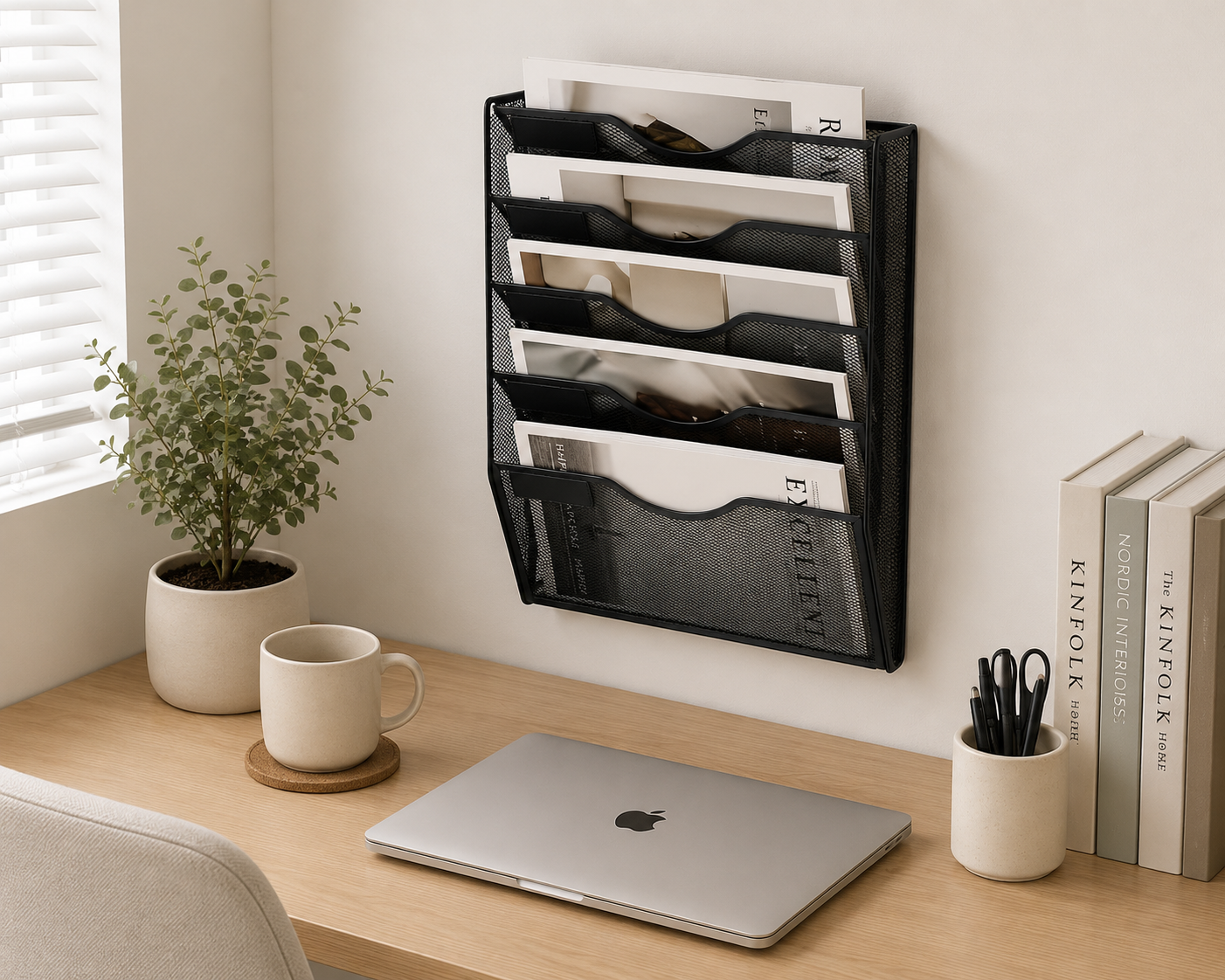
Wall space next to a desk is often the most underused storage option in a small room. A mesh or fabric wall-mounted organizer can hold files, mail, and documents in a few pockets, completely off the desk surface.
If you're renting, look for versions that use adhesive strips rather than screws, and check your lease for any restrictions on wall-mounted items before installing anything.
Best for: home offices with limited drawer space, or anyone who tends to misplace paperwork.
This wall-mounted file organizer is a smart office desk essential for small spaces, helping keep papers, mail, and documents organized while freeing up valuable desk space for a cleaner workspace.
4. Compact Tower Organizer with Drawers
A smaller file tower with built-in drawers can hold papers, pens, and supplies in one compact footprint, functioning similarly to the taller organizer above but suited to desks with less vertical clearance (for example, under a shelf or cabinet).
If you already have the taller organizer from #1, you likely don't need both. Choose based on your available vertical space rather than adding one of each.
Best for: desks with limited overhead clearance that still need multiple types of storage in one place.
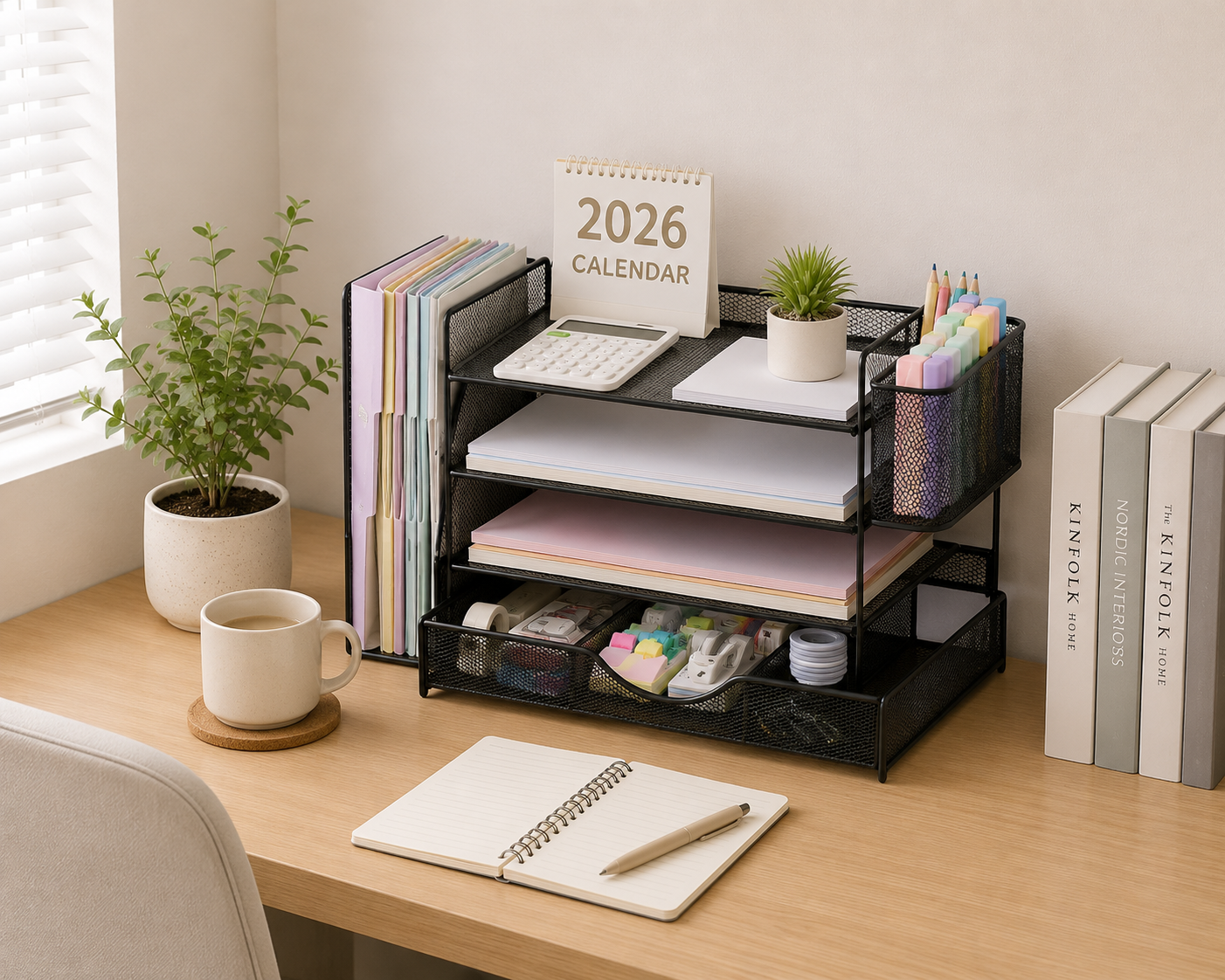
This multi-tier desk organizer is perfect for small office spaces, helping keep documents, pens, and office supplies neatly organized while maximizing desk space for a cleaner and more productive workspace.
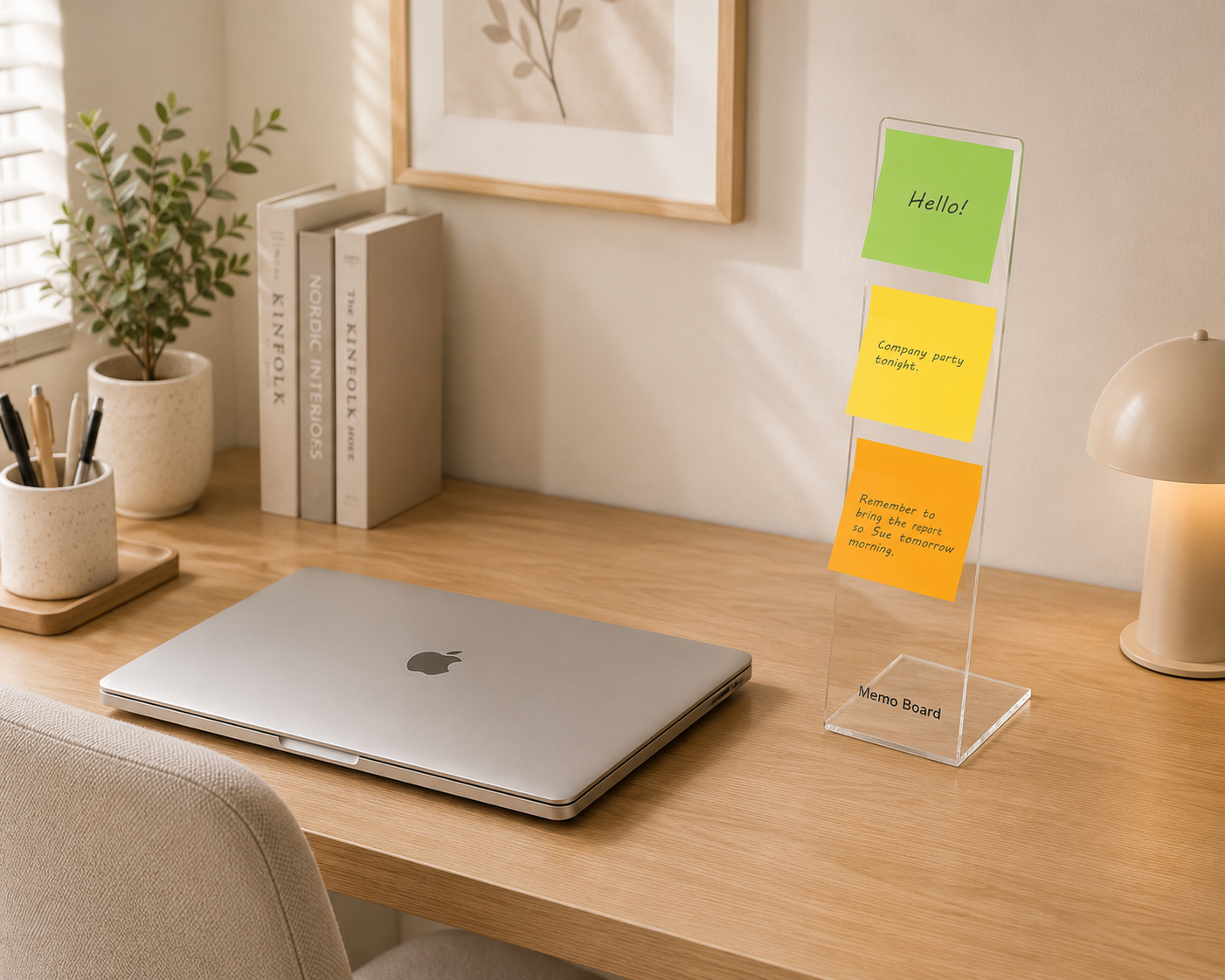
5. Acrylic Memo Board for Your Monitor
Sticky notes scattered across a desk add to visual clutter. A clear acrylic memo board that clips onto the edge of a monitor keeps a handful of reminders in your line of sight without taking up desk space.
This works best for a small number of active reminders. If you find yourself covering the whole board, it's usually a sign you need a task list or planner instead.
Best for: anyone who relies on visual reminders but wants them off the desk itself.
These acrylic monitor memo boards are perfect office desk essentials for small spaces, helping keep reminders, sticky notes, and daily tasks visible without adding clutter to your workspace.
Section 2: Lighting and Comfort Without the Bulk
A traditional lamp with a wide base can claim a surprising amount of desk space before it's even switched on.
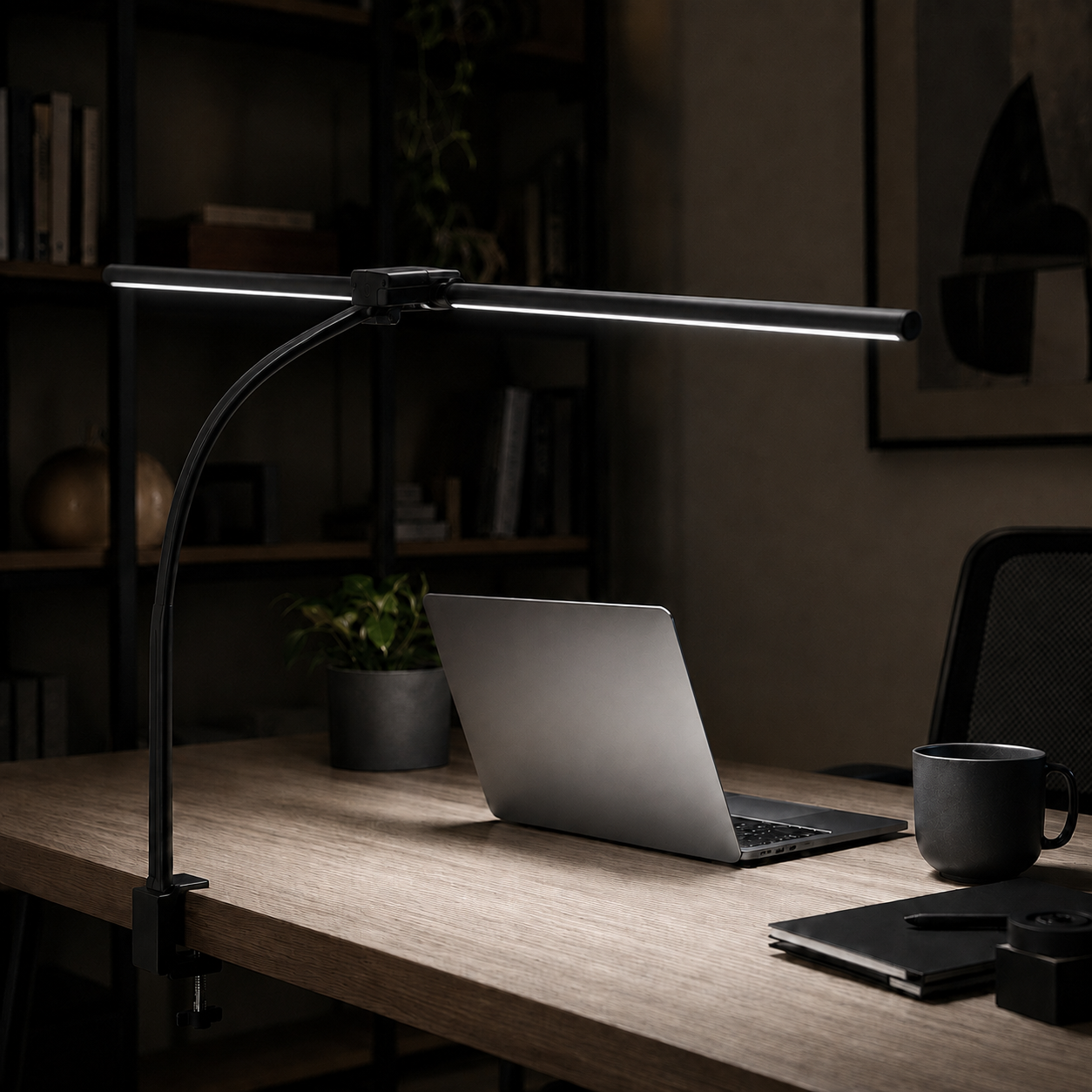
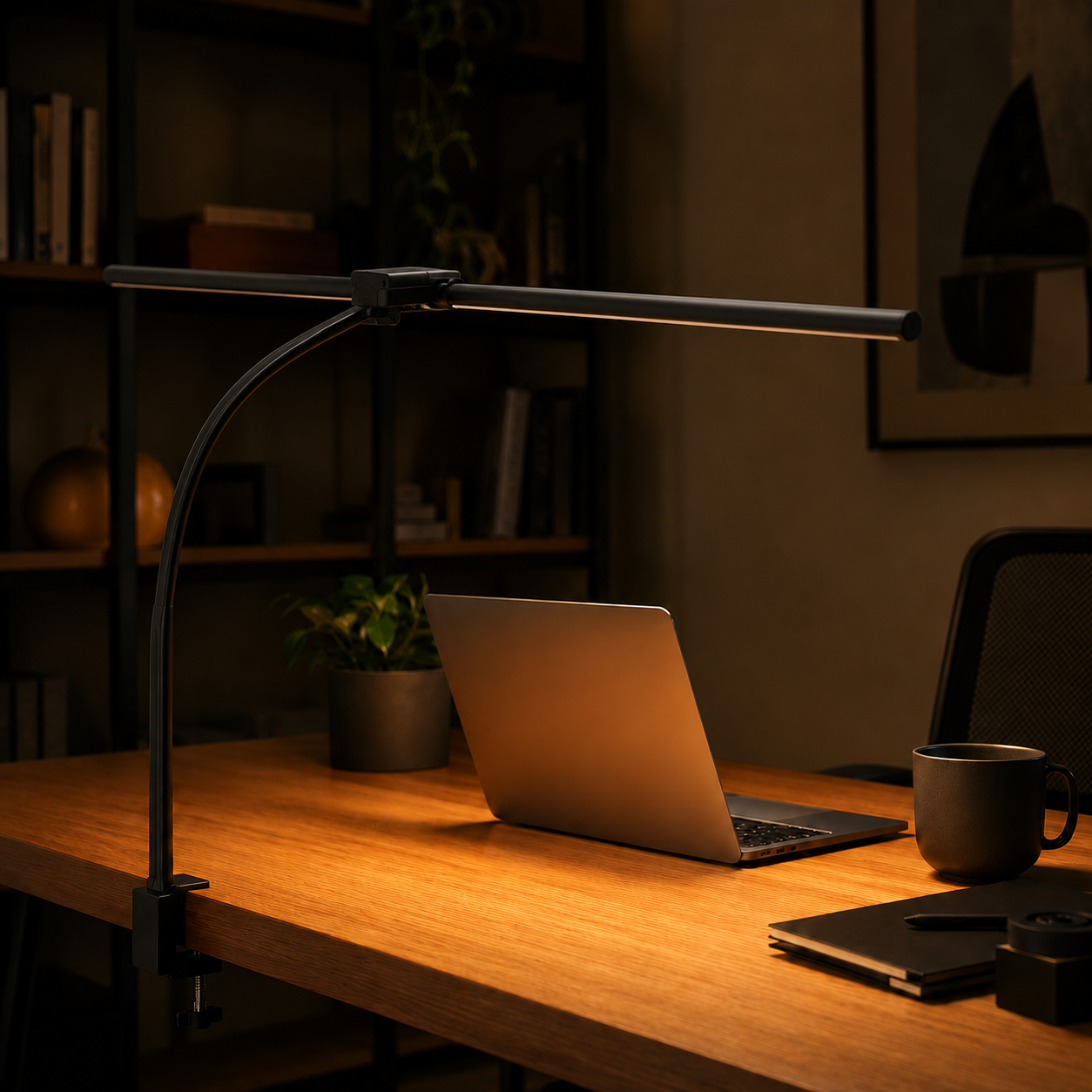
6. Clamp-On LED Desk Lamp
A lamp that clamps directly to the edge of the desk avoids the footprint of a traditional base entirely. Many options include adjustable color temperature and brightness, which can help reduce eye strain during evening work sessions.
Check your desk's edge thickness against the clamp's stated range before ordering, since some clamps don't fit particularly thick or thin edges.
Best for: small desks, dim rooms, or anyone working regularly in the evening.
7. Foldable Laptop Stand
A laptop stand that folds flat is useful on a desk that serves more than one purpose, for instance a table also used for meals or hobbies. It raises the screen to a more comfortable viewing height when you're working and can be tucked away or folded down when the surface is needed for something else.
Best for: multi-purpose desks or tables that need to switch between work and other uses.
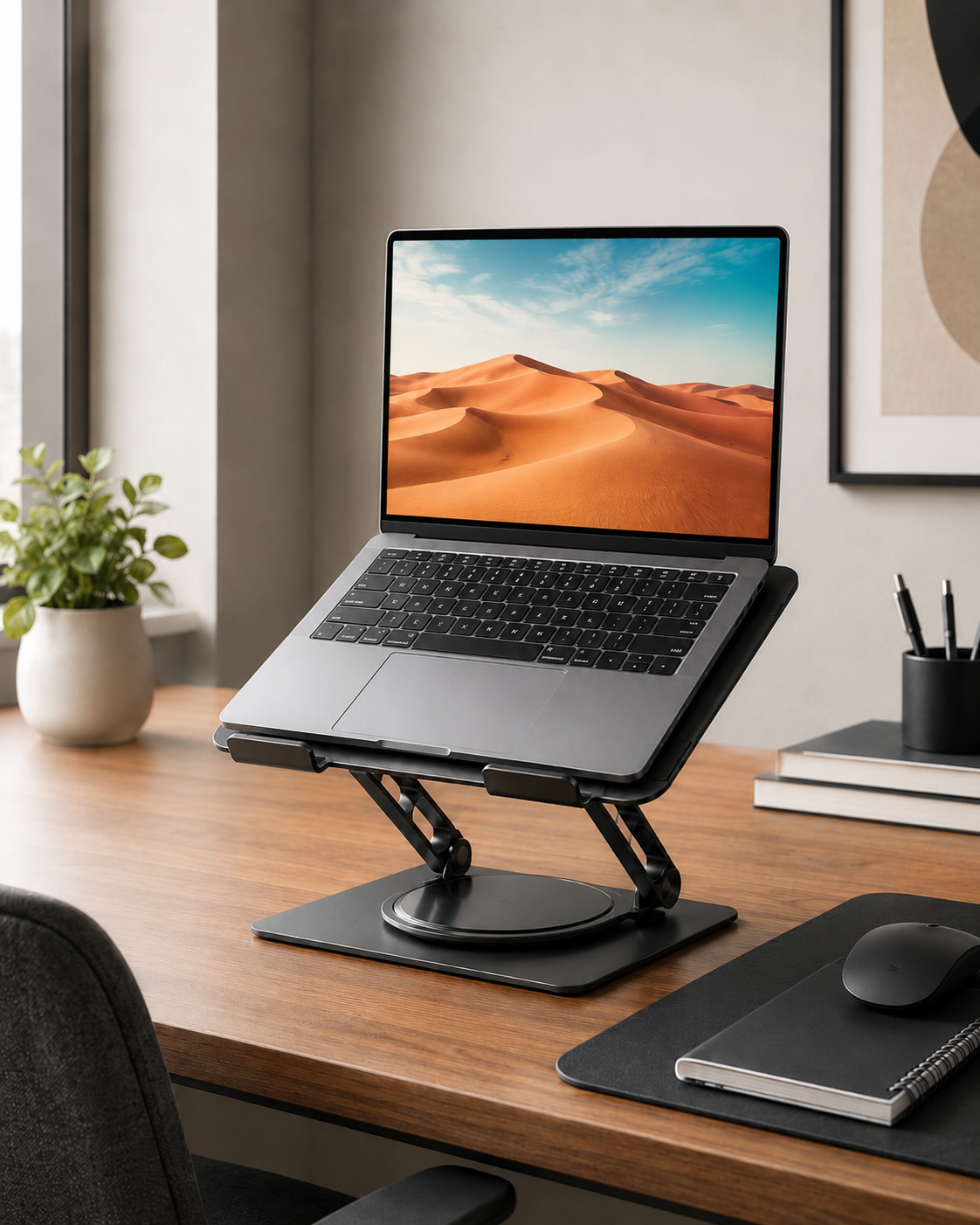
This adjustable laptop stand is a smart office desk essential for small spaces, helping elevate your screen for better posture while creating a cleaner, more comfortable, and productive workspace.
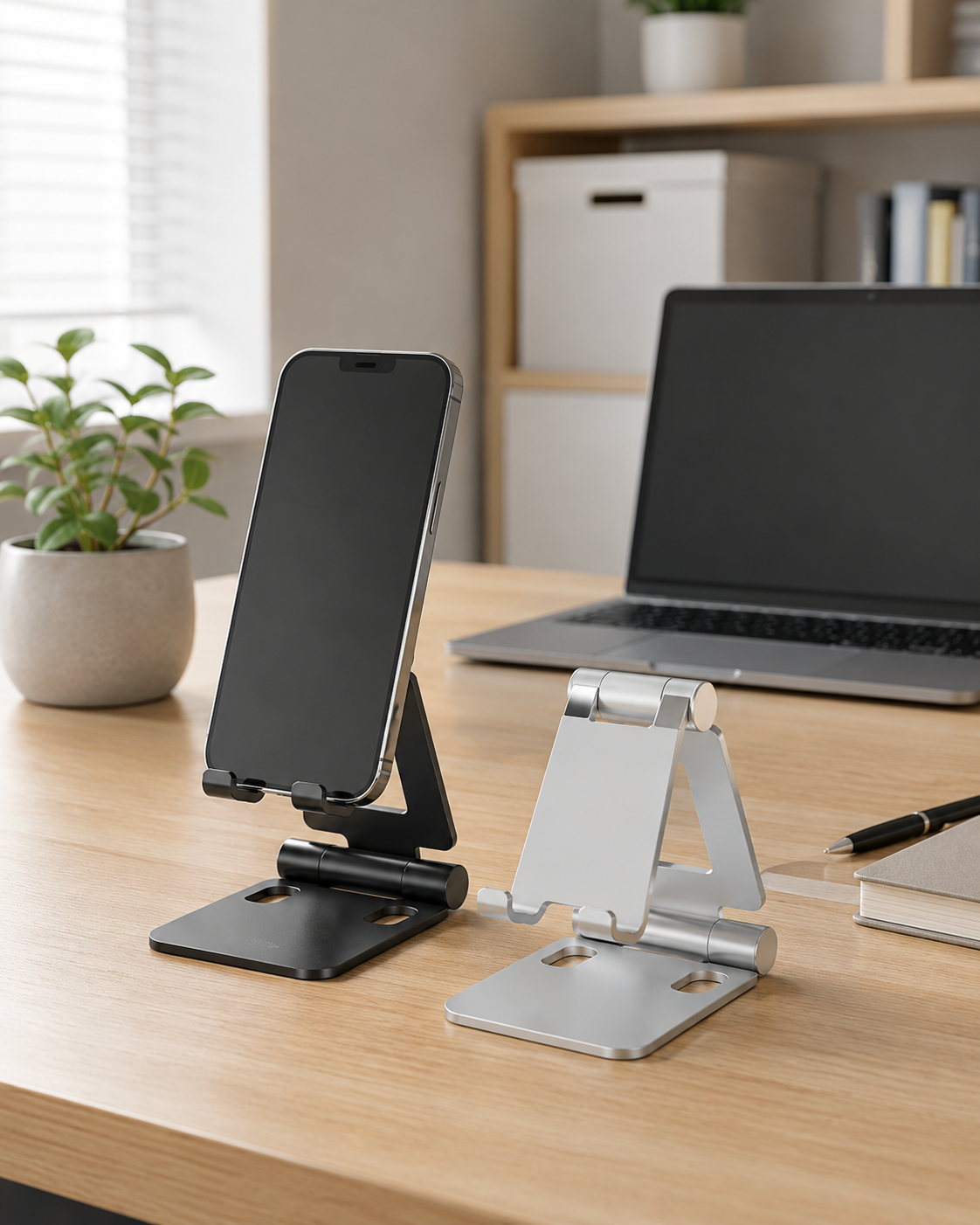
8. Foldable Phone Stand
A phone left flat on a desk tends to get picked up and put down constantly, which adds to the sense of clutter even when it isn't really in the way. A slim foldable stand keeps it upright and visible in a much smaller footprint than a case or a flat surface, useful for calls, timers, or keeping notifications visible without holding the phone.
Best for: frequent video calls or anyone who uses their phone as a secondary reference screen.
This adjustable phone stand is a practical office desk essential for small spaces, keeping your phone visible and within reach for calls, notifications, videos, and multitasking while reducing desk clutter.
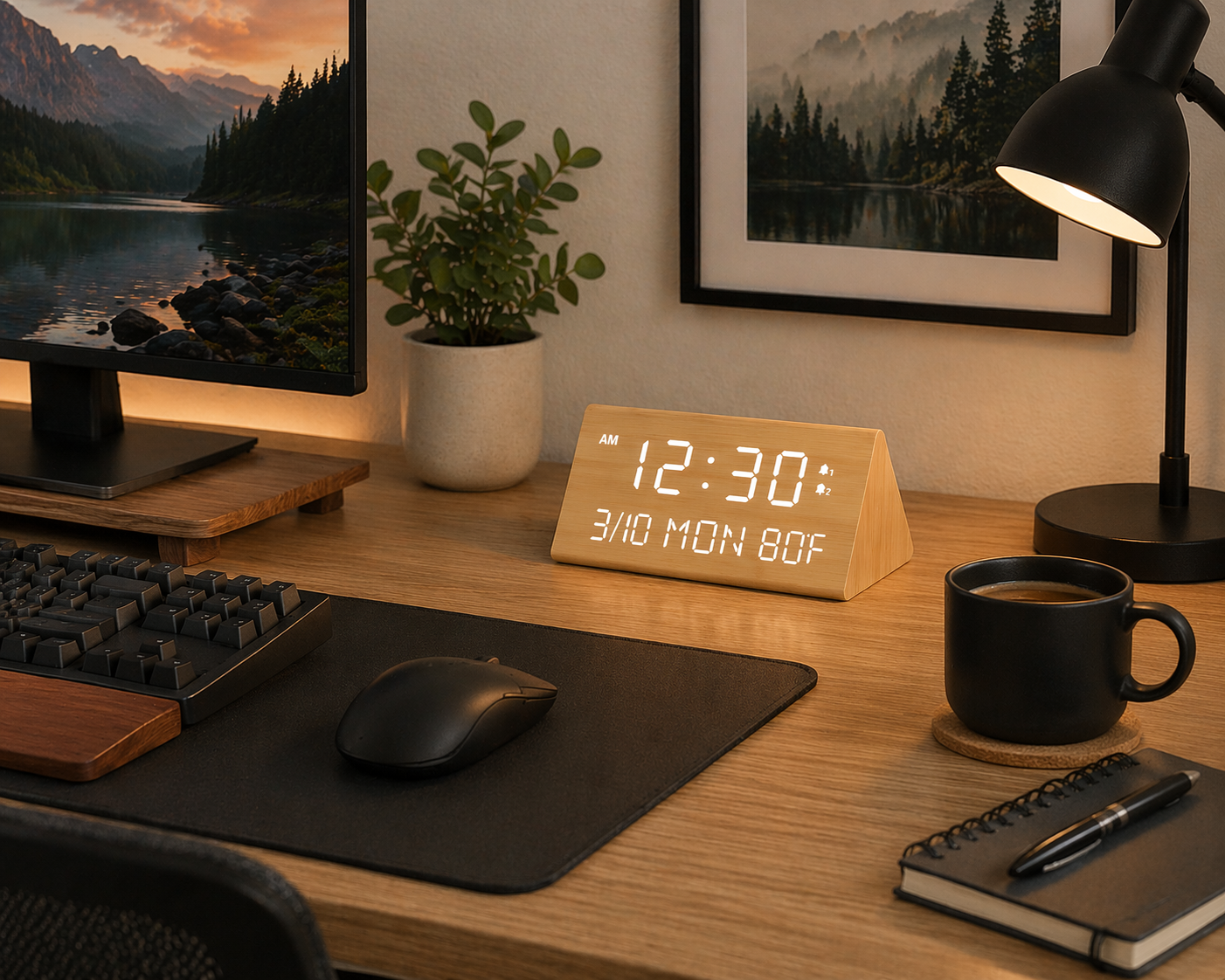
9. Small Digital Desk Clock
Reaching for a phone to check the time often comes with the risk of getting pulled into a notification. A small clock with an adjustable display can show the time (and sometimes date or temperature) at a glance, without inviting a scroll.
Best for: anyone trying to reduce phone checks during focused work.
This wooden digital alarm clock is a practical office desk essential for small spaces, helping you stay on schedule while adding a clean and minimalist touch to your workspace without taking up extra room.
Section 3: Cable Management and Hidden Storage
Visible cables and cords tend to make a small desk look more cluttered than it actually is, and they're worth a closer look for safety reasons as well as tidiness.
A quick safety note: when managing cables, avoid running cords across walkways where they could be a trip hazard, and check that any power strip or extension cord you use is rated for the number and type of devices plugged into it. Cable organizers help with appearance, but they aren't a substitute for basic electrical safety practices.
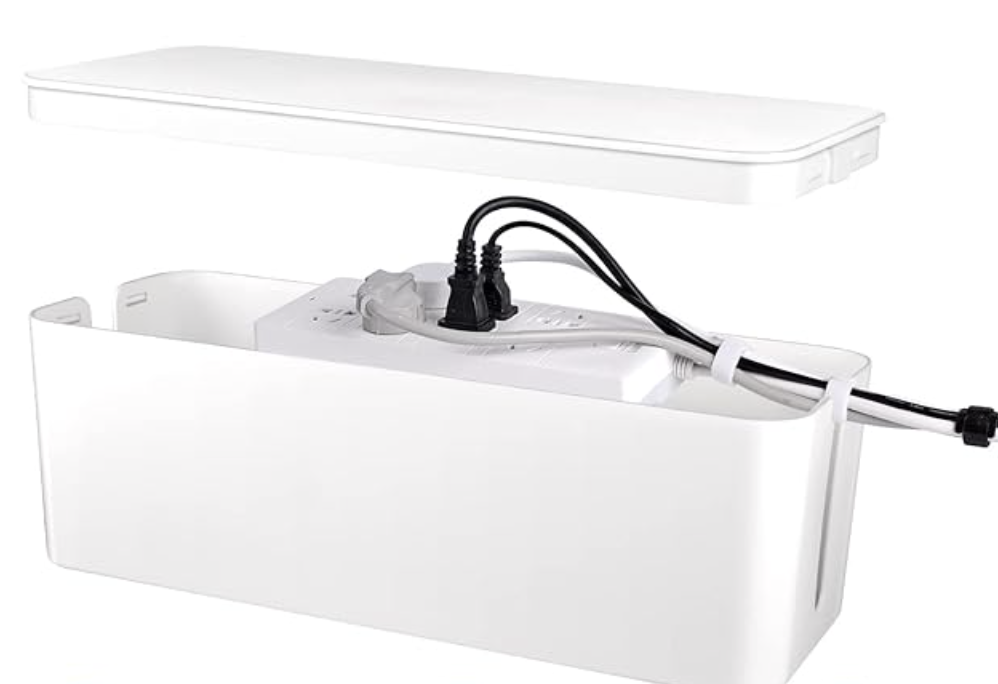
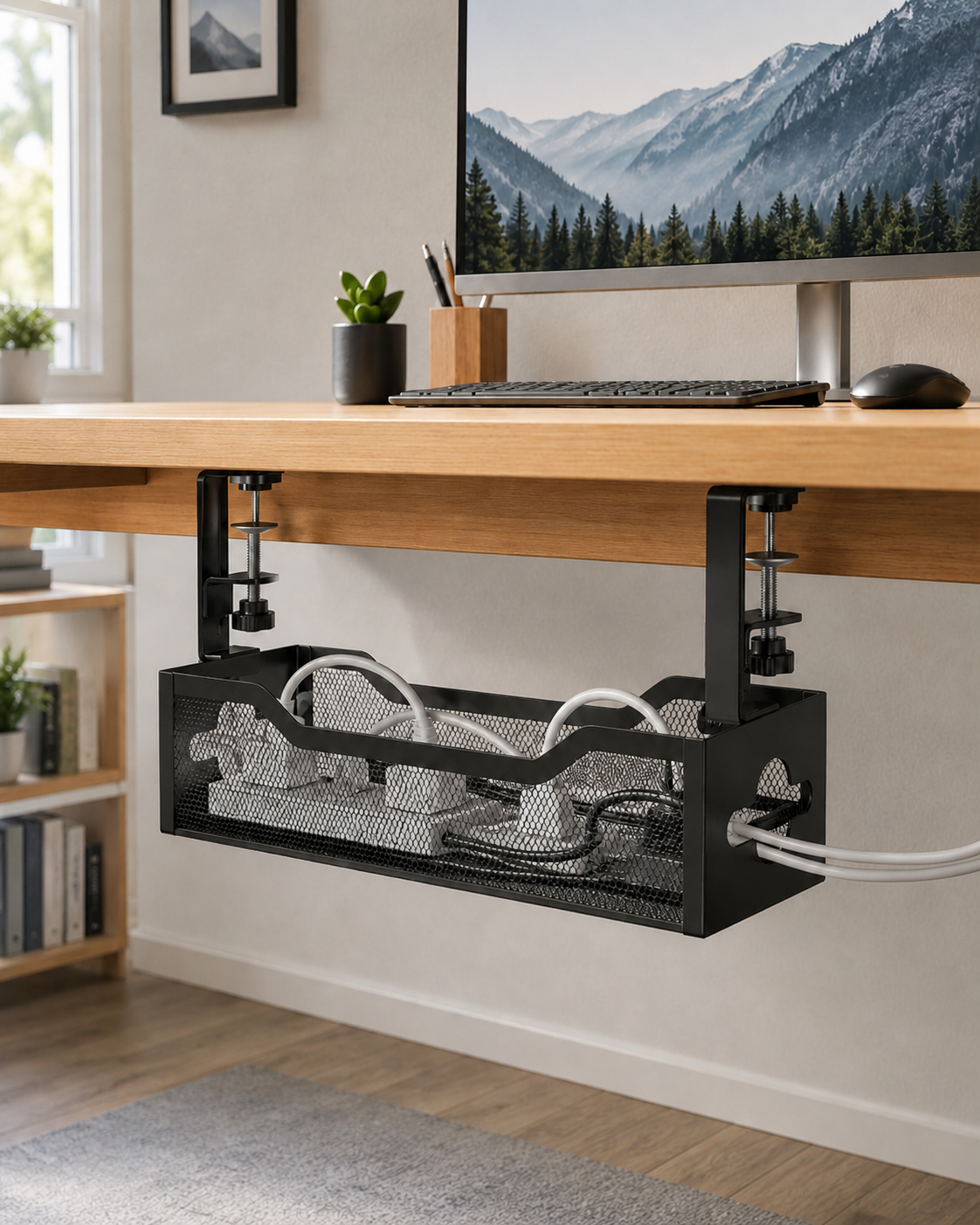
10. Cable Management Boxes and Under-Desk Tray
A set of cable management boxes can hide power strips and cord tangles, while a separate under-desk tray keeps additional cords off the visible surface. Used together, they address both the cords you can see and the ones running along the floor or desk legs.
Best for: desks with multiple devices and a visible tangle of cords.
If your bigger issue is everyday work setup rather than desk clutter alone, these office must-haves focus on cables, comfort, storage, and the small frustrations that interrupt a workday.
11. Multi-Device Charging Station
A compact charging hub can consolidate several charging cables into one spot instead of multiple chargers competing for the same outlets and desk space. If you're using a hub with several devices, check its total wattage output against what each device needs, especially for anything that charges faster with higher-wattage input.
Best for: anyone charging multiple devices at the same desk.


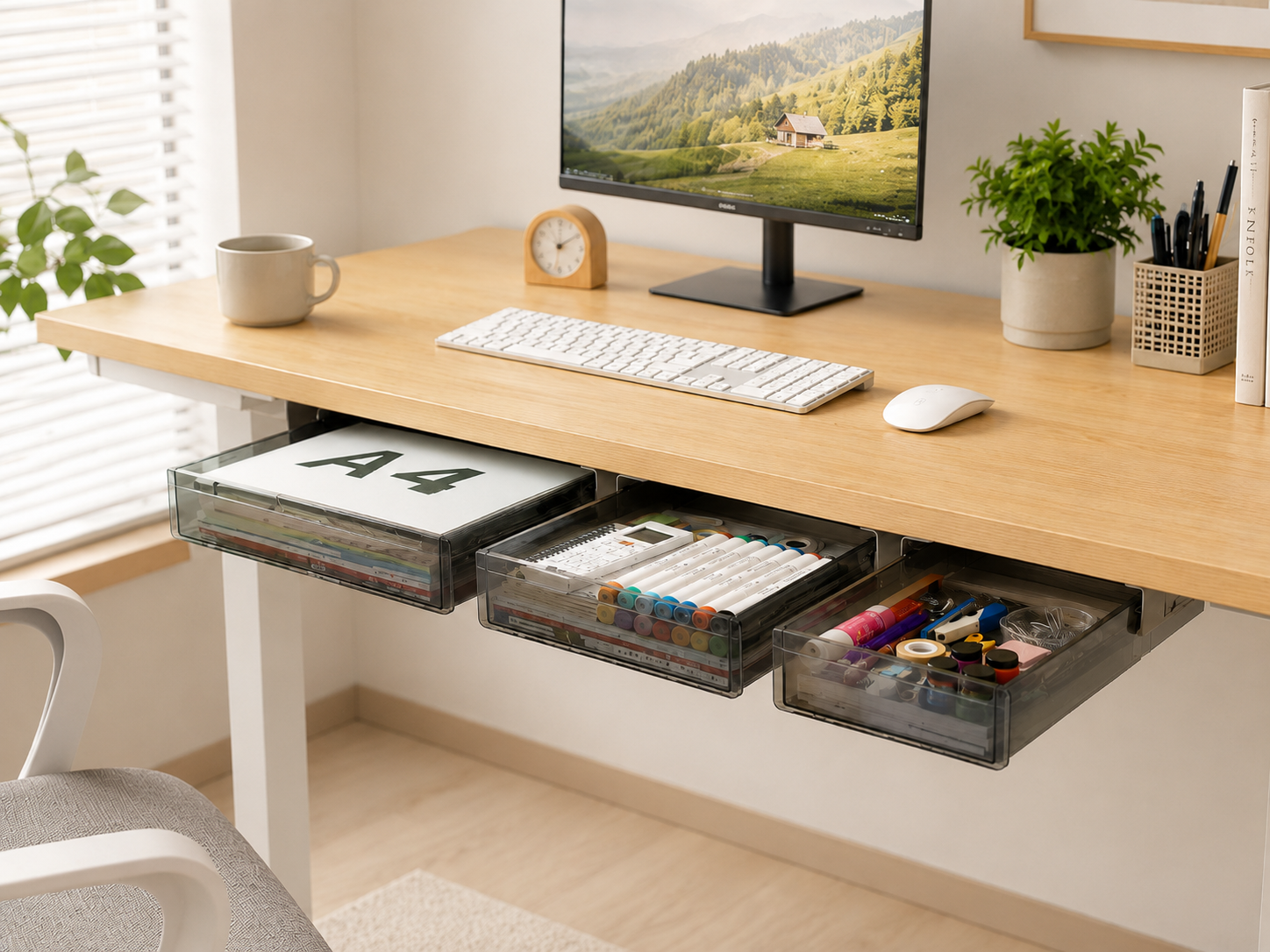
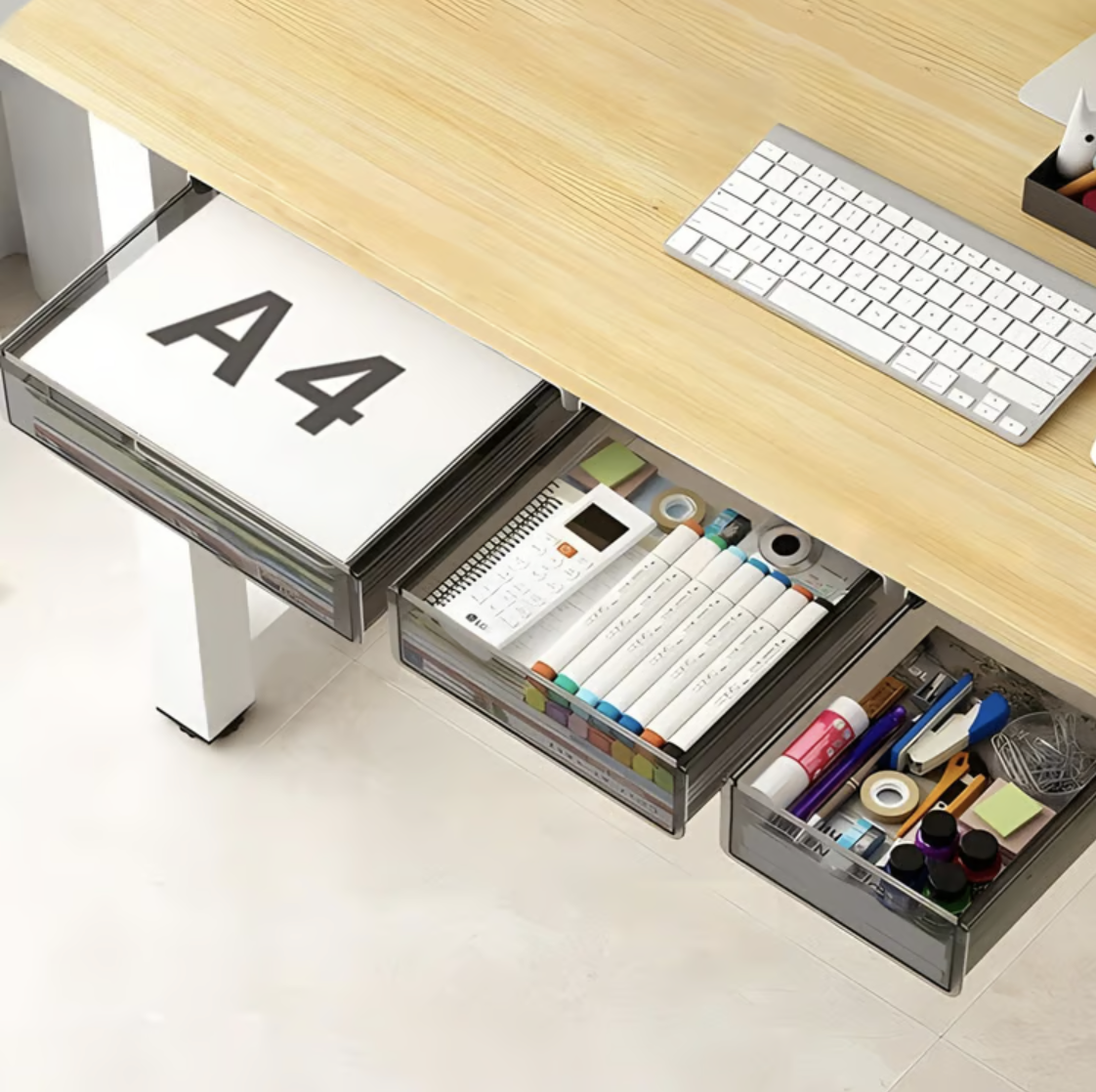
12. Under-Desk Drawer Attachment
For desks without built-in drawers, an attachable under-desk drawer creates hidden storage for pens, sticky notes, and other small items, without needing a new piece of furniture. Check the attachment method (clamp versus adhesive) against your desk's material before buying, since not every attachment style works well on every surface.
Best for: simple desks with no drawers and nowhere to stash small everyday items.
13. Under-Desk Headphone Hanger
A clamp-on hanger stores headphones underneath the desk instead of on top of it, keeping them out of the way but still within easy reach. A swivel design allows the hanger to be positioned at different angles depending on where you sit.
Best for: daily headphone users who are short on surface space.
This rotating headphone stand is a smart office desk essential for small spaces, helping keep headphones off your desk and organized while reducing clutter and freeing up valuable workspace.
Section 4: Finishing Touches
A few smaller details can make a compact desk setup feel more deliberate.
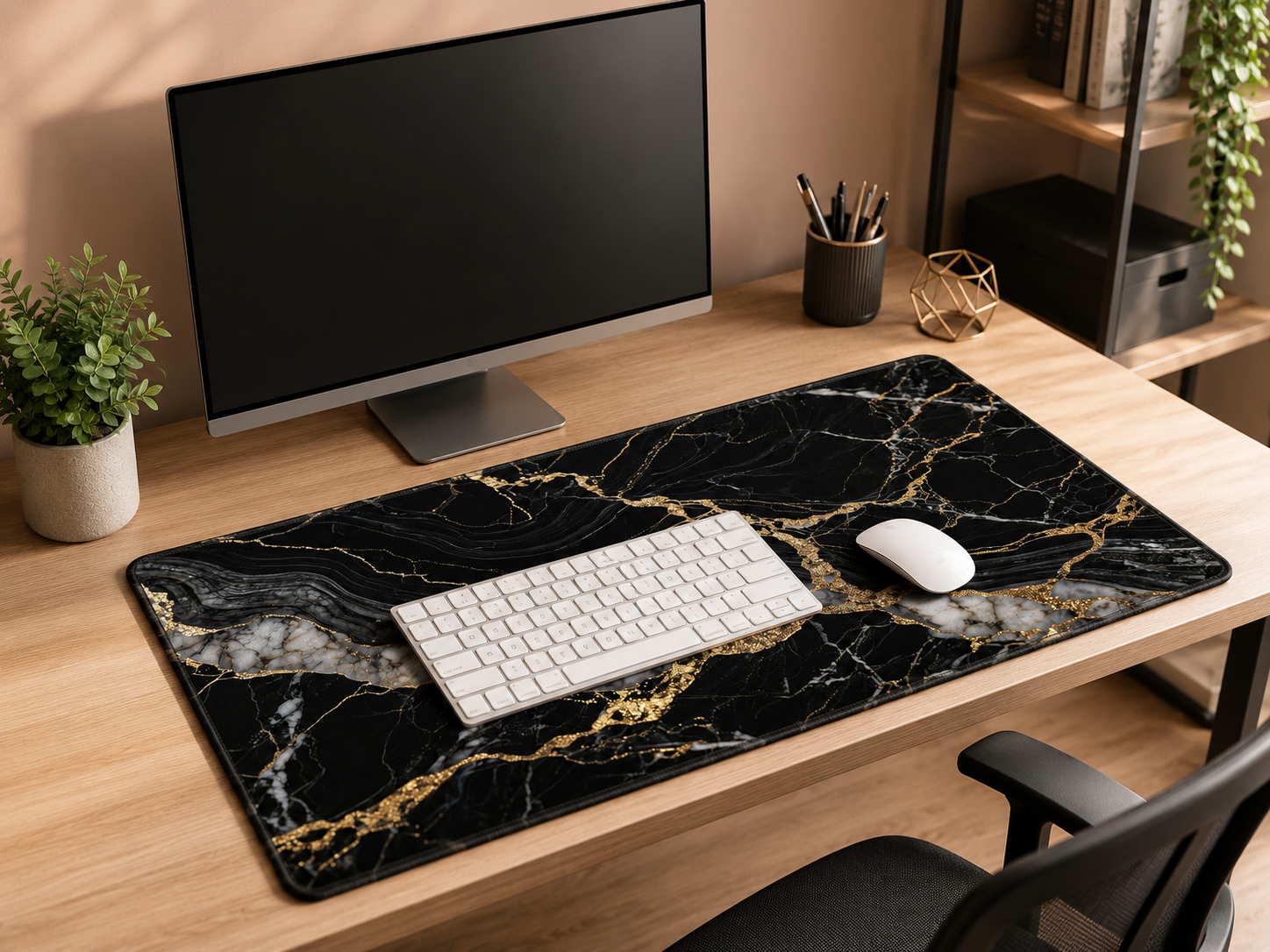
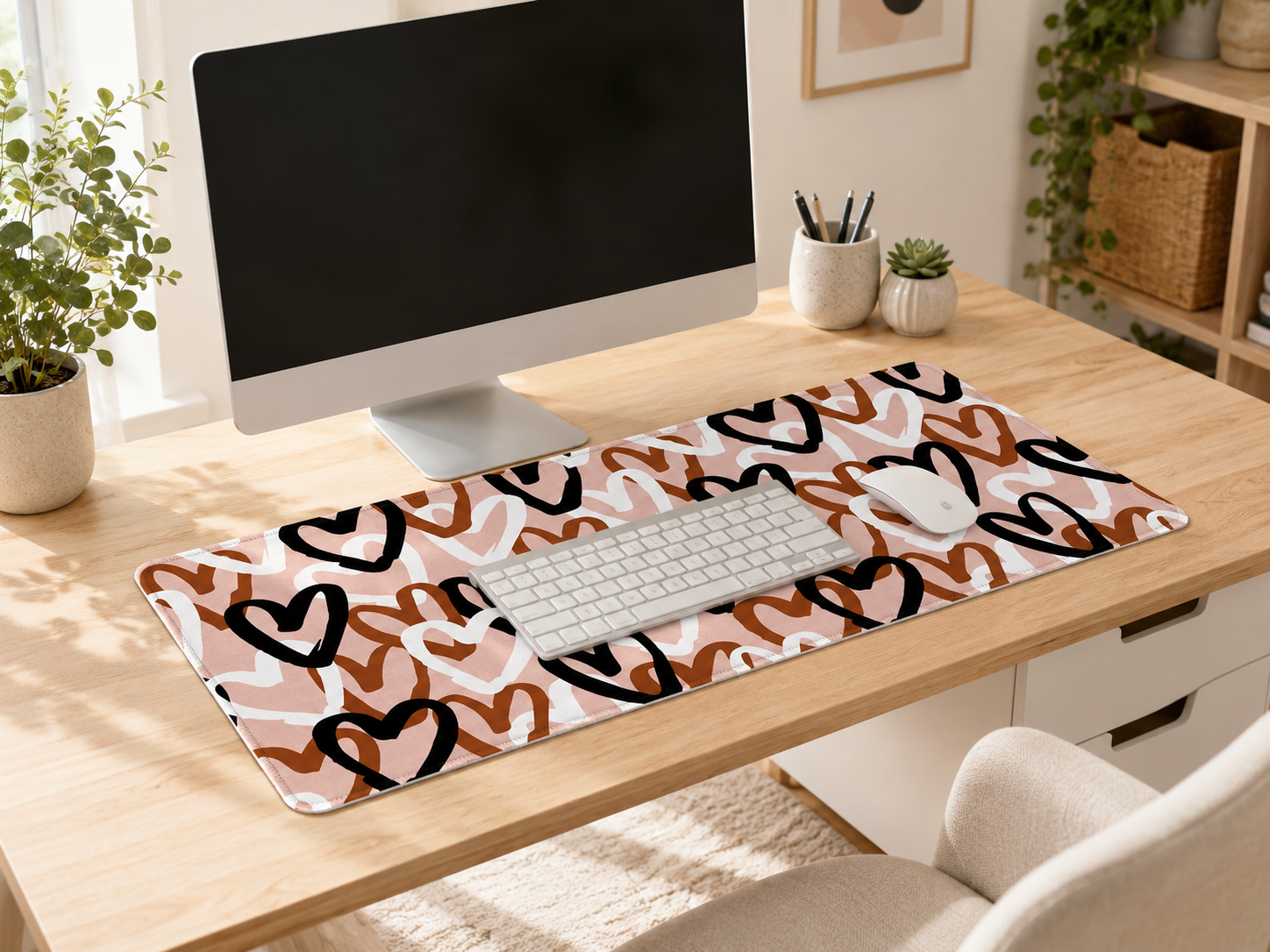
14. Extended Desk Mat
A full-desk mat defines the boundaries of a workspace and protects the surface from scratches and spills. It's a simple way to make even a basic desk setup feel more put together, and it can also help visually unify a desk that has several different organizers on it.
Best for: anyone who wants surface protection or a more cohesive look across mismatched furniture and accessories.
15. Slim Wireless Keyboard and Mouse Set
A slimmer keyboard and mouse set can take up meaningfully less space than a standard-size set, and a wireless design removes one more cable from an already busy desk. This is a relatively easy swap if your current keyboard is bulkier than you need.
Best for: anyone who wants to reclaim a few inches of desk depth.
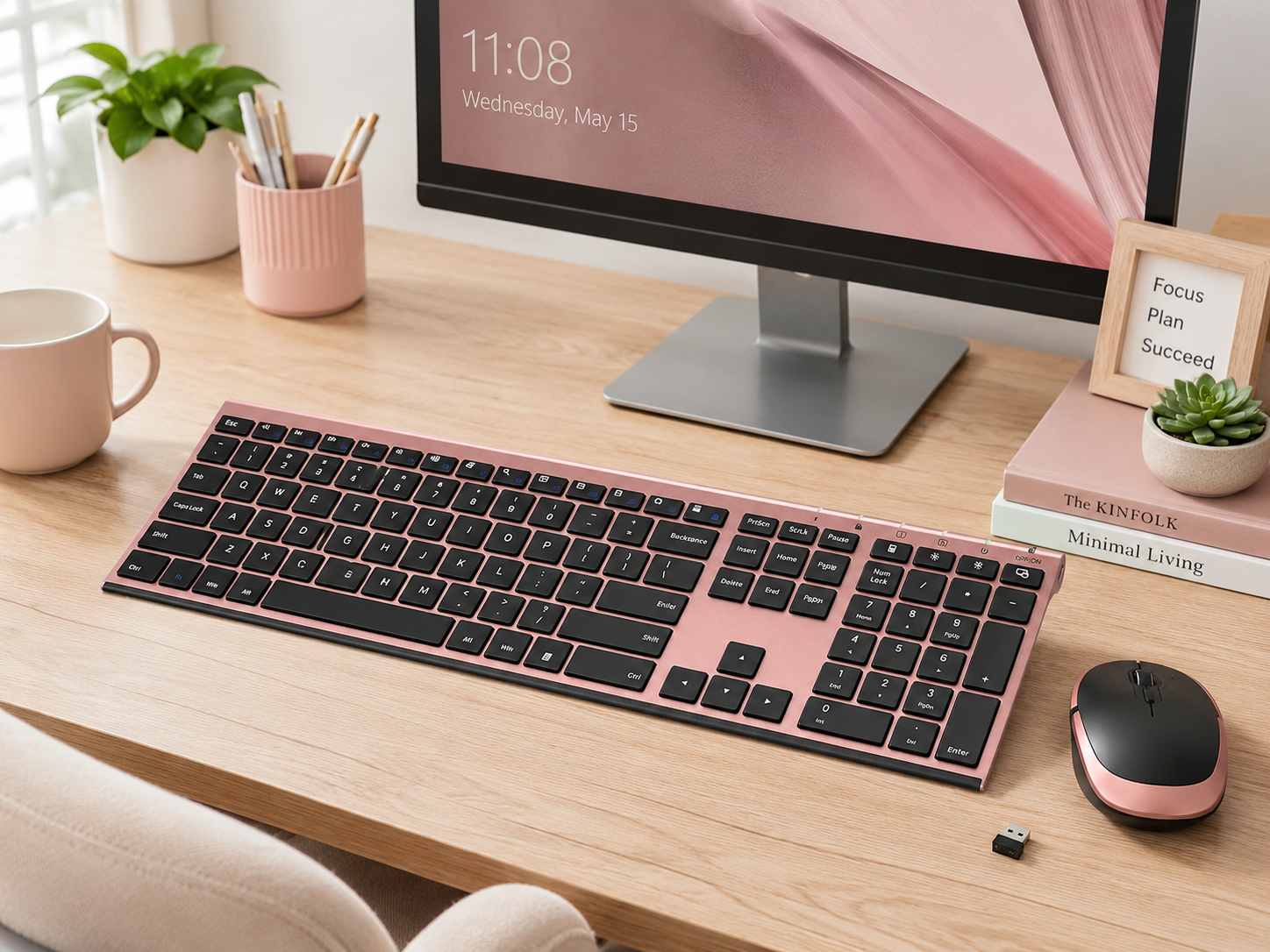
This wireless keyboard and mouse combo is a practical office desk essential for small spaces, helping create a cleaner and more organized workspace with a compact design and fewer cable distractions.
16. Vertical Pen Holder with Drawer
Loose pens, markers, and scissors are a common source of visual clutter on a small desk. A vertical pen holder keeps writing tools upright and contained in a footprint smaller than a coffee mug, with a small drawer for anything you'd rather not have on display.
Best for: anyone who uses multiple writing tools regularly.
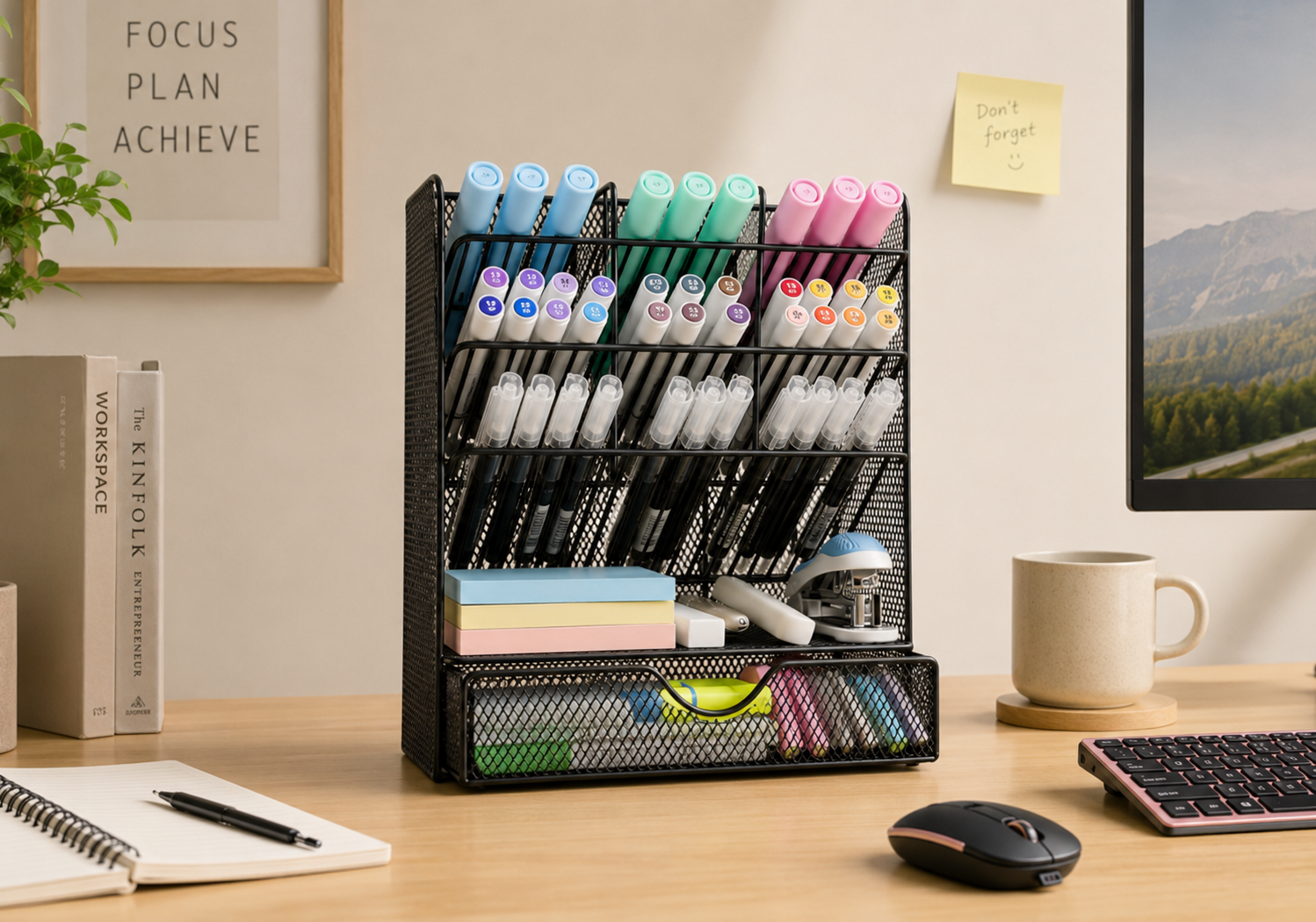
This metal desk organizer is a useful office desk essential for small spaces, helping keep pens, pencils, sticky notes, and everyday supplies neatly organized while reducing desk clutter.
17. Floating Wall Organizer for Small Essentials
A small wall-mounted organizer positioned beside the desk gives frequently used items (a phone, a remote, a set of keys) a consistent home that isn't the desk surface. Because it's within arm's reach, it tends to actually get used rather than becoming another catch-all.
Best for: anyone whose desk collects small everyday items that don't have another obvious home.

This wall-mounted organizer is a smart office desk essential for small spaces, helping keep phones, notebooks, remotes, and small accessories organized while freeing up valuable desk space.
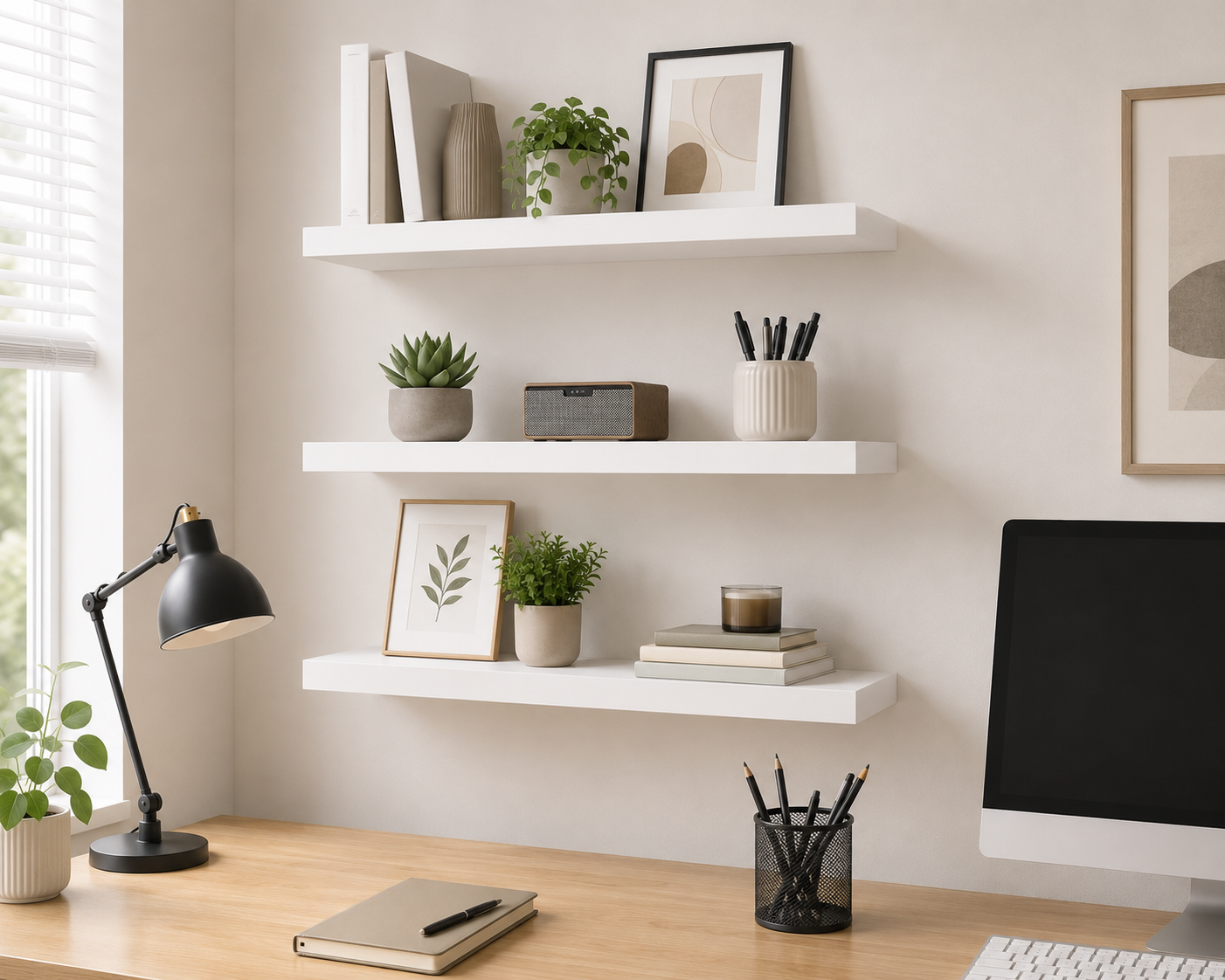
18. Floating Shelves Above the Desk
The wall directly above a desk is often unused space. A set of floating shelves can hold books, bins, or small decor items, moving storage off the desk entirely. If you rent, look for shelf brackets rated for wall anchors that don't require large or permanent holes, and check your lease before installing.
Best for: anyone who wants additional storage without adding desk-level furniture.
These floating wall shelves are perfect office desk essentials for small spaces, helping maximize vertical storage while keeping desks clear and creating a cleaner, more organized workspace.
If your desk is part of a rental or small apartment, these renter-friendly apartment ideas include more no-drill storage and space-saving solutions beyond the workspace.
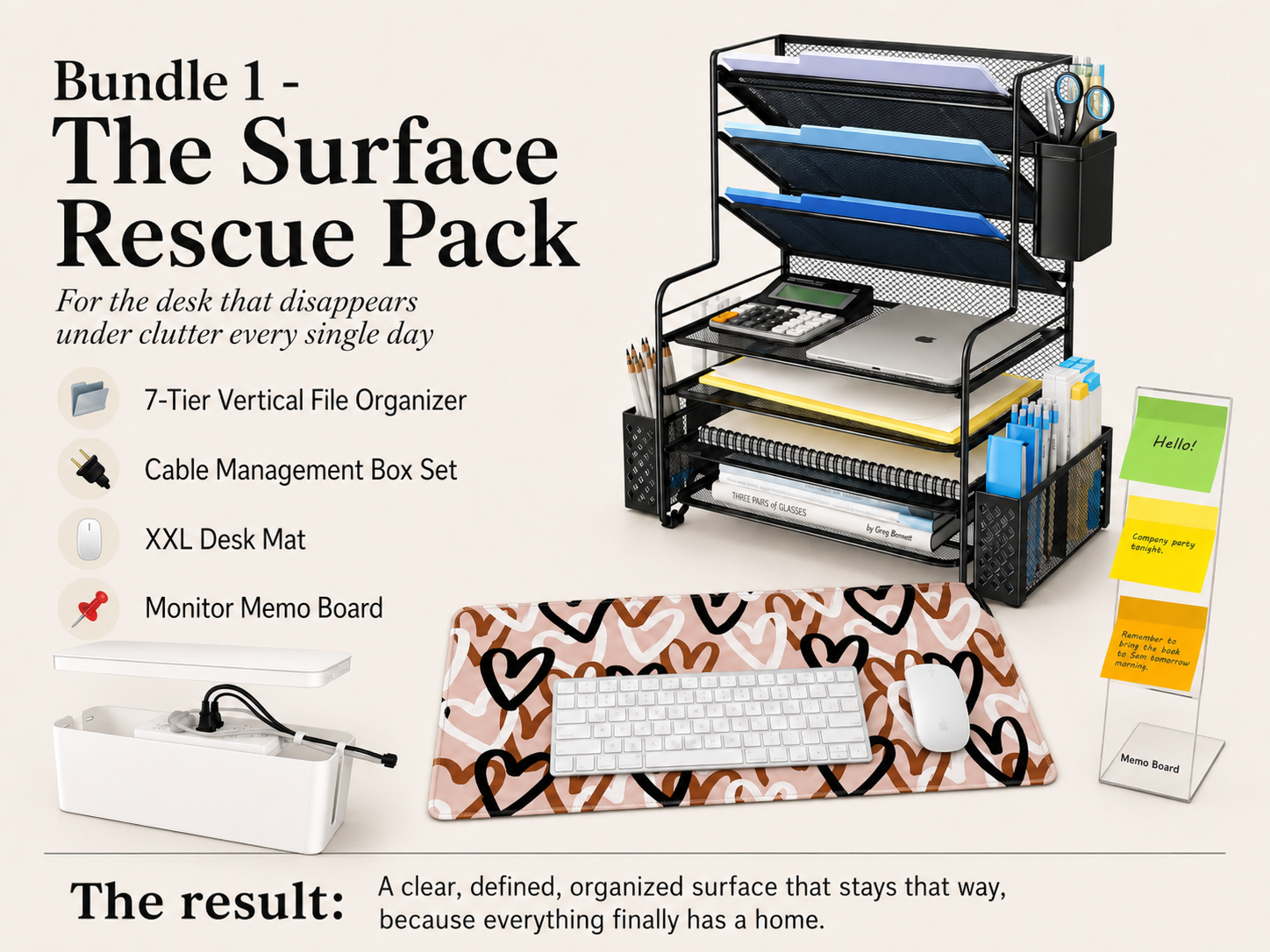
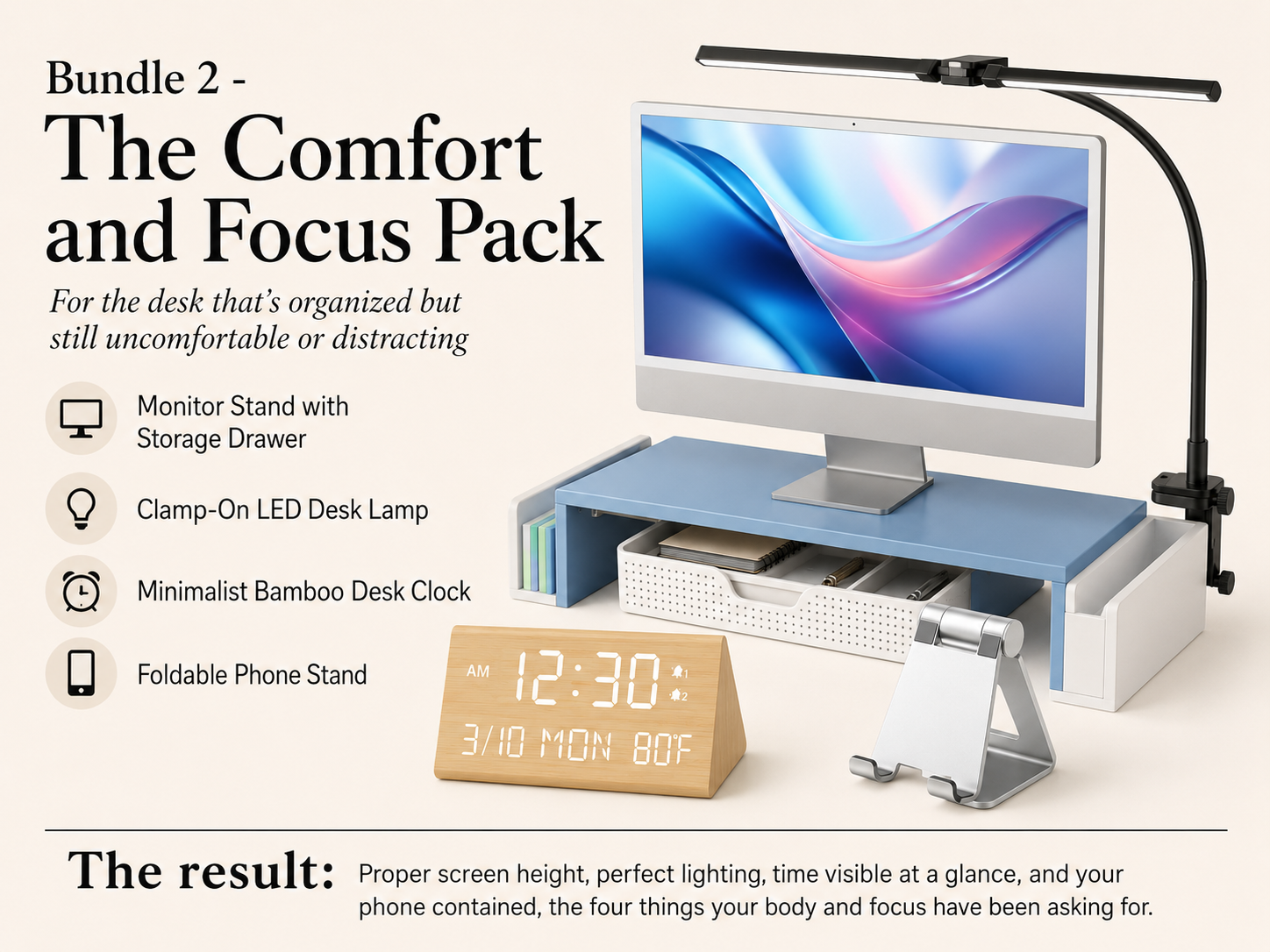
Build Your Perfect Small Desk - Three Starter Bundles
Not sure where to begin? Pick the bundle that matches your biggest frustration:

Budget-Friendly and No-Purchase Alternatives
Not every small desk problem requires a new product. A few no-cost or low-cost options worth considering before buying:
Repurpose containers you already own. Mason jars, mugs, or small boxes can work as pen holders or catch-all trays.
Use binder clips or command hooks to route cables along the underside of a desk instead of buying a dedicated cable box.
Store reference papers in a folder in a drawer rather than in a standing file organizer if floor or vertical space is limited.
Declutter first. Before adding any organizer, sorting through what's currently on the desk and removing what you don't need often solves more of the problem than a new product will.
These aren't the right fit for every situation, but they're worth considering if you'd rather not buy something new right away, or if you're testing an organization system before committing to it.
Choosing What's Actually Right for Your Desk
There's no single "correct" small desk setup. The right combination depends on your available space, how you actually work, what you're already dealing with (paper clutter, cable chaos, limited storage), and your budget. Start with whichever problem bothers you most, whether that's a cluttered surface, tangled cords, or a lack of storage, and add from there rather than trying to solve everything at once.
If you want more practical workspace upgrades beyond organization, these office gadgets include useful ideas for lighting, productivity, charging, and everyday desk comfort.
A small desk with the right few tools in place will generally work better than a larger desk with no system at all. Measure first, decide what problem you're actually solving, and choose accordingly.
